Artwork
A Chinese figure with a cow and calf
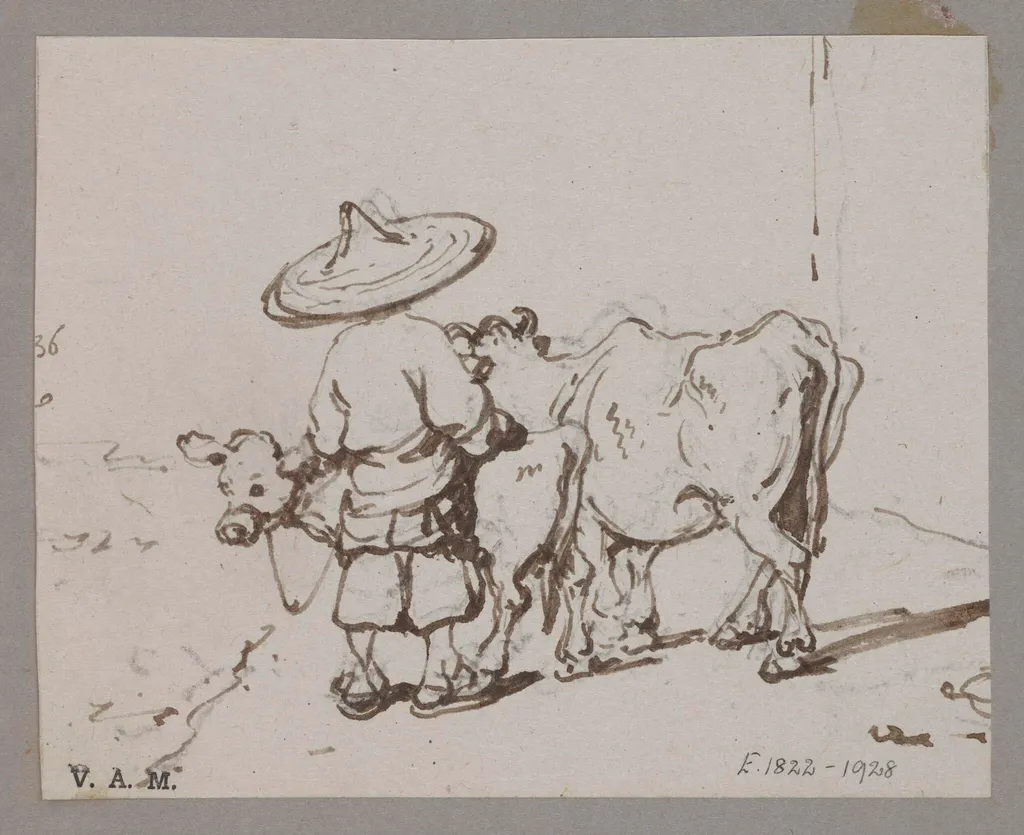
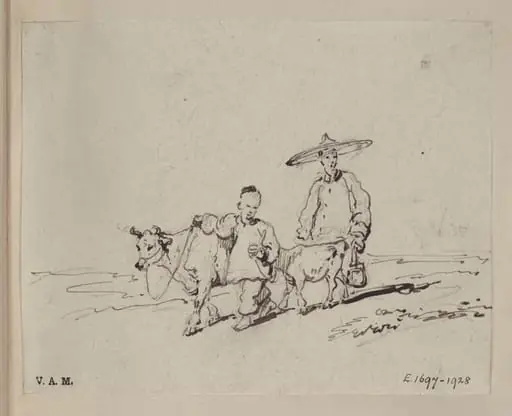
A Chinese figure with a cow and calf is a drawing by the Romanticist artist George Chinnery. It dates from 1 and is held in the collection of the Victoria and Albert Museum.
About this work
The drawing shows a Chinese figure with a cow and calf.
It was made by George Chinnery in 1836.
The drawing is part of the Romanticism movement, which often featured everyday life and landscapes, and this work fits into that category by depicting a quiet scene with animals.
You can learn more about this style at the Victoria and Albert Museum.
Overview
This ink drawing, created by George Chinnery in 1836, depicts a Chinese man wearing a broad-brimmed hat, accompanied by a cow and its calf. Executed in a straightforward, observational style, it belongs to a series of sketches Chinnery made during his time in southern China. The work is a quiet record of daily life, rendered with minimal embellishment and a focus on naturalistic detail.
Subject & Meaning
The scene portrays a rural moment—likely a farmer tending livestock—without overt symbolism or narrative drama. The figures are presented with dignity and stillness, emphasizing routine rather than spectacle. The presence of both adult and young animal suggests continuity and care, reflecting an unidealized view of agricultural life in early 19th-century Guangdong.
Technique & Style
Chinnery used pen and ink with subtle washes to define form and shadow, relying on line and tone rather than color. His approach is direct and economical, characteristic of on-site sketching. The composition is balanced but informal, with figures placed naturally within the space, avoiding theatrical arrangement. This reflects a Romantic-era interest in authentic, unposed moments.
History & Provenance
Created during Chinnery’s decades-long residence in Macau and Guangzhou, the drawing is one of many studies he made of local people and landscapes. It entered institutional collections in the 20th century, likely through family or academic channels, and is now held in a public archive. Its survival offers rare visual documentation of southern China from a Western artist’s perspective.
Context
In the 1830s, foreign access to mainland China was tightly restricted, making Chinnery’s sketches valuable as ethnographic records. His work diverged from grand historical or mythological themes common in European art, instead focusing on ordinary scenes. This aligns with broader Romantic trends that valued personal observation and the dignity of everyday life.
Legacy
Chinnery’s drawings, including this one, remain important for their unfiltered depiction of 19th-century Chinese rural life. They provide a counterpoint to more stylized or exoticized representations of Asia by Western artists. Today, they serve as historical documents studied for their cultural and artistic insight, rather than aesthetic novelty.
Artist & collection
Artist
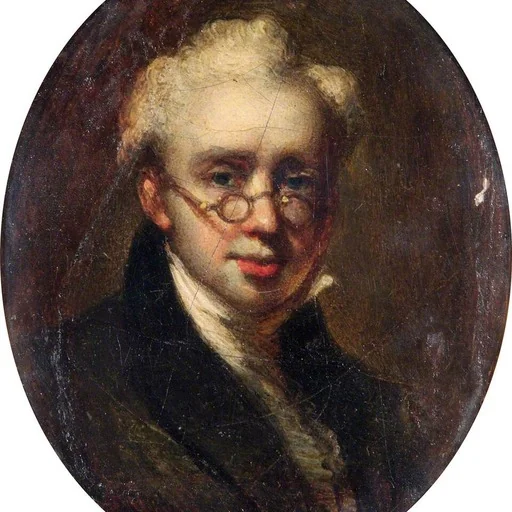
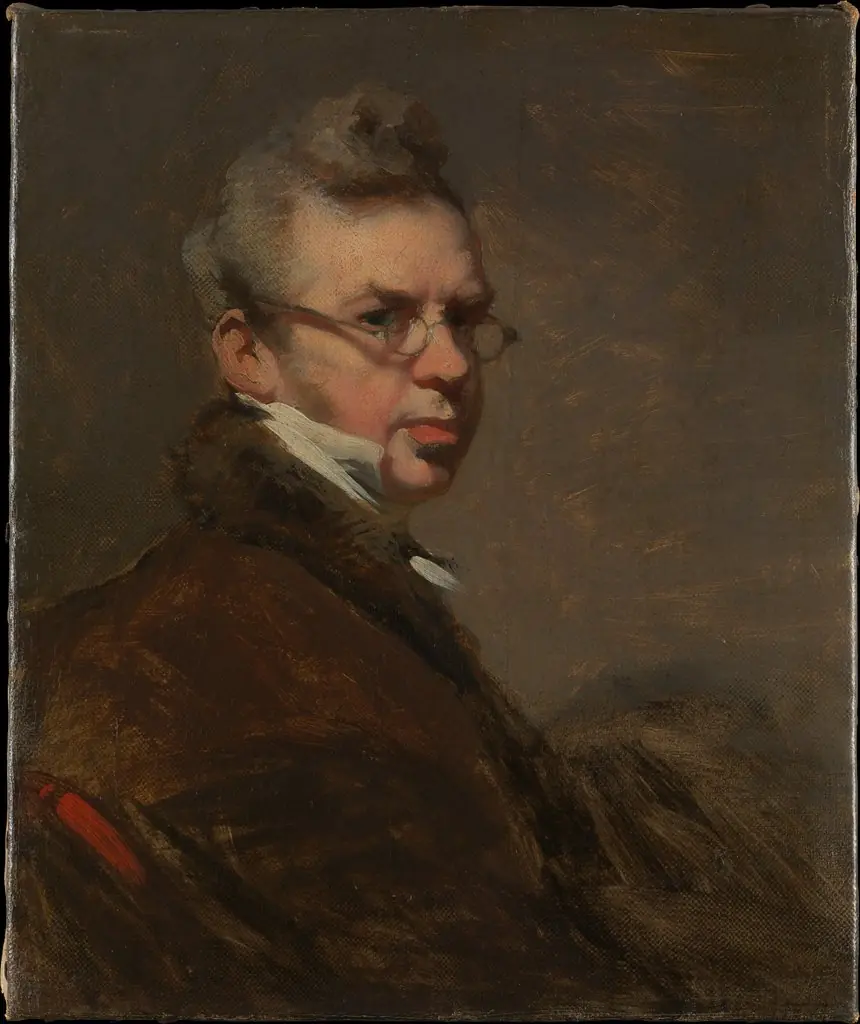
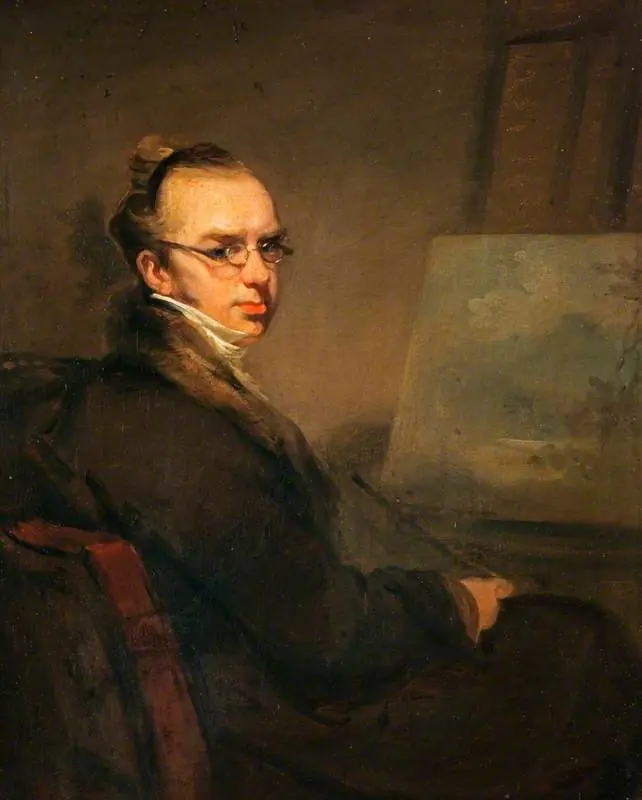
George Chinnery (Chinese: 錢納利; 5 January 1774 – 30 May 1852) was an English painter who spent most of his life in Asia, especially India and southern China.

 Two Chinese figures with a cow and calf
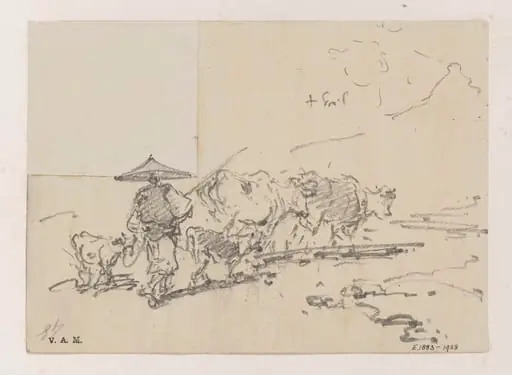 A Chinese cowherd driving cattle
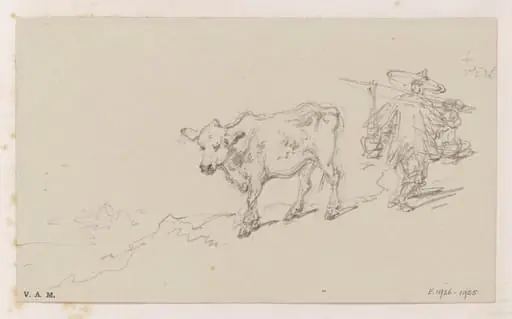 A Chinese porter and a cow
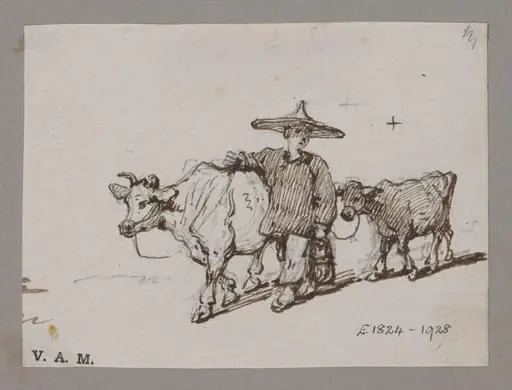 A Chinese figure with a cow and calf
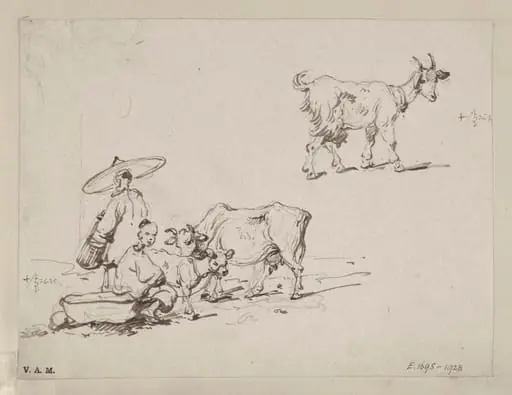 Two figures with a cow and calf; and a goat
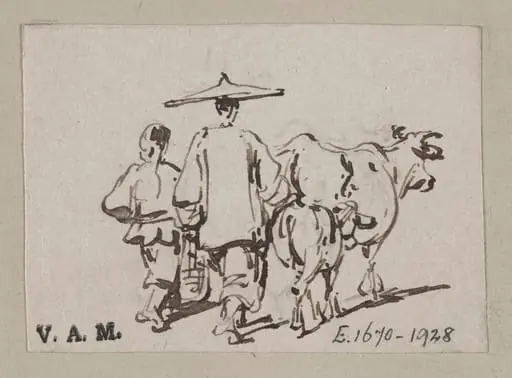 A man and a boy driving cattle
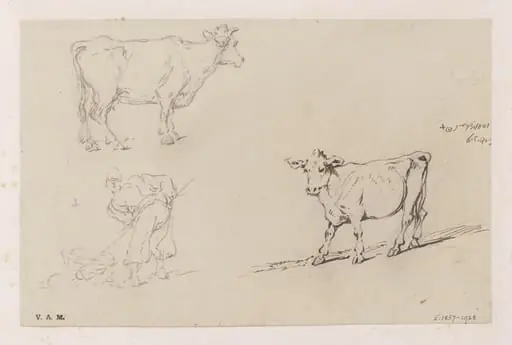 A Chinese man with a pole and basket, and two cows
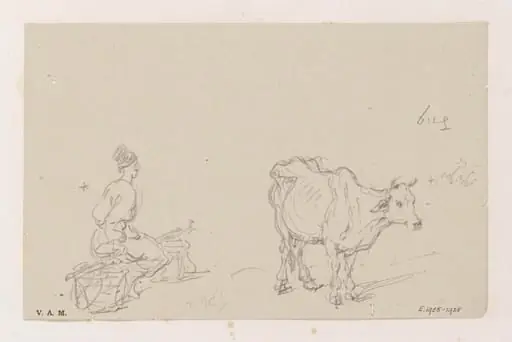 A figure seated between two baskets, and a cow
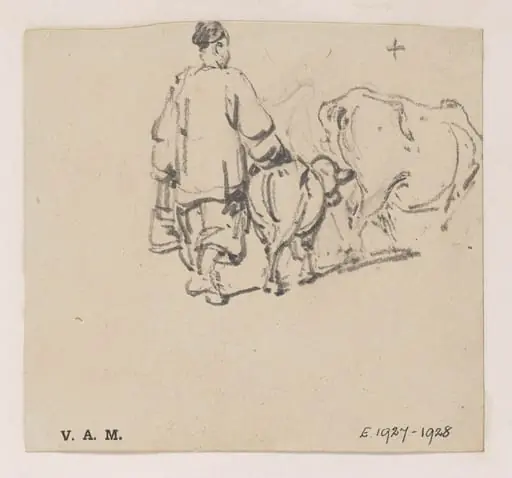 A Chinese man with a cow and calf