Artwork
Two Chinese figures with a cow and calf
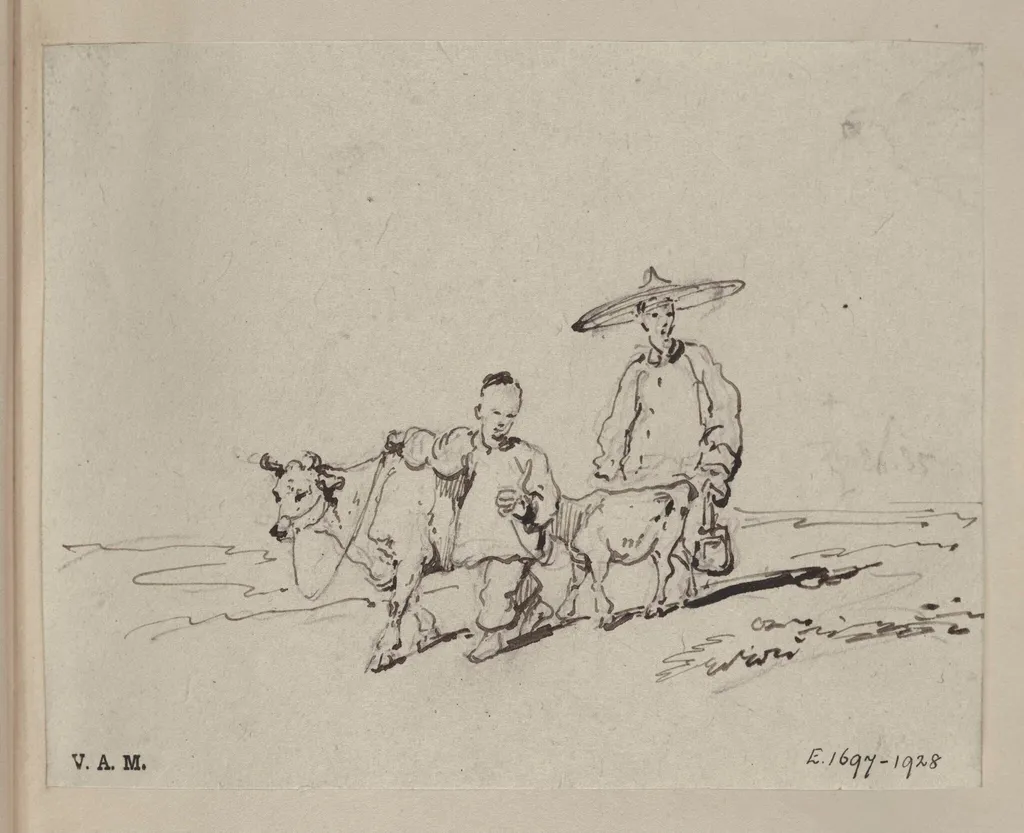
Two Chinese figures with a cow and calf is a drawing by the Romanticist artist George Chinnery. It dates from 1 and is held in the collection of the Victoria and Albert Museum.
About this work
Overview
Executed in pencil or ink, the composition captures a quiet rural moment, emphasizing naturalistic observation over idealization.
This drawing by George Chinnery depicts two Chinese figures—a boy and a man—alongside a cow and its calf. Executed in pencil or ink, the composition captures a quiet rural moment, emphasizing naturalistic observation over idealization. The figures and animals are arranged in a loose, horizontal grouping, suggesting a moment of pause in daily life. The work reflects Chinnery’s interest in documenting everyday scenes during his time in southern China.
Subject & Meaning
The scene portrays a boy near a bovine pair and a man carrying a basket, likely engaged in agricultural labor or transport. The presence of the calf suggests themes of continuity and domestic economy. No overt symbolism is present; instead, the drawing conveys dignity in routine activity. The figures’ postures and the animal’s calm demeanor imply a harmonious relationship between people and livestock in a rural setting.
Technique & Style
Chinnery employs economical linework and subtle cross-hatching to suggest volume and texture without heavy shading. The figures are rendered with loose, confident strokes, capturing movement and weight through minimal detail. The cow and calf are defined by contour and shadow, while the basket’s woven texture is implied through parallel lines. The style is observational, prioritizing immediacy over polish, typical of his on-site sketches.
History & Provenance
Created during George Chinnery’s residency in Guangzhou and Macau between 1802 and 1852, the drawing is part of a larger body of work documenting life in southern China. It likely originated as a preparatory sketch or personal record, later preserved in private collections before entering institutional holdings. Its survival reflects the value placed on Chinnery’s ethnographic observations by later collectors.
Context
Chinnery worked in a period when Western artists had limited access to China, making his sketches rare visual records of local life. His drawings avoided exoticism, focusing instead on ordinary people and routines. This piece aligns with broader 19th-century European interest in documenting non-Western societies, though Chinnery’s approach remained grounded in direct observation rather than romanticized interpretation.
Legacy
Chinnery’s drawings, including this one, contributed to a visual archive of early 19th-century southern China, influencing later ethnographic art. While not widely exhibited in his lifetime, his works became important references for historians studying cross-cultural encounters. The drawing’s simplicity and authenticity continue to inform contemporary understandings of daily life in the region during the Qing dynasty.
Artist & collection
Artist
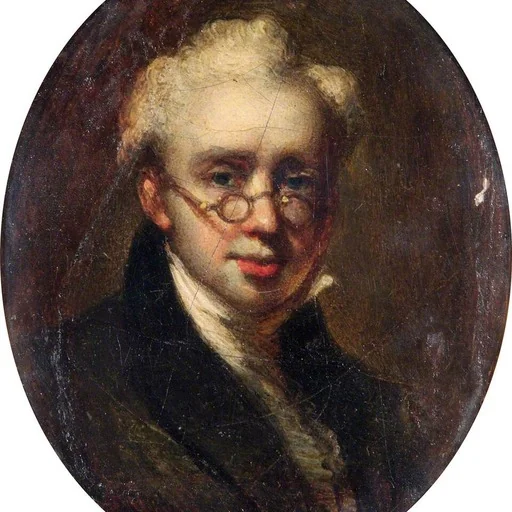
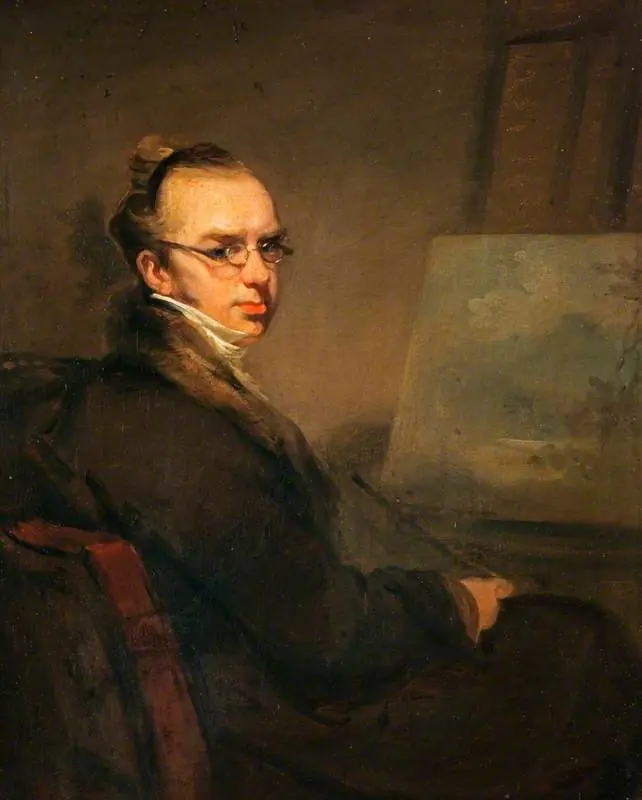
George Chinnery (Chinese: 錢納利; 5 January 1774 – 30 May 1852) was an English painter who spent most of his life in Asia, especially India and southern China.

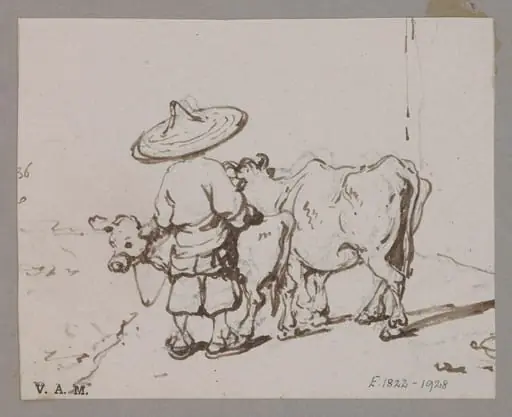 A Chinese figure with a cow and calf
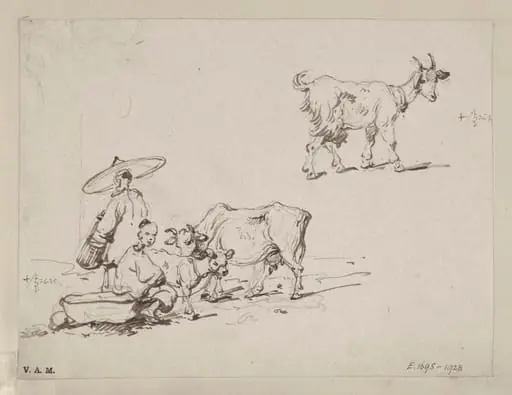 Two figures with a cow and calf; and a goat
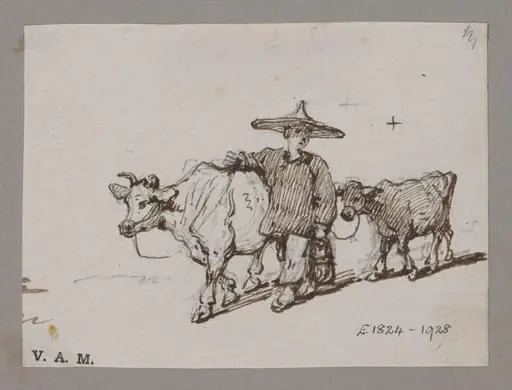 A Chinese figure with a cow and calf
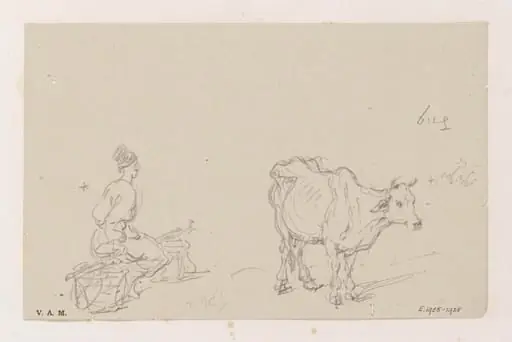 A figure seated between two baskets, and a cow
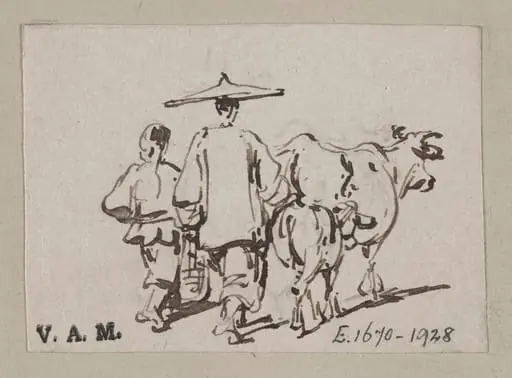 A man and a boy driving cattle
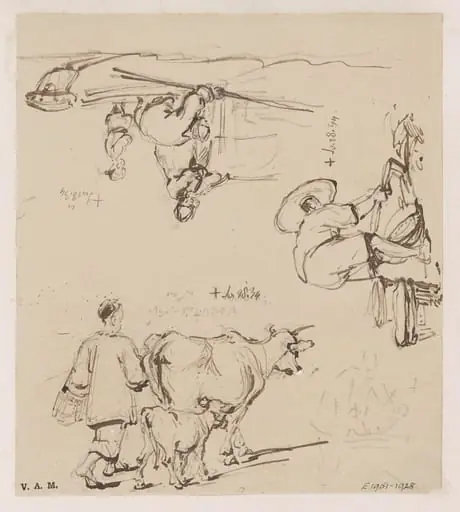 Three figure drawings
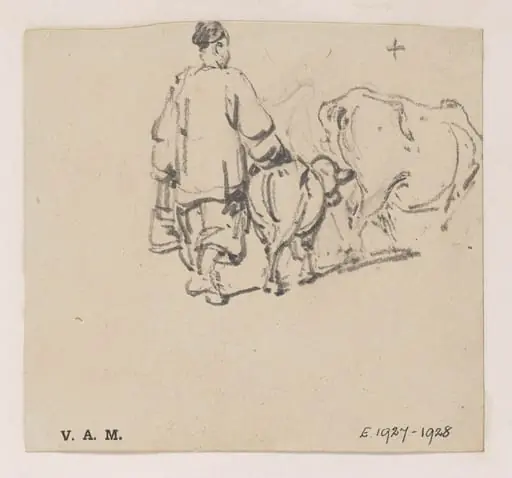 A Chinese man with a cow and calf
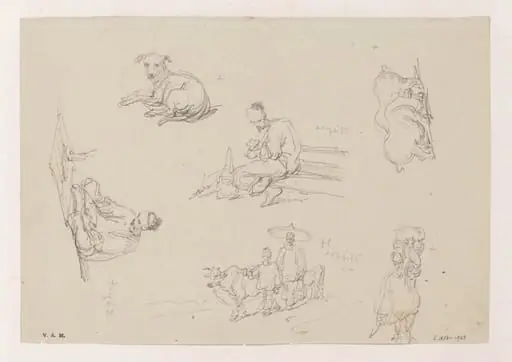 Chinese figures and animals
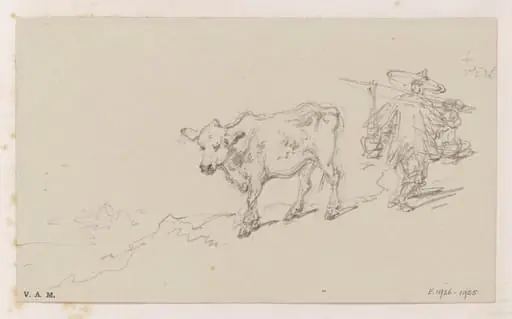 A Chinese porter and a cow
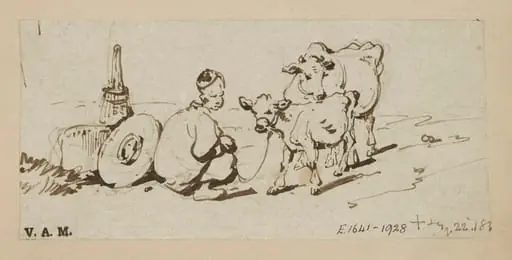 A crouching Chinese figure by a tethered calf and cow
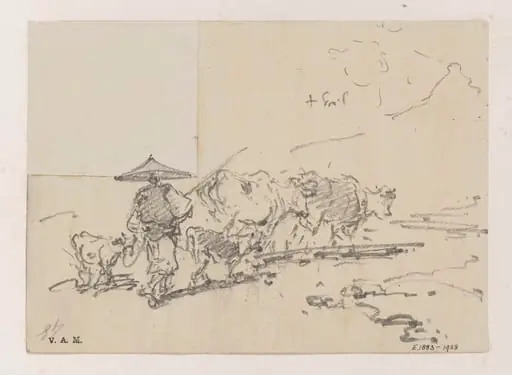 A Chinese cowherd driving cattle
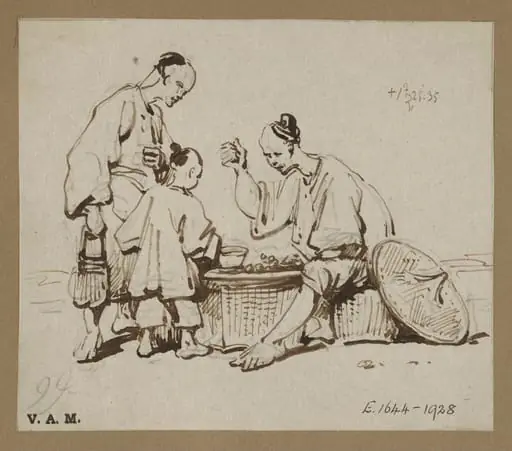 Three Chinese figures