Artwork
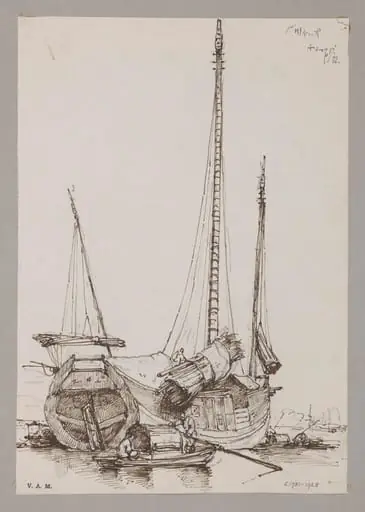
A Chinese junk with a sail partially raised
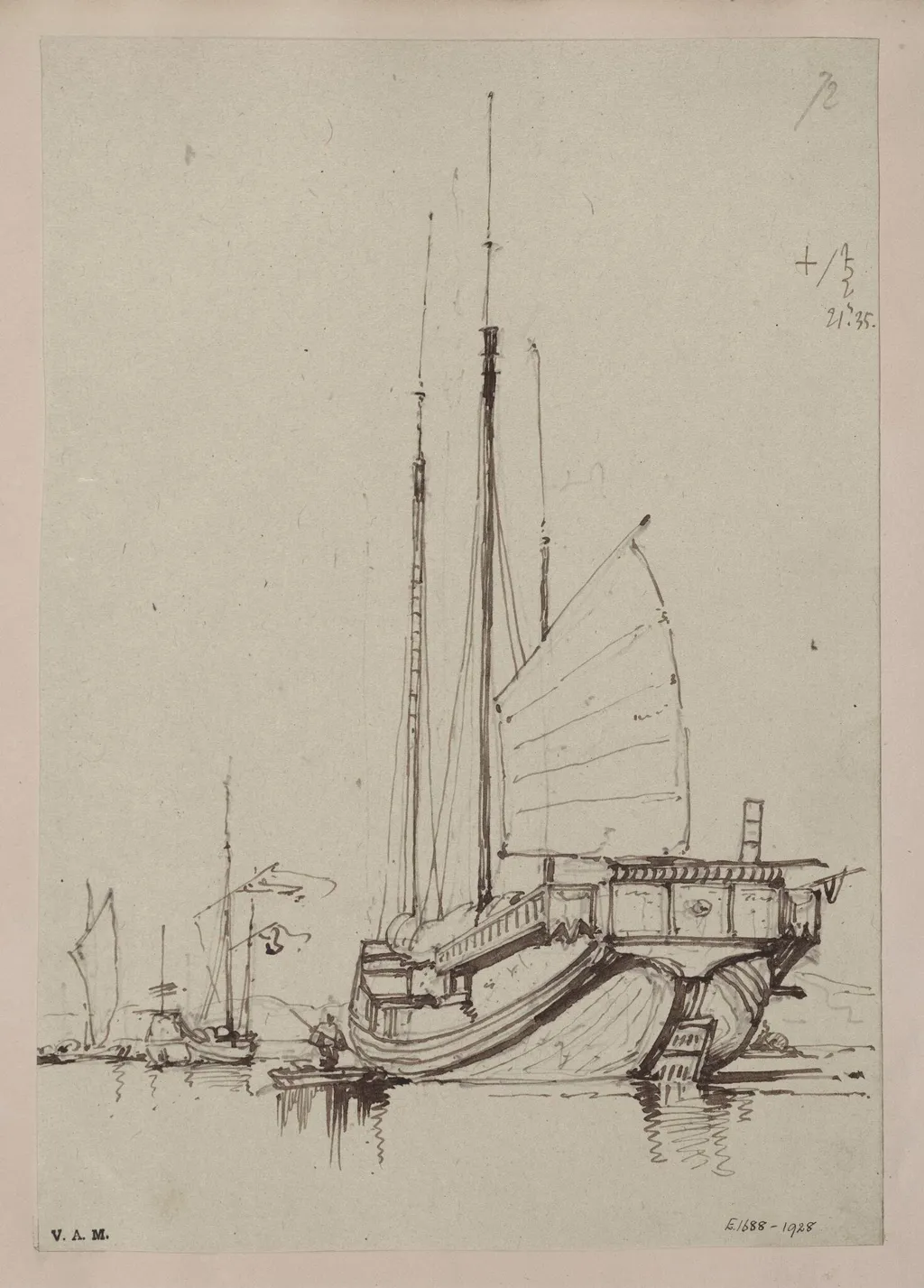
A Chinese junk with a sail partially raised is a drawing by the Romanticist artist George Chinnery. It dates from 15 and is held in the collection of the Victoria and Albert Museum. A pen-and-ink drawing from 1835 depicts a Chinese junk viewed from the stern, its sail partially raised.
About this work
This drawing shows a Chinese junk from the back, its sail half-raised like a ghost of wind still trapped in the lines. George Chinnery made it in 1835, just a quick sheet of paper and ink—no color, no big crowd.
Look past the boats to the way he set the ink down. You can almost feel the water beneath the hull without ever seeing a wave.
Next, peek at stippling.
Overview
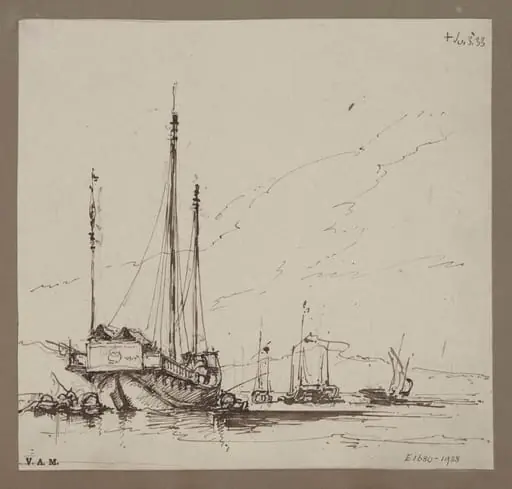
A pen-and-ink drawing from 1835 depicts a Chinese junk viewed from the stern, its sail partially raised. Behind it, a second vessel and smaller boats recede into the distance. Executed on a modest sheet of paper, the work captures a quiet maritime moment with minimal means—no color, no elaborate composition, yet rich in atmospheric suggestion.
Subject & Meaning
The scene presents a routine harbor activity: a junk preparing to sail, its sail caught mid-motion. The presence of other vessels suggests a working waterfront, not a ceremonial event. The composition emphasizes stillness and anticipation, conveying the rhythm of daily maritime life without dramatization or narrative.
Technique & Style
Chinnery used fine, controlled stippling and sparse ink lines to suggest texture and depth. The hull and rigging are rendered with economical strokes, while the water beneath is implied through negative space and subtle tonal shifts. The absence of waves heightens the sense of suspended motion, as if the breeze has paused just before filling the sail.
History & Provenance
Created during George Chinnery’s time in southern China, the drawing reflects his direct observation of local shipping. Likely made as a quick study during his travels, it was not intended for public display. Its survival offers insight into the artist’s private practice and his engagement with the coastal environments he inhabited.
Context
In the 1830s, foreign traders and artists in Guangzhou documented the bustling port’s vessels as part of their engagement with Chinese life. Chinnery’s drawing aligns with this tradition, but avoids exoticism. His focus on the mundane—partial sails, quiet hulls—reveals a preference for quiet realism over spectacle.
Legacy
The work stands as an example of early 19th-century Western artists in Asia who recorded local scenes with observational precision rather than romanticized interpretation. Its restraint and technical subtlety influenced later generations of sketchers who valued immediacy and understated detail over grandeur.
Own this work as a print
Artist & collection

Artist
George Chinnery (Chinese: 錢納利; 5 January 1774 – 30 May 1852) was an English painter who spent most of his life in Asia, especially India and southern China.





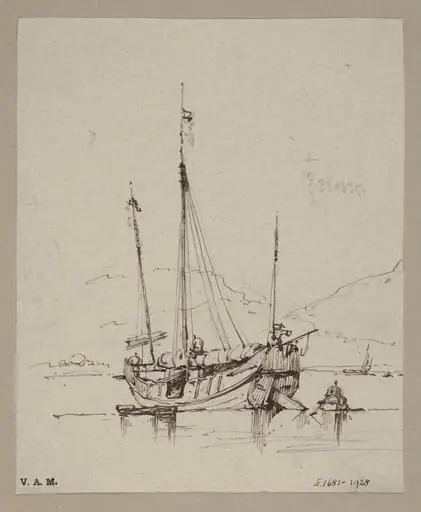 A Chinese junk with sail furled
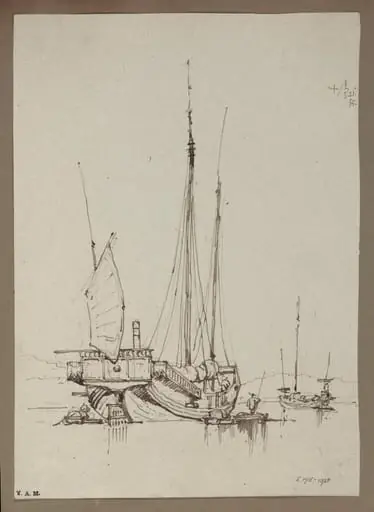 Untitled
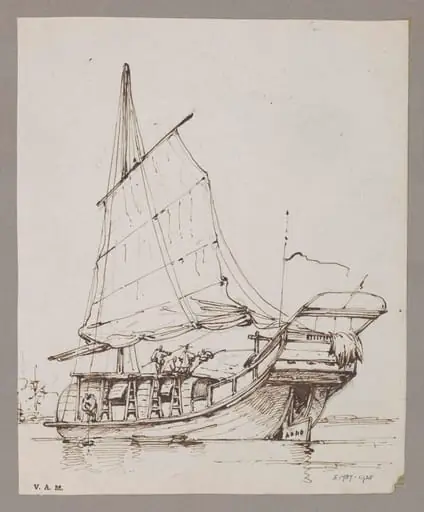 A Chinese junk with sail set
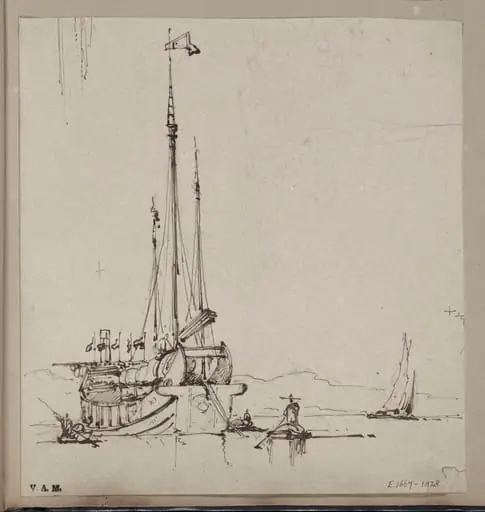 A junk with smaller craft
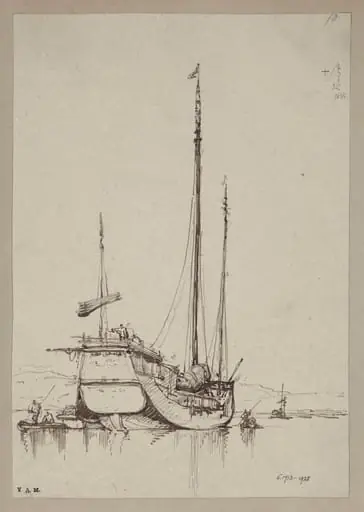 A junk with smaller craft alongside
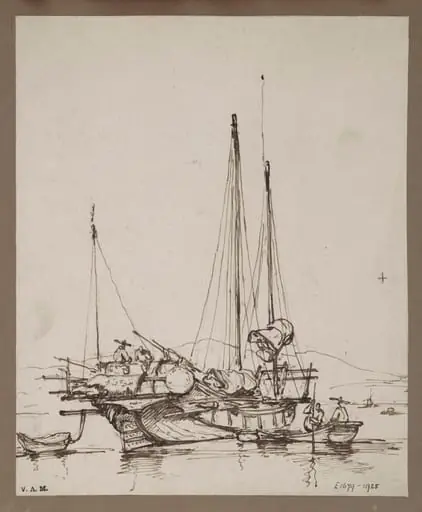 A drawing by George Chinnery of aA Chinese junk, with figures aboard and small craft alongside
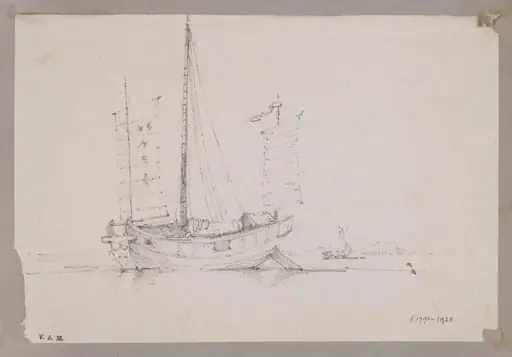 A Chinese junk
 A Chinese junk with timbers being hauled aboard
 A Chinese junk with others in the distance