Artwork
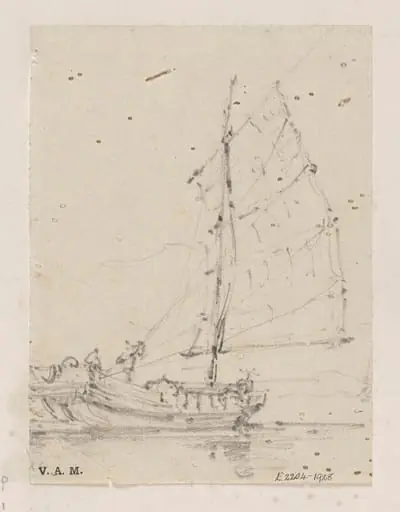
A Chinese junk with sail set
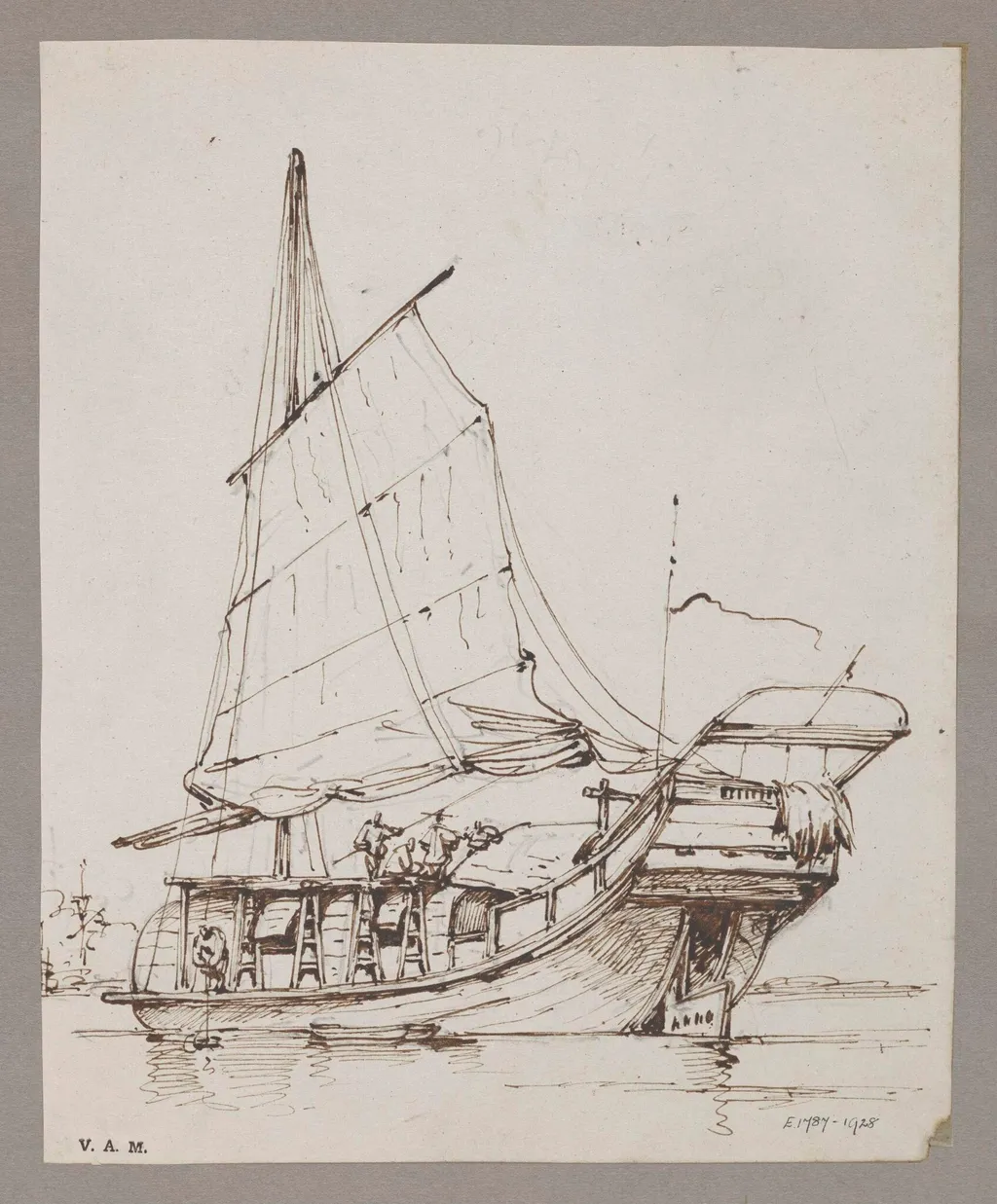
A Chinese junk with sail set is a drawing by the Romanticist artist George Chinnery. It dates from 19 and is held in the collection of the Victoria and Albert Museum. Executed in 1852, this ink drawing captures a Chinese junk under full sail, rendered with careful observation and subtle tonal variation.
About this work
George Chinnery drew this in 1852.
It shows a Chinese junk under sail with people on a raised deck.
At the back he sketched boat folk holding poles and a covered boat.
This is a Romantic work, not just a record.
Romantic artists often added mood to everyday scenes.
Chinnery spent years in Asia, so he knew these boats well.
Check out George Chinnery next.
Overview
Executed in 1852, this ink drawing captures a Chinese junk under full sail, rendered with careful observation and subtle tonal variation.
Executed in 1852, this ink drawing captures a Chinese junk under full sail, rendered with careful observation and subtle tonal variation. The artist, George Chinnery, depicted the vessel with attention to its distinctive hull and sail structure, while figures on the raised aft deck suggest daily activity. The reverse side contains additional sketches of river laborers and a covered boat, indicating the artist’s habit of documenting scenes beyond the primary subject.
Subject & Meaning
The junk is portrayed not merely as a vessel but as an element within a lived environment. Figures on the platform imply routine maritime life, while the reverse sketches extend the narrative to laborers poling smaller boats—suggesting a broader ecosystem of riverine existence. Chinnery’s focus on ordinary scenes, devoid of overt drama, reflects a quiet reverence for the rhythms of Asian coastal and riverine communities.
Technique & Style
Chinnery employed fluid ink lines and washes to suggest texture and movement, balancing precision with spontaneity. The sail’s billowing form is implied through layered shading rather than rigid contours, while the figures are rendered with economical strokes. The contrast between the detailed main image and the looser reverse sketches reveals a working process rooted in direct observation, not idealized composition.
History & Provenance
Created during Chinnery’s decades-long residence in southern China and Macau, the drawing belongs to a body of work produced for personal and private circulation rather than public exhibition. Its survival in a single sheet, with both front and back bearing sketches, suggests it was kept as a visual journal. No record of early ownership exists beyond the artist’s circle.
Context
In the mid-19th century, Western artists in Asia often documented local life as colonial and commercial interests expanded. Chinnery’s approach diverged from exoticizing tropes; his drawings reflect sustained familiarity with the region’s vessels and people. This work aligns with a broader trend among resident foreigners who recorded everyday scenes with ethnographic interest rather than theatrical embellishment.
Legacy
Chinnery’s drawings, including this one, remain among the most detailed visual records of 19th-century Chinese maritime life by a Western artist. They offer insight into the material culture of coastal trade and labor, valued today for their unembellished observation. While not widely exhibited in his lifetime, his oeuvre has since become a reference for historians studying cross-cultural visual documentation in Asia.
Artist & collection

Artist
George Chinnery (Chinese: 錢納利; 5 January 1774 – 30 May 1852) was an English painter who spent most of his life in Asia, especially India and southern China.







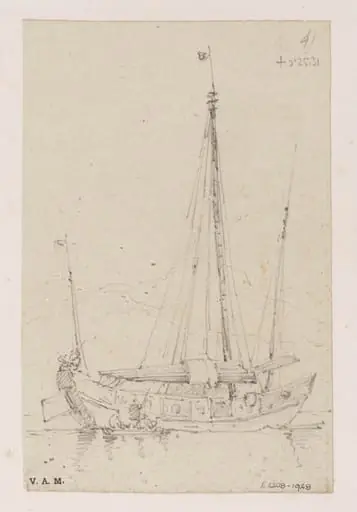
 A Chinese junk
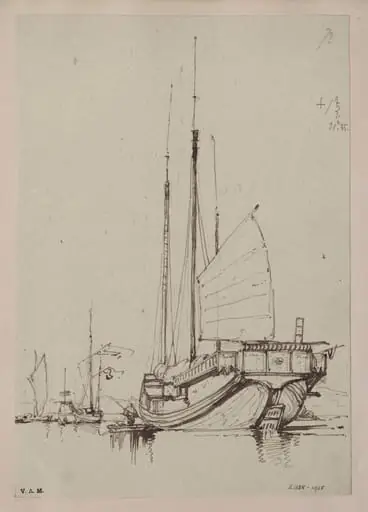 A Chinese junk with a sail partially raised
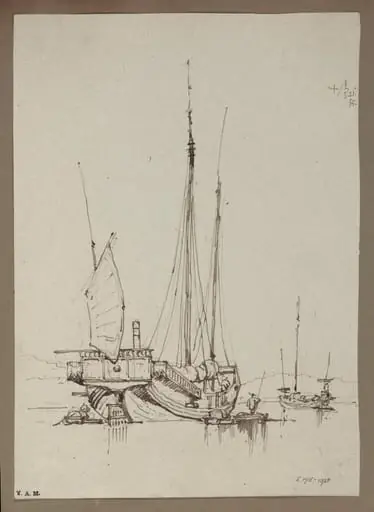 Untitled
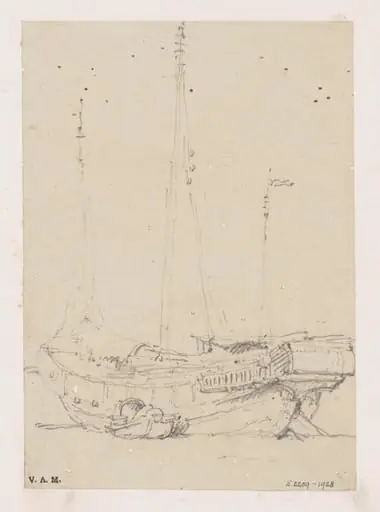
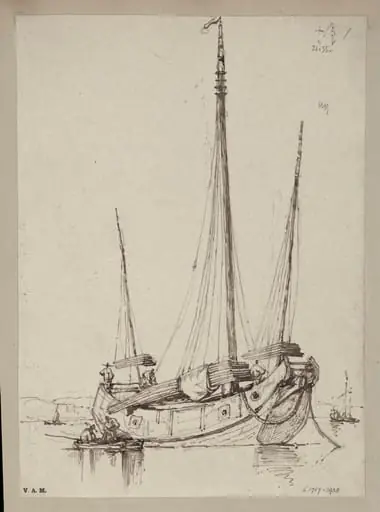 A junk hauling planks aboard
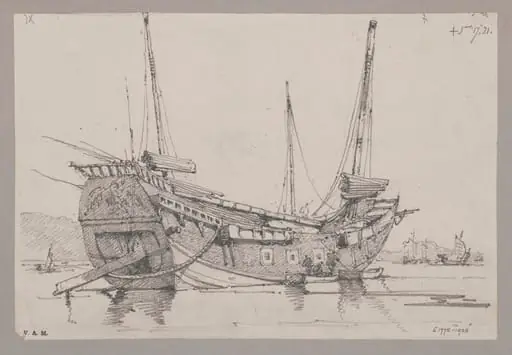 Old Chinese Junk
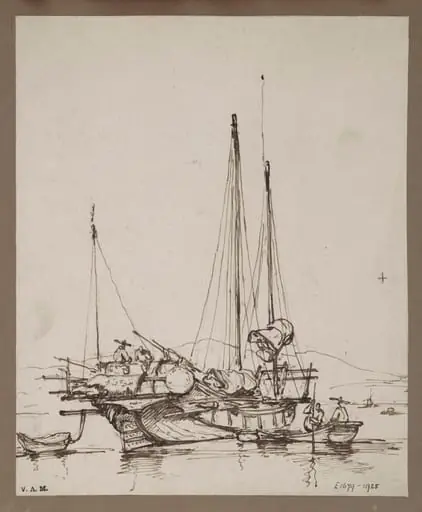 A drawing by George Chinnery of aA Chinese junk, with figures aboard and small craft alongside
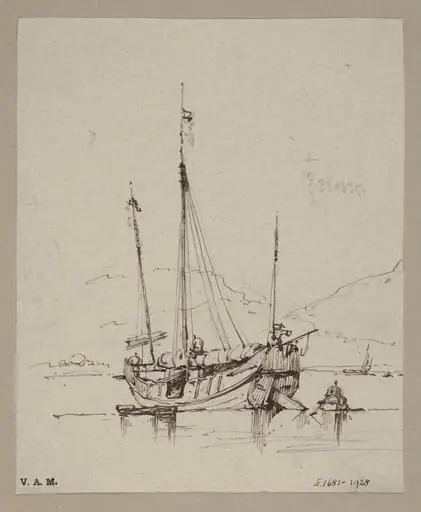 A Chinese junk with sail furled
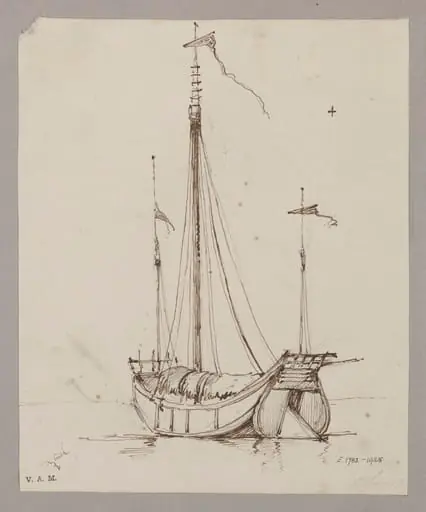 Untitled
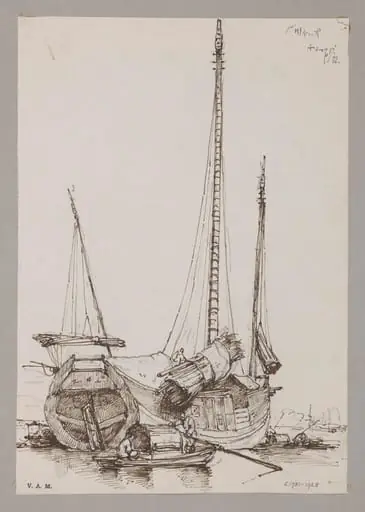 A Chinese junk with timbers being hauled aboard
 A junk under sail
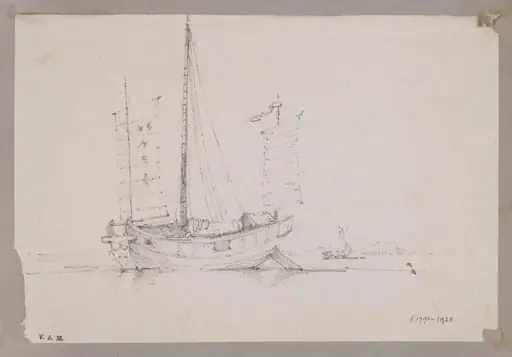
 A three-masted junk with a smaller boat alongside
 A junk with a small boat alongside