Artwork
A cow and calf
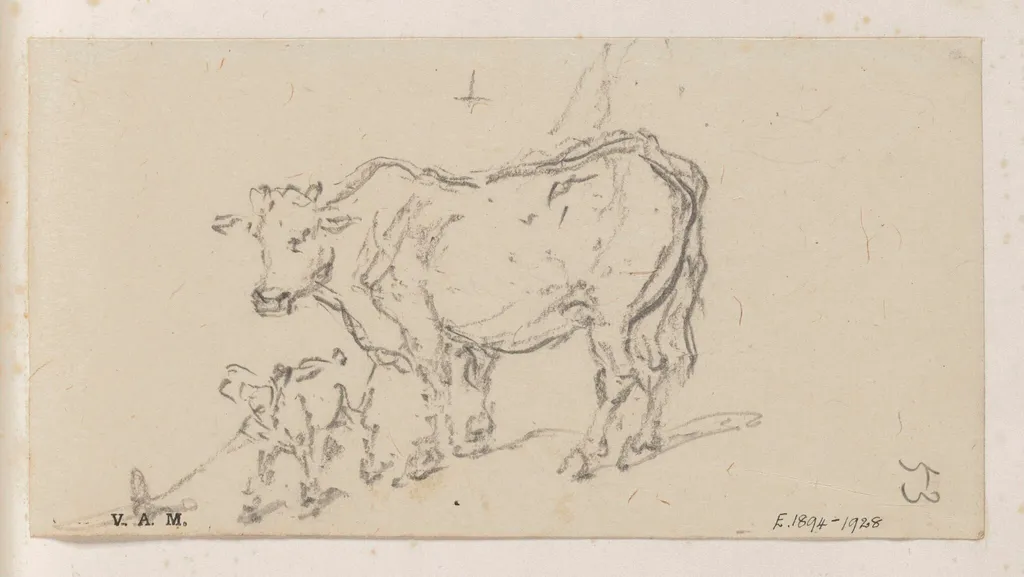
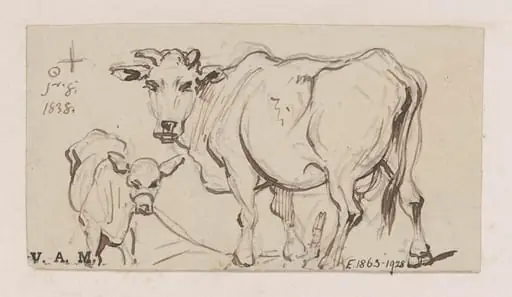
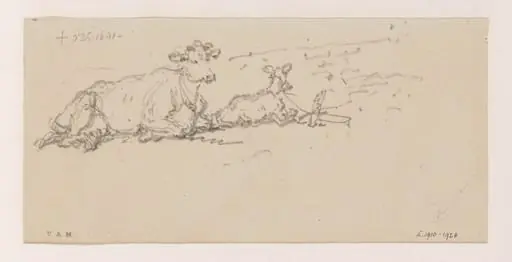
A cow and calf is a drawing by the Romanticist artist George Chinnery. It dates from 19 and is held in the collection of the Victoria and Albert Museum. This pencil drawing depicts a cow and her calf in a quiet, intimate moment.
About this work
George Chinnery used simple lines to bring the animals to life on paper.
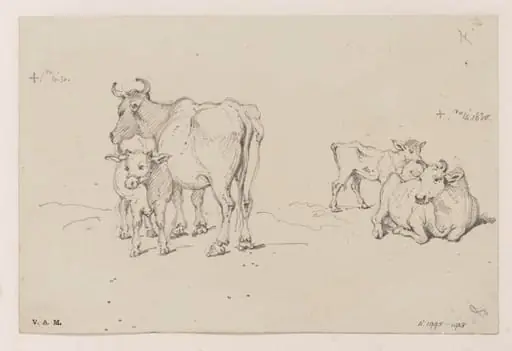
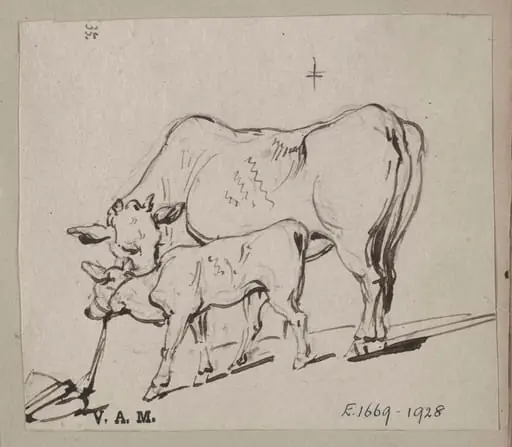
This drawing shows a cow standing near her calf, tied up close by. George Chinnery used simple lines to bring the animals to life on paper.
The calf looks small and curious next to the bigger cow. The drawing was made between 1825 and 1852.
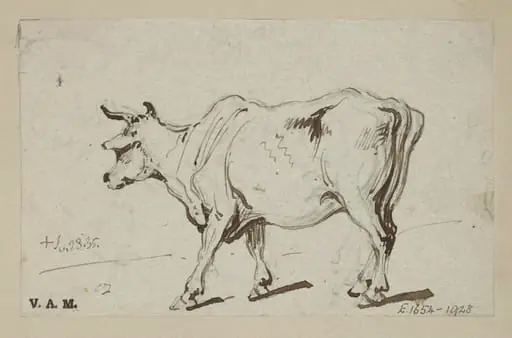
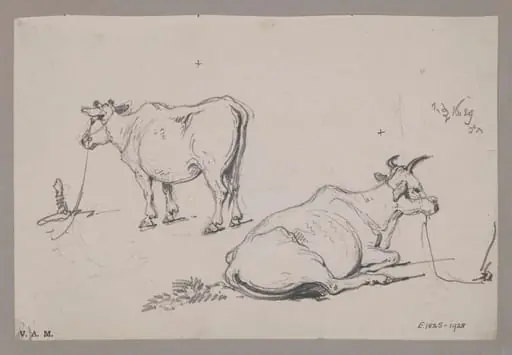
See how Chinnery used delicate shading to shape the cows. His paper sketch feels alive in a quiet way.
Look up cross-hatching to see how artists build shadows with tiny lines.
Overview
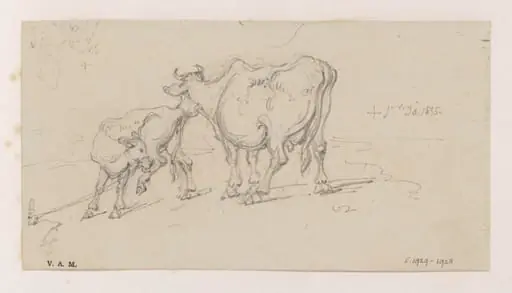
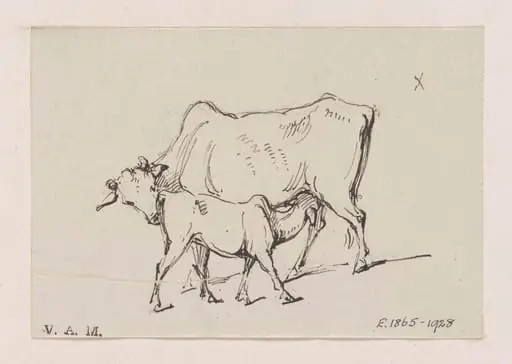
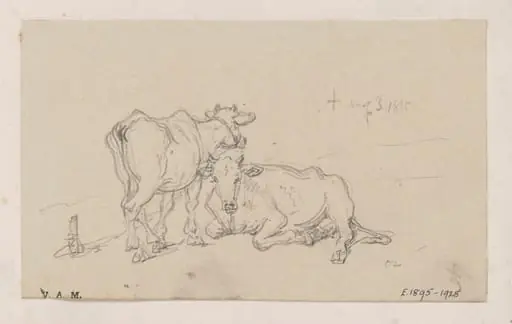
This pencil drawing depicts a cow and her calf in a quiet, intimate moment. Created by George Chinnery between 1825 and 1852, the work is a modest yet attentive study of livestock, rendered with minimal strokes and subtle tonal variations. The animals are positioned close together, suggesting a natural bond. The drawing’s simplicity belies its careful observation, capturing the stillness of rural life without embellishment.
Subject & Meaning
The scene centers on maternal presence: the larger cow stands calmly while the smaller calf, tethered nearby, leans into her space with a tentative curiosity. There is no human figure, no narrative beyond the animal relationship. The focus on this quiet interaction reflects an appreciation for everyday rural existence, free from idealization. The drawing invites contemplation of animal behavior and the unspoken rhythms of farm life.
Technique & Style
Chinnery employed fine, controlled lines and delicate cross-hatching to model form and suggest volume. The shading is light but precise, defining the cow’s muscular bulk and the calf’s softer contours without heavy outlines. The paper’s texture remains visible, enhancing the sketch’s immediacy. His approach avoids dramatic contrast, favoring a muted, atmospheric quality that lends the scene a sense of quiet realism.
History & Provenance
The drawing originates from Chinnery’s time in Asia, where he lived and worked from the 1820s until his death. Though he is better known for portraits and landscapes, this study reflects his habit of sketching local life in spontaneous, observational moments. Its survival suggests it was kept as a personal record rather than a finished work, offering insight into his private artistic practice away from formal commissions.
Context
During the early 19th century, European artists in colonial settings often documented indigenous and rural subjects with ethnographic interest. Chinnery’s drawing aligns with this trend but avoids exoticism. Instead, it mirrors the quiet realism of British agricultural sketches, adapted to the landscapes of southern China and India. The work reflects a broader shift toward valuing everyday scenes over grand historical themes.
Legacy
Though not widely exhibited, this drawing contributes to understanding Chinnery’s broader oeuvre as a keen observer of ordinary life. It exemplifies how sketching served as both practice and personal record for 19th-century artists abroad. Its preservation underscores the value placed on informal studies, revealing how artists engaged with their surroundings beyond commissioned work.
Artist & collection
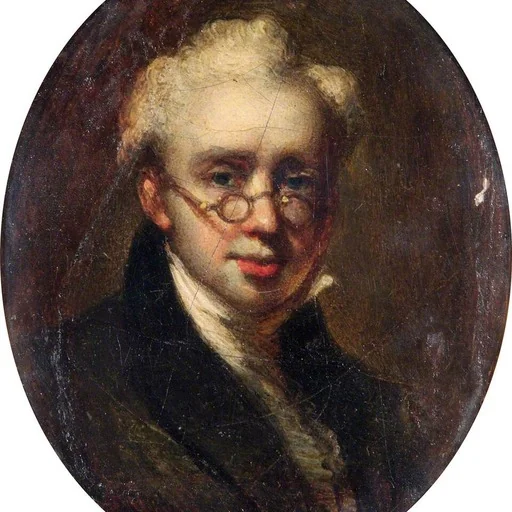
Artist
George Chinnery (Chinese: 錢納利; 5 January 1774 – 30 May 1852) was an English painter who spent most of his life in Asia, especially India and southern China.