Artwork
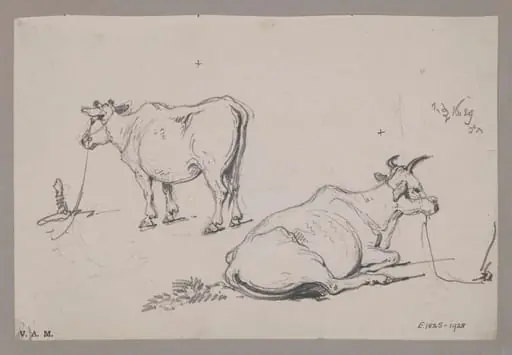
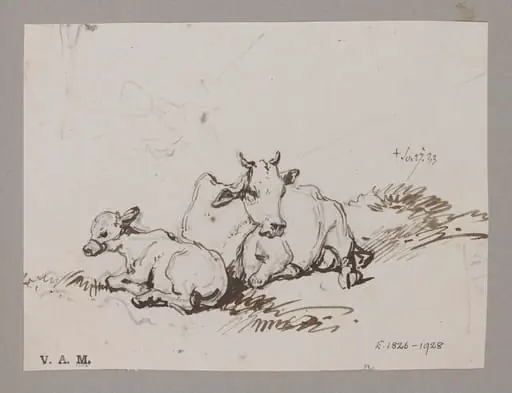
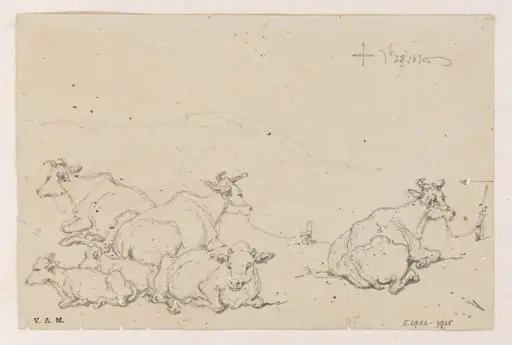
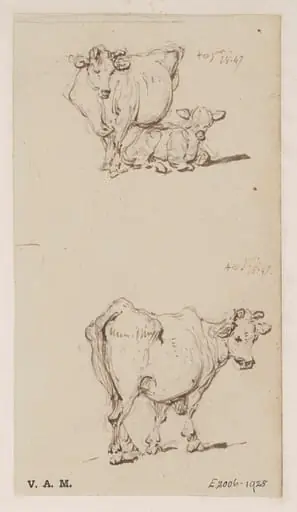
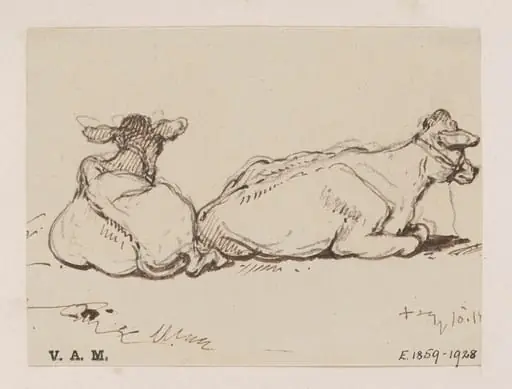
Two cows
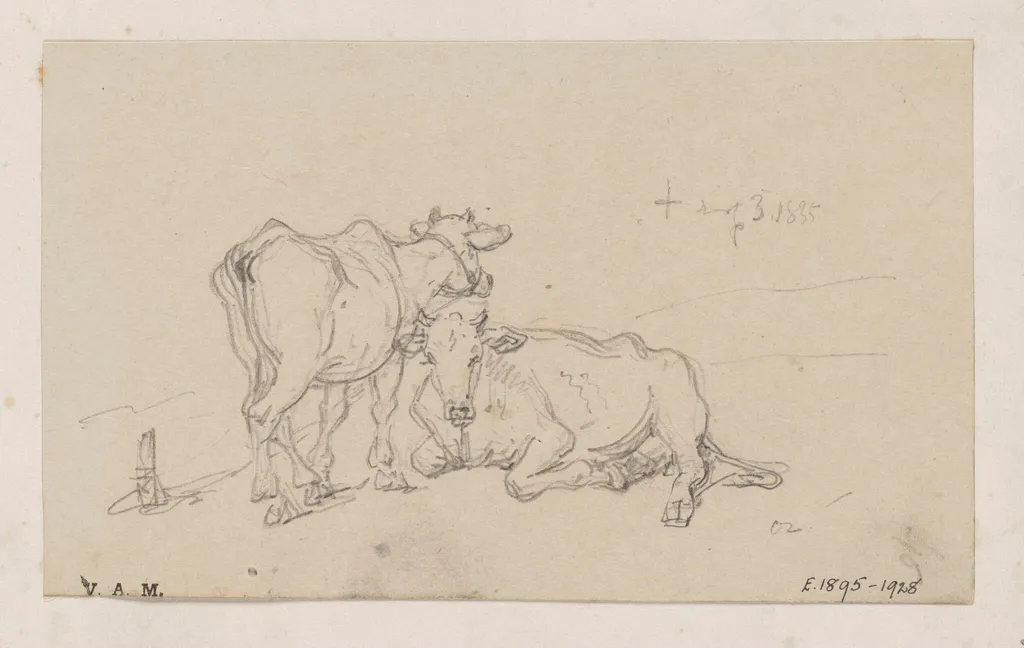
Two cows is a drawing by the Romanticist artist George Chinnery. It dates from 6 and is held in the collection of the Victoria and Albert Museum.
About this work
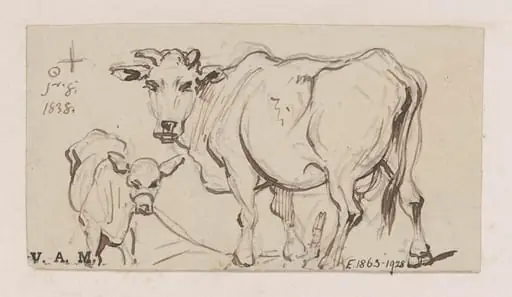
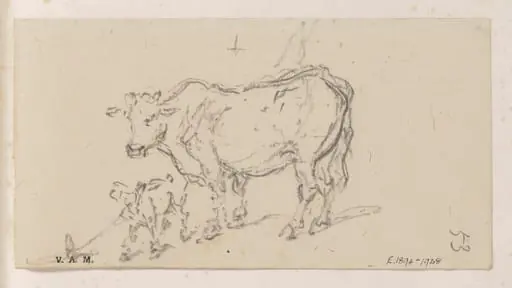
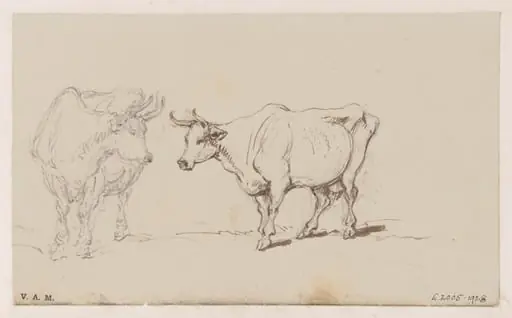
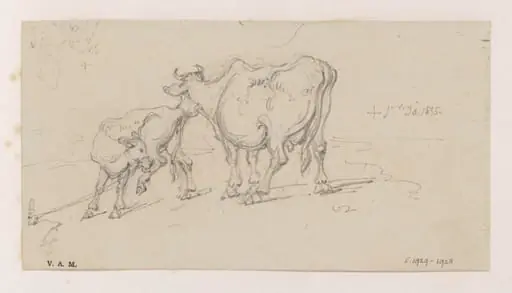
This drawing shows two cows tied up near a post. It’s by George Chinnery, made in 1835. That’s a long time ago—back when artists often used simple ink or pencil like this.
Chinnery was all about Romanticism, so he liked mood and natural details. Here, the focus is just the animals and their quiet spot. Not flashy, but honest.
Want to see more? Look up George Chinnery.
Overview
Unlike grand historical or mythological subjects common in European art, this work focuses on rural stillness, emphasizing observation over drama.
Created in 1835, this ink drawing by George Chinnery depicts two cattle standing near a wooden post, one loosely tethered. Executed with restrained linework, the piece reflects Chinnery’s habit of capturing quiet, everyday scenes during his time in Asia. Unlike grand historical or mythological subjects common in European art, this work focuses on rural stillness, emphasizing observation over drama.
Subject & Meaning
The two cows, one bound and the other free but nearby, suggest a quiet tension between restraint and natural presence. There is no human figure, yet the post implies human intervention in the landscape. The scene conveys a sense of solitude and routine, aligning with Romantic ideals that valued unembellished nature and the dignity of humble life.
Technique & Style
Chinnery used fine ink lines to define the animals’ forms, with subtle shading to suggest volume without heavy modeling. The drawing’s economy of line and absence of color reflect its function as a sketch—likely made outdoors. The loose, observational quality reveals his training in the Romantic tradition, prioritizing immediacy and atmospheric truth over polished finish.
History & Provenance
Made during Chinnery’s decades-long residence in Macau and southern China, the drawing belongs to a body of work documenting local life and landscapes. It was likely created as a personal study rather than a commissioned piece. The work remained in private hands until entering institutional collections in the 20th century, where it is now preserved as part of his lesser-known but significant Asian period.
Context
In the 1830s, European artists in Asia often recorded unfamiliar environments through sketches. Chinnery’s focus on animals and rural scenes contrasted with the more common depictions of ports or colonial architecture. His work offered a quiet counterpoint to imperial narratives, capturing the rhythms of local agriculture and animal husbandry with unromanticized attention.
Legacy
Though not widely exhibited, this drawing exemplifies Chinnery’s role as an observational chronicler of 19th-century Asia. His sketches, including this one, provide valuable visual records of rural life during a period of rapid cultural change. They remain important for their unidealized perspective and their contribution to cross-cultural artistic exchange in the colonial era.
Artist & collection
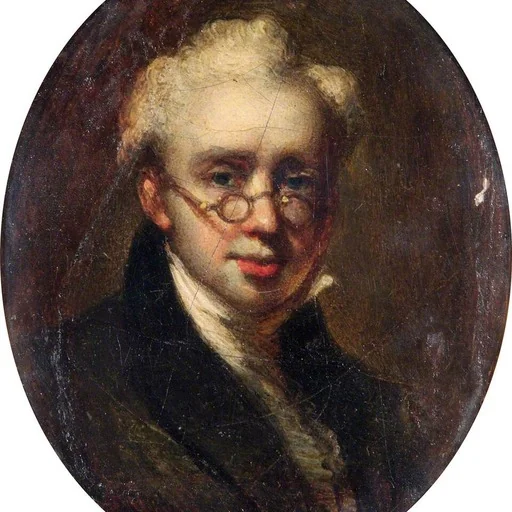
Artist
George Chinnery (Chinese: 錢納利; 5 January 1774 – 30 May 1852) was an English painter who spent most of his life in Asia, especially India and southern China.