Artwork
A cow on a grassy slope
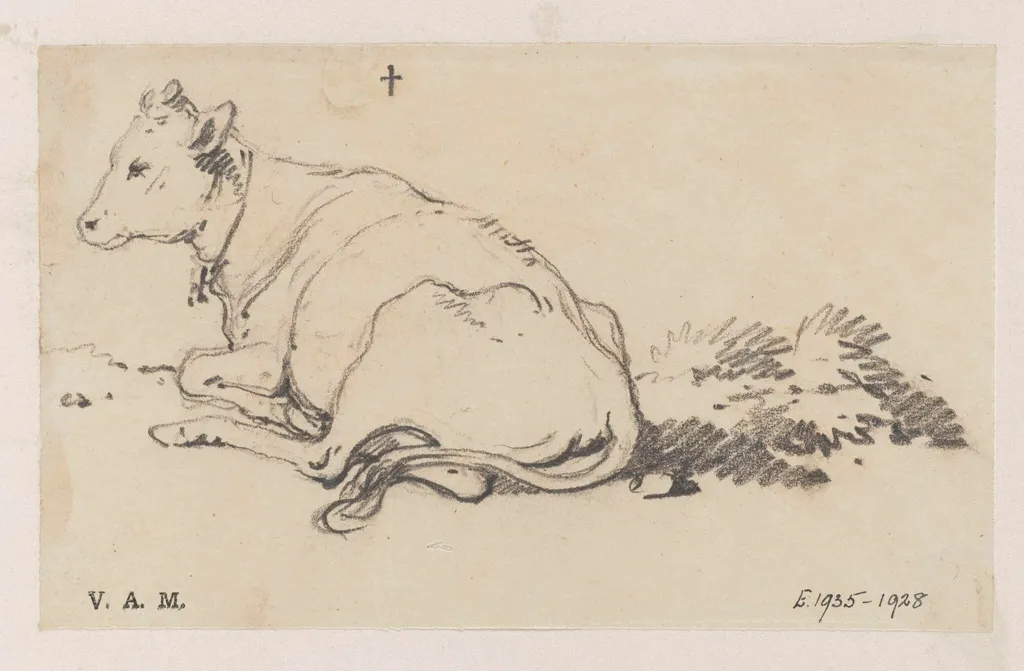
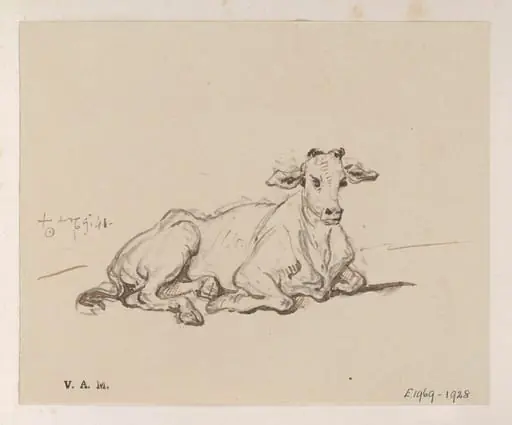
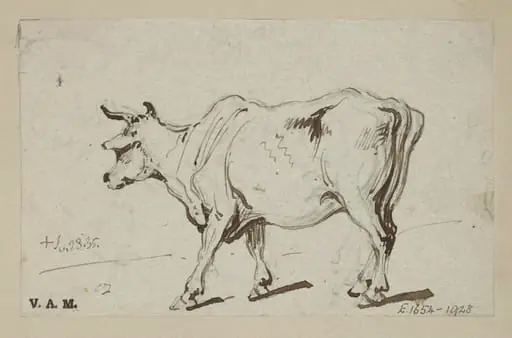
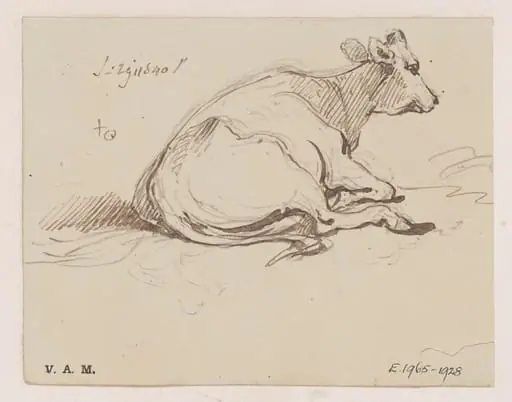
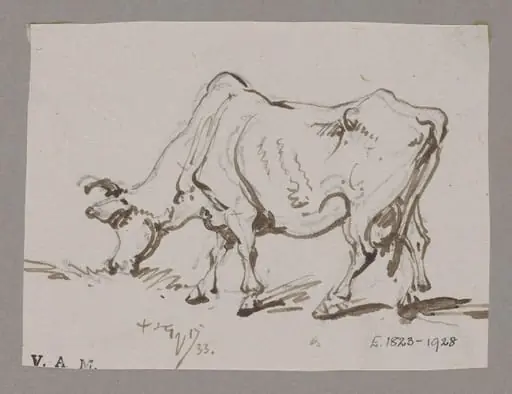
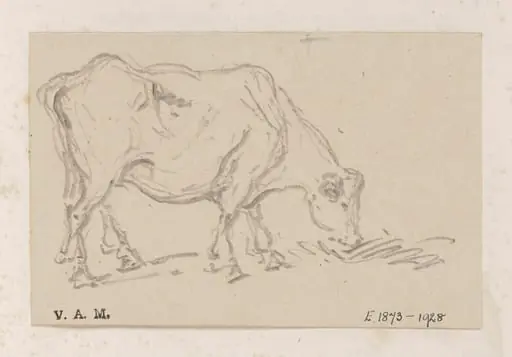
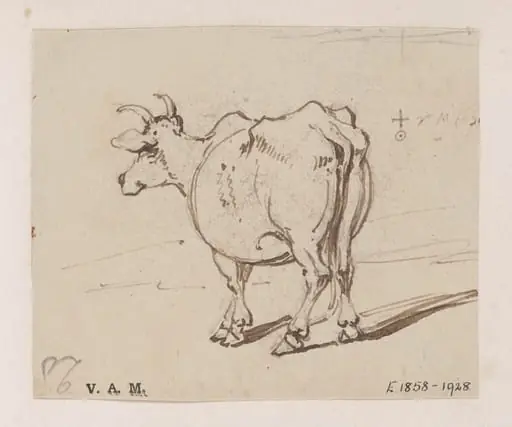
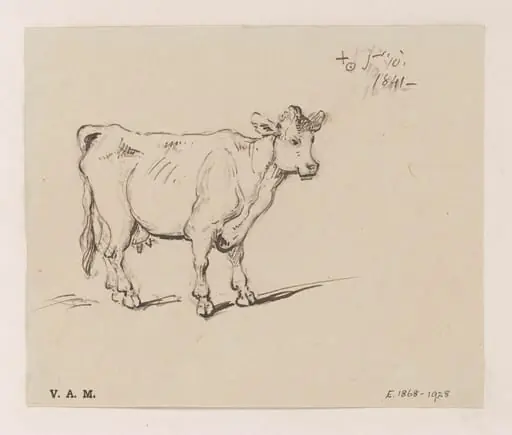
A cow on a grassy slope is a drawing by the Romanticist artist George Chinnery. It dates from 19 and is held in the collection of the Victoria and Albert Museum. This small drawing on paper depicts a cow positioned on a gentle grassy slope, viewed from the left side.
About this work
Here’s a fresh rewrite, grounded in the facts and keeping it simple: This is a drawing of a cow, seen from the left.
Here’s a fresh rewrite, grounded in the facts and keeping it simple:
This is a drawing of a cow, seen from the left. George Chinnery made it between 1825 and 1852. It’s a small work on paper, typical of his time.
The Romantic style often focused on nature and animals. This drawing shows that interest in quiet, everyday scenes.
Check out cross-hatching next if you like seeing how artists build up tone with lines.
Overview
This small drawing on paper depicts a cow positioned on a gentle grassy slope, viewed from the left side. Created by George Chinnery between 1825 and 1852, it reflects his habit of sketching observational studies during his time in Asia. The work is modest in scale and medium, consistent with his practice of recording everyday subjects in portable form.
Subject & Meaning
The cow, rendered in quiet stillness, represents an unidealized moment of rural life. Rather than dramatizing the animal, the drawing emphasizes its presence within a natural setting. This aligns with Romantic-era interests in ordinary nature, where animals and landscapes were observed for their inherent dignity rather than symbolic meaning.
Technique & Style
Chinnery used fine linear strokes to model form, relying on cross-hatching to suggest volume and shadow. The lines are deliberate but unembellished, avoiding theatrical effects. The composition is simple, with minimal background detail, focusing attention on the cow’s posture and the texture of its coat through careful tonal gradation.
History & Provenance
The drawing originates from Chinnery’s extensive sketchbook practice during his decades in southern China and India. It was likely made as a personal study, not for public display. Its survival suggests it was preserved among his private papers, later entering institutional collections through family or collector networks.
Context
During the early 19th century, European artists in Asia increasingly turned to local subjects as subjects of study. Chinnery’s drawings of animals, landscapes, and people reflected both curiosity and documentation. This work fits within a broader trend of observational art made outside academic studios, grounded in direct experience.
Legacy
Though not widely exhibited, Chinnery’s sketches like this one contribute to understanding how Western artists engaged with Asian environments. His quiet, unpretentious approach influenced later generations interested in ethnographic and naturalistic drawing, preserving a record of daily life through unadorned observation.
Artist & collection
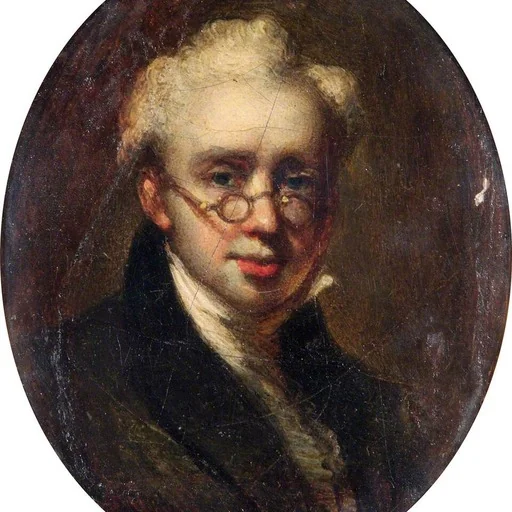
Artist
George Chinnery (Chinese: 錢納利; 5 January 1774 – 30 May 1852) was an English painter who spent most of his life in Asia, especially India and southern China.