Artwork
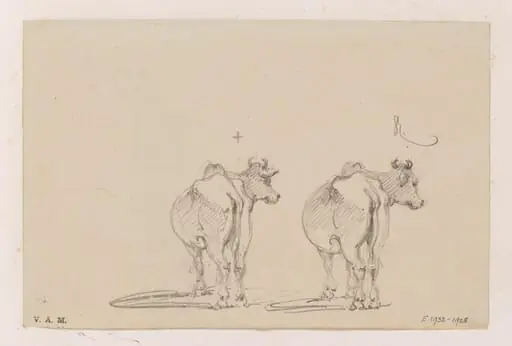
A cow seen from the rear
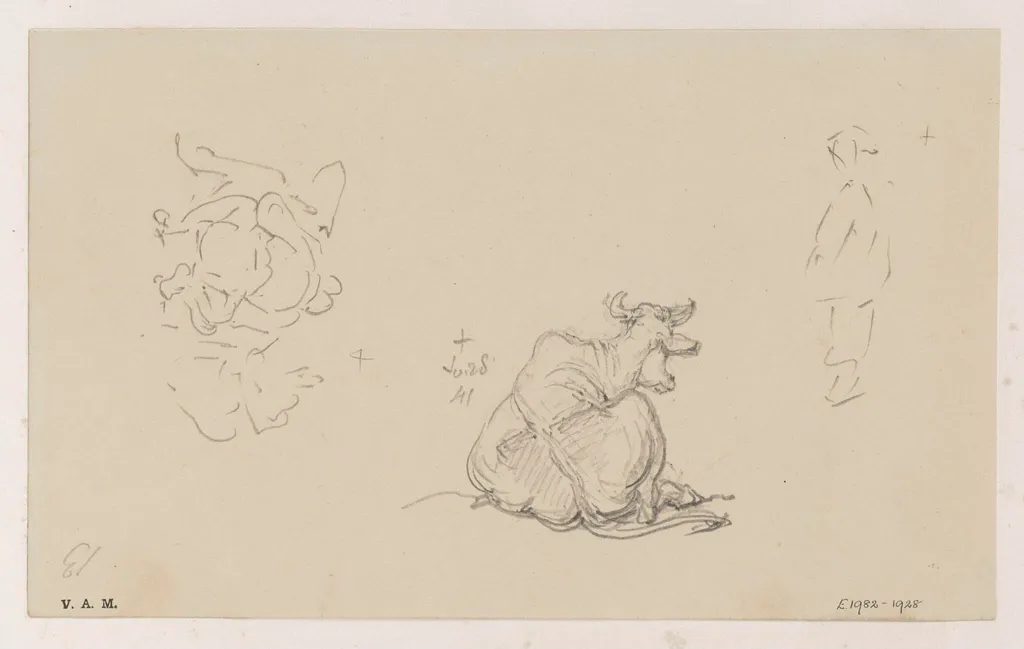
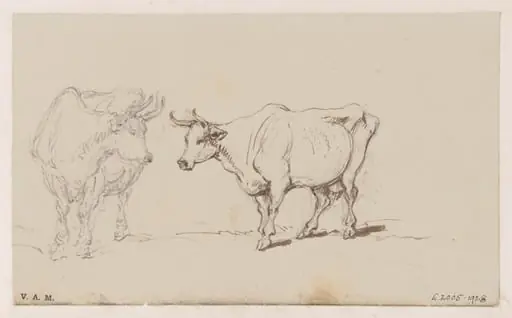
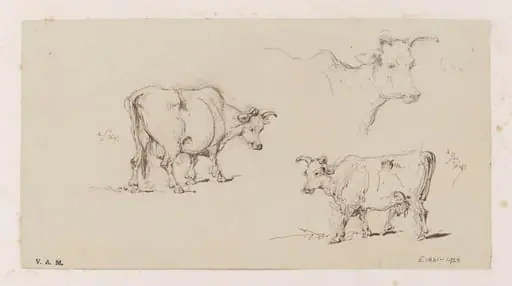
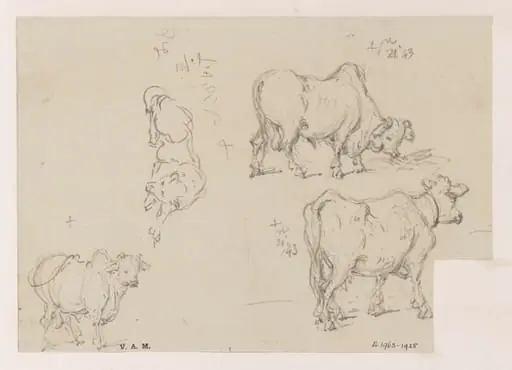
A cow seen from the rear is a drawing by the Romanticist artist George Chinnery. It dates from 18 and is held in the collection of the Victoria and Albert Museum.
About this work
Next time you’re in London, look for this exact sheet at the Victoria and Albert Museum.
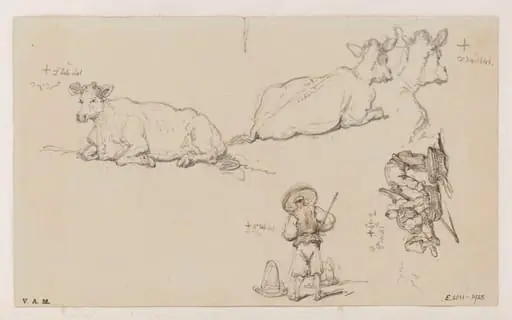
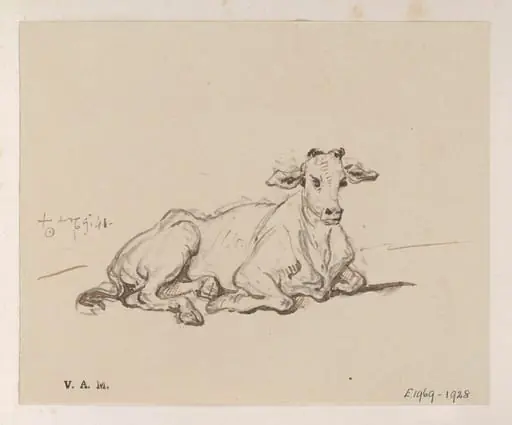
George Chinnery drew this in 1841. It’s a simple scene of a cow lying down with two quick figure sketches mixed in. The date is written right on the page.
This isn’t just a cow study—it’s a snapshot of a moment. The figures look like they were done fast, maybe on the side while he waited. The cow’s position feels calm, almost sleepy.
Next time you’re in London, look for this exact sheet at the Victoria and Albert Museum.
Overview
This 1841 drawing by George Chinnery depicts a single cow reclining on the ground, rendered with quiet precision. Two faint, hastily sketched figures appear beside it, their forms suggesting brief observational notes. The date is inscribed directly on the paper, anchoring the work to a specific moment in time. The composition lacks narrative ambition, instead capturing a quiet, unposed scene from daily life.
Subject & Meaning
The cow, positioned with relaxed limbs and lowered head, conveys stillness rather than utility. The accompanying figures, loosely drawn, imply the artist’s presence as a witness rather than a director. Together, they suggest a moment of pause—perhaps during travel or fieldwork—where observation took precedence over formal composition. The scene holds no symbolic weight, instead valuing the ordinary as worthy of record.
Technique & Style
Chinnery employed a restrained line quality, using minimal strokes to define the cow’s bulk and the figures’ outlines. The drawing’s economy of means reflects a spontaneous approach, with no shading or elaborate detail. The figures appear as afterthoughts, their hurried execution contrasting with the cow’s deliberate form. This interplay reveals a working method grounded in immediacy and direct observation.
History & Provenance
Created during Chinnery’s time in Asia, the drawing survives as part of a larger body of sketches made on the move. Its survival in the Victoria and Albert Museum’s collection reflects its value as a personal record rather than a finished work. The inscription of the date suggests the artist treated it as a dated note, not a curated piece, yet its preservation indicates its significance as a document of his visual habits.
Context
In 1841, Chinnery was based in Macau and frequently traveled across southern China, sketching landscapes and local life. This drawing aligns with his practice of recording fleeting moments—animals, people, architecture—with minimal intervention. Such sketches served as visual diaries, preserving impressions for later use in more developed works or simply as personal records of his surroundings.
Legacy
The drawing exemplifies Chinnery’s commitment to unembellished observation, a trait that distinguishes his work from more idealized European traditions. While not widely exhibited, it contributes to understanding how artists of the period engaged with the mundane. Its preservation underscores the growing recognition of sketchbooks as vital historical documents, not merely preparatory studies.
Artist & collection
Artist
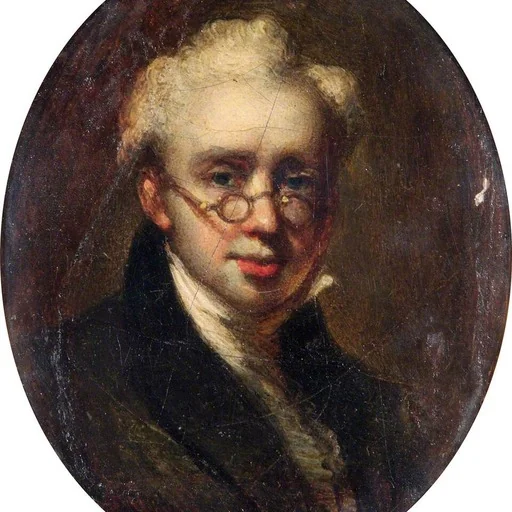
George Chinnery (Chinese: 錢納利; 5 January 1774 – 30 May 1852) was an English painter who spent most of his life in Asia, especially India and southern China.