Artwork
A group of Chinese men, and a Macanese woman
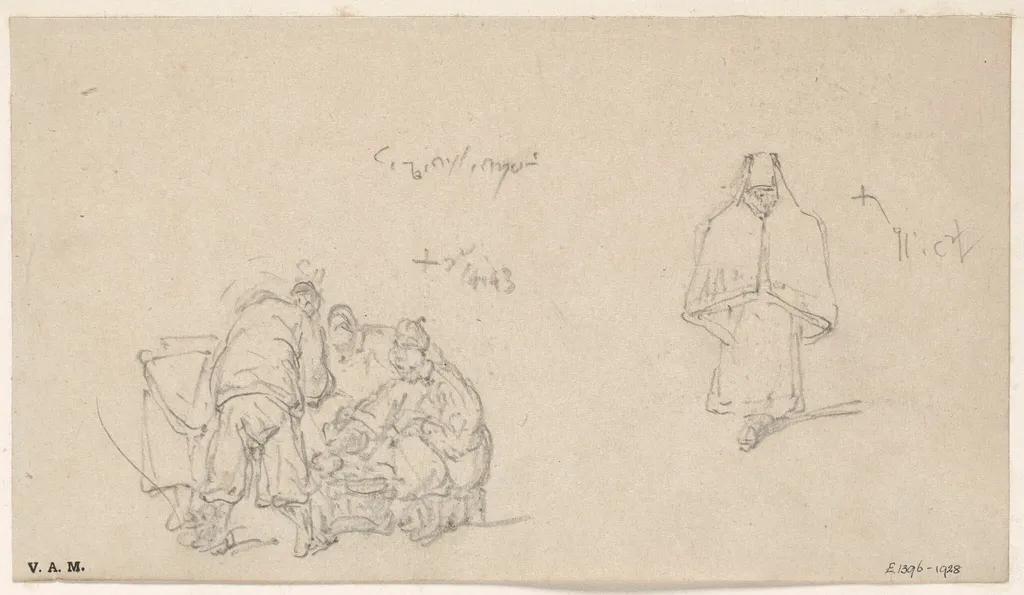
A group of Chinese men, and a Macanese woman is a drawing by the Romanticist artist George Chinnery. It dates from 8 and is held in the collection of the Victoria and Albert Museum.
About this work
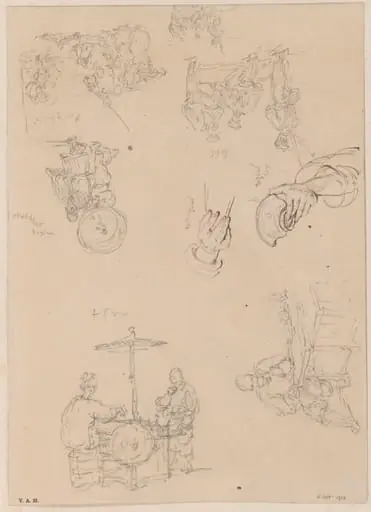
This drawing shows two quick sketches from 1843. On the left, Chinese men guess how many porcelain pieces are in a bowl. On the right, a Macanese woman wears a traditional mantle over her head.
Chinnery made these while living in Macau. He kept the lines loose, just enough to show mood, not detail.
Check out more works by George Chinnery.
Overview
Executed with loose, fluid lines, the work captures fleeting moments of daily life rather than polished detail, reflecting Chinnery’s observational approach.
This 1843 drawing by George Chinnery consists of two quick, side-by-side sketches made during his time in Macau. One depicts a group of Chinese men engaged in a guessing game involving porcelain, while the other portrays a Macanese woman adorned in a traditional head covering. Executed with loose, fluid lines, the work captures fleeting moments of daily life rather than polished detail, reflecting Chinnery’s observational approach.
Subject & Meaning
The left panel shows men gathered around a bowl, likely participating in a common pastime of estimating the number of porcelain items inside—a social activity reflecting local customs. The right panel presents a Macanese woman, her identity signaled by the distinctive mantle, emblematic of the region’s blended cultural heritage. Together, the sketches document everyday interactions in a multicultural port community.
Technique & Style
Chinnery employed rapid, expressive linework to convey movement and atmosphere without elaborate detail. The figures are suggested rather than rendered precisely, emphasizing gesture and posture over anatomical accuracy. This sketch-like quality reflects his practice of capturing transient scenes, prioritizing immediacy and mood over finish, consistent with his broader approach to observational drawing.
History & Provenance
Created during Chinnery’s residence in Macau in the early 1840s, the drawing originates from a period when he was actively documenting the people and customs of southern China. It likely formed part of a personal album or study collection, preserved as a record of his surroundings rather than for public display. Its survival offers insight into his private artistic process.
Context
In 1843, Macau was a Portuguese trading enclave with a significant Chinese population, serving as a cultural crossroads. Chinnery’s sketches reflect this hybrid environment, portraying both Han Chinese and Macanese subjects with equal attention. His work stands as a visual archive of a society in transition, shaped by trade, colonial presence, and local tradition.
Legacy
Chinnery’s drawings from this period remain among the most direct visual records of 19th-century southern China and Macau. While not widely exhibited in his lifetime, they later became valuable resources for historians studying regional life. His unembellished style influenced later artists seeking authenticity in ethnographic observation.
Artist & collection
Artist
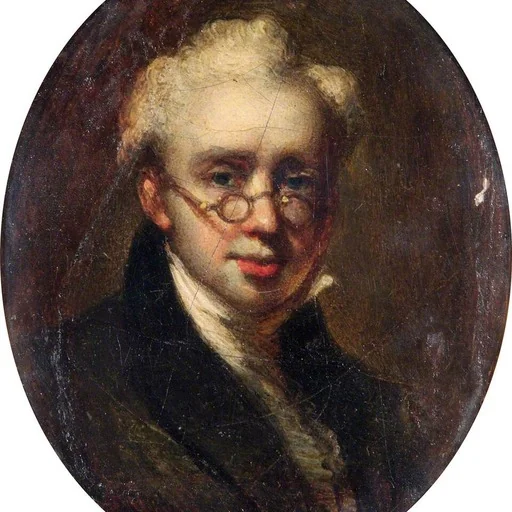
George Chinnery (Chinese: 錢納利; 5 January 1774 – 30 May 1852) was an English painter who spent most of his life in Asia, especially India and southern China.

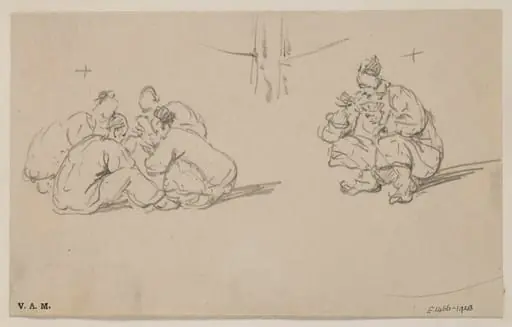 Seated Chinese men
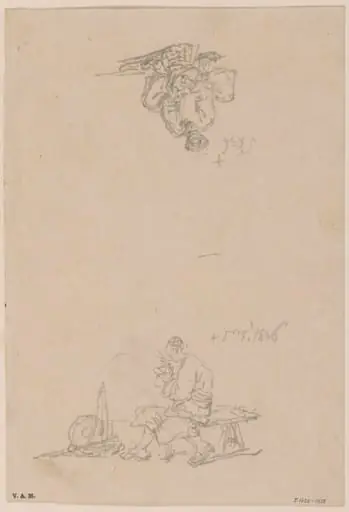 Two drawings of Chinese figures
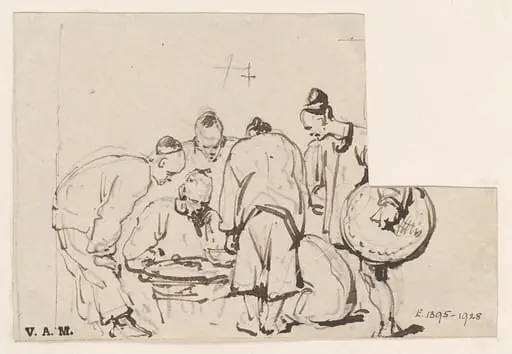 A group of six Chinese figures
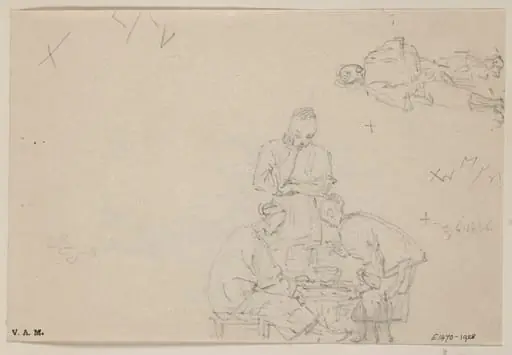 Chinese figures
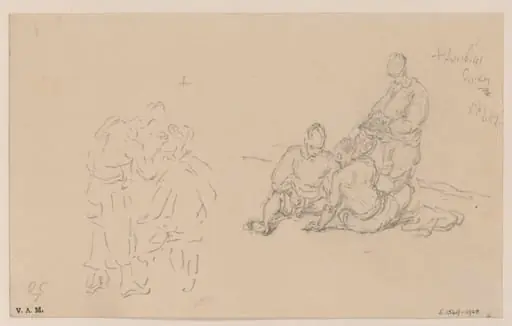 Two sketches of groups of Chinese figures
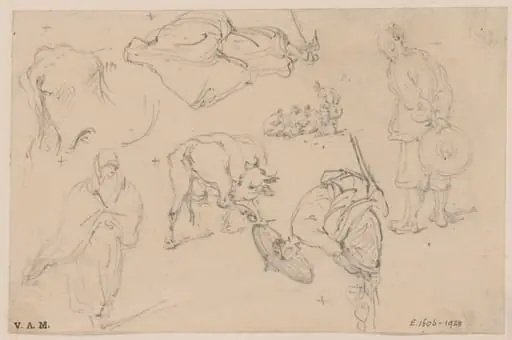 Chinese figures and cattle
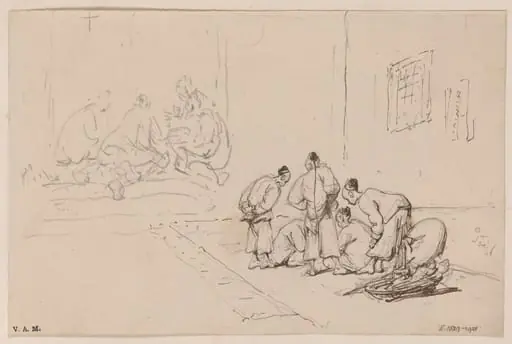 Two drawings of groups of Chinese figures
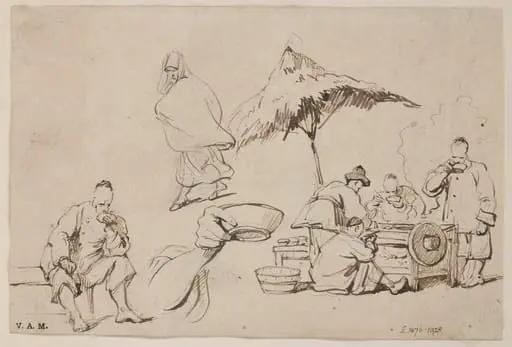 Chinese figures at a food stall
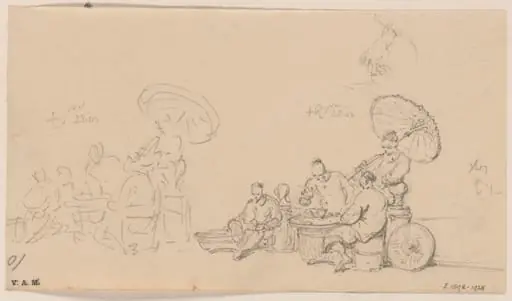 Chinese figures around a basket
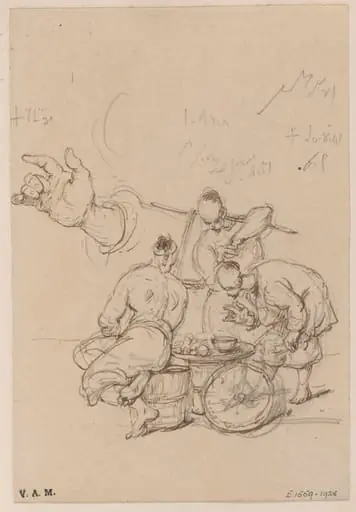 A group of three Chinese men, and a study of a hand
 Chinese figures, soldiers, and details of hands