Artwork
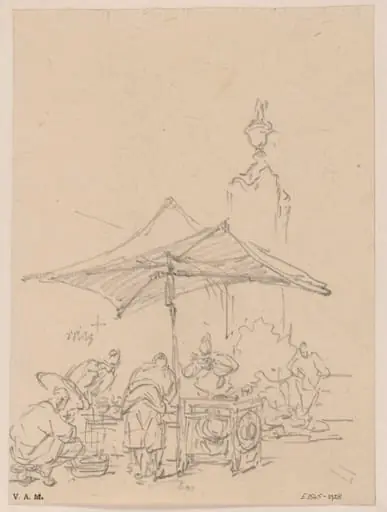
Chinese figures at a food stall
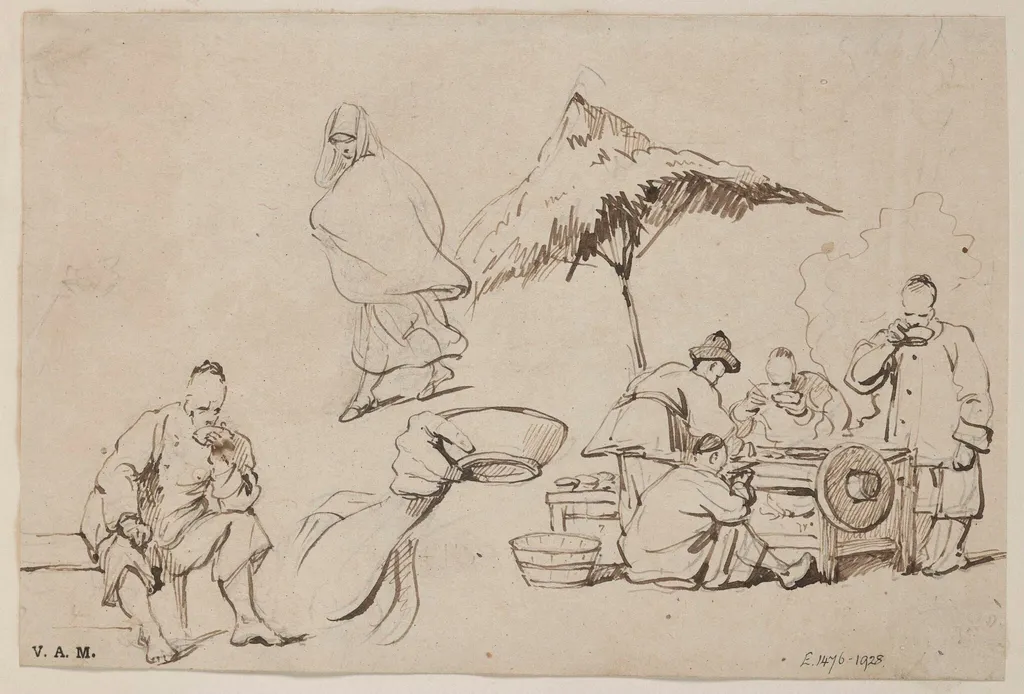
Chinese figures at a food stall is a drawing by the Romanticist artist George Chinnery. It dates from 19 and is held in the collection of the Victoria and Albert Museum. This drawing presents a scene of urban life in late nineteenth-century Macau, rendered in ink or pencil on paper.
About this work
Overview
This drawing presents a scene of urban life in late nineteenth-century Macau, rendered in ink or pencil on paper.
This drawing presents a scene of urban life in late nineteenth-century Macau, rendered in ink or pencil on paper. Four male figures occupy the foreground, engaged in conversation or eating at an open-air stall. Additional studies—a woman in Macanese dress, a seated man, and a disembodied arm holding a bowl—appear in the margins or on separate sheets, suggesting preparatory sketches for a larger composition.
Subject & Meaning
The central grouping depicts a moment of informal commerce, likely set in a market or street-side eatery. The figures’ postures and expressions convey casual interaction, while the marginal sketches isolate individual characters, emphasizing costume and gesture. Together, they document the social mixing of Chinese and Macanese communities under Portuguese colonial rule, capturing fleeting exchanges rather than formal portraiture.
Technique & Style
Executed with loose, confident lines, the drawing employs minimal shading to define form, relying on contour to convey volume. The marginal studies display a more schematic approach, reducing figures to essential outlines. This economy of means aligns with observational sketching practices of the period, where speed and accuracy served as tools for recording ethnographic detail before it was refined into finished works.
History & Provenance
The drawing’s origins lie within a European or Eurasian artistic circle active in Macau during the 1880s or 1890s. It entered a private collection in the early twentieth century, remaining largely undocumented until its acquisition by a public institution in the 2010s. No artist’s signature or inscription has been identified, leaving authorship uncertain but consistent with local workshop production.
Context
Macau’s status as a Portuguese trading post fostered a hybrid visual culture, blending European draftsmanship with Chinese subjects. Drawings of this kind often served as studies for paintings, prints, or illustrations intended for colonial audiences. The focus on everyday scenes reflects broader nineteenth-century interests in documenting foreign customs, though here the perspective remains observational rather than exoticizing.
Legacy
While not part of a major oeuvre, the drawing contributes to the sparse visual record of Macau’s multiethnic street life before extensive urban redevelopment. Its informality preserves details of dress, posture, and setting that formal portraits omit. As one of few surviving sketches from the period, it offers insight into the working methods of artists operating at the margins of colonial art institutions.
Artist & collection
Artist
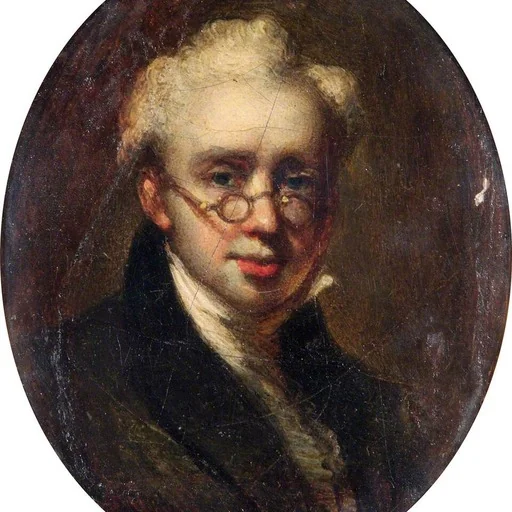
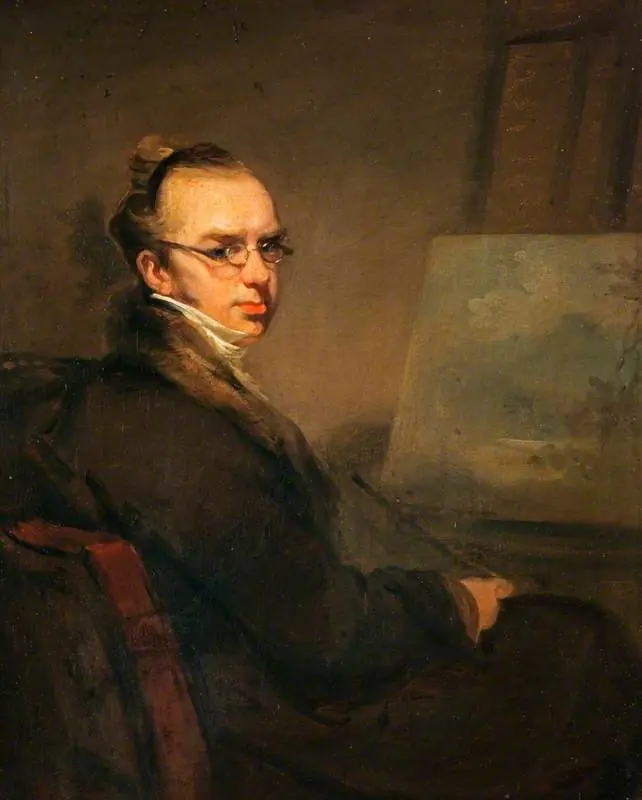
George Chinnery (Chinese: 錢納利; 5 January 1774 – 30 May 1852) was an English painter who spent most of his life in Asia, especially India and southern China.

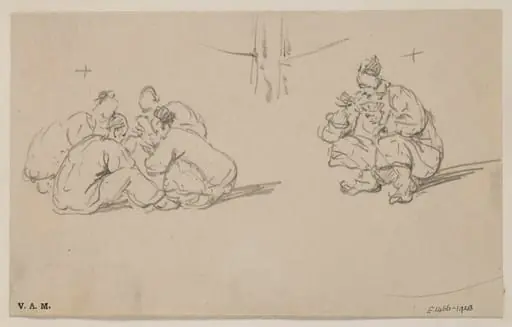 Seated Chinese men
 Chinese figures at a food stall
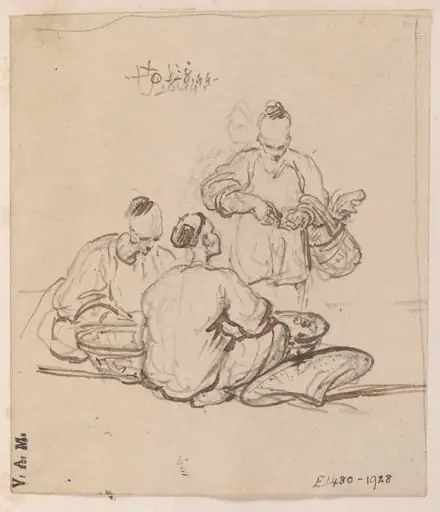 Three Chinese men with baskets
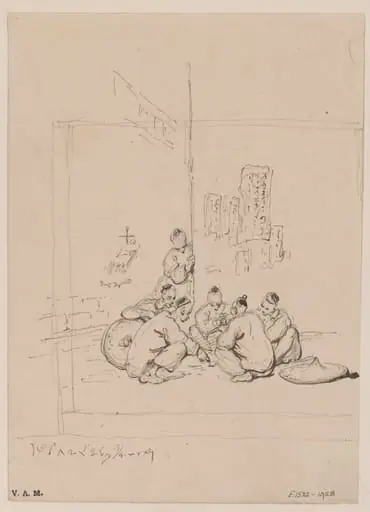 A group of Chinese figures at a street corner
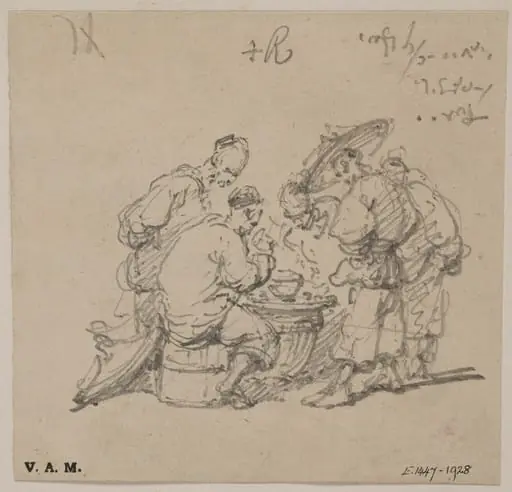 A group of Chinese figures
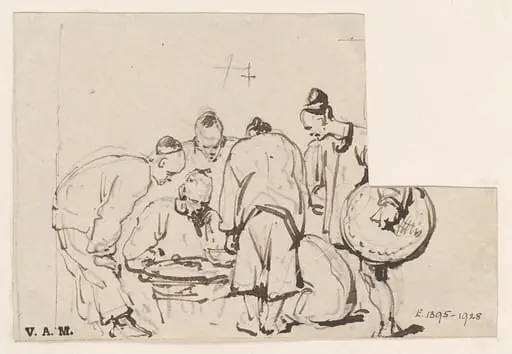 A group of six Chinese figures
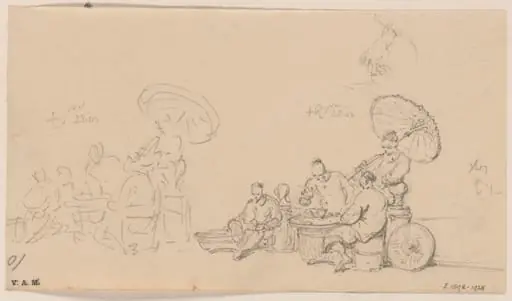 Chinese figures around a basket
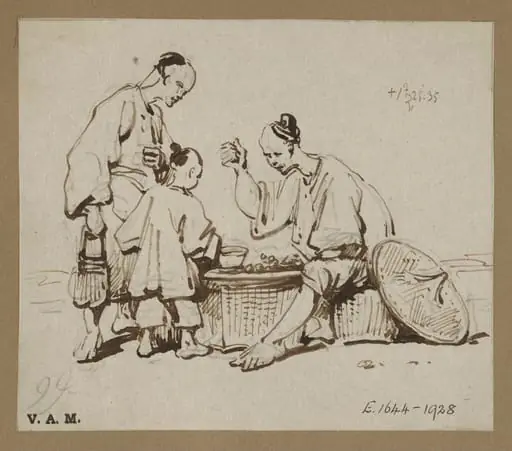 Three Chinese figures
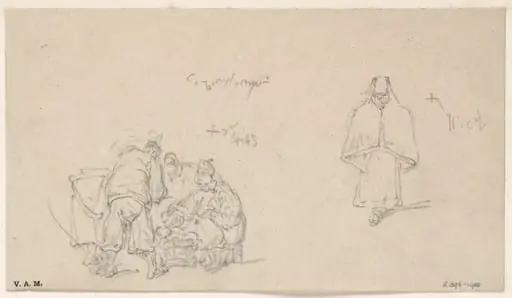 A group of Chinese men, and a Macanese woman
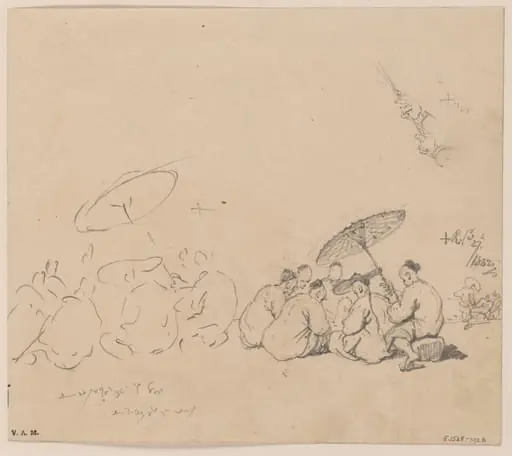 Two drawings of a group of Chinese figures
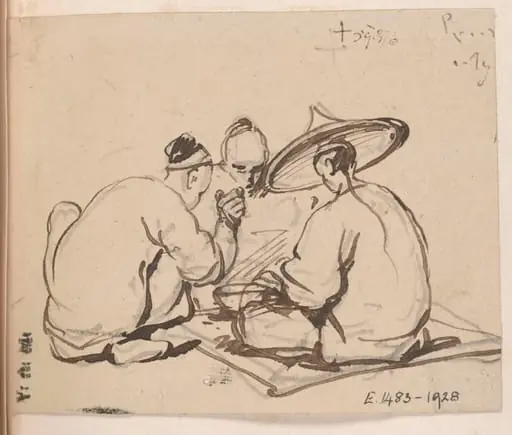 Three seated Chinese men
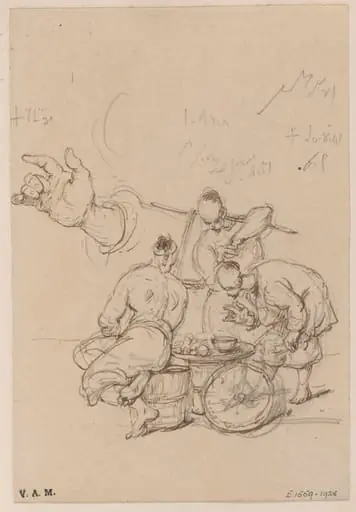 A group of three Chinese men, and a study of a hand