Artwork
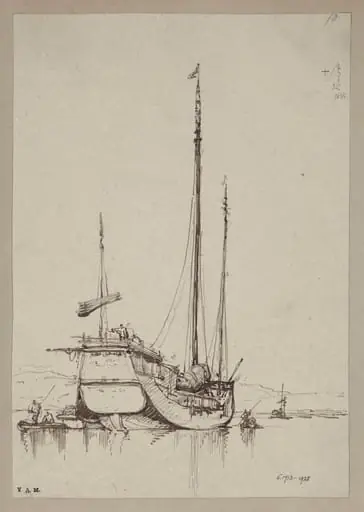
A junk with flag aloft and pennants along the stern
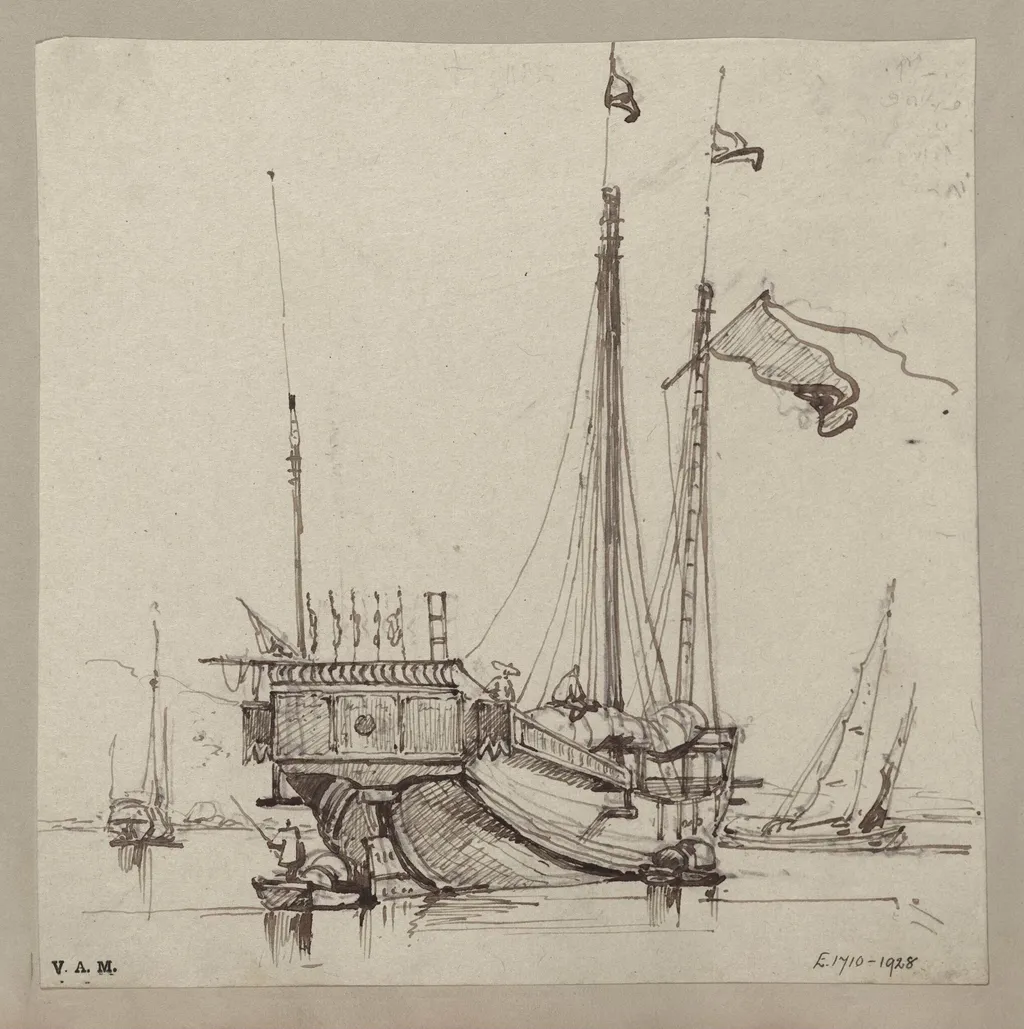
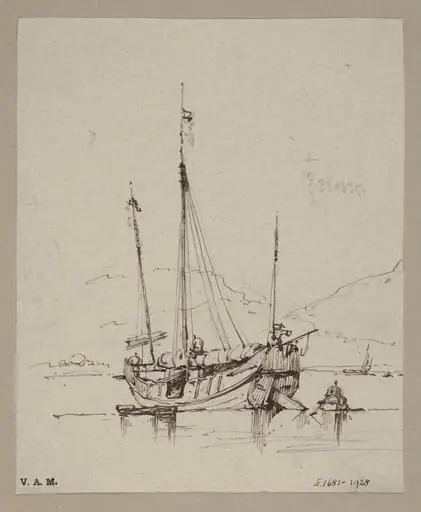
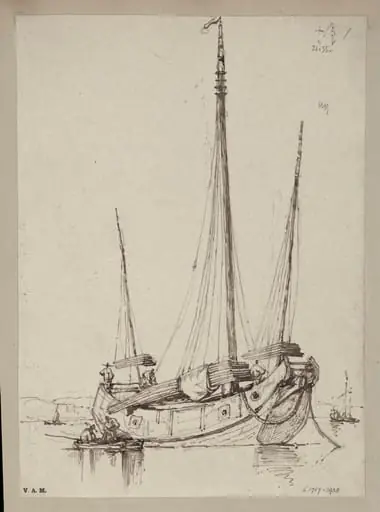
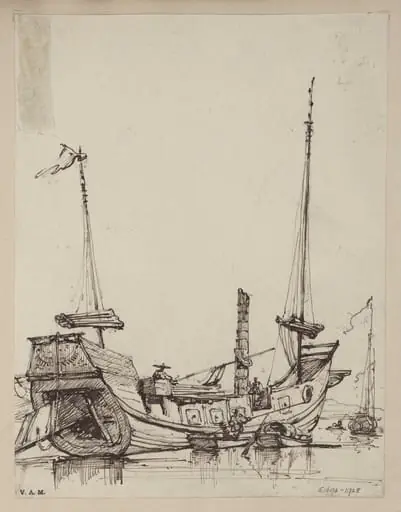
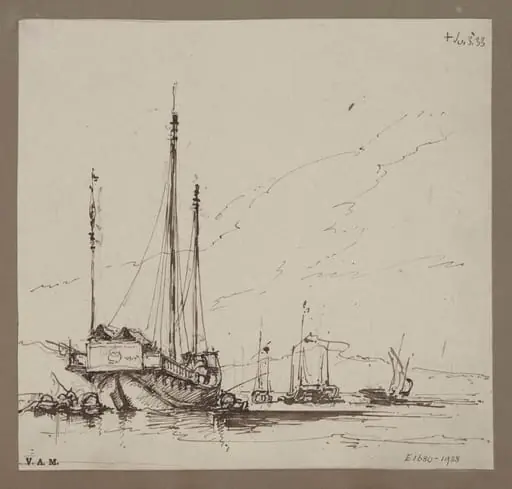
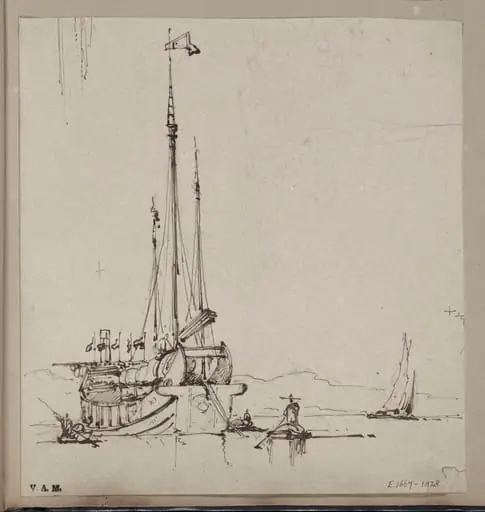
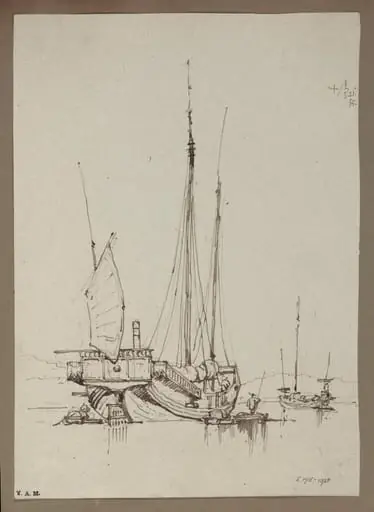
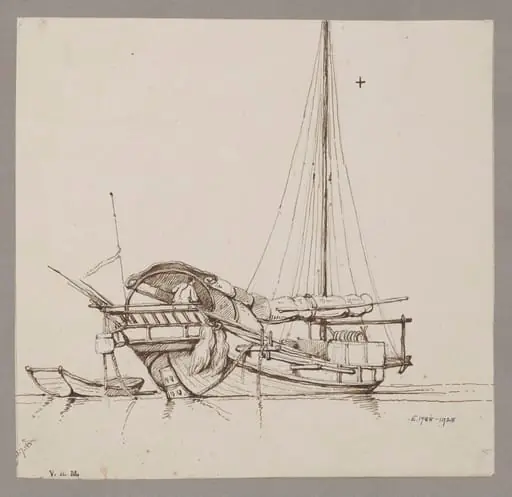
A junk with flag aloft and pennants along the stern is a drawing by the Romanticist artist George Chinnery. It dates from 1834 and is held in the collection of the Victoria and Albert Museum. This ink drawing, created in the 1830s, depicts a Chinese junk viewed from its stern and slightly to the right.
About this work
Overview
This ink drawing, created in the 1830s, depicts a Chinese junk viewed from its stern and slightly to the right. The sails are lowered, and a line of small flags, or pennants, runs along the rear rail. Nearby, several smaller vessels are clustered, suggesting a busy harbor or anchorage. The work is one of many observational sketches made by George Chinnery during his time in southern China.
Subject & Meaning
The subject is a working junk, a traditional Chinese sailing vessel, shown in a moment of rest rather than motion.
The subject is a working junk, a traditional Chinese sailing vessel, shown in a moment of rest rather than motion. The presence of pennants may indicate ownership, status, or regional affiliation. The surrounding smaller boats imply a functioning waterborne economy, possibly a port or riverside settlement. The drawing captures daily maritime life without romanticization or narrative embellishment.
Technique & Style
Executed in ink, the drawing employs precise, controlled lines to define the hull, rigging, and flags. Shading is minimal, relying on line weight and spacing to suggest form and texture. The composition is observational, with careful attention to architectural detail of the vessel and the arrangement of adjacent boats. The perspective is grounded, avoiding dramatic angles in favor of documentary clarity.
History & Provenance
The drawing originates from George Chinnery’s extensive sketching trips along the southern Chinese coast during the 1820s and 1830s. As a British artist resident in Macau and Guangzhou, he produced hundreds of such studies of local life. This piece likely formed part of a personal archive, later dispersed through family or institutional acquisition. It is now held in the collection of the Victoria and Albert Museum.
Context
Chinnery worked during a period of increasing foreign presence in southern China, before the Opium Wars reshaped trade and diplomacy. His drawings document a world of indigenous maritime activity largely untouched by Western influence at the time. These works serve as rare visual records of Chinese vessel design and harbor life, made by a foreign observer with sustained, firsthand access.
Legacy
Chinnery’s sketches, including this one, remain valuable for their unembellished record of 19th-century Chinese maritime culture. They offer insight into vessel construction, port activity, and daily routines often absent from official records. Though not widely exhibited during his lifetime, his drawings now contribute to scholarly understanding of cross-cultural visual documentation in early colonial-era Asia.
Artist & collection
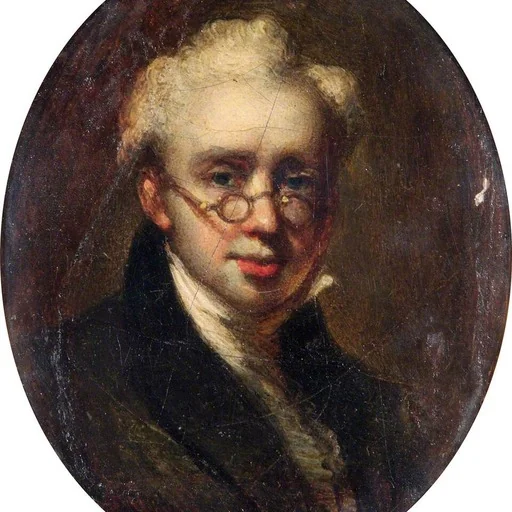
Artist
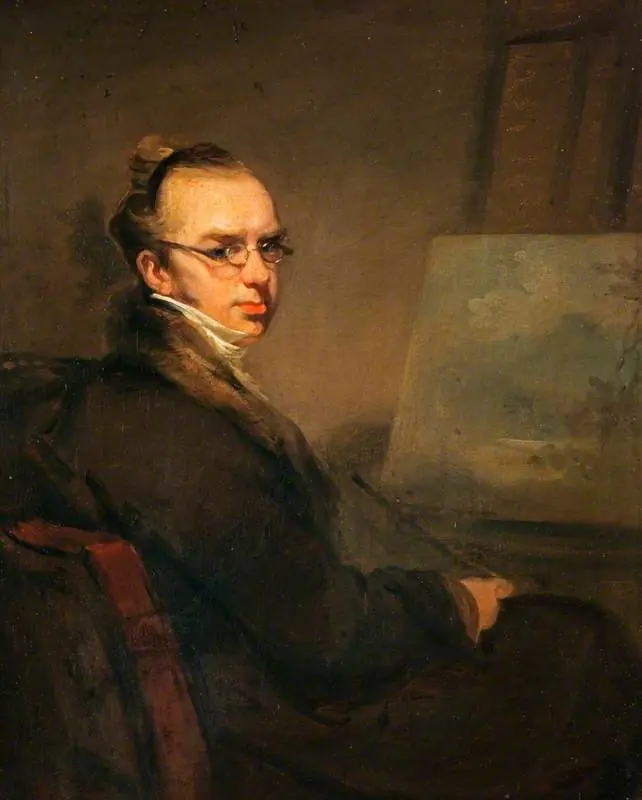
George Chinnery (Chinese: 錢納利; 5 January 1774 – 30 May 1852) was an English painter who spent most of his life in Asia, especially India and southern China.