Artwork
A junk hauling planks aboard
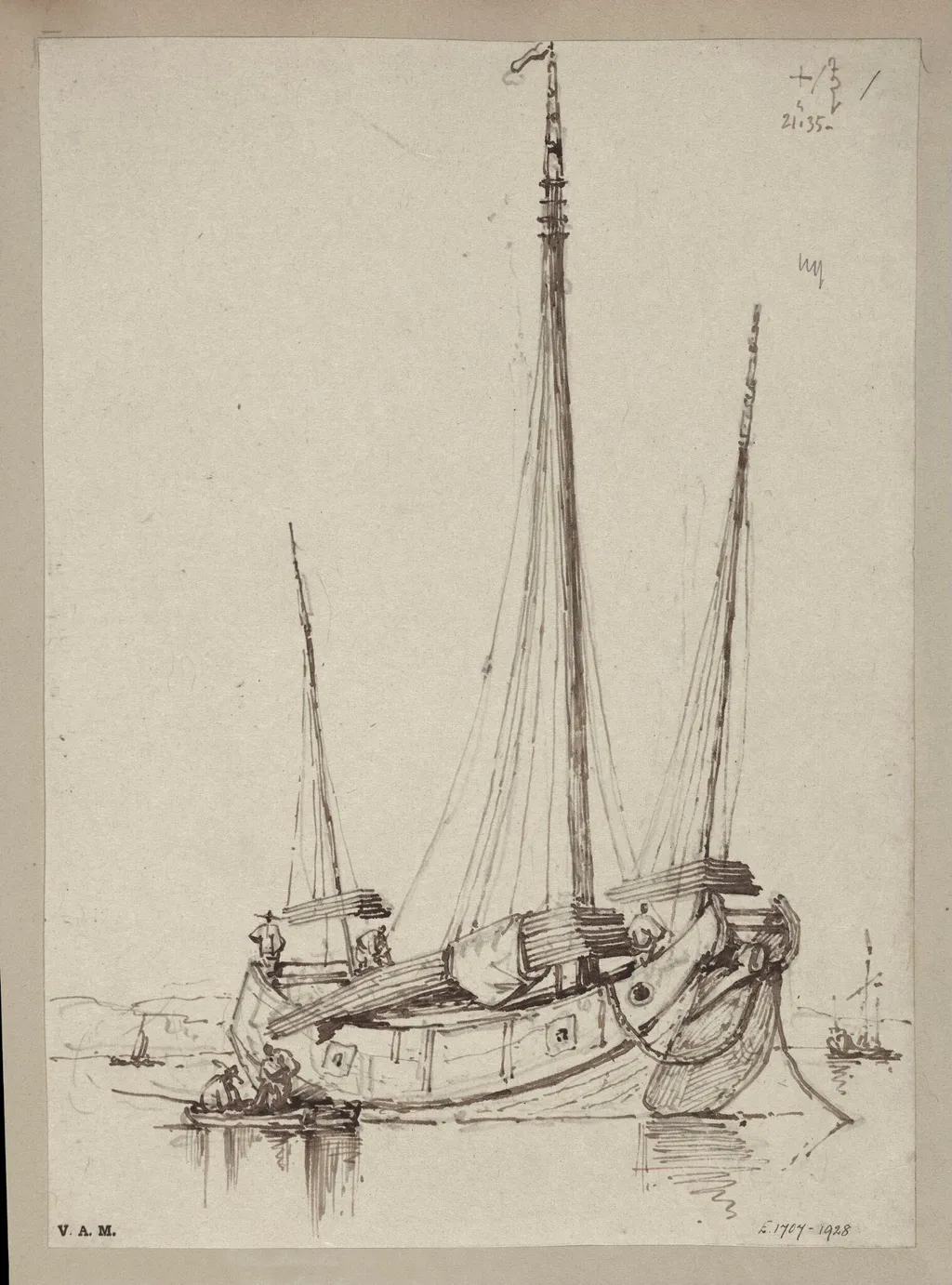
A junk hauling planks aboard is a drawing by the Romanticist artist George Chinnery. It dates from 15 and is held in the collection of the Victoria and Albert Museum.
About this work
George Chinnery drew this scene in 1835. A junk boat floats still at anchor. A bundle of planks dangles over the side, tied tight with sailcloth.
The trick here is how the bundle hangs. It looks heavy but balanced, like the crew just stowed it. You can almost feel the wood and cloth in your hands.
Look up the artist George Chinnery next.
Overview
The scene is rendered with quiet precision, focusing on the interaction between man-made objects and the vessel’s structure without narrative flourish.
This 1835 drawing by George Chinnery captures a Chinese junk at rest, its hull anchored in calm waters. A large bundle of planks, bound in folded sailcloth, extends over the vessel’s side, suspended in a posture that suggests recent placement rather than haphazard storage. The scene is rendered with quiet precision, focusing on the interaction between man-made objects and the vessel’s structure without narrative flourish.
Subject & Meaning
The drawing depicts a routine maritime moment: the loading or unloading of timber aboard a traditional junk. The planks, secured with sailcloth, imply practical resourcefulness—common in regional trade. There is no indication of ceremony or conflict; the image values observation over symbolism, reflecting the daily rhythms of coastal labor in early 19th-century southern China.
Technique & Style
Chinnery employs fine ink lines and subtle washes to define form and texture. The planks are suggested through parallel strokes, while the sailcloth binding is rendered with soft, irregular folds that convey weight and tension. The vessel’s hull is outlined with economical precision, avoiding ornamentation. The composition centers on balance and stillness, emphasizing the quiet dignity of labor.
History & Provenance
Created during Chinnery’s time in Macau and Guangzhou, the drawing stems from his extensive sketching of local maritime life between 1825 and 1852. Likely made on-site, it belongs to a body of work documenting Chinese vessels and port activities for European audiences. The drawing remained in private collections until entering institutional holdings in the 20th century.
Context
In the 1830s, foreign traders and artists in southern China documented local shipping as Western interest in the region grew. Chinnery’s drawings served as visual records of a world unfamiliar to Europe. This piece reflects the practical realities of junk construction and cargo handling, contrasting with idealized Orientalist depictions common at the time.
Legacy
Chinnery’s drawings, including this one, remain valuable for their unembellished observation of Chinese maritime culture. They offer insight into pre-colonial trade practices and vessel design, preserved through the lens of a foreign artist who prioritized accuracy over romanticism. The work contributes to broader scholarly understanding of 19th-century Sino-Western visual exchange.
Artist & collection

Artist
George Chinnery (Chinese: 錢納利; 5 January 1774 – 30 May 1852) was an English painter who spent most of his life in Asia, especially India and southern China.






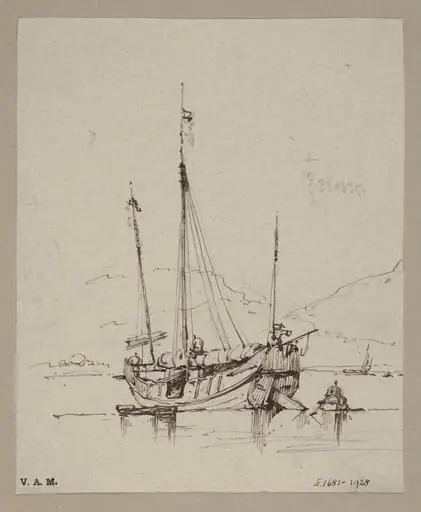 A Chinese junk with sail furled
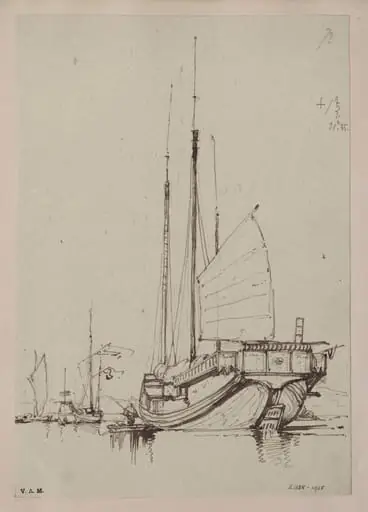 A Chinese junk with a sail partially raised
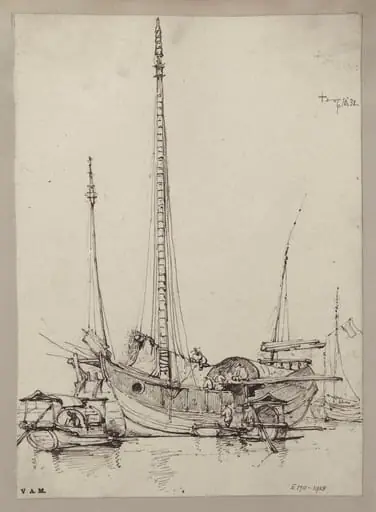 A junk with figures at work on board
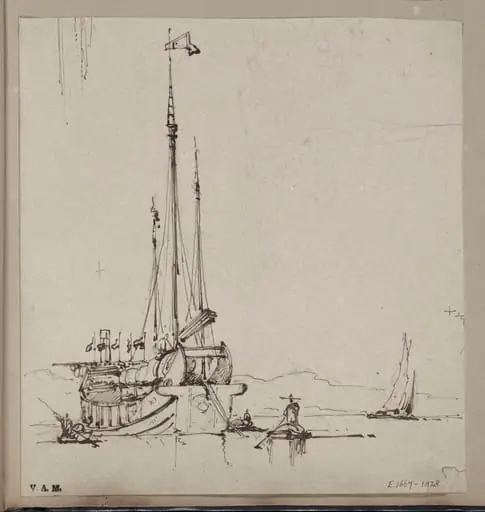 A junk with smaller craft
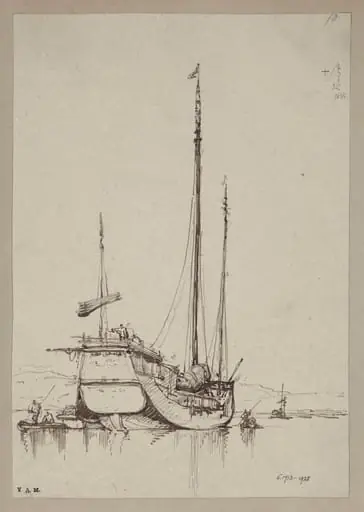 A junk with smaller craft alongside
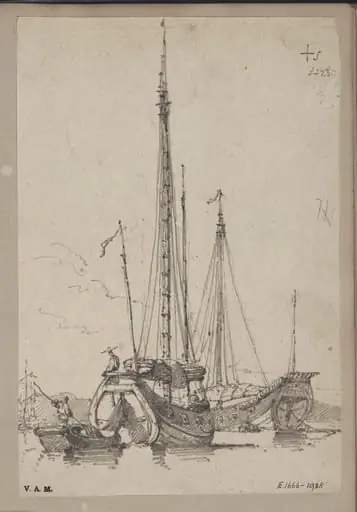 Two junks and a Tanka boat
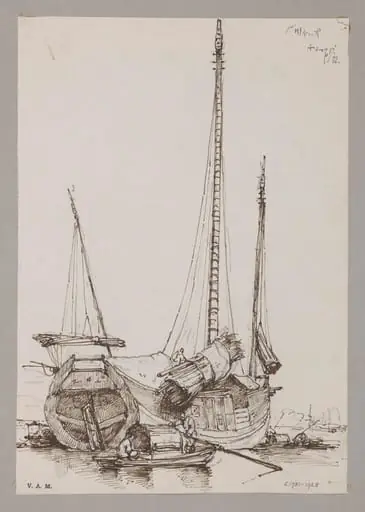 A Chinese junk with timbers being hauled aboard
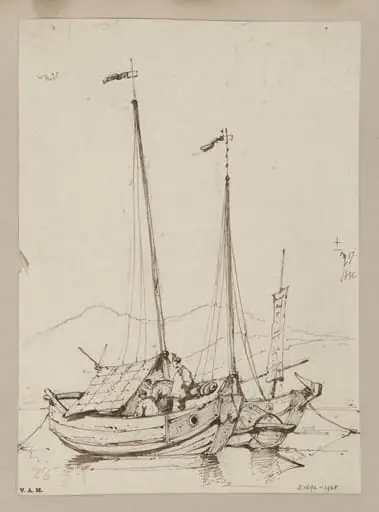 Two small junks at anchor, Macau
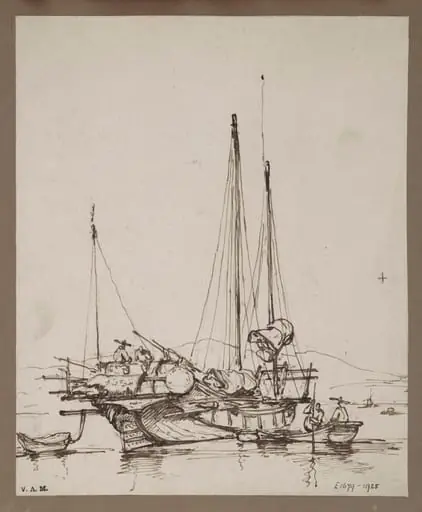 A drawing by George Chinnery of aA Chinese junk, with figures aboard and small craft alongside
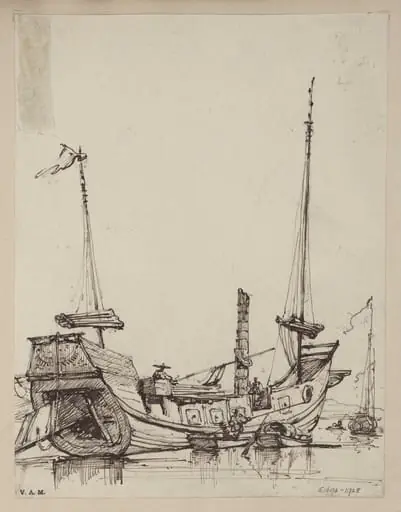 A junk undergoing repairs
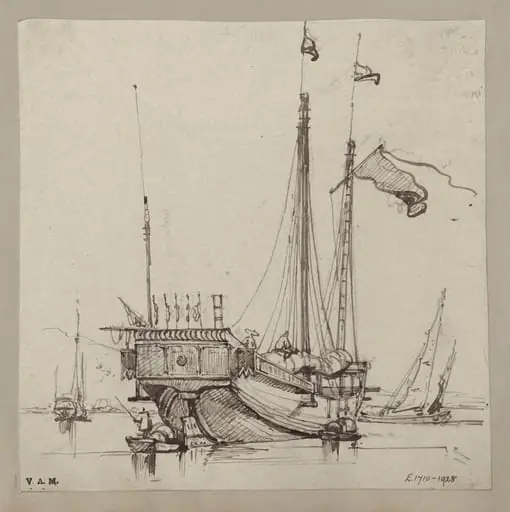 A junk with flag aloft and pennants along the stern
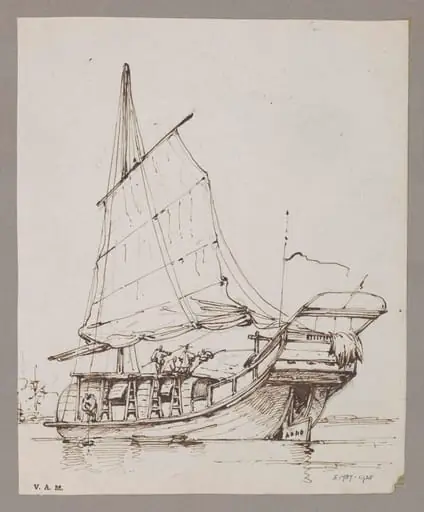 A Chinese junk with sail set