Artwork
A path leading uphill between houses and a long wall
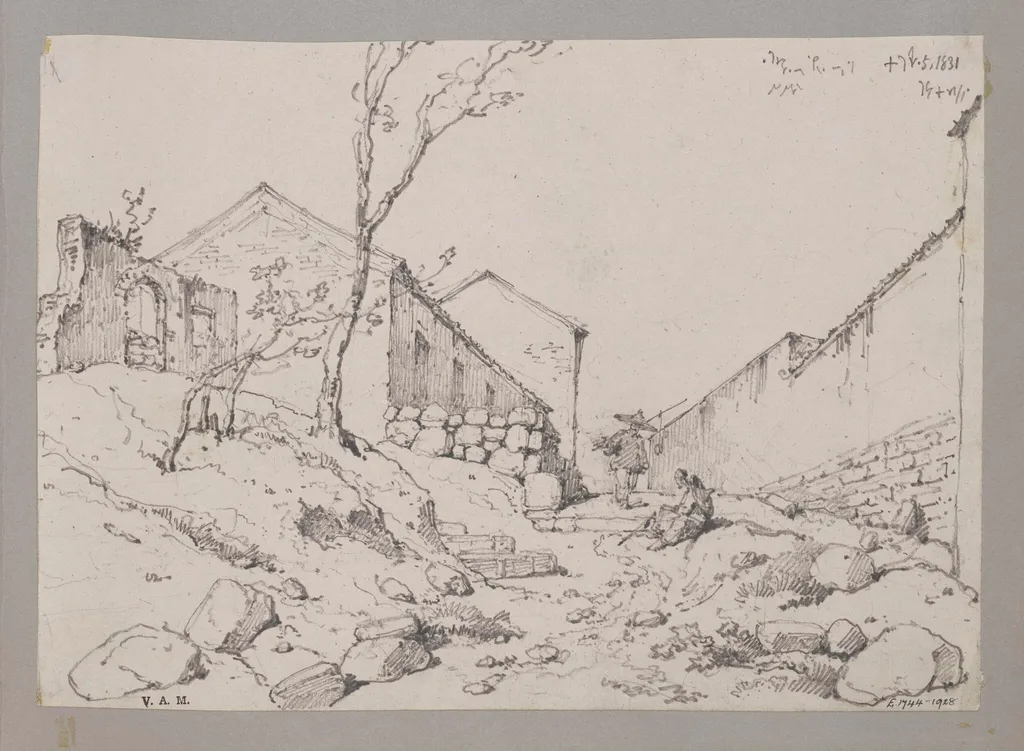
A path leading uphill between houses and a long wall is a drawing by the Romanticist artist George Chinnery. It dates from 4 and is held in the collection of the Victoria and Albert Museum.
About this work
George Chinnery drew a path climbing beside a long wall in this 1831 work. The scene follows a path up a hill, next to a wall that may link Fort Bomparto to Penha Hill.
This drawing shows Macau in the early 1800s. Chinnery spent years there, sketching daily life and scenery.
Look up the museum that holds this drawing: Victoria and Albert Museum.
Overview
The composition captures a quiet stretch of the landscape, emphasizing the linear relationship between the road and the barrier that runs parallel to it.
George Chinnery’s 1831 drawing depicts a narrow path winding uphill beside an extended wall in Macau. The composition captures a quiet stretch of the landscape, emphasizing the linear relationship between the road and the barrier that runs parallel to it. The work is executed in fine pen and ink, offering a clear, measured view of the terrain as it would have appeared in the early nineteenth century.
Subject & Meaning
The scene portrays a utilitarian route ascending a hill, flanked by a wall that likely served as a connective structure between Fort Bomparto and the summit of Penha Hill. By focusing on this ordinary passage, Chinnery highlights the interplay of built and natural elements in a colonial outpost, suggesting the everyday movements that shaped local life.
Technique & Style
Rendered with precise line work, the drawing employs delicate hatching to convey texture and depth, distinguishing the stone wall from the surrounding foliage and earth. Chinnery’s approach reflects his training in British topographical drawing, yet his attention to atmospheric detail reveals an observational sensitivity to the subtleties of the Macau environment.
History & Provenance
Created during Chinnery’s long residence in Macau, the drawing remained in private collections before being acquired by the Victoria and Albert Museum in London. The museum’s catalogue lists it as part of its Asian drawing holdings, where it serves as a documented example of early colonial-era visual records.
Context
In the early 1800s Macau functioned as a Portuguese trading hub, with fortifications such as Bomparto protecting the settlement. The wall illustrated in the drawing would have facilitated movement between the fort and the hill’s strategic high point, reflecting the military and infrastructural concerns of the period.
Artist & collection
Artist
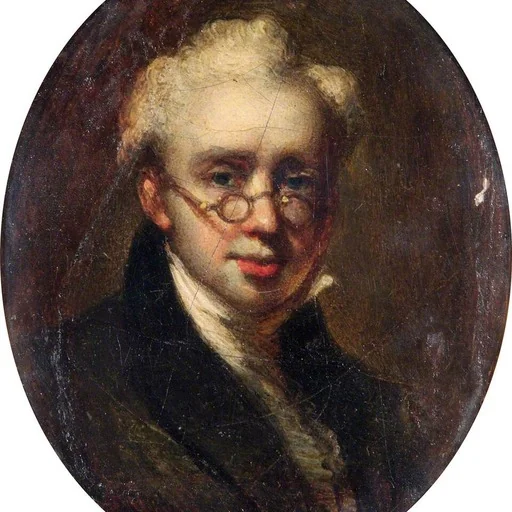
George Chinnery (Chinese: 錢納利; 5 January 1774 – 30 May 1852) was an English painter who spent most of his life in Asia, especially India and southern China.

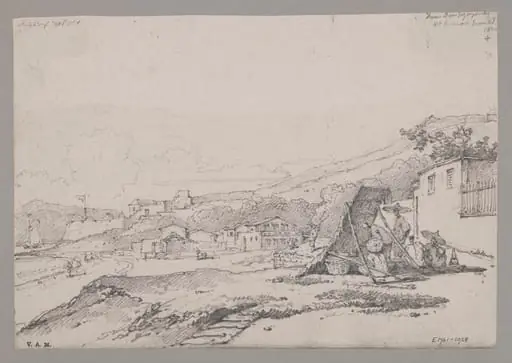 Corner of Macao Bay, looking west
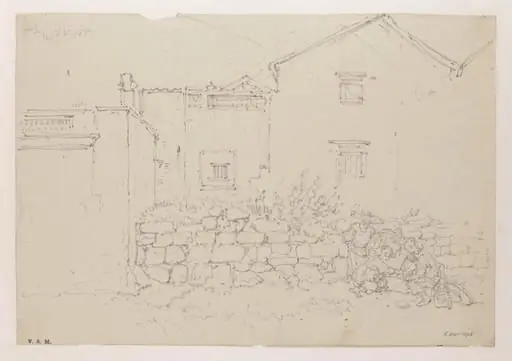 Figures by a stone wall with houses behind, Macau
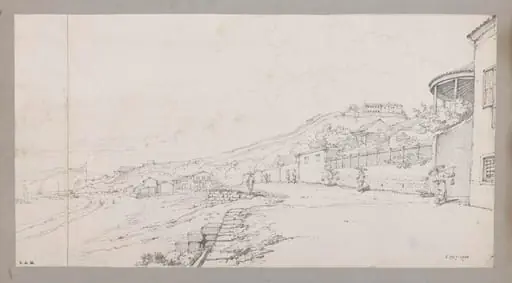 Part of Macao Bay, looking west
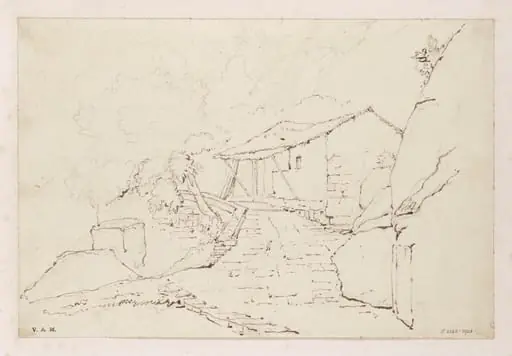 A small building on a rocky hillside, Macau
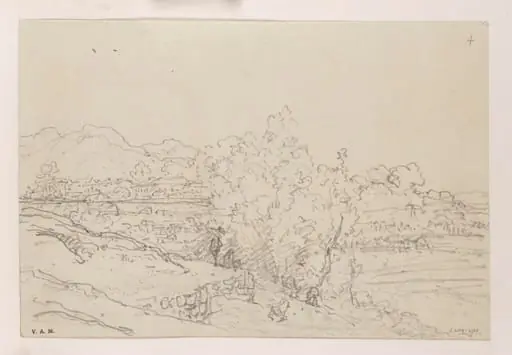 Fields and trees, with the city of Macau in the distance
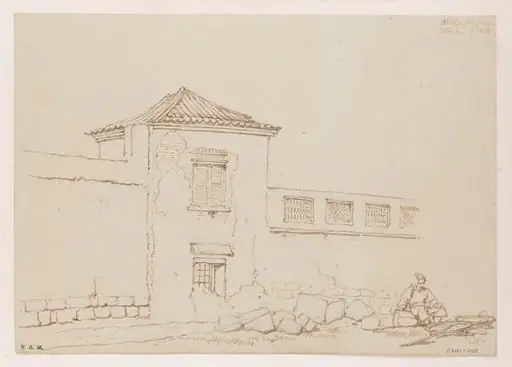 A building in Macau
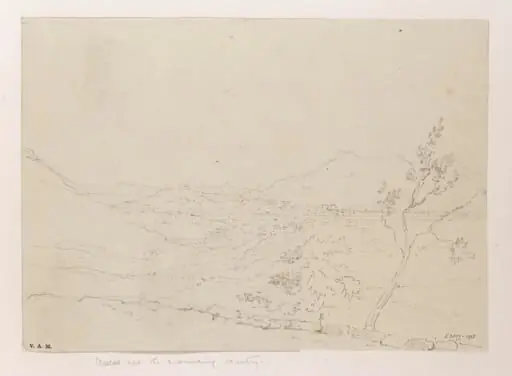 Macau, looking south-west along the peninsula
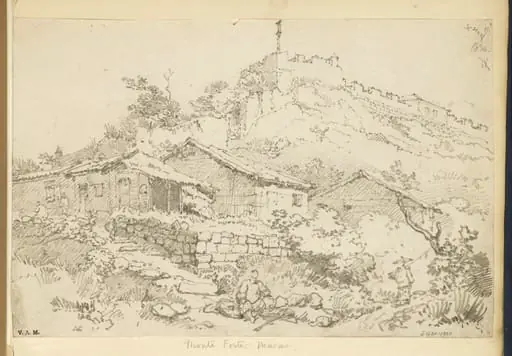 Monte Fort, Macau
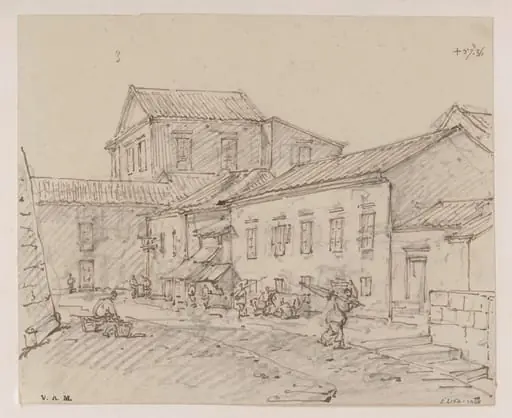 A street in Macau