Artwork
Monte Fort, Macau
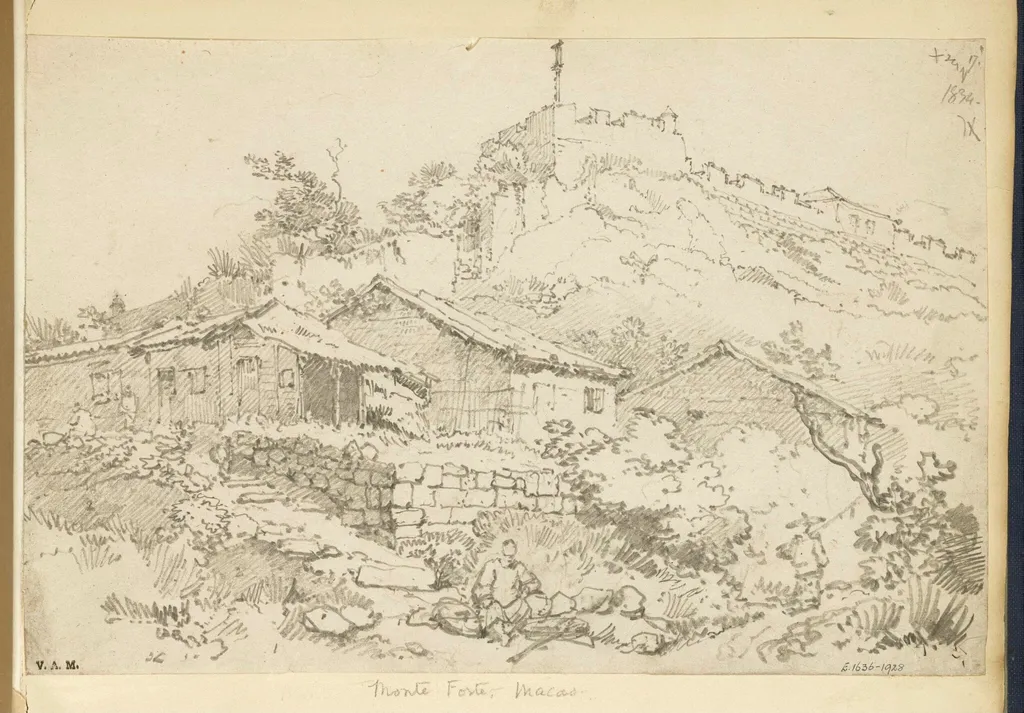
Monte Fort, Macau is a drawing by the Romanticist artist George Chinnery. It dates from 14 and is held in the collection of the Victoria and Albert Museum.
About this work
George Chinnery drew Monte Fort, Macau in 1834 on paper. It’s a Romanticism work held at the Victoria and Albert Museum. The scene shows the fort on its hill with village houses down below.
This drawing comes from a British artist who lived in Macau for years. Chinnery often sketched the area’s landscapes and people.
Search for another George Chinnery drawing next.
Overview
George Chinnery created this pencil drawing in 1834 during his time in Macau, capturing the elevated position of Monte Fort against the surrounding settlement.
George Chinnery created this pencil drawing in 1834 during his time in Macau, capturing the elevated position of Monte Fort against the surrounding settlement. Executed on paper, the work belongs to a series of observational sketches made by the British artist while living in southern China. It is now held in the collection of the Victoria and Albert Museum, reflecting his sustained engagement with the region’s topography.
Subject & Meaning
The drawing presents Monte Fort as a dominant architectural presence rising above a cluster of low-lying village dwellings. The composition emphasizes the fort’s strategic perch and its contrast with the humble human settlement below, suggesting a quiet tension between colonial authority and local life. No figures are depicted, allowing the landscape itself to convey presence and scale.
Technique & Style
Chinnery employed fine linear pencil strokes to define form and shadow, with subtle tonal gradations suggesting atmospheric depth. The loose, fluid handling aligns with Romantic-era landscape traditions, prioritizing mood over precision. His technique reflects direct observation, capturing the hillside’s natural contours and the irregularity of vernacular architecture with immediacy.
History & Provenance
The drawing was made during Chinnery’s extended residence in Macau, where he lived from the 1820s until his death in 1852. It likely originated as a personal study, later preserved within his archive. Acquired by the Victoria and Albert Museum, it remains part of a larger body of works documenting British presence and local life in 19th-century southern China.
Context
Chinnery’s drawings of Macau emerged during a period of increasing British commercial and diplomatic activity in the region. While not overtly political, his sketches quietly record the physical and social landscape shaped by colonial trade networks. His focus on everyday scenes, rather than grand ceremonies, offers a grounded perspective on life in a multicultural port.
Legacy
Chinnery’s Macau drawings are valued for their unembellished documentation of a transitional era. They provide visual evidence of urban and architectural conditions before major 20th-century transformations. As one of the few Western artists to live extensively in the region, his work remains a key resource for understanding the visual culture of colonial-era southern China.
Artist & collection
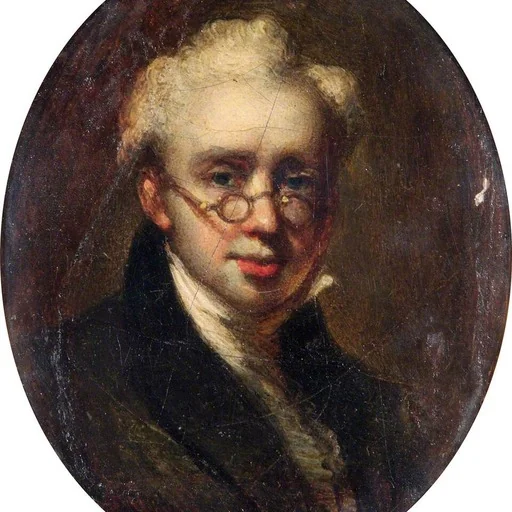
Artist
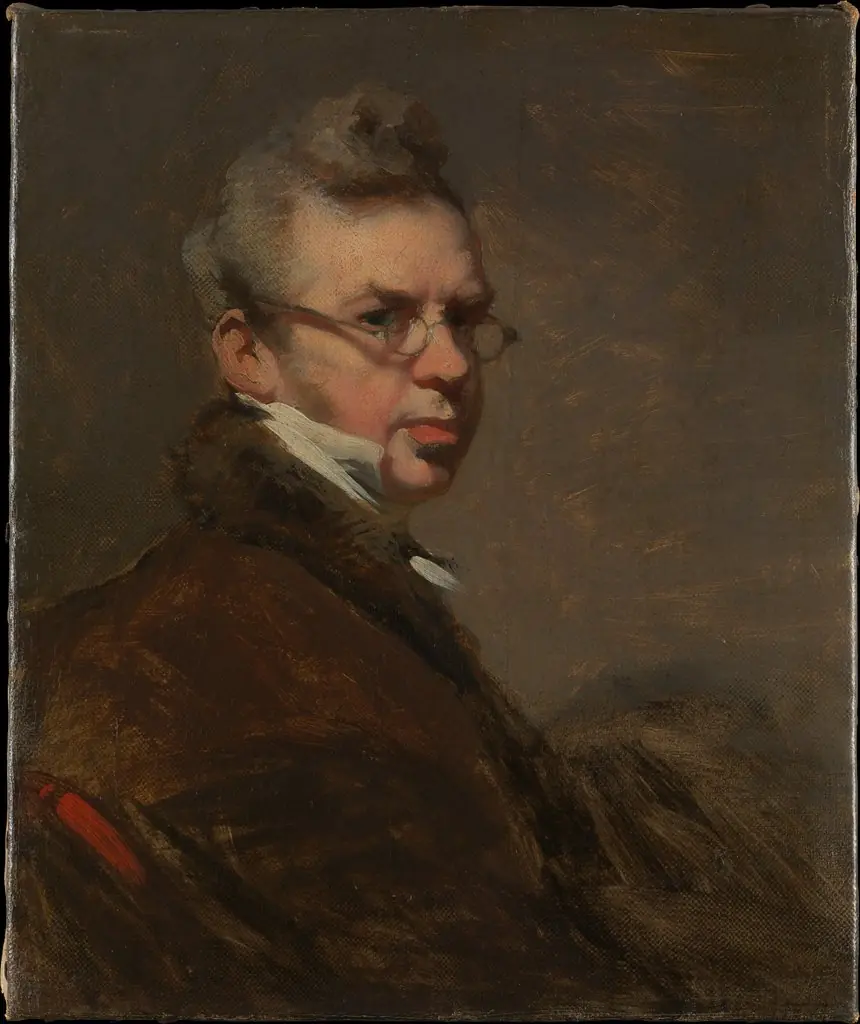
George Chinnery (Chinese: 錢納利; 5 January 1774 – 30 May 1852) was an English painter who spent most of his life in Asia, especially India and southern China.

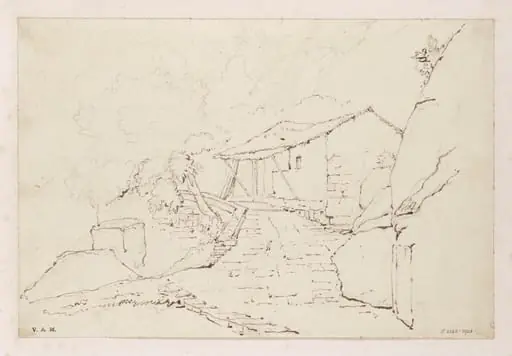 A small building on a rocky hillside, Macau
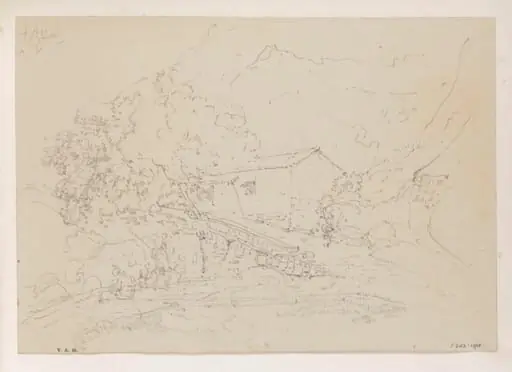 A small building and trees on a hillside, Macau
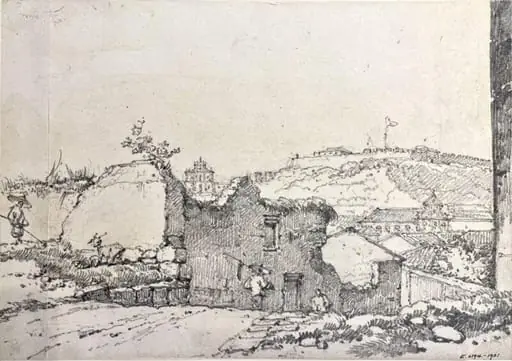 Ruinous buildings, Macau, with distant views of the façade of S. Paulo, Monte Fort and S. Domingos Church
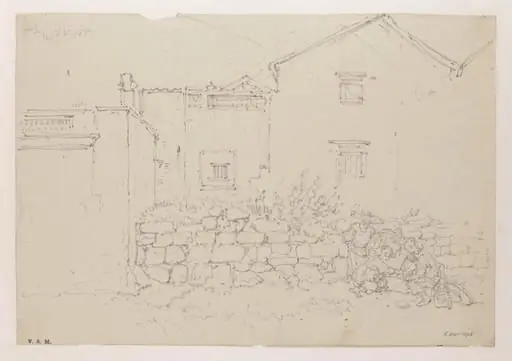 Figures by a stone wall with houses behind, Macau
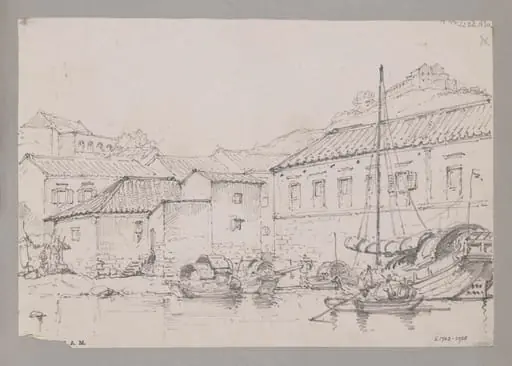 Waterside houses below Penha Hill, Macau
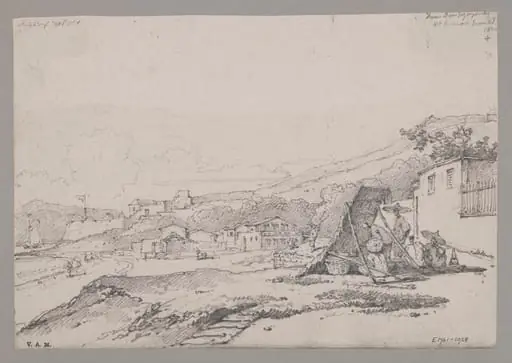 Corner of Macao Bay, looking west
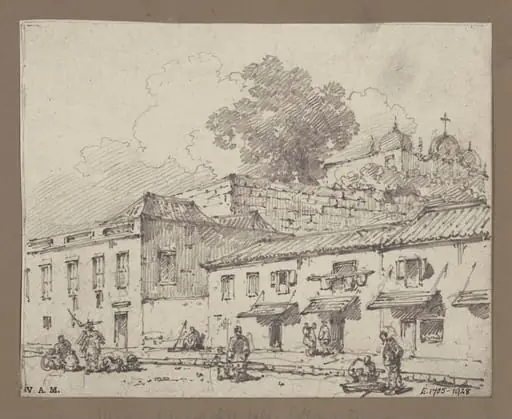 Houses below the church and college of S. José, Macau
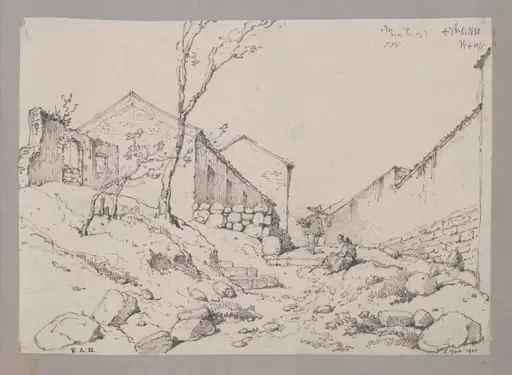 A path leading uphill between houses and a long wall
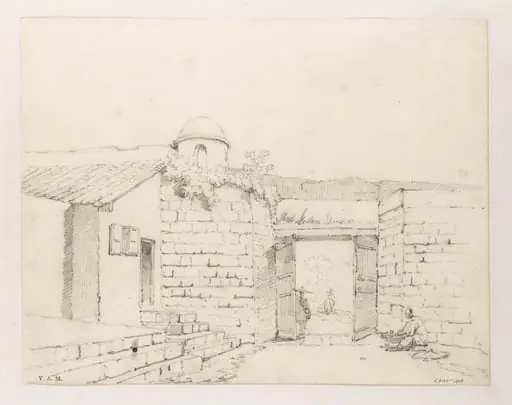 A gateway with a domed turret, Macau
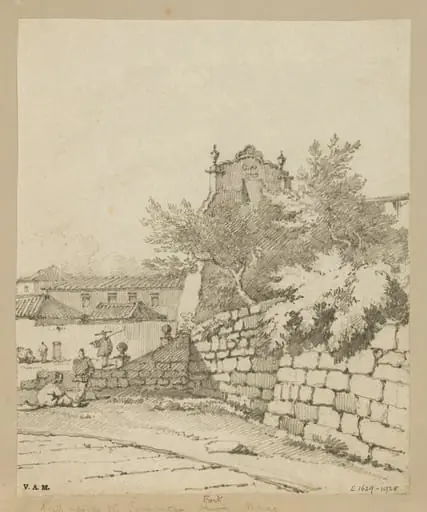 The wall below the church of S. Francisco, Macau