Artwork
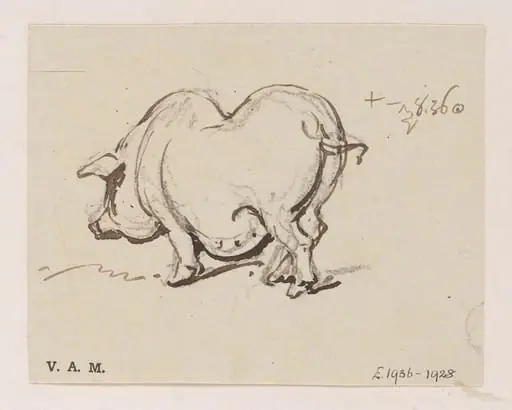
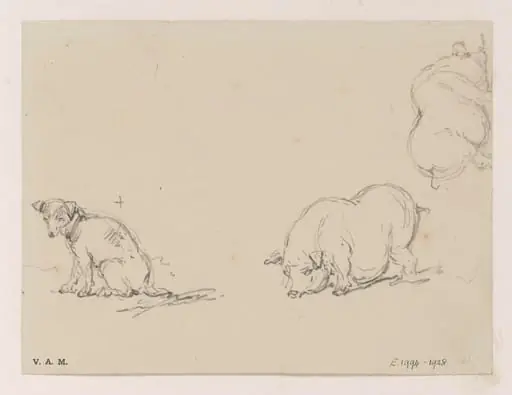
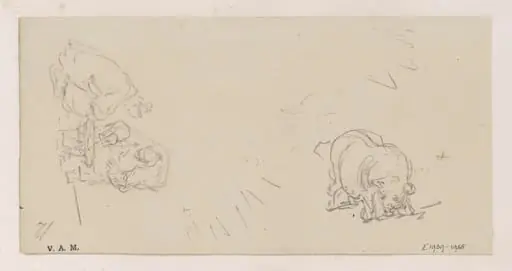
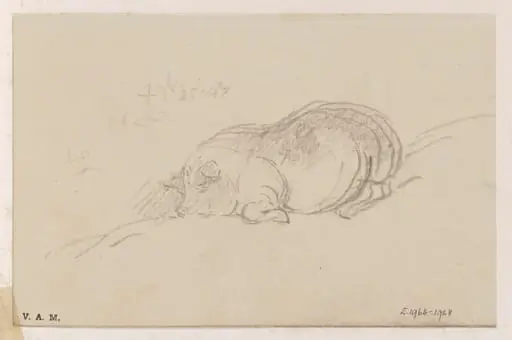
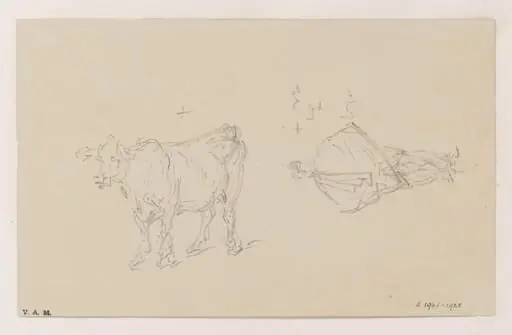
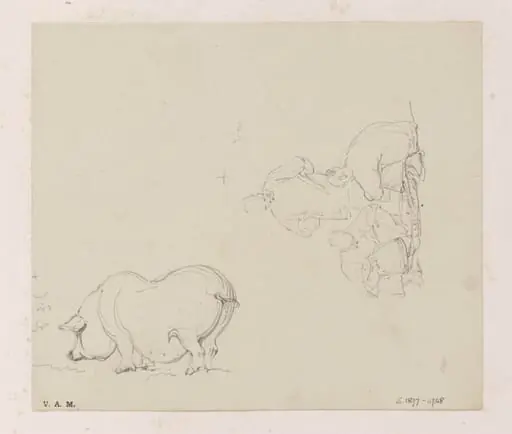
A study of a pig
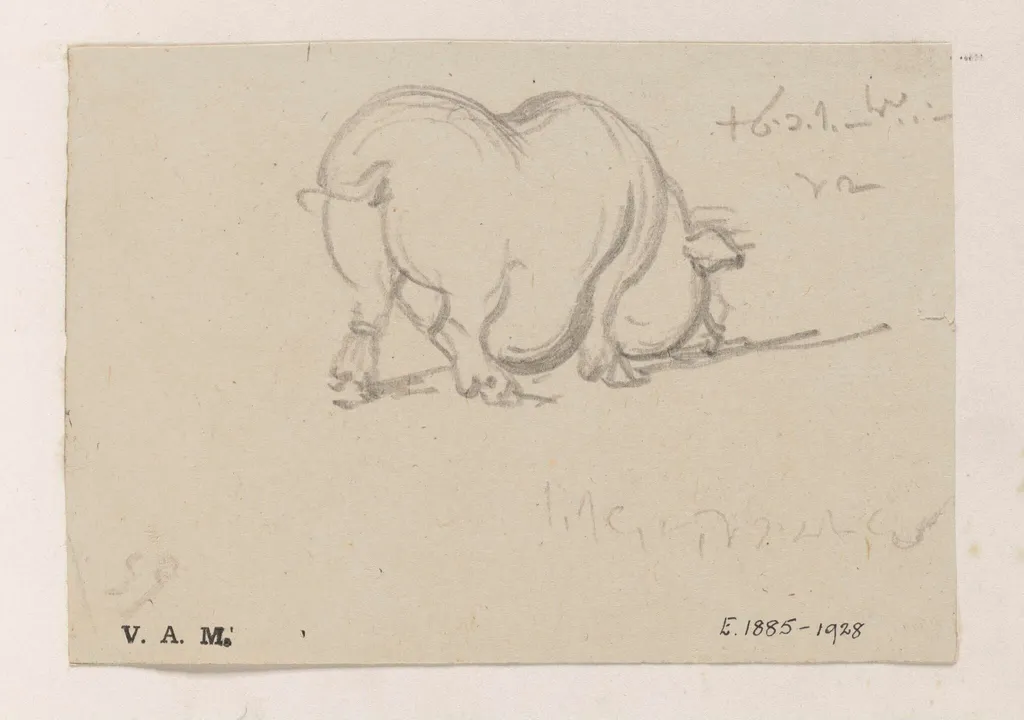
A study of a pig is a drawing by the Romanticist artist George Chinnery. It dates from 19 and is held in the collection of the Victoria and Albert Museum.
About this work
Next time you’re near London, peek at the real thing at the Victoria and Albert Museum.
George Chinnery made this careful drawing of a pig in 1825. It’s a straightforward study, almost like a quick lesson in animal form. You can feel the artist’s hand moving across the page.
The date range is oddly split—it starts and ends in different centuries. That’s because Chinnery worked in India and China, where time felt different.
Next time you’re near London, peek at the real thing at the Victoria and Albert Museum.
Overview
A study of a pig, executed in 1825 by George Chinnery, presents the animal in a rear-right view. The drawing embodies a direct, instructive approach to capturing animal anatomy.
Subject & Meaning
The subject, a pig, is depicted in a straightforward manner, suggesting the drawing's primary purpose was to explore and render its physical form rather than convey a deeper symbolic meaning.
Technique & Style
Characterized by visible, expressive lines, the drawing conveys a sense of spontaneity, as if the artist's hand moved freely across the paper to capture the pig's anatomy in a potentially rapid study.
History & Provenance
Created in 1825 by George Chinnery, an artist who worked in both India and China, the drawing is now part of the Victoria and Albert Museum's collection in London.
Artist & collection
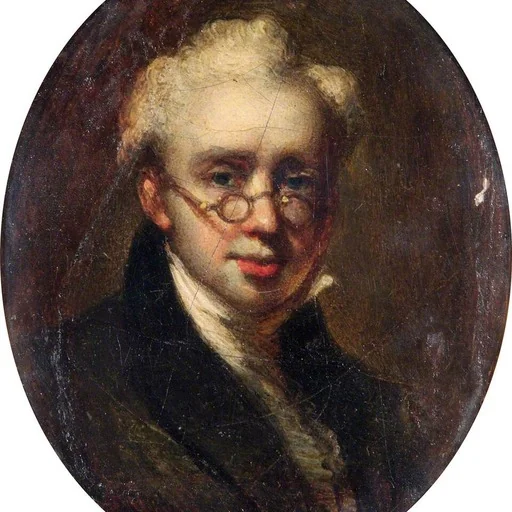
Artist
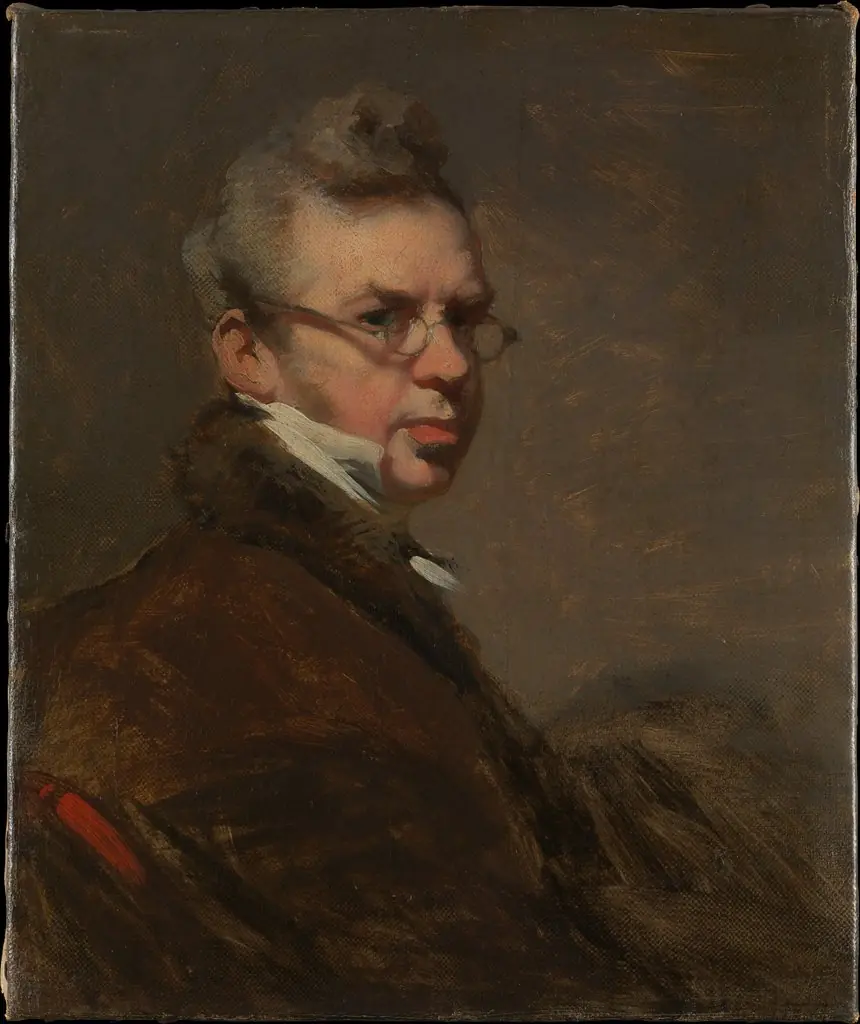
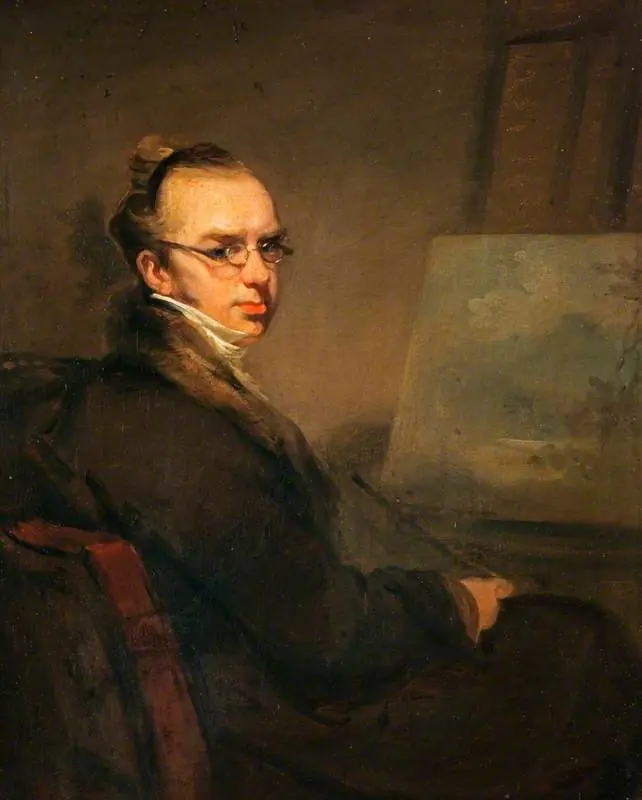
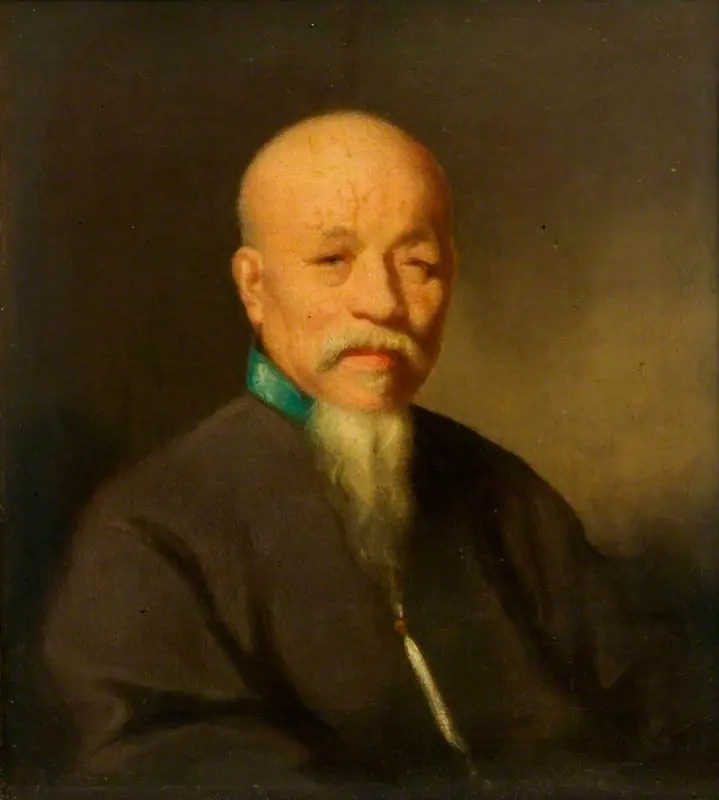
George Chinnery (Chinese: 錢納利; 5 January 1774 – 30 May 1852) was an English painter who spent most of his life in Asia, especially India and southern China.