Artwork
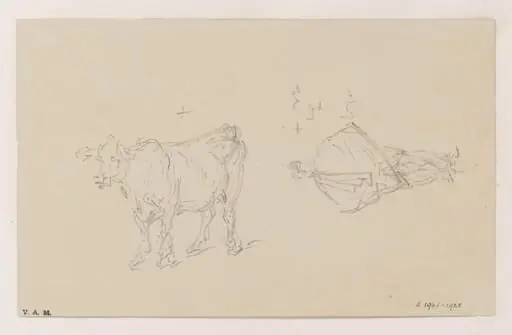
Chinese figures and cattle
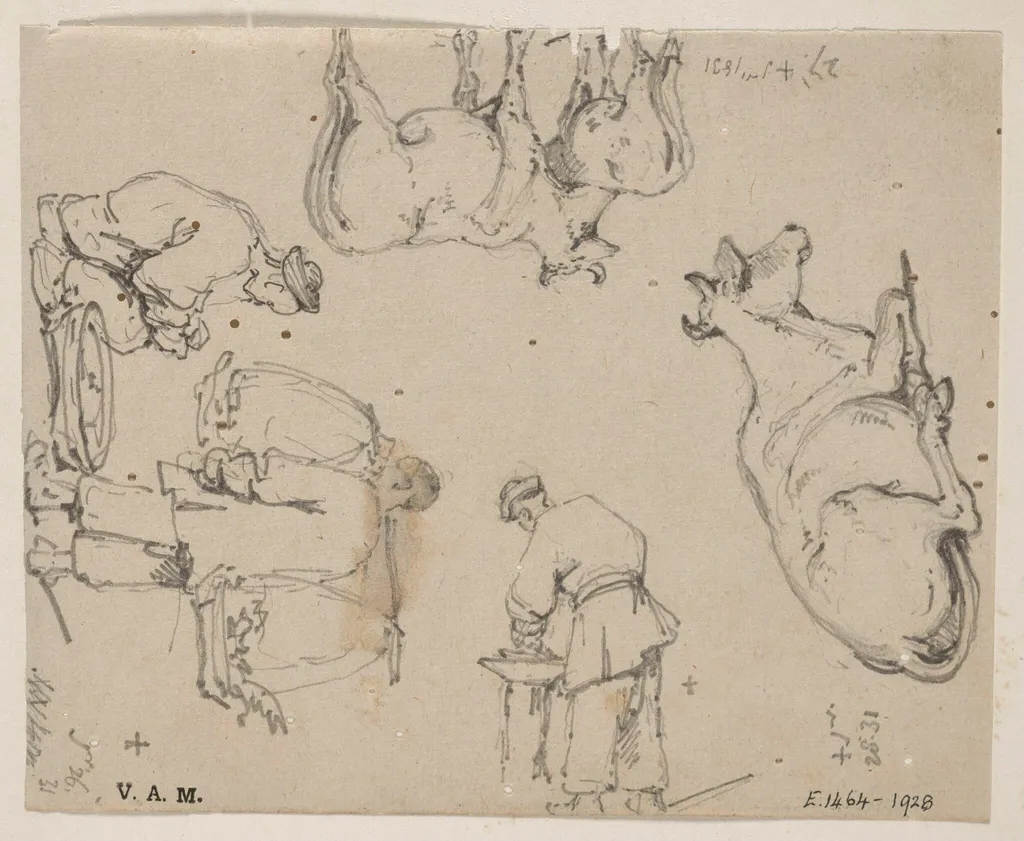
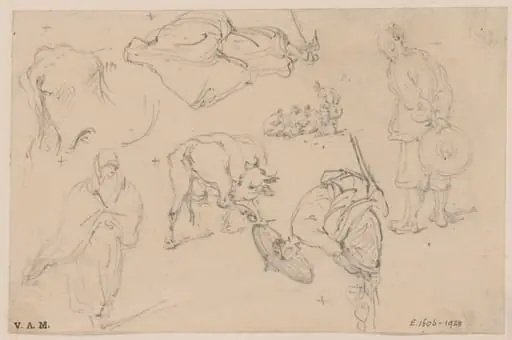
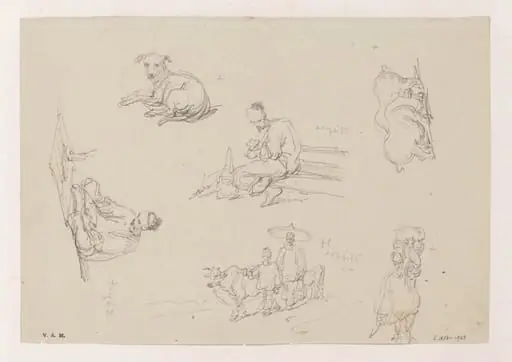
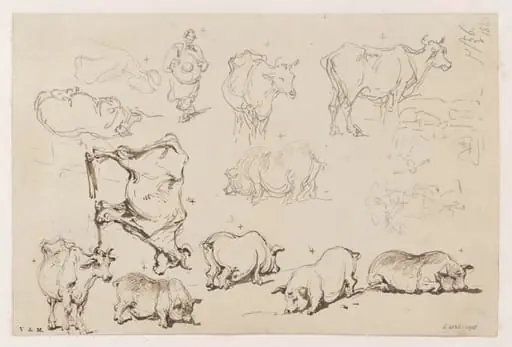
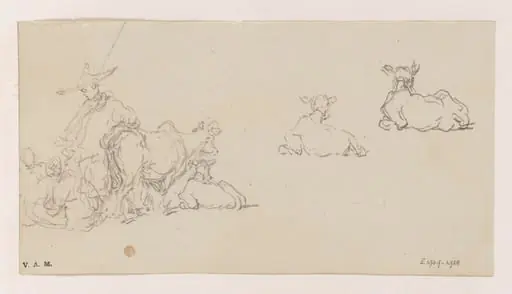
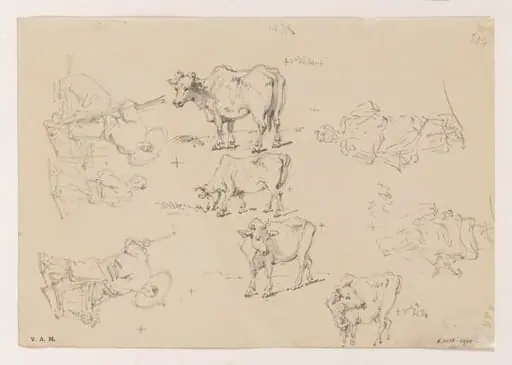
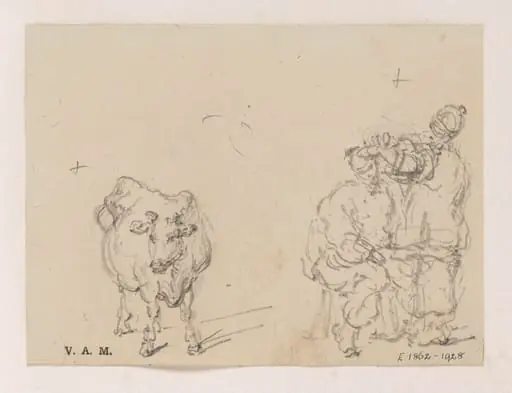
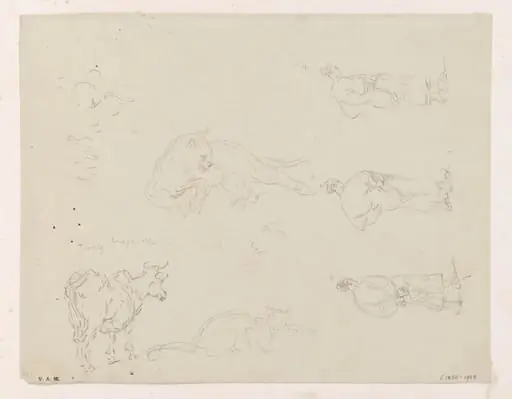
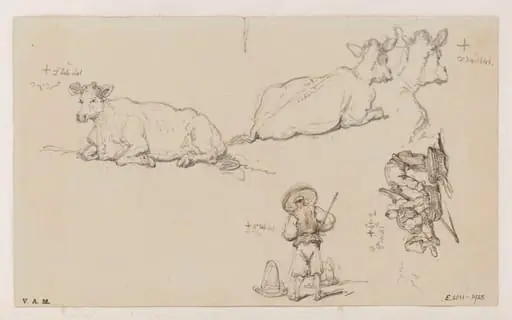
Chinese figures and cattle is a drawing by the Romanticist artist George Chinnery. It dates from 14 and is held in the collection of the Victoria and Albert Museum. A series of pencil drawings created in January 1831 depicts Chinese laborers and cattle, each panel oriented in a different direction.
About this work
The artist was likely interested in everyday life, as the drawing depicts men at work.
The drawing shows Chinese figures and cattle.
It was made over a few days in January 1831.
The artist was likely interested in everyday life, as the drawing depicts men at work.
The drawing is part of a collection at the Victoria and Albert Museum.
This museum has many artworks from different periods and styles.
The drawings in this collection are notable for their varied orientations.
You can learn more about this style by looking into the movement: Romanticism.
Overview
A series of pencil drawings created in January 1831 depicts Chinese laborers and cattle, each panel oriented in a different direction. Executed over several days, the work captures moments of daily activity without theatrical embellishment. These sheets are held in the Victoria and Albert Museum’s collection, which includes a broad range of graphic works from across cultures and eras.
Subject & Meaning
The figures shown are engaged in routine tasks, likely agricultural or transport-related, with cattle present as working animals. There is no indication of ceremony or idealization; the focus is on physical labor and the relationship between people and animals. The absence of narrative context suggests the artist valued observation over storytelling.
Technique & Style
Rendered in pencil, the drawings emphasize line and posture over shading or detail. Figures are simplified but dynamically posed, with attention to posture and movement. The varied orientations—upright, inverted, and sideways—reflect a deliberate structural experimentation, possibly to study form from multiple angles.
History & Provenance
The drawings entered the Victoria and Albert Museum’s collection as part of a larger group of 19th-century graphic studies. Their origin is tied to a British artist traveling in or studying East Asian subjects, though the creator’s identity remains unconfirmed. The works were likely made as preparatory studies rather than finished pieces.
Context
Created during a period of growing European interest in Asian cultures, the drawings align with Romantic-era tendencies to document ordinary life with sincerity. While not part of a formal movement, their focus on labor and naturalism echoes Romantic ideals of authenticity, contrasting with more stylized Orientalist depictions of the time.
Legacy
These drawings contribute to a broader archive of 19th-century observational art that valued direct study over imagination. Their inclusion in a major museum underscores their role as historical records of cross-cultural encounter and the quiet dignity of labor, preserved without embellishment.
Artist & collection
Artist
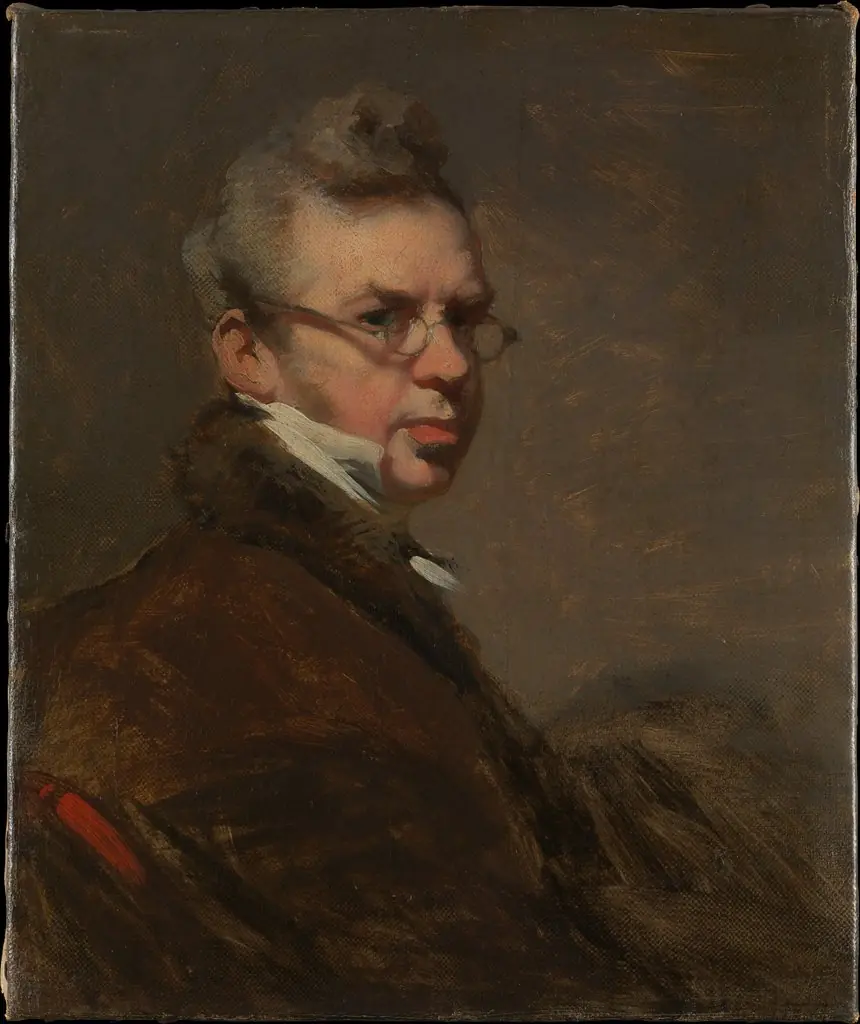
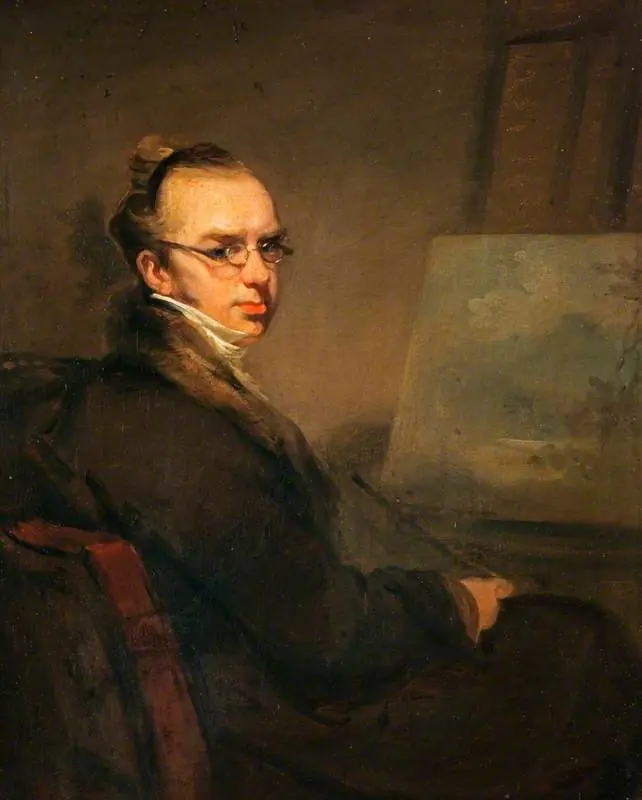
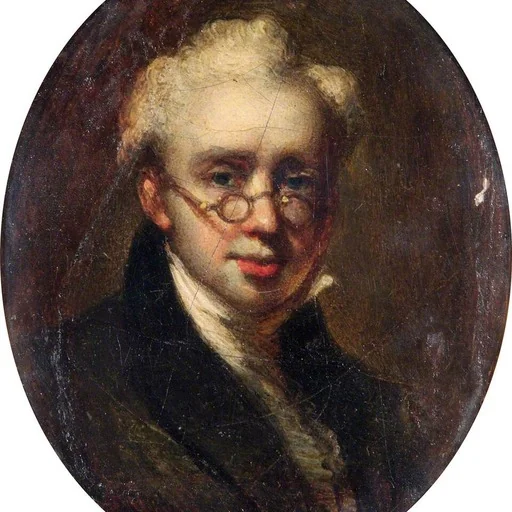
George Chinnery (Chinese: 錢納利; 5 January 1774 – 30 May 1852) was an English painter who spent most of his life in Asia, especially India and southern China.