Artwork
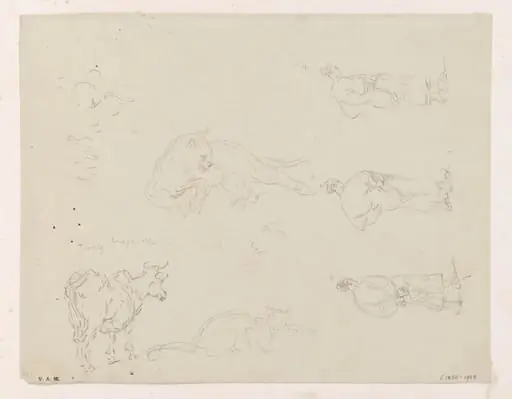
Chinese figures and animals
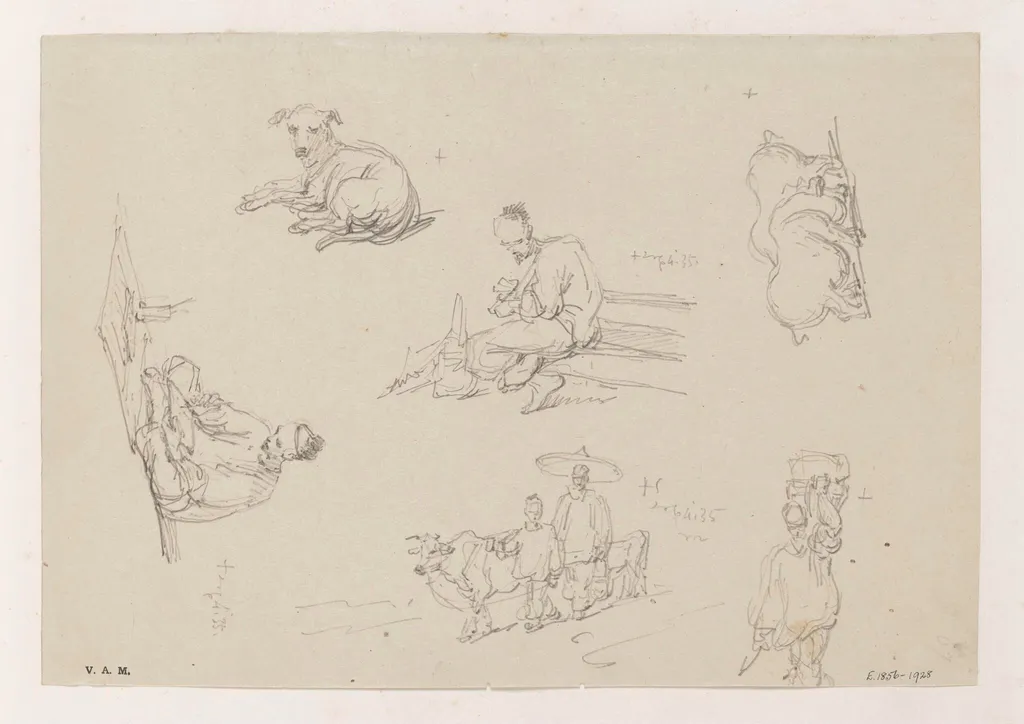
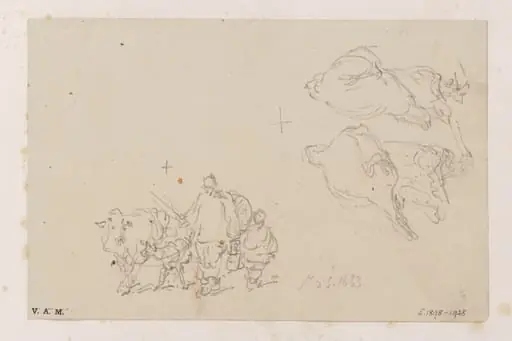
Chinese figures and animals is a drawing by the Romanticist artist George Chinnery. It dates from 6 and is held in the collection of the Victoria and Albert Museum.
About this work
Overview
This pencil drawing by George Chinnery presents a sequence of everyday scenes from southern China, likely observed during his time in Macau and Guangzhou.
This pencil drawing by George Chinnery presents a sequence of everyday scenes from southern China, likely observed during his time in Macau and Guangzhou. It combines multiple figures and animals in a single composition, capturing moments of labor and domestic life without narrative hierarchy. The work reflects Chinnery’s interest in documenting local customs through direct observation rather than idealized representation.
Subject & Meaning
The drawing includes a seated scribe at work, a man and boy guiding a cow and its calf, a laborer carrying a basket, two pigs, and a dog. These elements suggest a snapshot of rural or suburban life, emphasizing routine activities over ceremonial or symbolic content. The grouping implies a visual inventory of human and animal interactions, possibly intended as ethnographic study rather than storytelling.
Technique & Style
Chinnery employed fine pencil lines and controlled cross-hatching to model form and suggest texture, particularly in clothing and animal fur. The figures are rendered with loose, confident strokes, avoiding rigid outlines. His approach prioritizes immediacy and observation, with varying line weights guiding the viewer’s eye across the composition without formal framing or perspective.
History & Provenance
Created during Chinnery’s residence in southern China in the early 19th century, the drawing is part of a larger body of sketches he made while living in Macau. It was likely produced for personal documentation or as reference material, not for public exhibition. The work remained in private collections after his death, eventually entering institutional holdings through later acquisitions.
Context
Chinnery was one of the few Western artists in China during the 1820s–1830s permitted to live and work outside treaty ports. His drawings offer rare visual records of Chinese daily life at a time of limited foreign access. Unlike contemporaries who focused on portraiture or architecture, he turned his attention to ordinary scenes, preserving details often omitted by official records.
Legacy
The drawing contributes to a broader archive of early Western observations of Chinese society, valued today for its unembellished depiction of common life. It stands apart from romanticized or exoticized depictions of Asia common in European art, offering instead a quiet, attentive record grounded in firsthand experience. Its significance lies in its documentary fidelity rather than aesthetic ambition.
Artist & collection
Artist
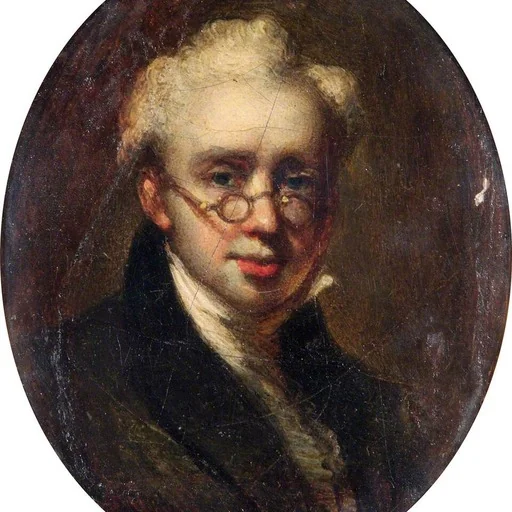
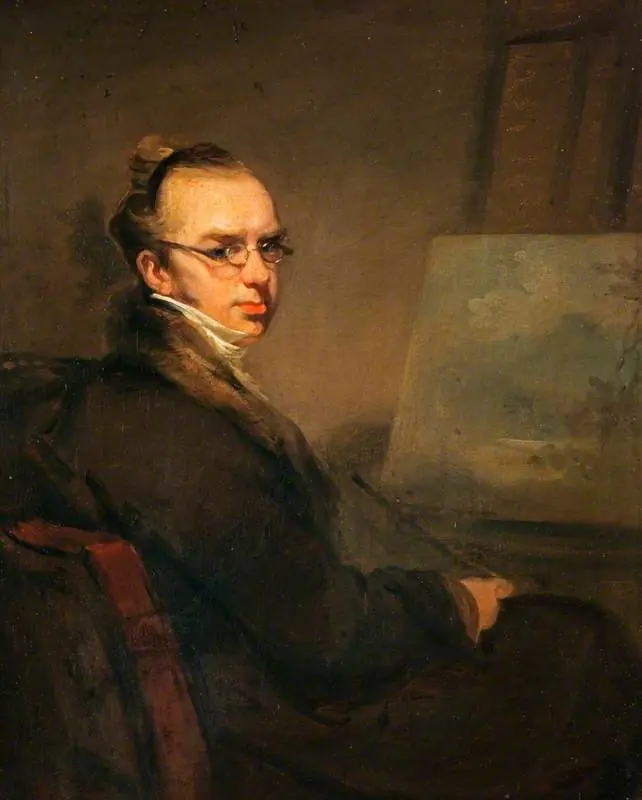
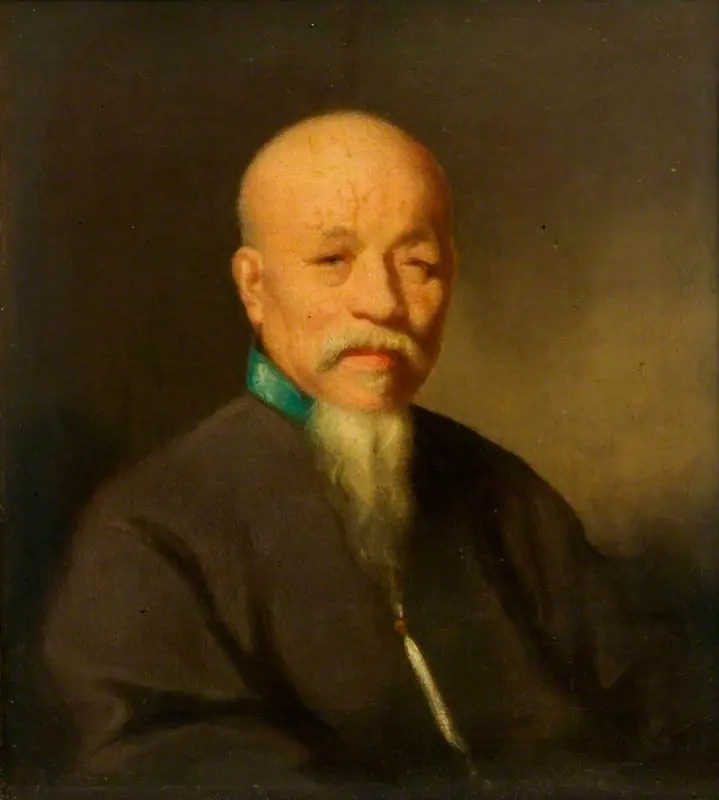
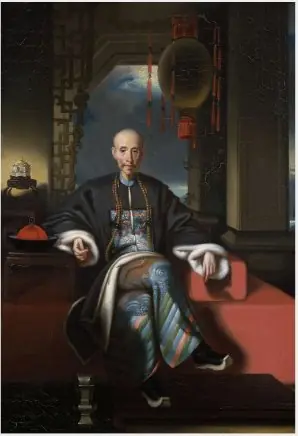
George Chinnery (Chinese: 錢納利; 5 January 1774 – 30 May 1852) was an English painter who spent most of his life in Asia, especially India and southern China.

 Drawings of figures and animals
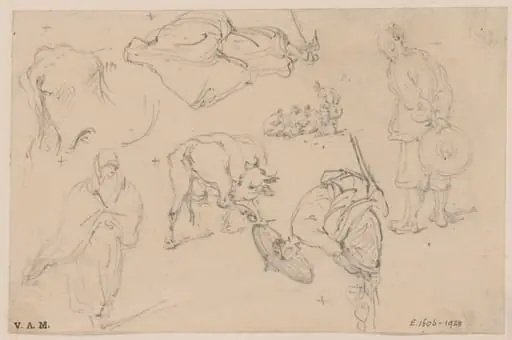 Chinese figures and cattle
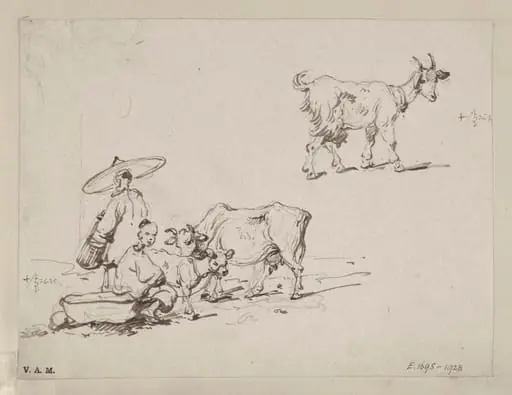 Two figures with a cow and calf; and a goat
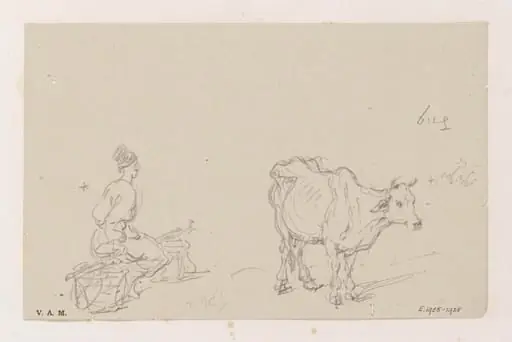 A figure seated between two baskets, and a cow
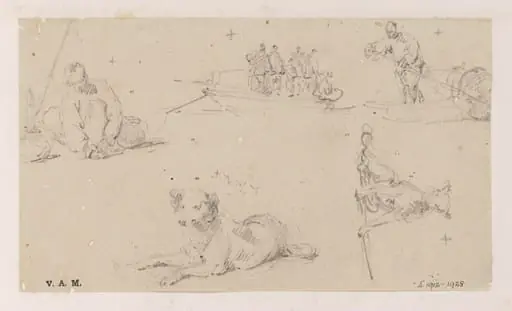 Five drawings of figures and dogs
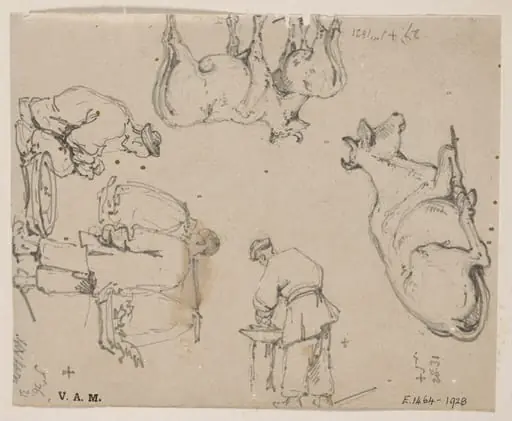 Chinese figures and cattle
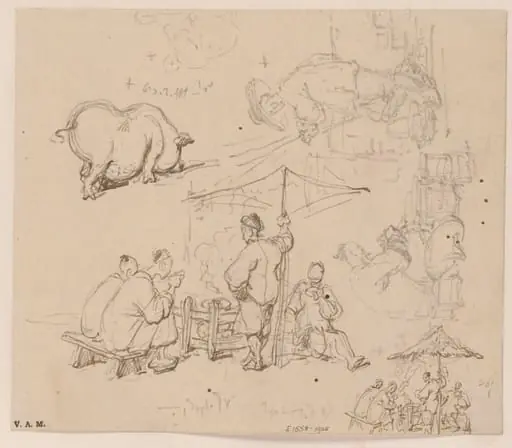 Chinese men at a cooking stove, and of a pig
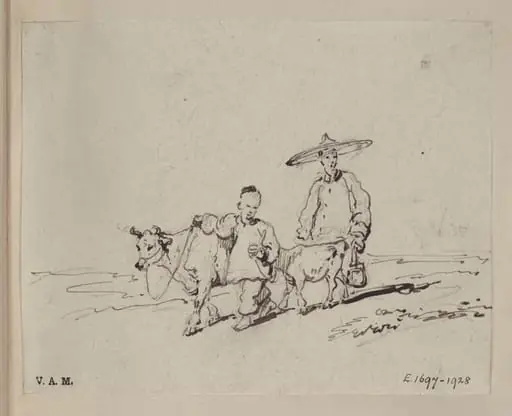 Two Chinese figures with a cow and calf
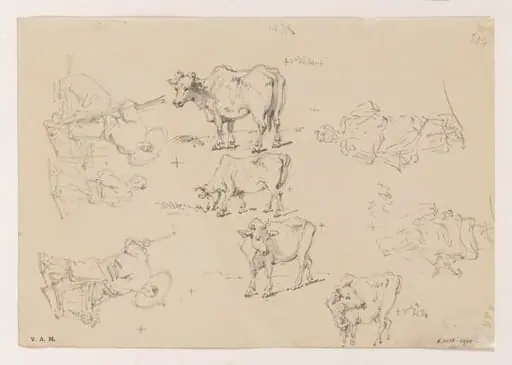 Figures and cattle
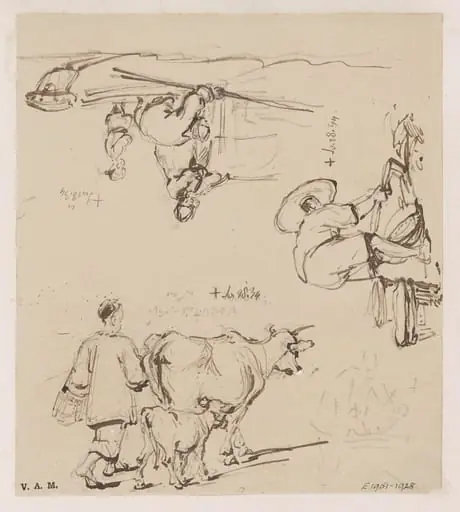 Three figure drawings
 Two figures with a cow and calf; and two Macanese women