Artwork
Cows and goats
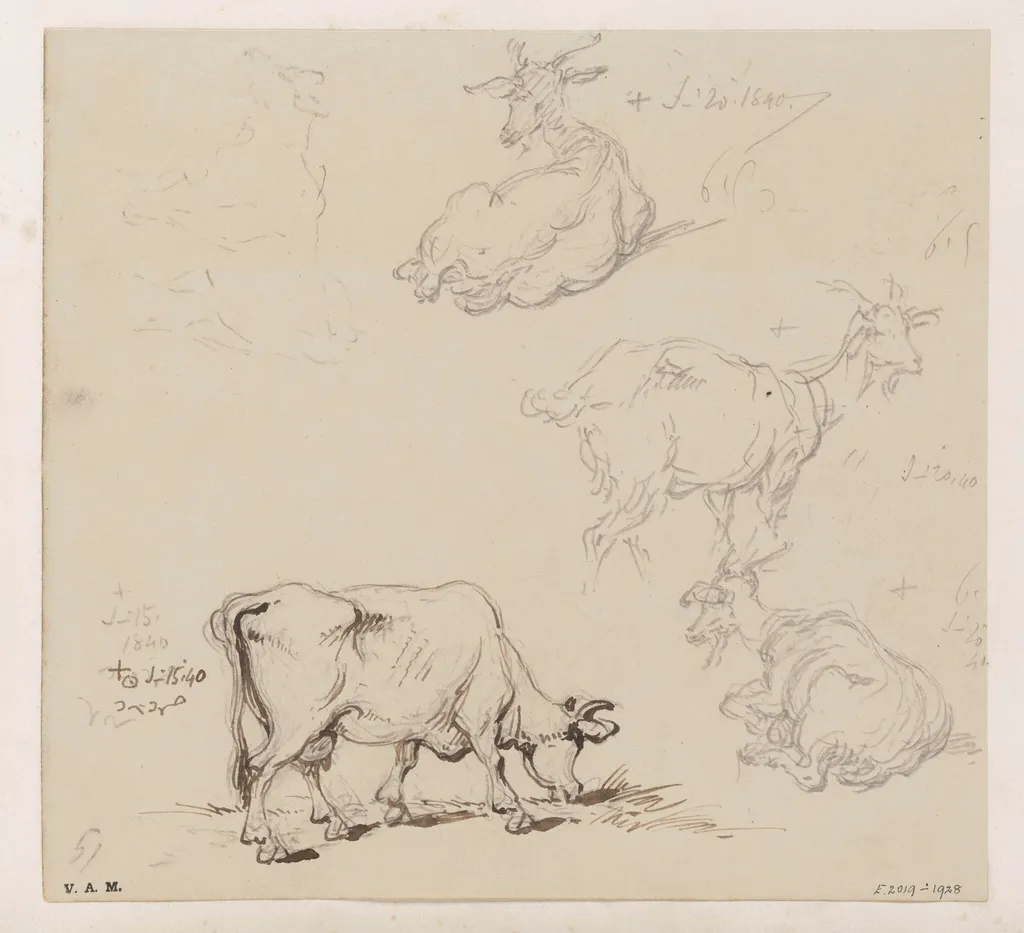
Cows and goats is a drawing by the Romanticist artist George Chinnery. It dates from 11 and is held in the collection of the Victoria and Albert Museum.
About this work
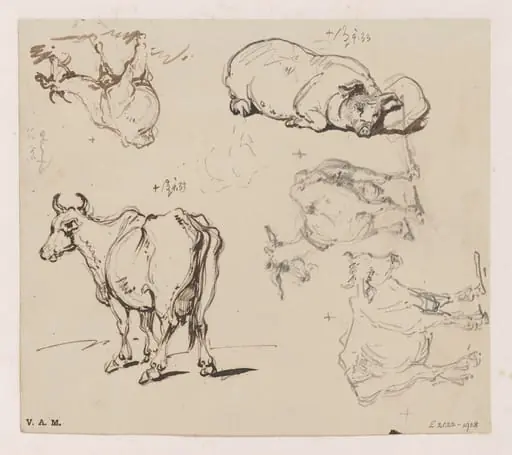
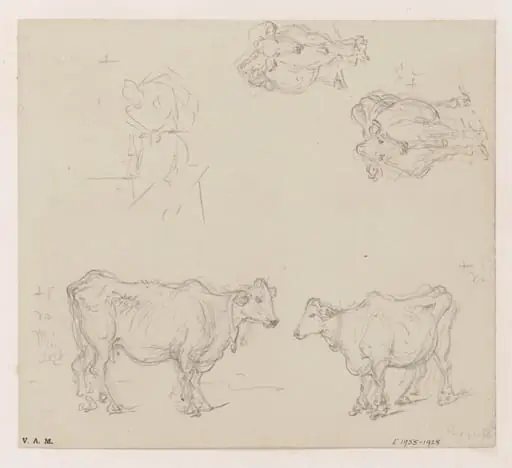
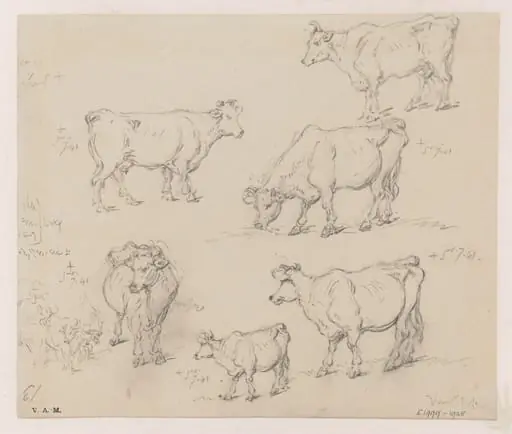
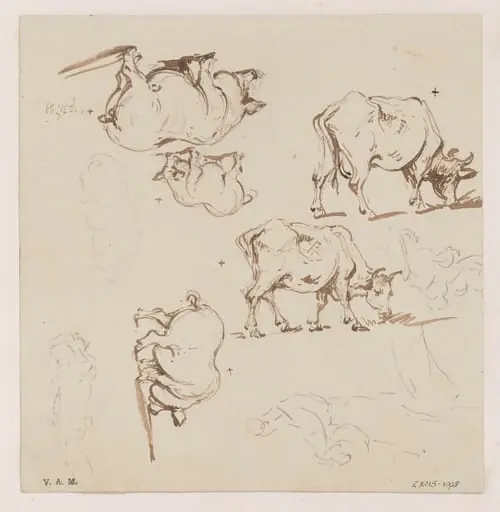
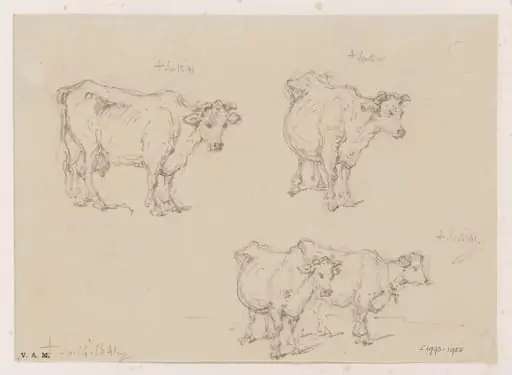
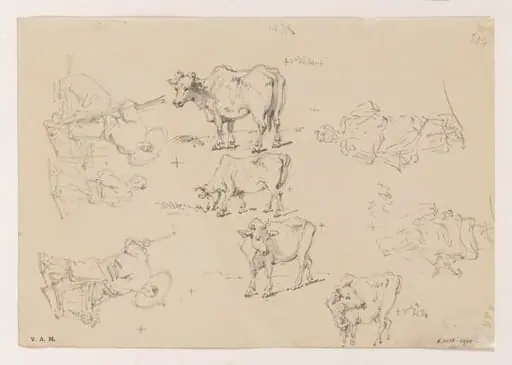
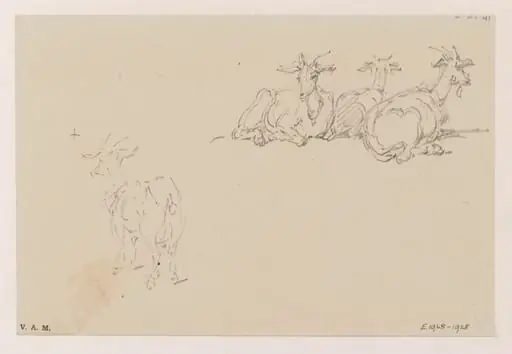
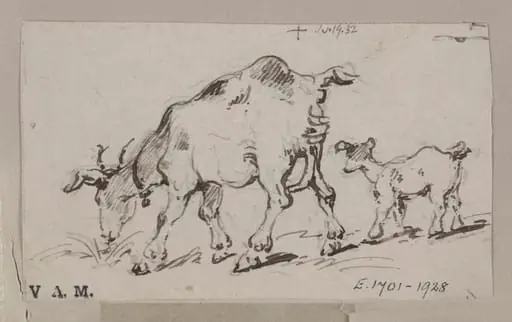
This is a pencil sketch by George Chinnery from 1840. It shows a cow and two goats using simple lines. The cow stands farther back while two goats cluster near the front.
The artist worked fast, finishing four drawings in just five days. One cow gets extra ink work to make it stand out.
Look up the artist George Chinnery next.
Overview
This 1840 pencil drawing by George Chinnery depicts a cow and two goats in a quiet pastoral arrangement. Executed swiftly over five days, it is one of four similar studies completed during that period. The composition places the cow slightly behind the two goats, creating a sense of spatial depth. A single figure is enhanced with ink, distinguishing it from the others in the series.
Subject & Meaning
The animals are rendered without narrative or symbolism, focusing instead on their physical presence and natural posture. The cow and goats appear at rest, grazing or standing calmly, reflecting Chinnery’s interest in observing livestock in their environment. The work captures a moment of rural life, not as an idealized scene but as a direct observation of everyday animals.
Technique & Style
Chinnery used light, rapid pencil strokes to define form, suggesting volume with minimal detail. The two goats are clustered in the foreground with loose, energetic lines, while the cow is drawn with slightly more definition and finished in ink, giving it visual weight. The technique conveys immediacy, as if the artist worked directly from life with little revision.
History & Provenance
Created during Chinnery’s time in Asia, where he lived from the 1820s until his death, these sketches were likely made as personal studies rather than commissioned works. They reflect his habit of documenting local fauna and landscapes during his travels. The drawing remains part of private collections, with no public exhibition history widely documented.
Context
Chinnery, a British artist based in Macau and Calcutta, often turned to sketching animals and rural scenes as a counterpoint to his portrait commissions. These drawings align with a broader 19th-century practice among expatriate artists of recording the natural world around them, blending European draftsmanship with observations of Asian environments.
Legacy
Though not widely exhibited, these sketches contribute to understanding Chinnery’s artistic range beyond portraiture. They reveal his sensitivity to form and movement, and his ability to capture quiet moments with economy. The work stands as a quiet testament to his daily practice and his engagement with the landscapes and creatures of his adopted home.
Artist & collection
Artist
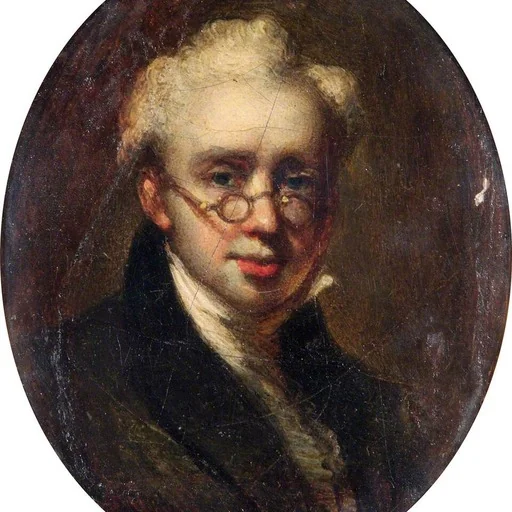
George Chinnery (Chinese: 錢納利; 5 January 1774 – 30 May 1852) was an English painter who spent most of his life in Asia, especially India and southern China.