Artwork
Four Chinese figures
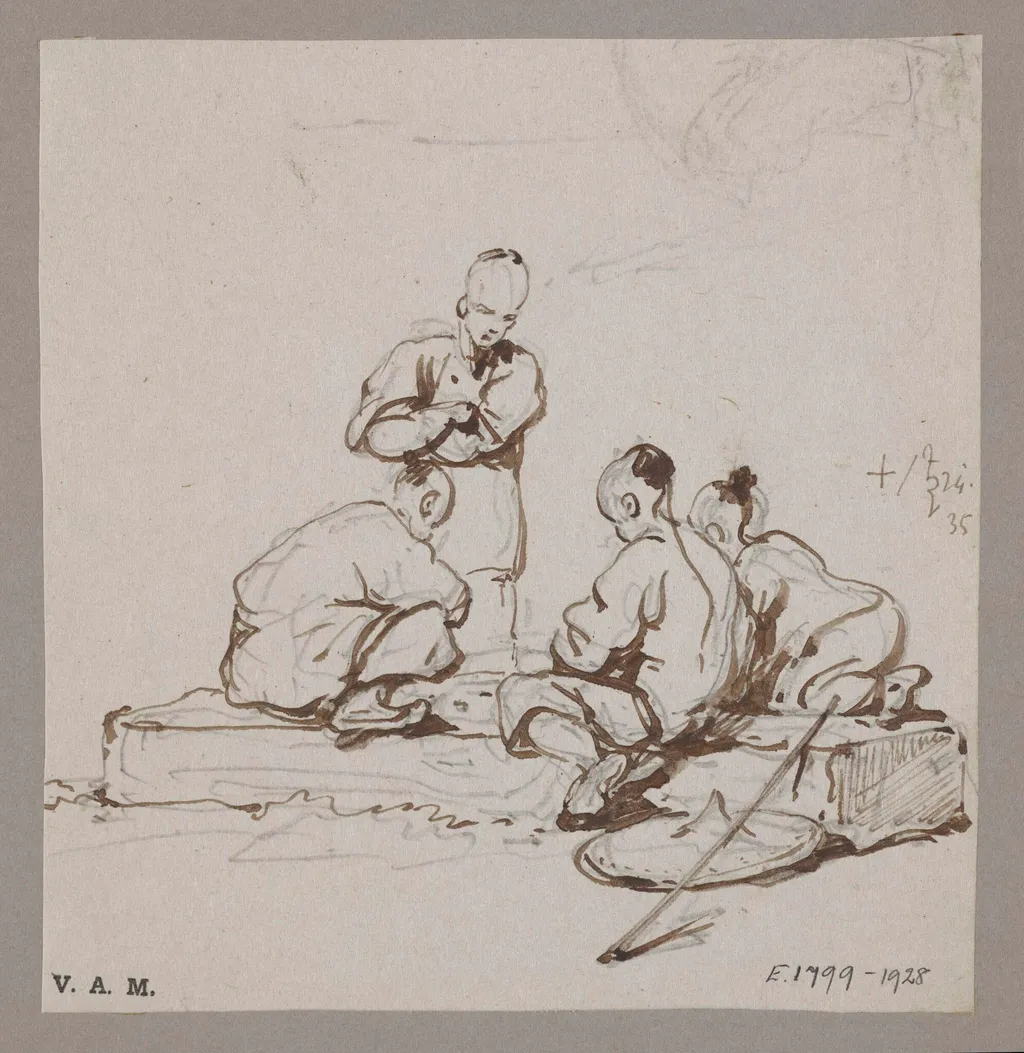
Four Chinese figures is a drawing by the Romanticist artist George Chinnery. It dates from 16 and is held in the collection of the Victoria and Albert Museum.
About this work
In the 1800s, Romanticism often showed daily moments with feeling.
George Chinnery drew four figures in 1835.
One stands behind three others who sit low on a stone platform.
Maybe they’re playing a quiet game while the fourth watches.
In the 1800s, Romanticism often showed daily moments with feeling.
Chinnery worked in Macau and India, so this scene feels personal.
The linework is sharp but gentle, letting the figures breathe.
Look up the technique called cross-hatching next.
Overview
George Chinnery’s 1835 drawing presents a small group of Chinese figures arranged on a modest stone ledge. Three individuals are positioned low, either seated or crouched, while a fourth figure stands slightly behind, observing the scene. The composition captures a quiet, everyday moment, rendered in delicate ink work that emphasizes the subtle interaction among the participants.
Subject & Meaning
The central activity appears to involve a subdued pastime, perhaps a board or hand game, shared by the three lower figures. The standing observer, positioned at the rear, watches attentively, suggesting a role of mentor, spectator, or participant awaiting his turn. The work conveys a sense of communal leisure and the nuanced social dynamics of informal gatherings.
Technique & Style
Executed in ink, the drawing employs fine cross‑hatching to model form and suggest texture, balancing precision with a soft, flowing quality. Chinnery’s linework is both exacting and restrained, allowing the figures to emerge with a sense of presence without heavy shading. The technique reflects a disciplined hand that still captures the fleeting atmosphere of the scene.
History & Provenance
Created during Chinnery’s residence in Macau, the drawing reflects his immersion in the local environment of the early nineteenth century. While the work has remained within private collections, it is documented in the artist’s catalogue raisonné and has been exhibited in exhibitions focusing on colonial-era Asian art, underscoring its relevance to his body of work.
Context
In the broader Romantic era, artists often turned to ordinary, emotive moments to explore human experience. Chinnery, who worked across Macau and India, frequently depicted everyday life in the regions he inhabited, merging Western drawing techniques with Eastern subject matter. This piece exemplifies that cross‑cultural engagement, illustrating a slice of daily life through a refined, observational lens.
Own this work as a print
Artist & collection
Artist
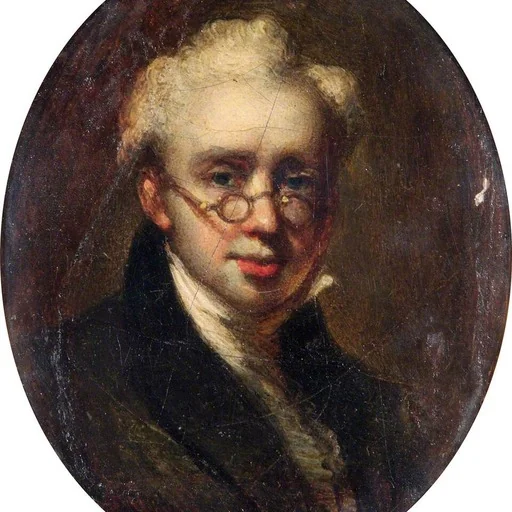
George Chinnery (Chinese: 錢納利; 5 January 1774 – 30 May 1852) was an English painter who spent most of his life in Asia, especially India and southern China.

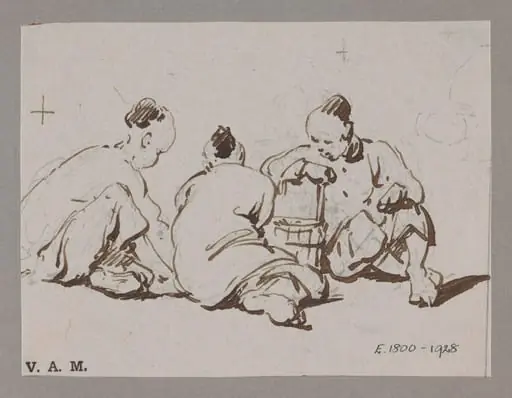 Three seated figures
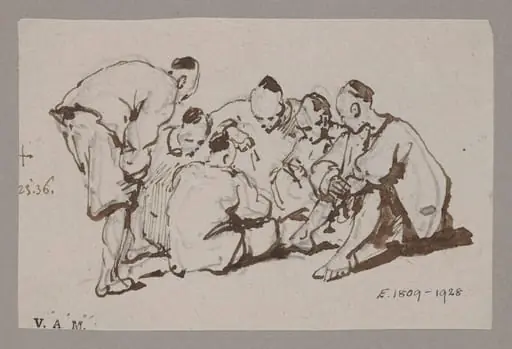 A group of six Chinese figures
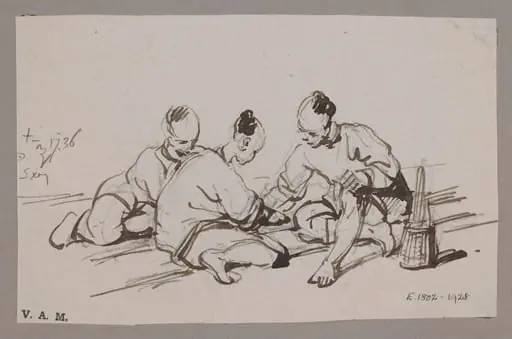 Three Chinese figures
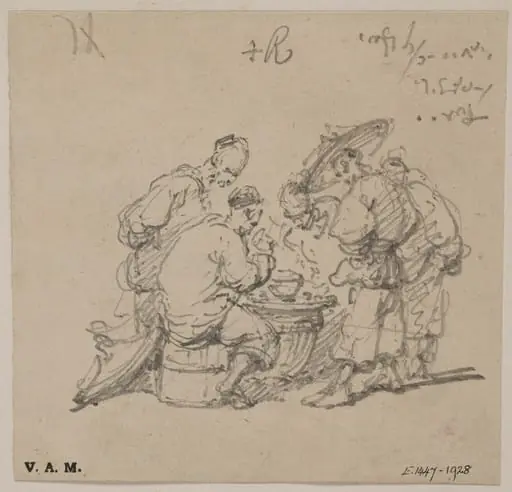 A group of Chinese figures
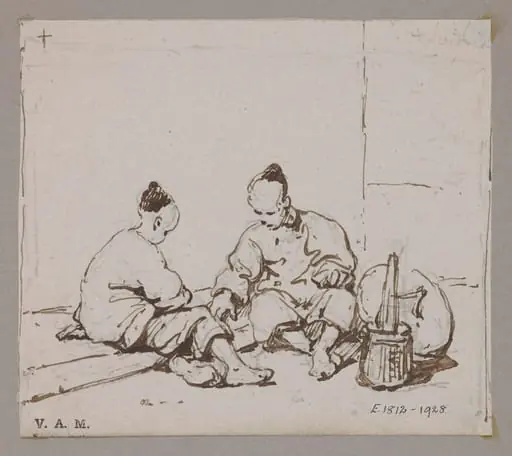 Two seated Chinese figures with a basket and hat
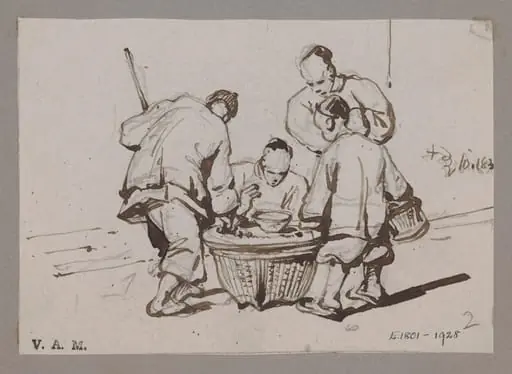 Chinese figures around a covered basket
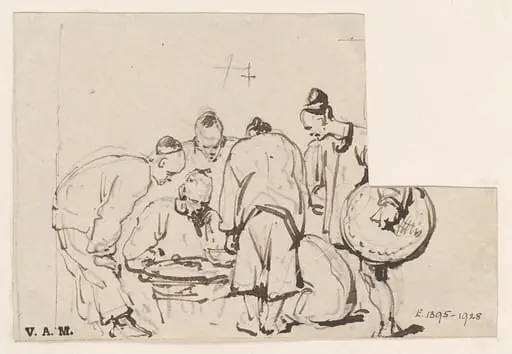 A group of six Chinese figures
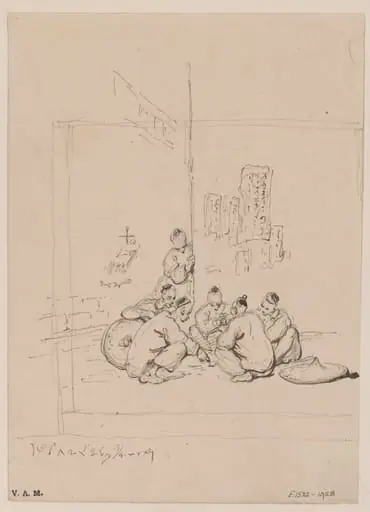 A group of Chinese figures at a street corner
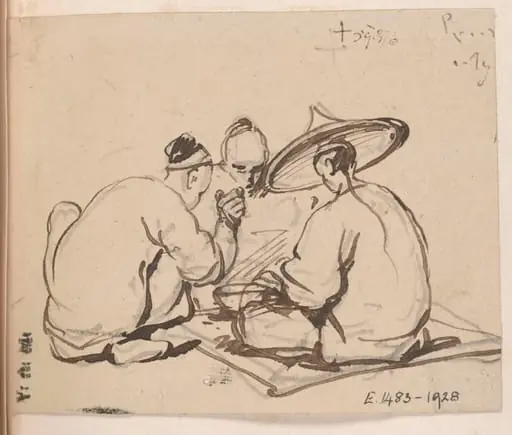 Three seated Chinese men
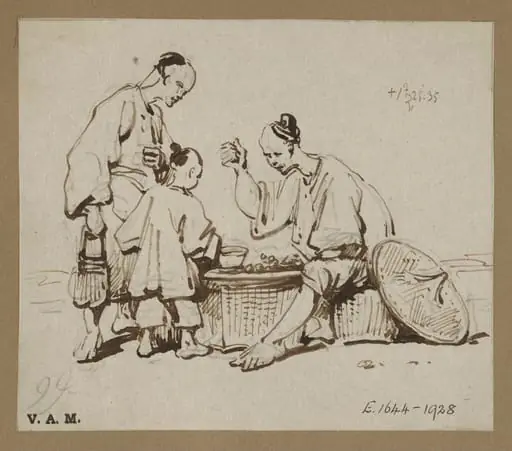 Three Chinese figures
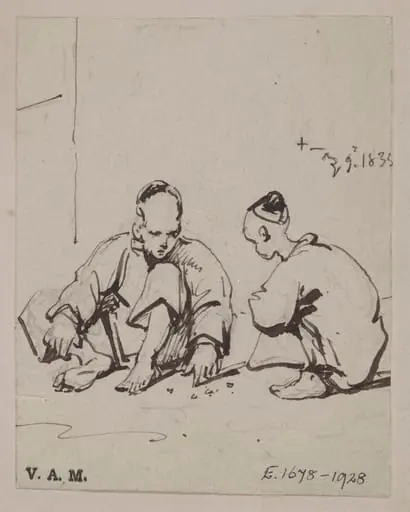 Two Chinese figures playing with pebbles on the ground
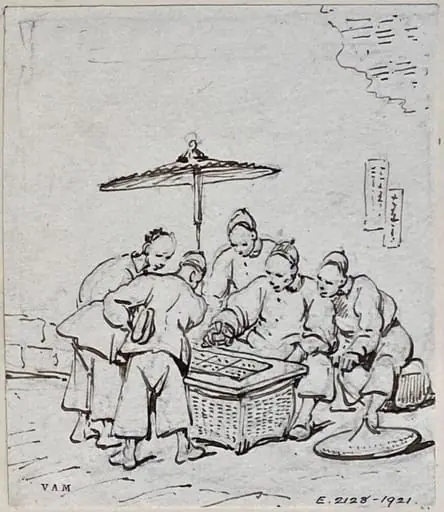 Drawing, Chinese players beneath a parasol