Artwork
Two seated Chinese figures with a basket and hat
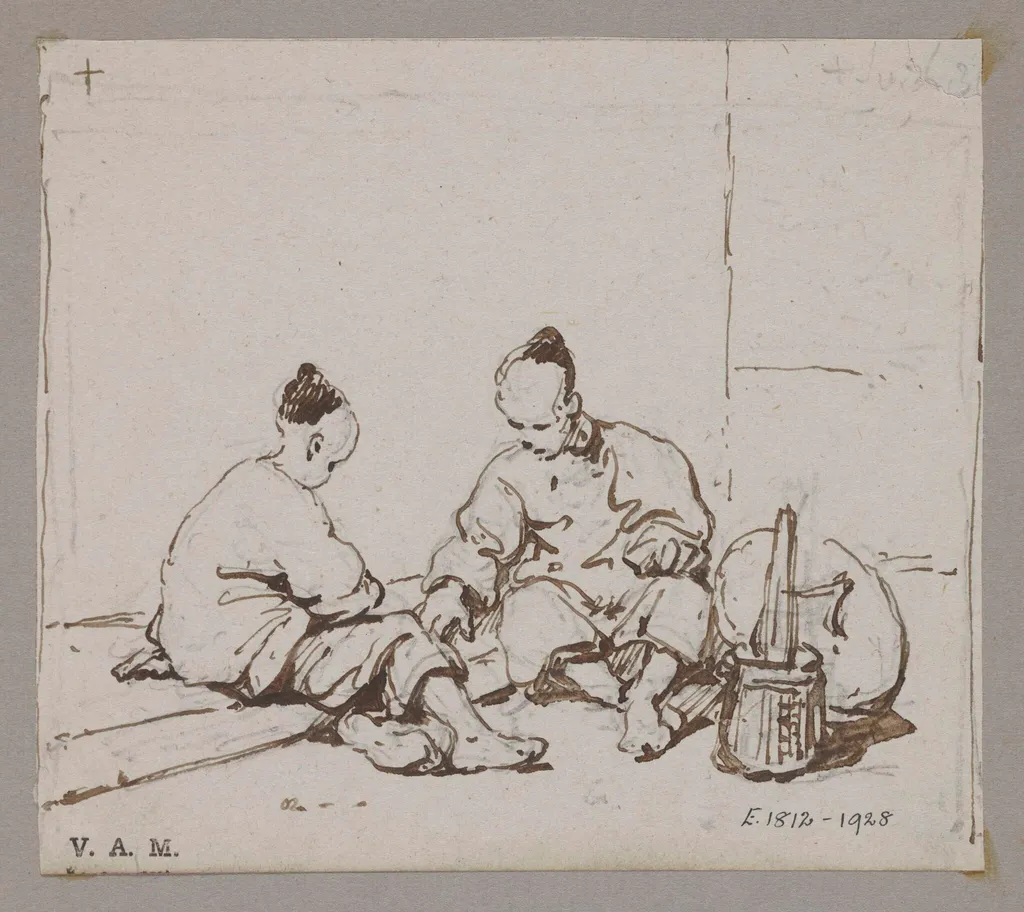
Two seated Chinese figures with a basket and hat is a drawing by the Romanticist artist George Chinnery. It dates from 19 and is held in the collection of the Victoria and Albert Museum.
About this work
George Chinnery drew two seated Chinese figures in 1825. It’s a simple street scene in ink on paper. Two boys or young men sit side by side with a basket and wide hat between them.
It’s a tiny sheet—only 28 by 22 cm. Yet it feels alive with quiet activity. Details like the boys’ hands and the woven basket hint at daily life.
Look up the museum that keeps this drawing for you to see.
Overview
Measuring just 28 by 22 centimeters, the work is executed on paper with minimal strokes, yet conveys a sense of lived-in realism.
Created in 1825 by George Chinnery, this small ink drawing captures two seated Chinese youths in a moment of quiet repose. Measuring just 28 by 22 centimeters, the work is executed on paper with minimal strokes, yet conveys a sense of lived-in realism. The figures rest beside a basket and a broad hat, suggesting an informal pause in daily routines. Chinnery’s focus on ordinary moments reflects his interest in the rhythms of life in southern China during his time there.
Subject & Meaning
The two figures, likely young men or adolescents, are depicted in a casual, unposed manner, engaged in no overt action but surrounded by objects tied to street life. The basket and hat imply a temporary suspension of work—perhaps after selling goods or waiting for customers. Their proximity and posture suggest familiarity, evoking the quiet camaraderie of urban laborers without romanticizing their circumstances.
Technique & Style
Chinnery used fluid ink lines to define form with economy, relying on subtle variations in pressure and tone rather than shading. The basket’s weave and the boys’ hands are rendered with delicate precision, grounding the scene in tactile reality. The composition is sparse, with no background details, directing attention entirely to the figures and their immediate surroundings, enhancing the intimacy of the moment.
History & Provenance
The drawing was made during Chinnery’s residence in Macau and Guangzhou, where he lived from 1802 until his death in 1852. It likely originated as a personal sketch, not a commissioned work, and remained within private collections before entering institutional hands. Its survival as a modest, unadorned study offers rare insight into the artist’s observational practice beyond formal portraits.
Context
In early 19th-century southern China, foreign artists like Chinnery were among the few documenting everyday life outside elite circles. While European audiences often sought exoticized imagery, Chinnery’s sketches quietly recorded the routines of local people—street vendors, laborers, children—offering a counterpoint to prevailing colonial narratives through understated realism.
Legacy
This drawing exemplifies Chinnery’s role as a chronicler of daily life in early colonial-era China. Its simplicity and lack of embellishment distinguish it from more theatrical contemporaries’ works. Today, it stands as a quiet testament to the value of observing the mundane, preserving a fleeting moment of ordinary existence with dignity and precision.
Artist & collection
Artist
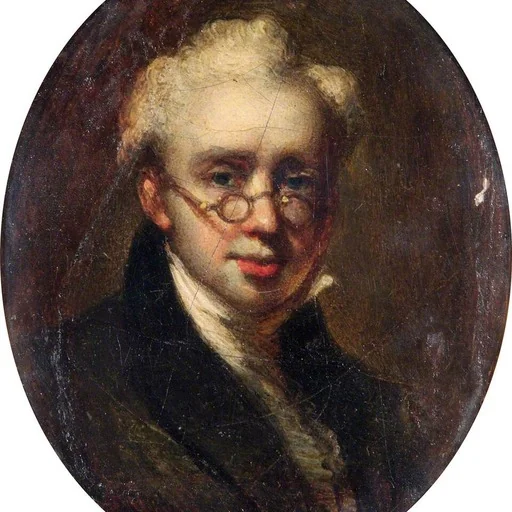
George Chinnery (Chinese: 錢納利; 5 January 1774 – 30 May 1852) was an English painter who spent most of his life in Asia, especially India and southern China.

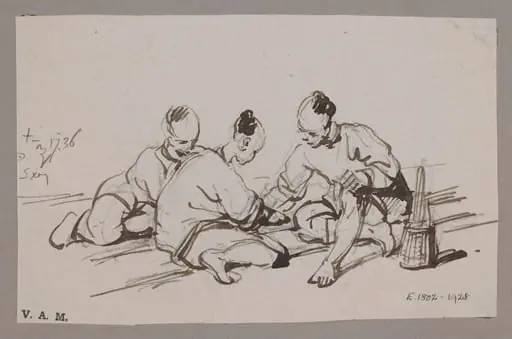 Three Chinese figures
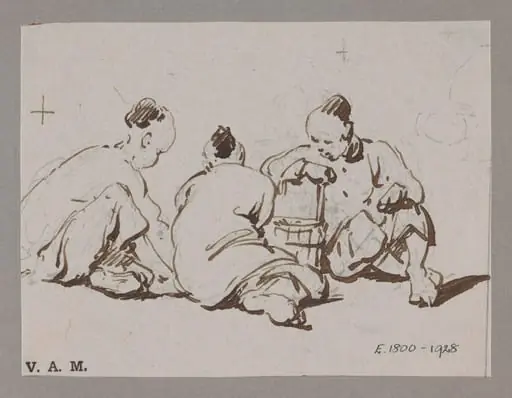 Three seated figures
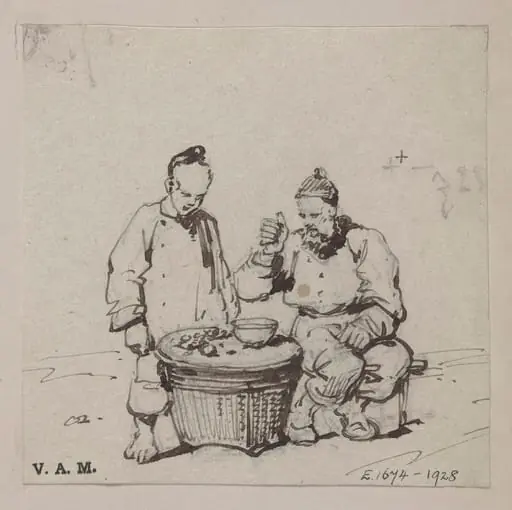 A Chinese man and boy beside a bowl placed on a basket
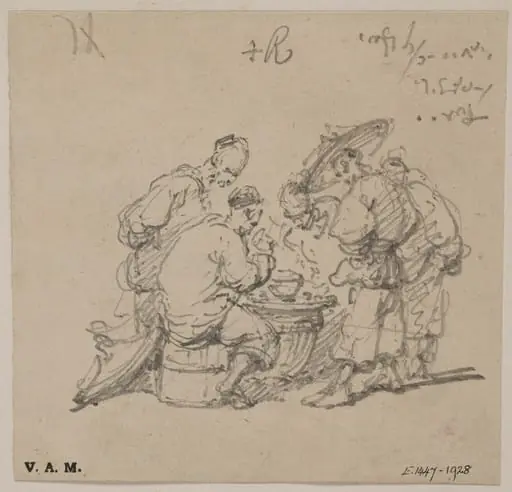 A group of Chinese figures
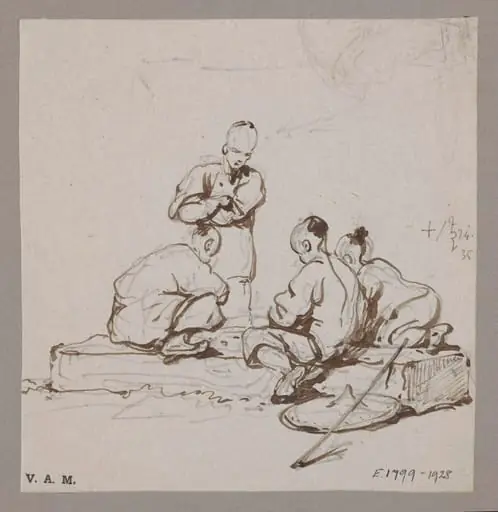 Four Chinese figures
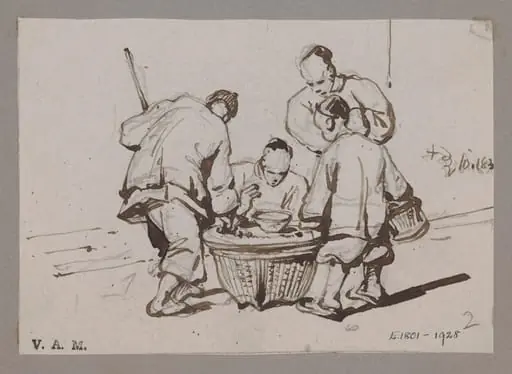 Chinese figures around a covered basket
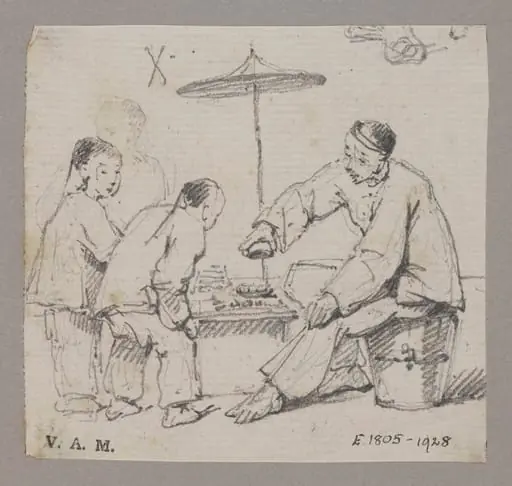 A Chinese man seated at a table, watched by two children
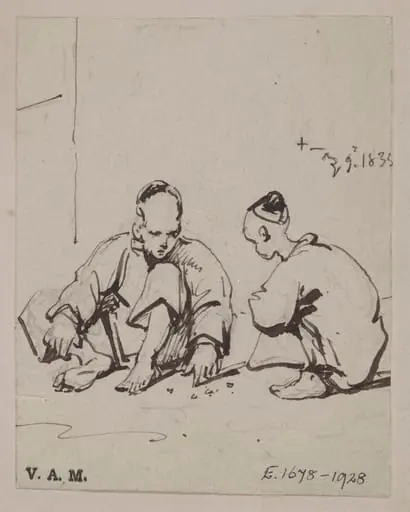 Two Chinese figures playing with pebbles on the ground
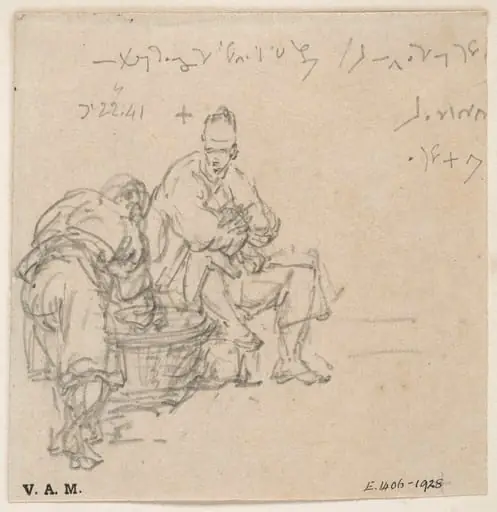 Chinese figures by a basket
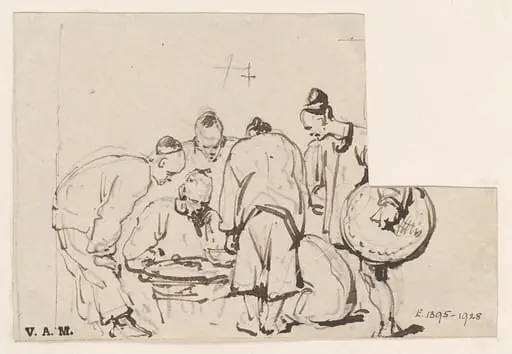 A group of six Chinese figures
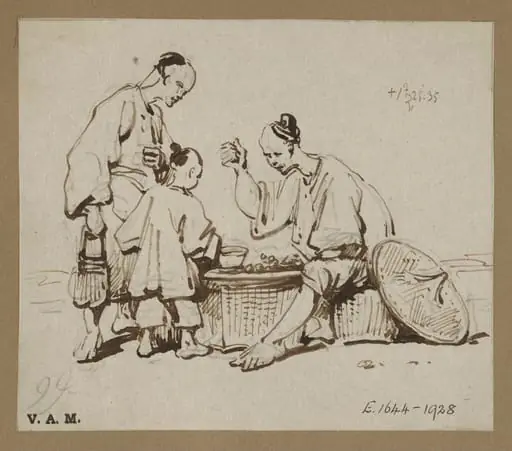 Three Chinese figures
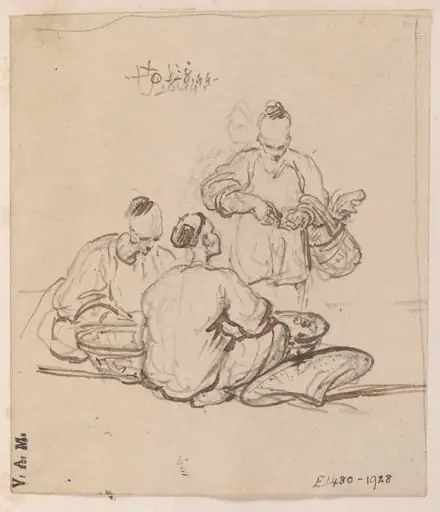 Three Chinese men with baskets