Artwork
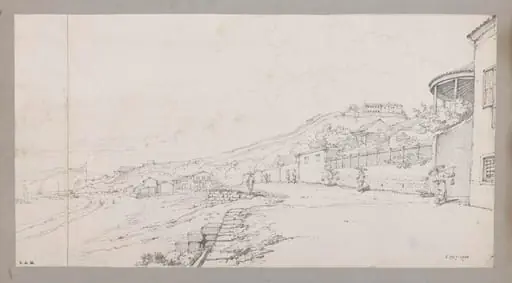
Governor's House, and part of the Praya Grande and Penha Hill
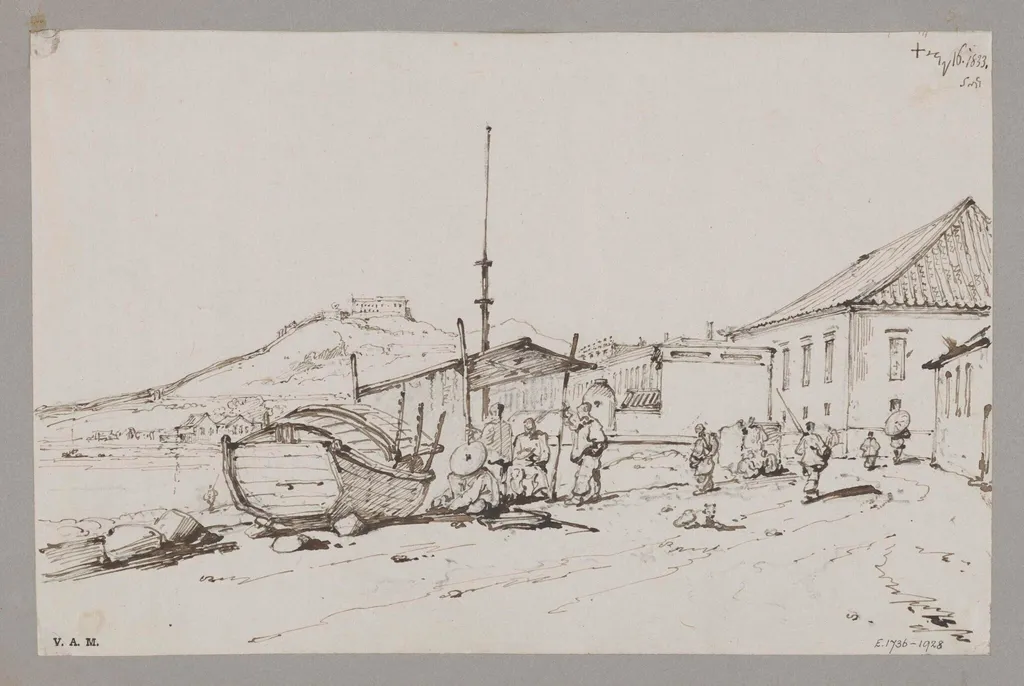
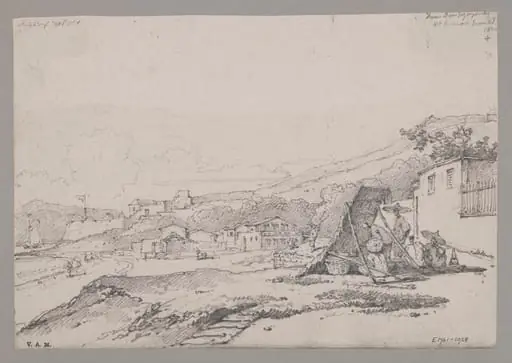
Governor's House, and part of the Praya Grande and Penha Hill is a drawing by the Romanticist artist George Chinnery. It dates from 13 and is held in the collection of the Victoria and Albert Museum.
About this work
This drawing shows a moment along the Praya Grande in Macau. George Chinnery used Romanticism to capture the scene in 1833. It’s a quick sketch, not a polished painting.
Look for the beached Tanka boat in the front. Figures sit under a simple shelter near a small fort called S. Pedro.
Check out the Victoria and Albert Museum online to see more.
Overview
The work is a drawing titled *Governor's House, and part of the Praya Grande and Penha Hill*, executed in 1833. It presents a westward view along Macau’s Praya Grande, foregrounded by a beached Tanka boat and a group of figures sheltered beneath a modest awning, with the modest fort of São Pedro visible beyond.
Subject & Meaning
The composition captures a quotidian moment in a bustling waterfront district, juxtaposing the stillness of the stranded boat and the sheltering figures against the fortified backdrop. The scene reflects the everyday life of local Tanka communities and the strategic military presence that shaped Macau’s coastal landscape.
Technique & Style
Rendered as a rapid sketch rather than a finished painting, the drawing employs the loose, expressive line work characteristic of George Chinnery’s Romantic approach. The hand‑drawn quality emphasizes atmosphere and movement over meticulous detail, conveying immediacy and personal observation.
History & Provenance
Created by the British artist George Chinnery during his long residence in Macau, the piece documents the city’s early‑19th‑century environment. It later entered the collection of the Victoria and Albert Museum, where it is catalogued among Chinnery’s works depicting the region.
Context
At the time of its creation, Macau served as a key Portuguese trading outpost, with the Praya Grande functioning as a principal promenade and commercial artery. The presence of the Tanka boat highlights the role of indigenous waterborne labor, while the fort of São Pedro underscores the colonial military infrastructure.
Artist & collection
Artist
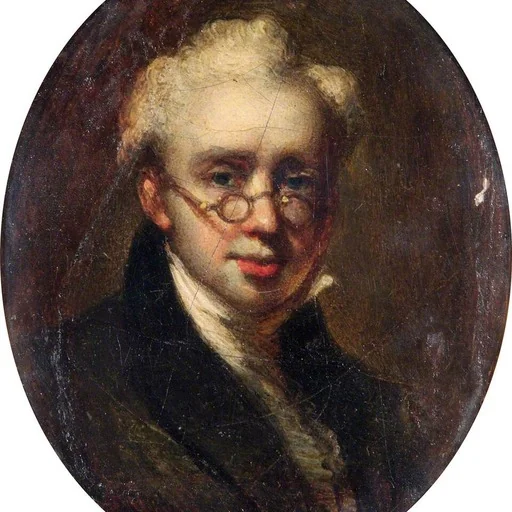
George Chinnery (Chinese: 錢納利; 5 January 1774 – 30 May 1852) was an English painter who spent most of his life in Asia, especially India and southern China.

 Corner of Macao Bay, looking west
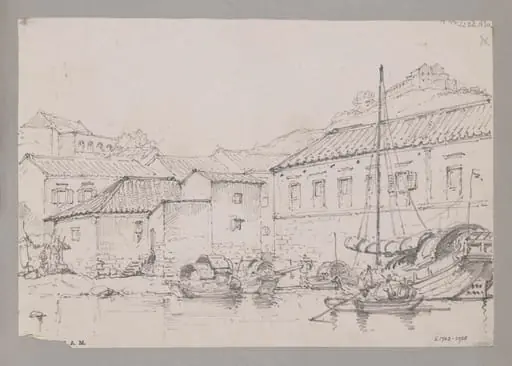 Waterside houses below Penha Hill, Macau
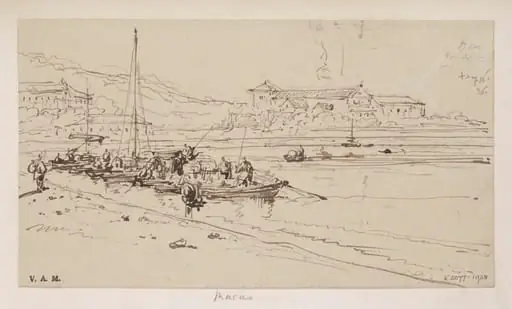 Tanka boats in the Praya Grande, Macau
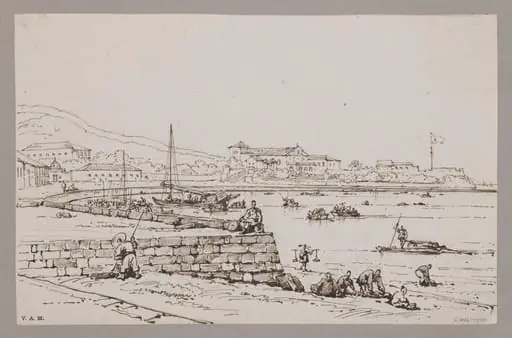 The bay, Macau, with the church and fort of S. Francisco
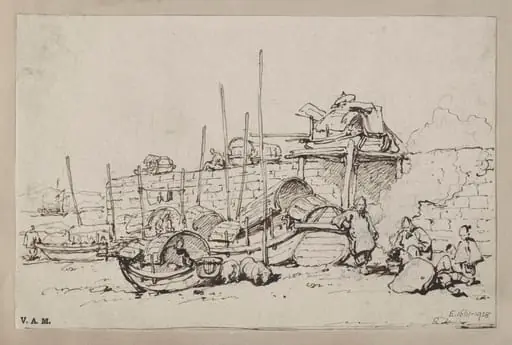 Tanka boats and boatpeople on the beach by the sea wall, Macau
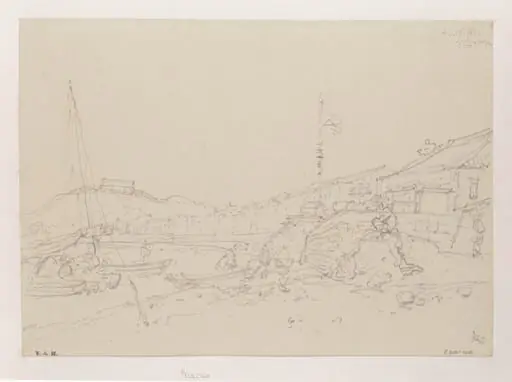 The Praya Grande, Macau, from S. Pedro fort
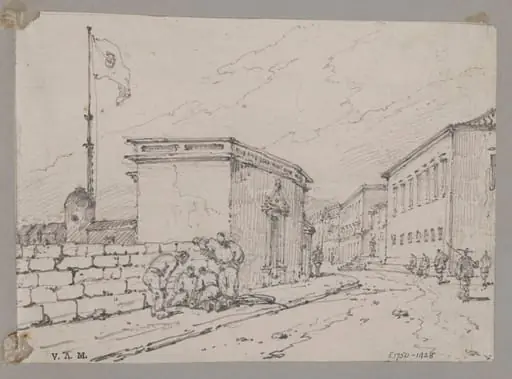 Governor's House, and Pedro Fort, Macao
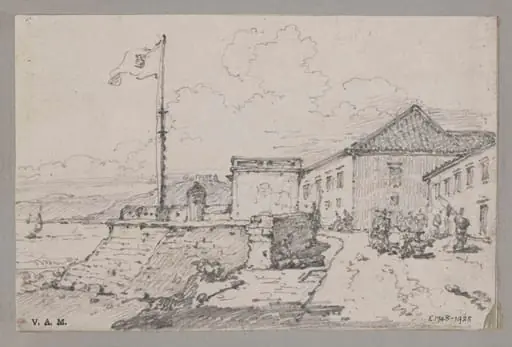 Governor’s House and Pedro Fort, Macau
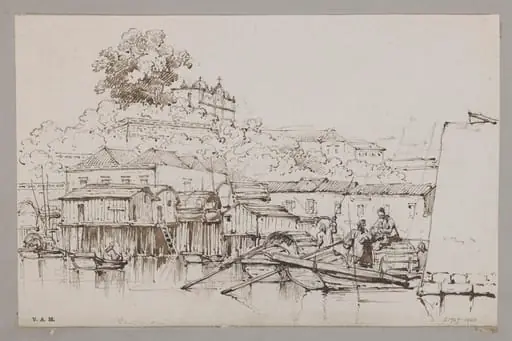 College of San José from the adjacent boat-village, Macao
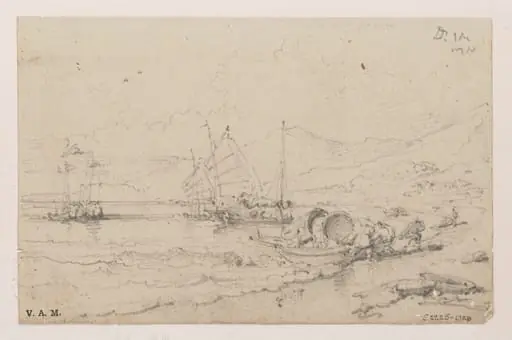 A drawing of the Praya Grande, Macau, with figures beaching a Tanka boat and other craft in the bay
 Part of Macao Bay, looking west