Artwork
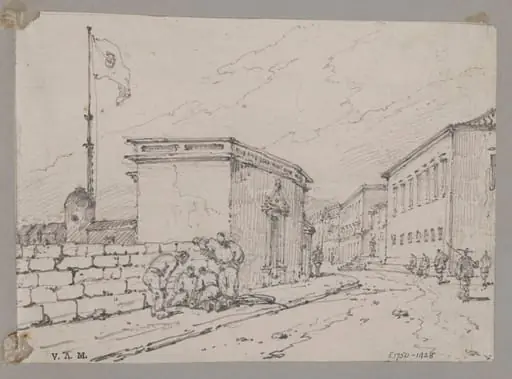
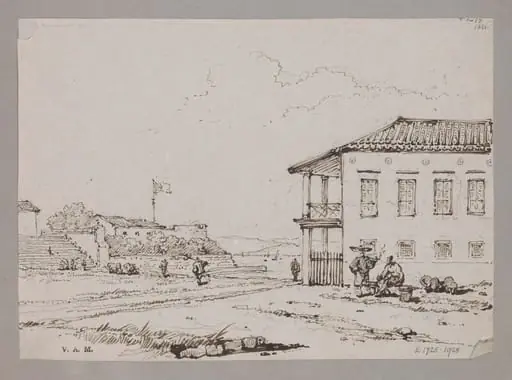
Governor’s House and Pedro Fort, Macau
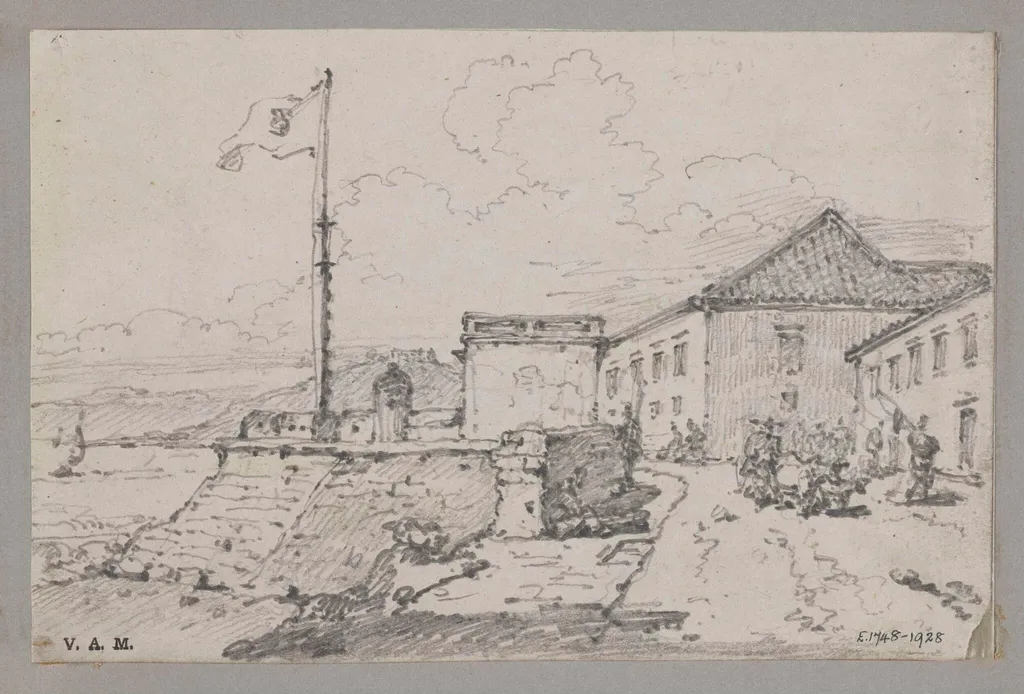
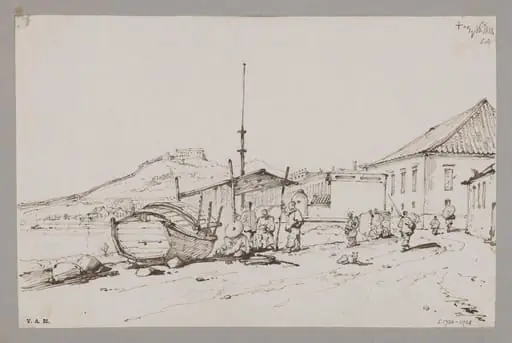
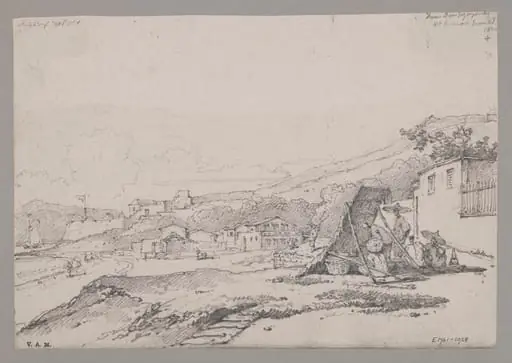
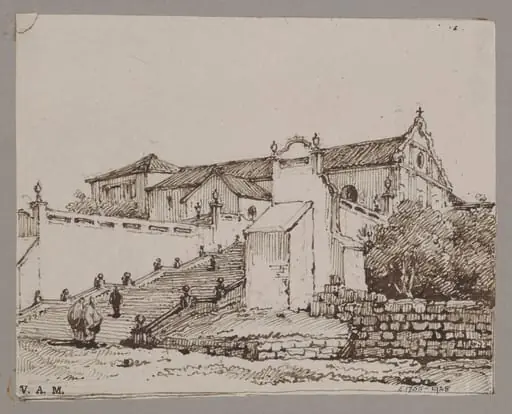
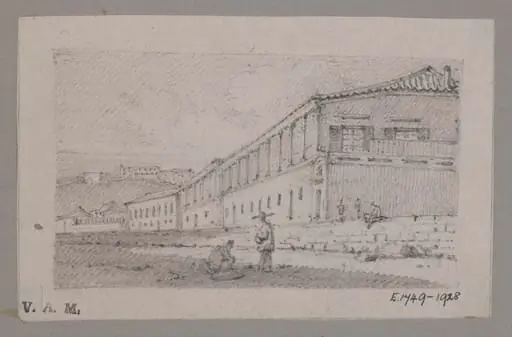
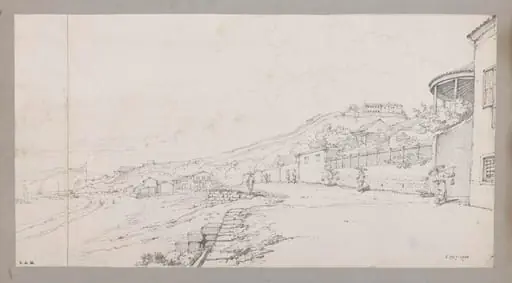
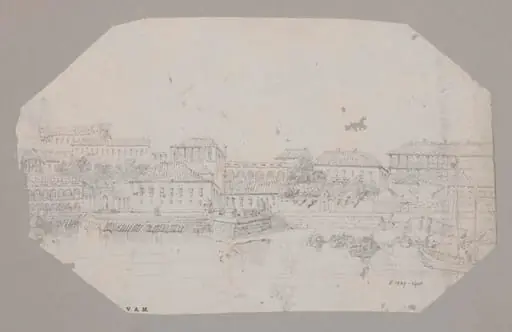
Governor’s House and Pedro Fort, Macau is a drawing by the Romanticist artist George Chinnery. It dates from 19 and is held in the collection of the Victoria and Albert Museum. This 1825 drawing presents a southwest prospect along Macau’s Praya Grande, the city’s waterfront promenade.
About this work
This drawing shows Macau’s coast in 1825. Artist George Chinnery chose a Romantic view, looking past a fort and the Governor’s house toward distant hills.
The sheet holds more than the scene—two quick pencil studies crowd the back. That mix of finished view and loose sketches catches a moment in time.
Check out the Victoria and Albert Museum to see this work in person.
Overview
This 1825 drawing presents a southwest prospect along Macau’s Praya Grande, the city’s waterfront promenade. The composition frames the Governor’s residence and São Pedro Fort in the foreground, with Penha Hill rising in the distance. Executed in ink and wash, the work balances topographic precision with atmospheric effects, characteristic of early nineteenth-century travel imagery.
Subject & Meaning
The scene records Macau’s colonial architecture and strategic defenses during the Qing dynasty. By positioning the fort and government building prominently, the drawing underscores Portuguese administrative presence. The inclusion of distant hills softens the urban focus, evoking a Romantic sensibility that contrasts human order with natural expanse.
Technique & Style
Rendered in ink with subtle washes, the drawing employs controlled linework for architectural detail and looser strokes for foliage and sky. The verso contains two rapid pencil sketches—figure studies—revealing the artist’s process of observation and experimentation. This duality reflects a transitional approach, merging finished composition with informal draftsmanship.
History & Provenance
Created by George Chinnery during his residency in Macau, the work entered the Victoria and Albert Museum’s collection in 1928. Its acquisition number, E.1750-1928, links it to related studies from the same period. The sheet’s physical condition preserves both the primary view and incidental sketches, offering insight into the artist’s working methods.
Context
In 1825, Macau served as a critical hub for European trade in East Asia, governed under Portuguese authority while remaining under nominal Chinese sovereignty. Drawings like this documented the city’s built environment for audiences unfamiliar with its geography, blending documentary intent with aesthetic appeal.
Artist & collection
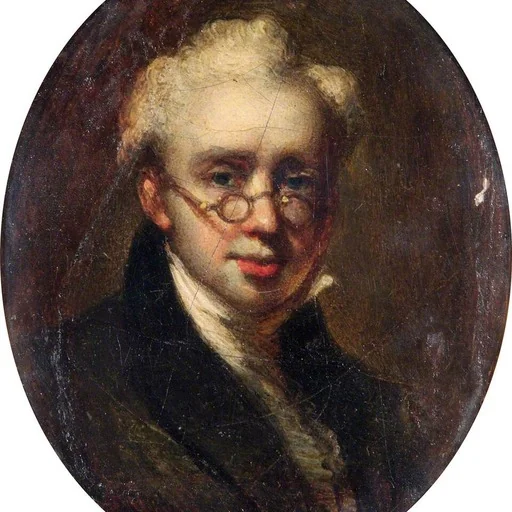
Artist
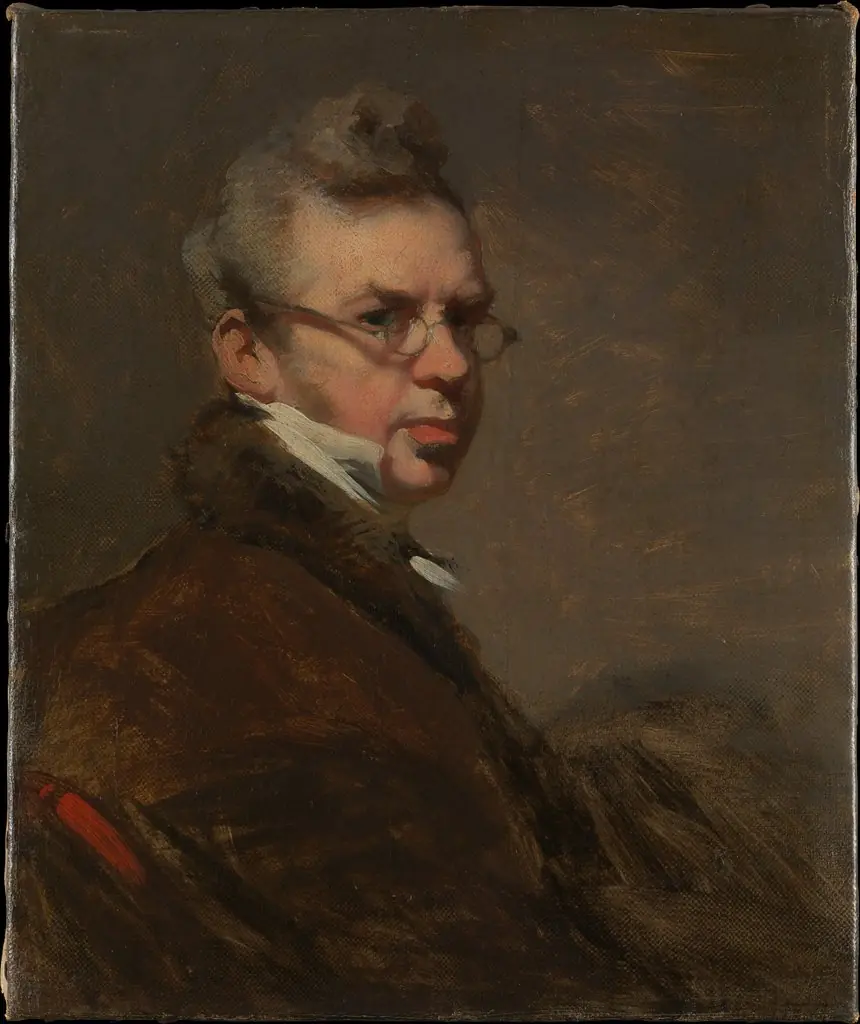
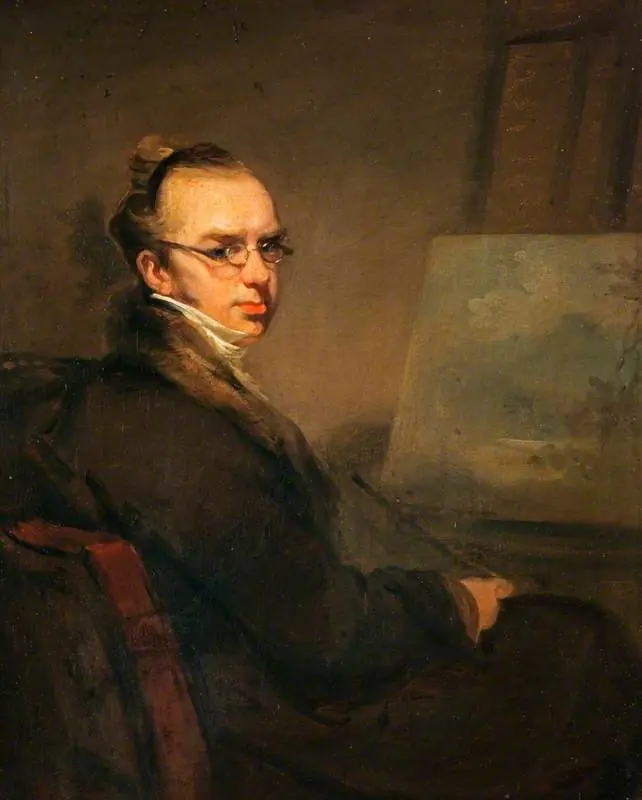
George Chinnery (Chinese: 錢納利; 5 January 1774 – 30 May 1852) was an English painter who spent most of his life in Asia, especially India and southern China.