Artwork
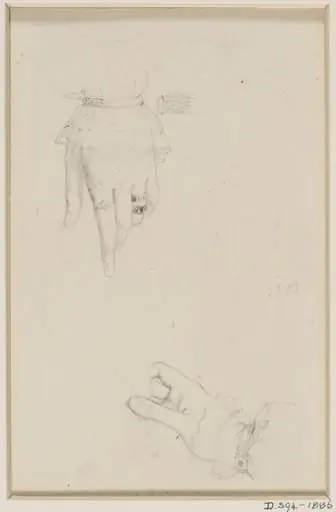
Hands folded on the back of a chair
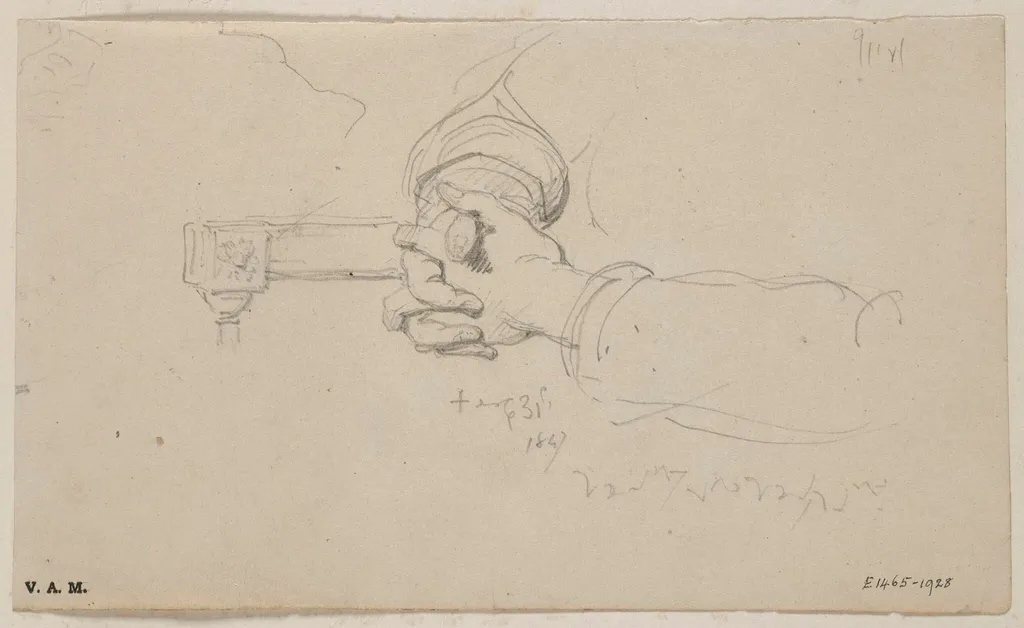
Hands folded on the back of a chair is a drawing by the Romanticist artist George Chinnery. It dates from 20 and is held in the collection of the Victoria and Albert Museum. This drawing depicts folded hands resting on the back of a chair, rendered in careful pencil strokes.
About this work
Overview
This drawing depicts folded hands resting on the back of a chair, rendered in careful pencil strokes. The reverse side contains two additional sketches of a seated Western woman, suggesting the sheet was reused for preliminary studies. An inscription references Joseph Jardine, linking the work to a British merchant family active in 19th-century China.
Subject & Meaning
The inclusion of seated female figures on the reverse may indicate an attempt to explore posture or domestic presence.
The folded hands suggest quiet contemplation or stillness, possibly evoking absence or memory. The inclusion of seated female figures on the reverse may indicate an attempt to explore posture or domestic presence. The connection to Joseph Jardine implies a personal or familial context, though the exact intent remains ambiguous—perhaps a private exercise in observation rather than a formal portrait.
Technique & Style
The drawing employs fine, controlled pencil lines to define form and texture, with subtle shading to suggest volume. The hands are rendered with attention to anatomical detail, while the chair’s contours are lightly suggested. The sketches on the reverse are more rapid, indicating spontaneous study. The style aligns with 19th-century observational drawing practices common among travelers and merchants.
History & Provenance
Joseph Jardine, nephew of Dr. William Jardine, arrived in China in 1843, the year his uncle died. The drawing likely dates to this period or shortly after, created during Jardine’s time in the region. Its survival suggests it was preserved within family circles, possibly as a personal memento rather than a commissioned work. The inscription confirms its direct association with him.
Context
In mid-19th century China, Western merchants often documented their surroundings through sketches, blending personal record with cultural observation. This drawing reflects that practice—its intimate subject matter contrasts with the broader commercial activities of Jardine, Matheson & Co. The reuse of paper hints at limited resources or a pragmatic approach to artistic study in a foreign setting.
Legacy
The drawing survives as a quiet artifact of cross-cultural encounter, offering insight into the private moments of a Western figure in China. It does not belong to a major artistic movement but exemplifies the everyday visual habits of expatriates. Its value lies in its unembellished observation, preserving a fleeting gesture from a historical moment rarely captured in such personal form.
Artist & collection
Artist
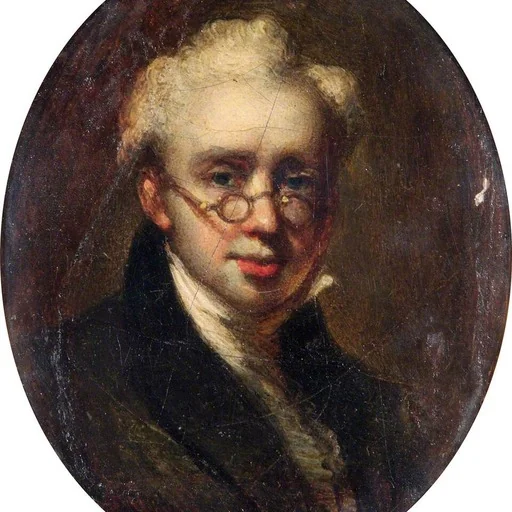
George Chinnery (Chinese: 錢納利; 5 January 1774 – 30 May 1852) was an English painter who spent most of his life in Asia, especially India and southern China.

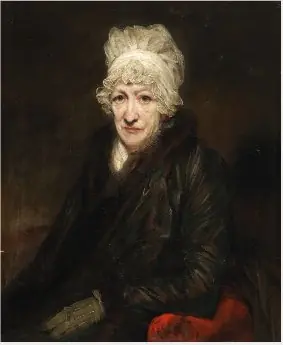
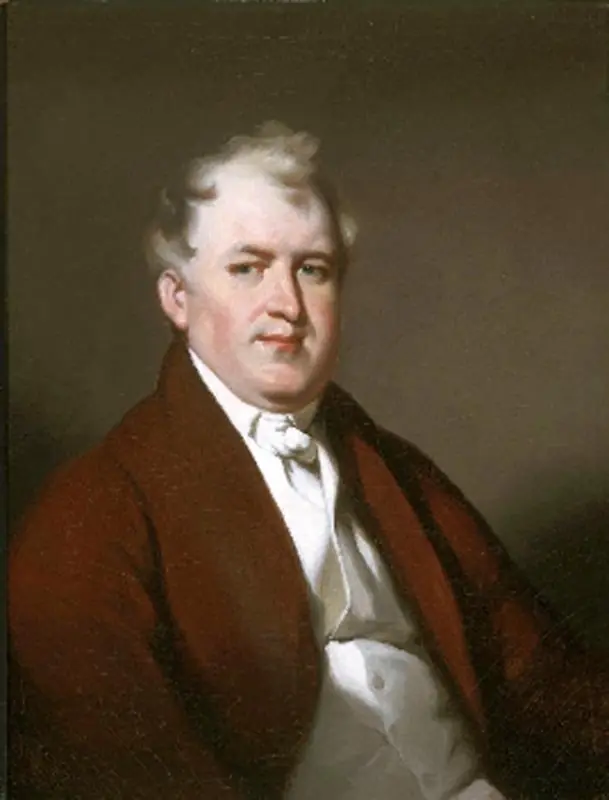
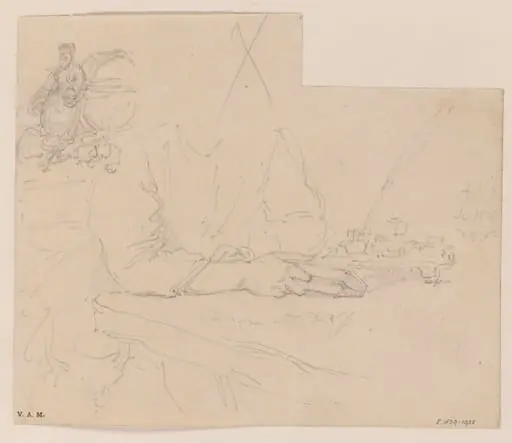 A Western woman seated at a table
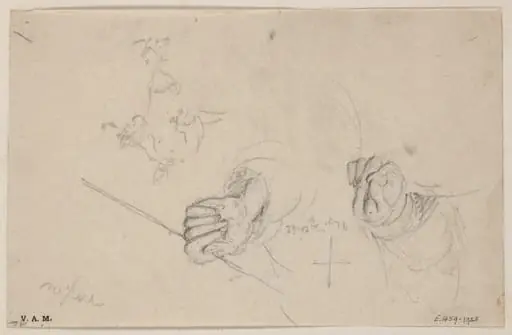 The hands of a Chinese figure holding a line or pipe
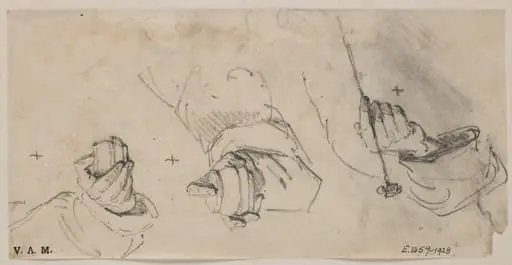 Three drawings of a hand grasping different objects
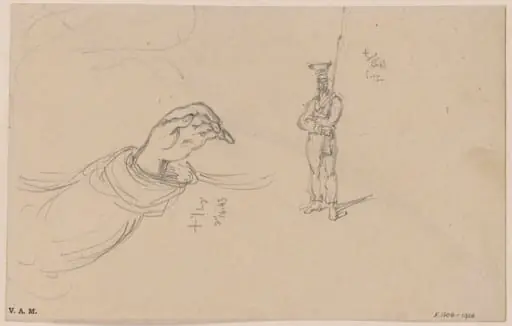 A hand and sleeve, and a soldier
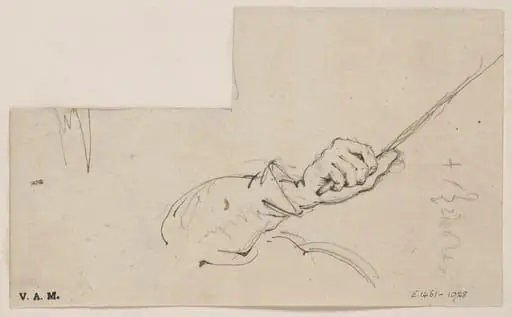 An arm and hand holding a stick
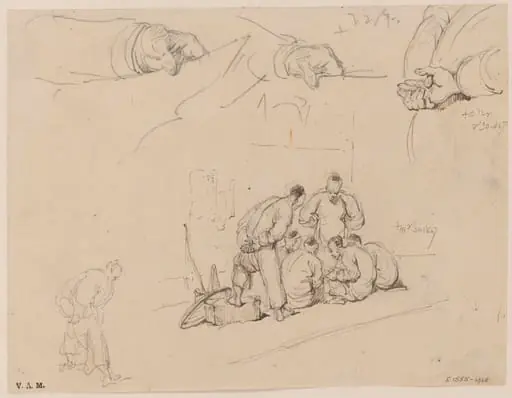 Drawings of a group of Chinese men, clasped hands, and a hand holding paper
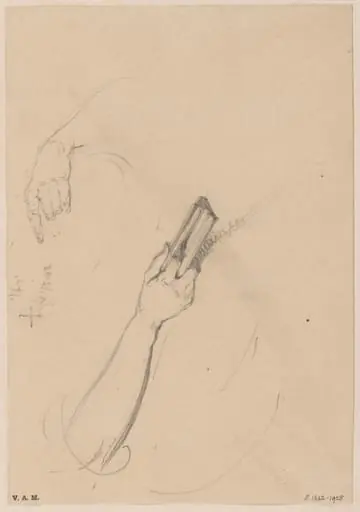 Studies of arms and hands, one holding a book
![Hand Studies [verso], by Allan Ramsay](https://artifactworldgallery.com/img/allan-ramsay--hand-studies-verso--f6c634d33f170fe2-w320.webp) Hand Studies [verso]
Hand Studies [verso]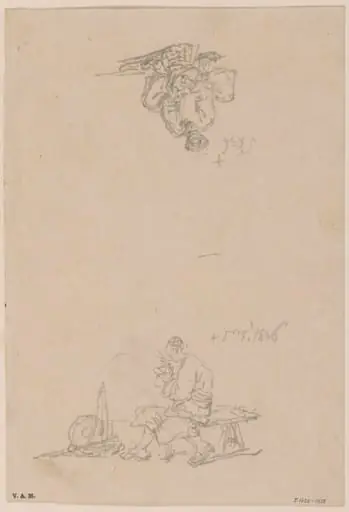 Two drawings of Chinese figures
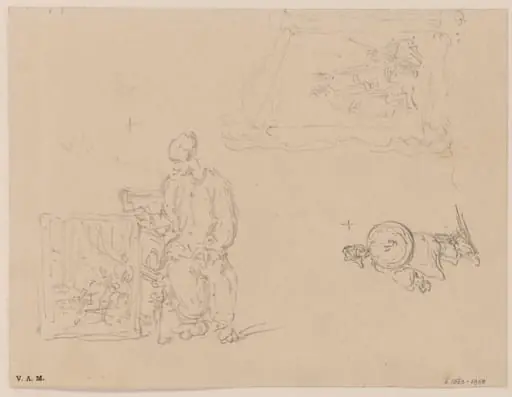 A figure seated beside a portrait, and other sketches
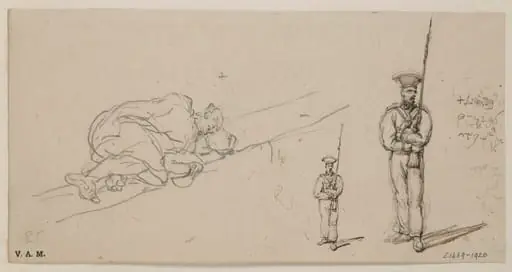 A sleeping Chinese man and a Portuguese soldier
 Study of hands