Artwork
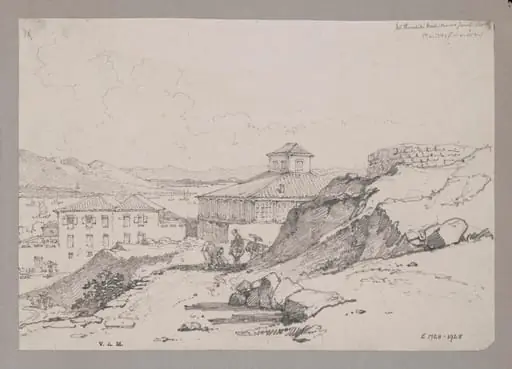
Part of the Citadel and Franciscan Fort, Macao, with part of Mr. Whiteman's house ("the forty-pillared house")
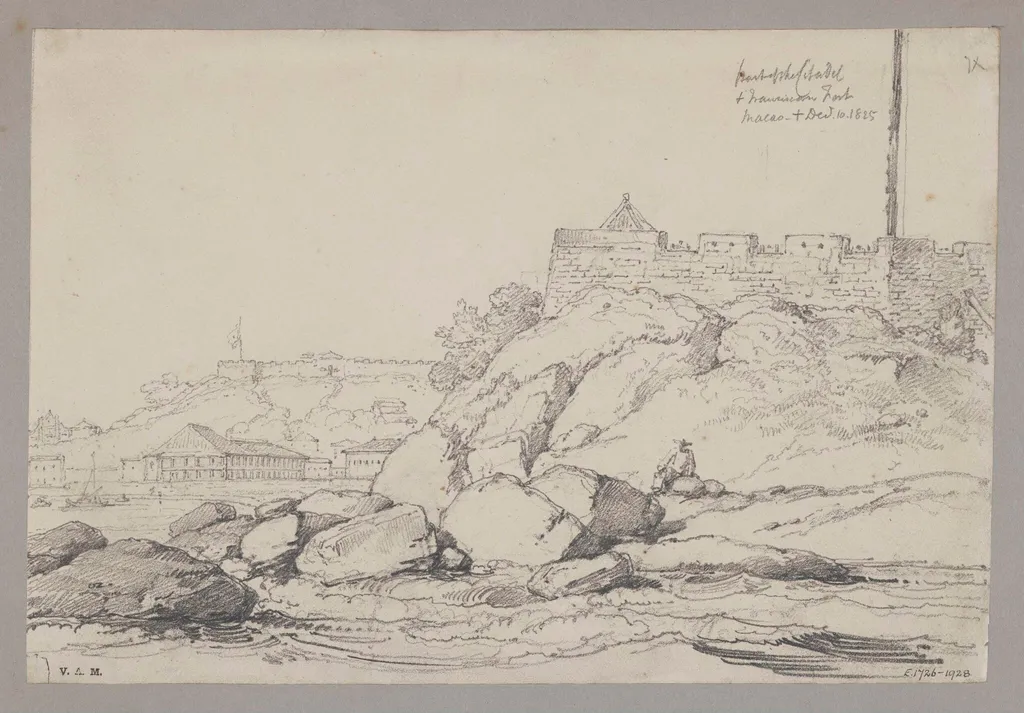
Part of the Citadel and Franciscan Fort, Macao, with part of Mr. Whiteman's house ("the forty-pillared house") is a drawing by the Romanticist artist George Chinnery. It dates from 11 and is held in the collection of the Victoria and Albert Museum.
About this work
George Chinnery made a detailed drawing of Macao’s skyline in 1836. It shows the Franciscan Fort on its rocky cliff, plus Mr. Whiteman’s house and parts of the citadel and S. Paulo façade across the bay.
The artist captured this scene in Romantic style, with soft shading and careful lines.
Check out the Victoria and Albert Museum to see the original drawing.
Overview
This 1836 drawing by George Chinnery depicts a panoramic view of Macao’s coastal landscape, focusing on key architectural landmarks visible across the bay.
This 1836 drawing by George Chinnery depicts a panoramic view of Macao’s coastal landscape, focusing on key architectural landmarks visible across the bay. The Franciscan Fort, perched on a rocky outcrop, is rendered alongside Mr. Whiteman’s residence, known locally as the 'forty-pillared house,' as well as fragments of the Citadel of Fort Monte and the façade of St. Paul’s. Executed in ink and wash, the work captures the city’s layered urban fabric with precision and atmospheric nuance.
Subject & Meaning
The drawing presents Macao as a crossroads of cultures, where European fortifications, missionary architecture, and colonial residences coexist. The inclusion of the Franciscan Fort and St. Paul’s façade reflects the enduring presence of Portuguese and Catholic influence, while Whiteman’s house—built for a British merchant—signals the growing role of foreign traders. The composition suggests a quiet observation of cohabitation rather than overt political statement.
Technique & Style
Chinnery employed soft washes and delicate linear contours to convey depth and texture, characteristic of Romantic-era topographical drawing. The skyline is rendered with graduated tonal shifts, enhancing the sense of distance and atmospheric haze over the bay. Architectural details are carefully delineated, yet the overall effect remains lyrical, balancing documentary accuracy with a subdued emotional tone.
History & Provenance
Created during Chinnery’s extended stay in Macao, the drawing is part of a series documenting the city’s changing urban landscape in the 1830s. It entered the Victoria and Albert Museum’s collection through established provenance linked to British colonial collectors. The work survives as a rare visual record of Macao before major 19th-century transformations, preserving structures now altered or lost.
Context
In 1836, Macao was a Portuguese-administered trading post under increasing pressure from British commercial interests. The presence of Whiteman’s house, a private residence for a British merchant, illustrates the informal expansion of foreign enclaves despite Portuguese sovereignty. Chinnery’s view captures this tension subtly, framing the city not as a battleground but as a lived, layered environment.
Legacy
Chinnery’s drawing remains a key reference for historians studying Macao’s pre-modern urban form. Its detailed depiction of now-vanished or altered structures provides valuable evidence for architectural reconstruction and cultural analysis. The work exemplifies the role of British artists in documenting colonial Asia, offering a quiet but enduring record of a transitional moment in the region’s history.
Artist & collection
Artist
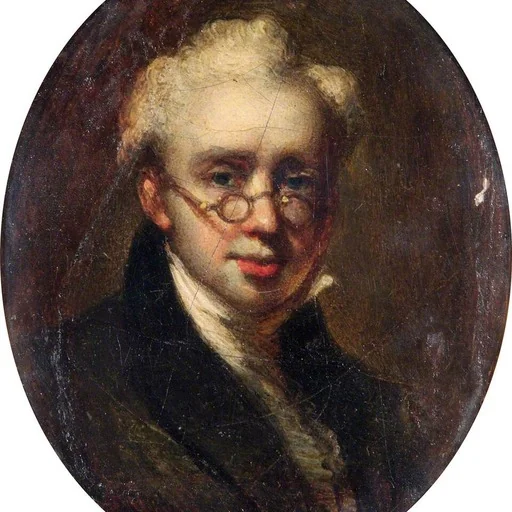
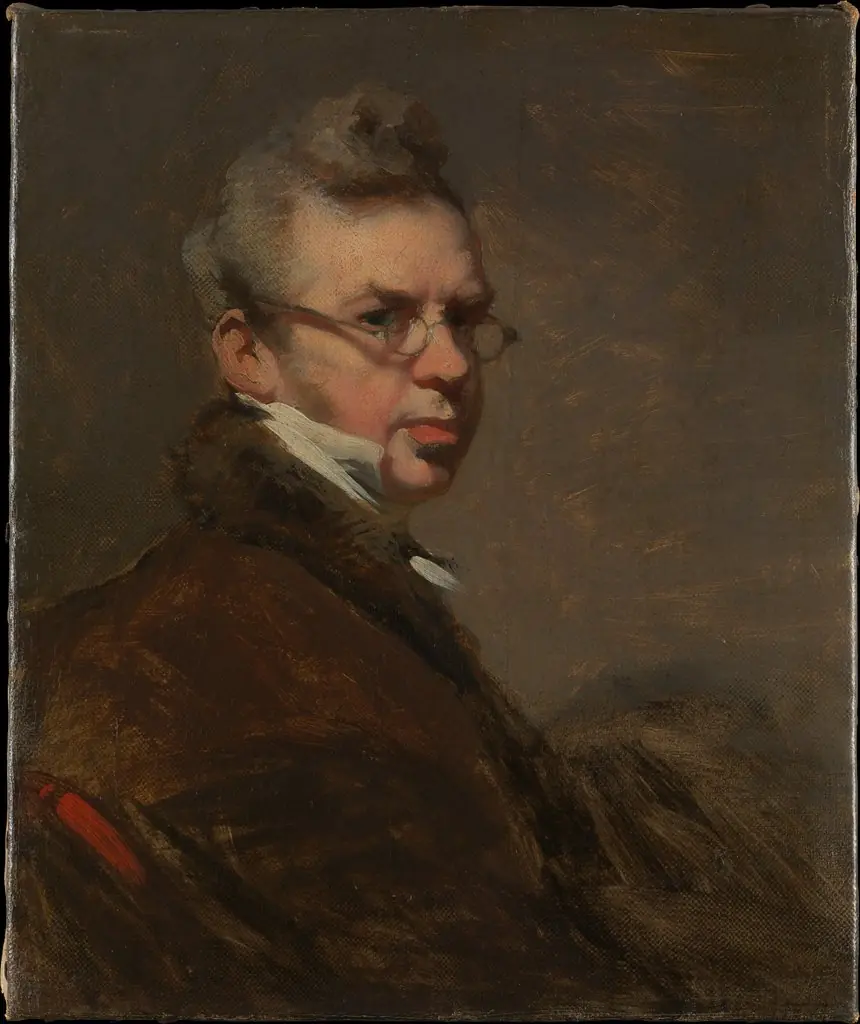
George Chinnery (Chinese: 錢納利; 5 January 1774 – 30 May 1852) was an English painter who spent most of his life in Asia, especially India and southern China.

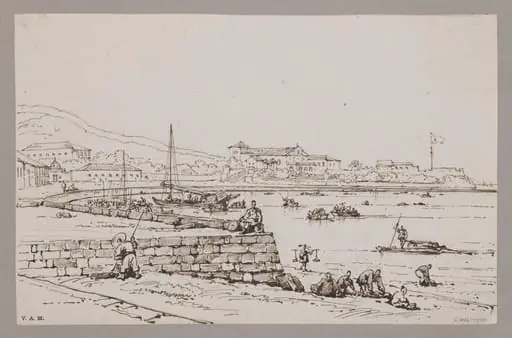 The bay, Macau, with the church and fort of S. Francisco
 The Rev. Mr. Vatchell's house (formerly Mr. Thornhill's), Macao
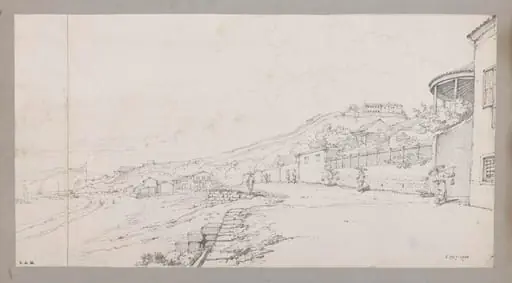 Part of Macao Bay, looking west
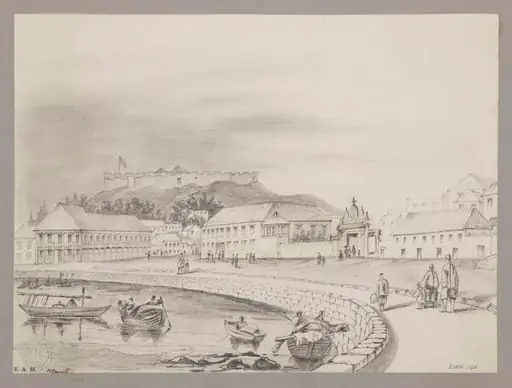 Houses of Mr. Whiteman ("the forty-pillared house") and Captain Elliott, and Monte Fort, Macao
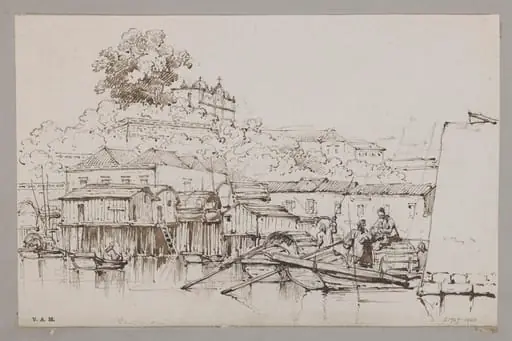 College of San José from the adjacent boat-village, Macao
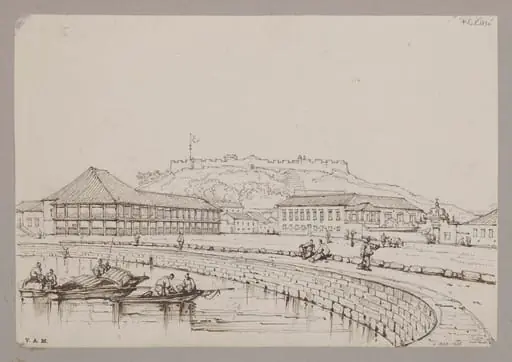 Houses of Mr. Whiteman ("the forty-pillared house") and Captain Elliott, and Monte Fort, Macao
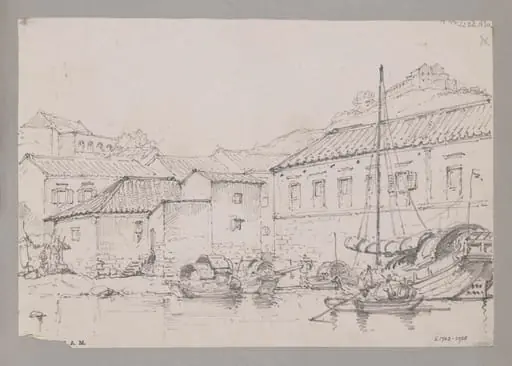 Waterside houses below Penha Hill, Macau
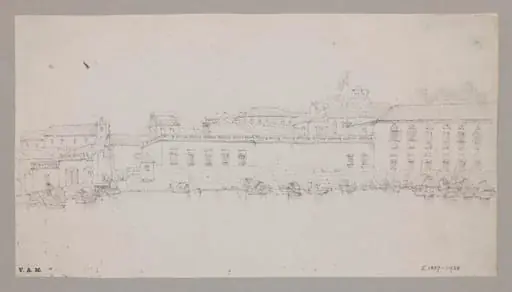 Buildings flanking the Inner Harbour, Macau
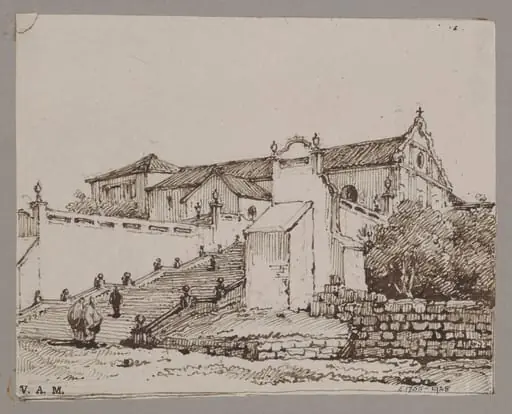 Franciscan Church, Macao