Artwork
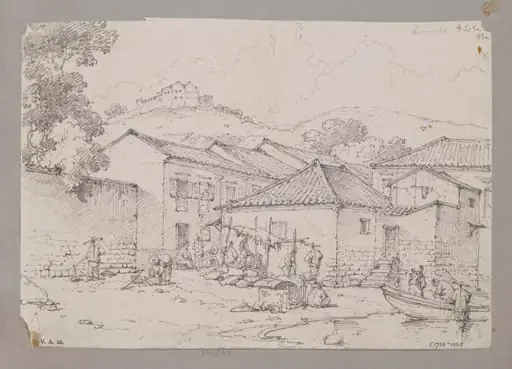
Part of the Praya Manduco and Penha Hill, Macao
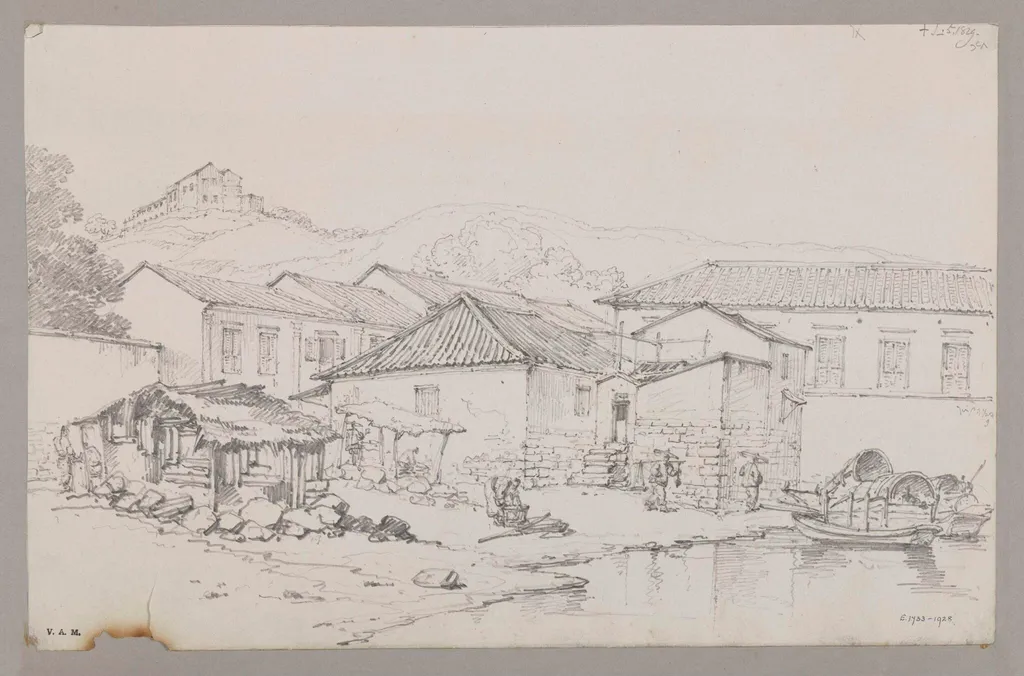
Part of the Praya Manduco and Penha Hill, Macao is a drawing by the Romanticist artist George Chinnery. It dates from 6 and is held in the collection of the Victoria and Albert Museum.
About this work
Overview
This pencil drawing by George Chinnery captures a quiet coastal stretch in Macau known as Praya Manduco, with the Convent of Penha perched on the hill above. Executed in fine linear detail, it records the modest architecture of waterfront dwellings and the topography of the site, offering a precise, unembellished view of daily life in the mid-19th century Portuguese colony.
Subject & Meaning
The scene depicts humble homes clustered along the shoreline of a small bay, their placement reflecting the organic growth of settlement near the Inner Harbour.
The scene depicts humble homes clustered along the shoreline of a small bay, their placement reflecting the organic growth of settlement near the Inner Harbour. Above, the convent on Penha Hill anchors the composition vertically, suggesting the spiritual and institutional presence that shaped the landscape. The drawing serves as a documentary record rather than an idealized portrayal, emphasizing spatial relationships over narrative.
Technique & Style
Chinnery employs delicate pencil lines and subtle cross-hatching to model form and suggest texture, particularly in the roofs and hillside. The tonal gradations are restrained, avoiding dramatic contrast, which lends the scene a quiet realism. His hand is precise yet fluid, capturing architectural detail without ornamentation, consistent with his observational approach to urban and coastal life in Asia.
History & Provenance
Created during Chinnery’s time in Macau, the drawing is one of many made between the 1820s and 1850s as he documented the region’s topography and vernacular architecture. It was later acquired by the Victoria and Albert Museum, where it resides alongside related works, including a companion piece dated a year later. Its survival reflects its value as a historical record rather than a commercial artwork.
Context
In the 1830s, Macau was a minor but enduring Portuguese trading post, its landscape shaped by centuries of maritime exchange. The Praya Manduco area was a working waterfront, home to fishermen and small traders. The convent on Penha Hill, established in the 17th century, remained a visible landmark. Chinnery’s drawing captures this transitional moment before rapid urbanization altered the coastline.
Legacy
Chinnery’s drawings of Macau provide some of the most detailed visual evidence of the colony’s pre-industrial character. This work, along with others in his series, informs modern studies of urban development in southern China and the Portuguese diaspora. Though not widely exhibited, they remain essential references for historians studying 19th-century coastal Asia.
Artist & collection
Artist
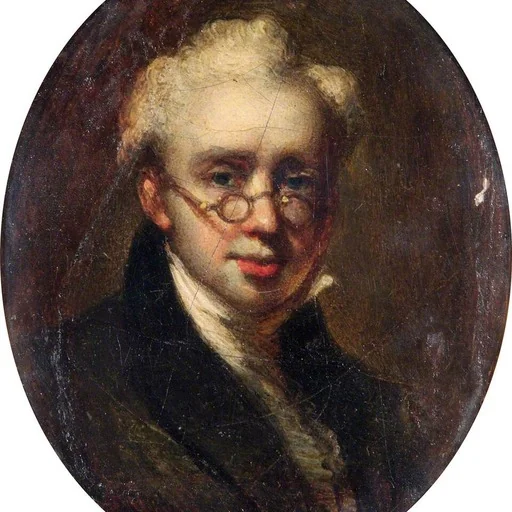
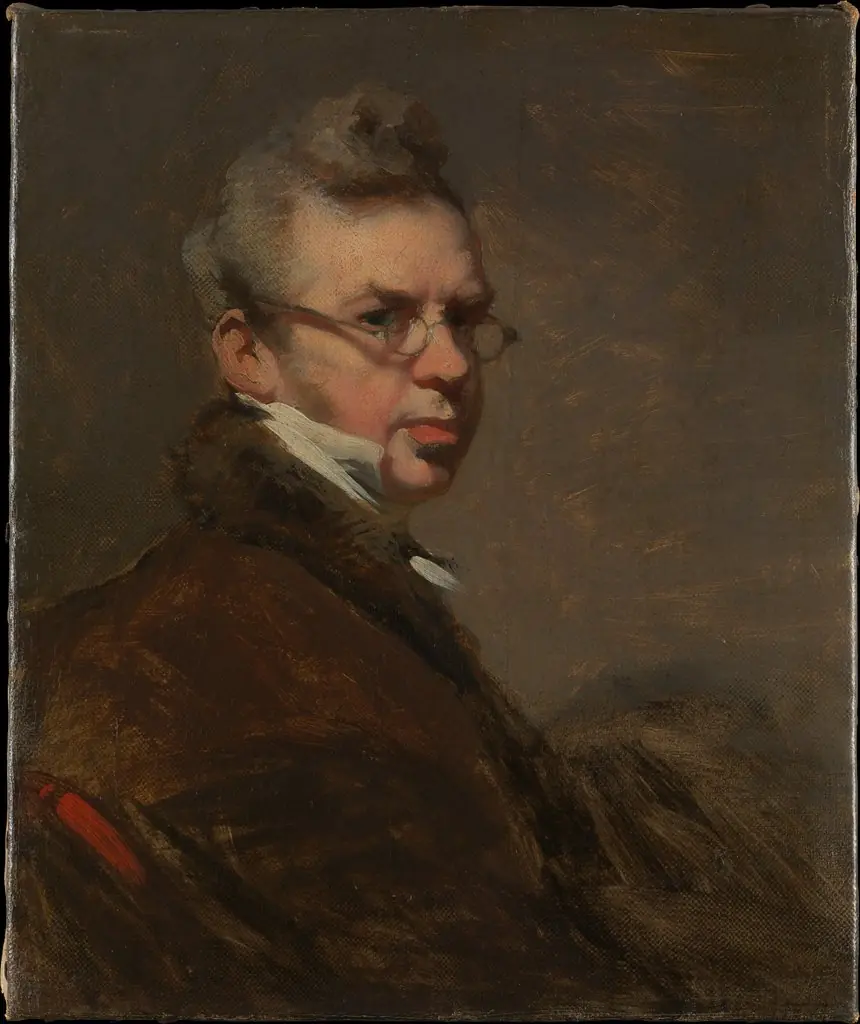
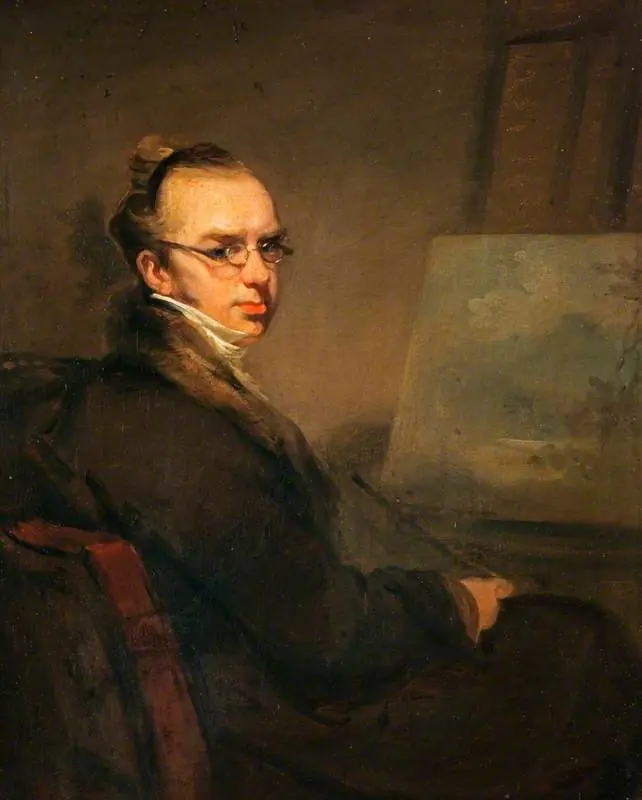
George Chinnery (Chinese: 錢納利; 5 January 1774 – 30 May 1852) was an English painter who spent most of his life in Asia, especially India and southern China.

 Part of the Praya Manduco, Macao
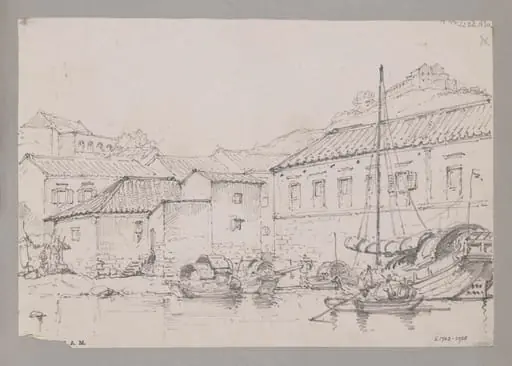 Waterside houses below Penha Hill, Macau
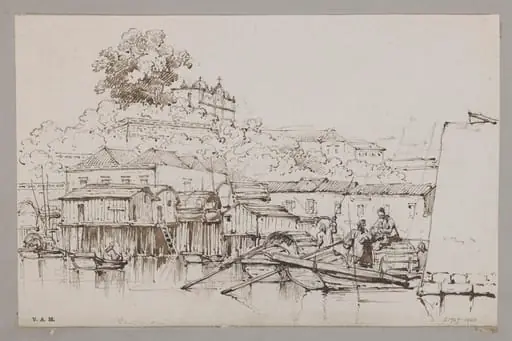 College of San José from the adjacent boat-village, Macao
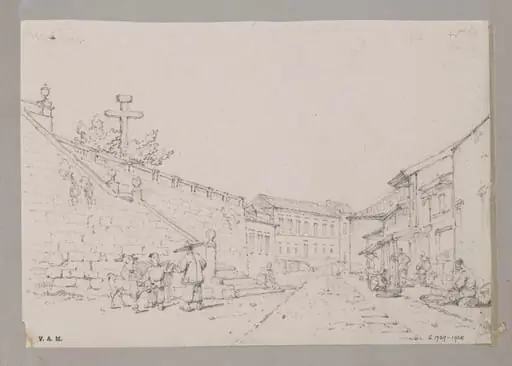 Mr. Baretto's House, Macao
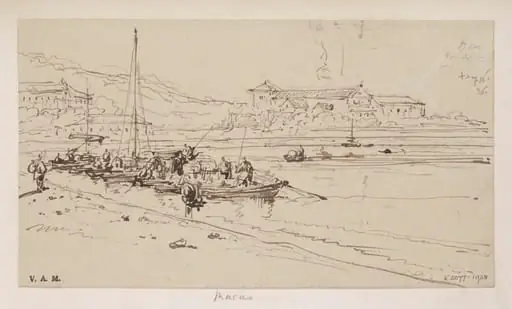 Tanka boats in the Praya Grande, Macau
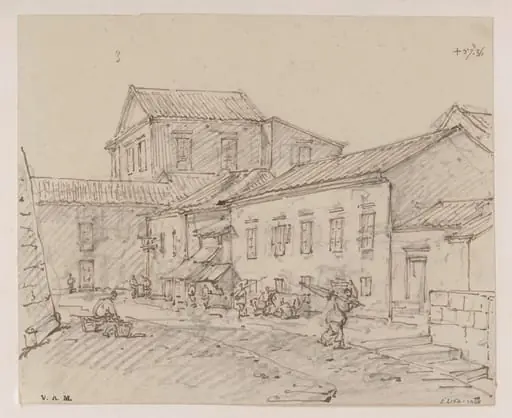 A street in Macau
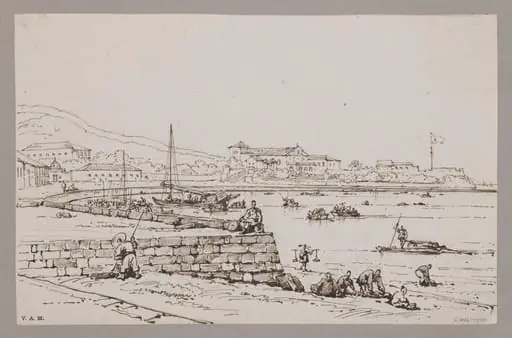 The bay, Macau, with the church and fort of S. Francisco
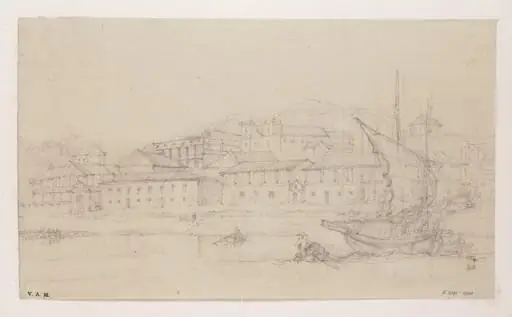 Macau with the church of S. Lourenço
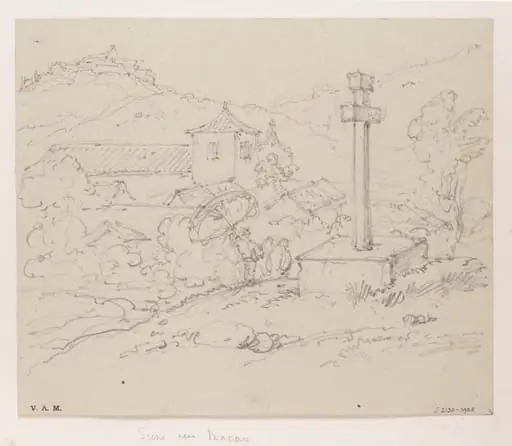 The church of S. Lazaro, Macau