Artwork
Mr. Baretto's House, Macao
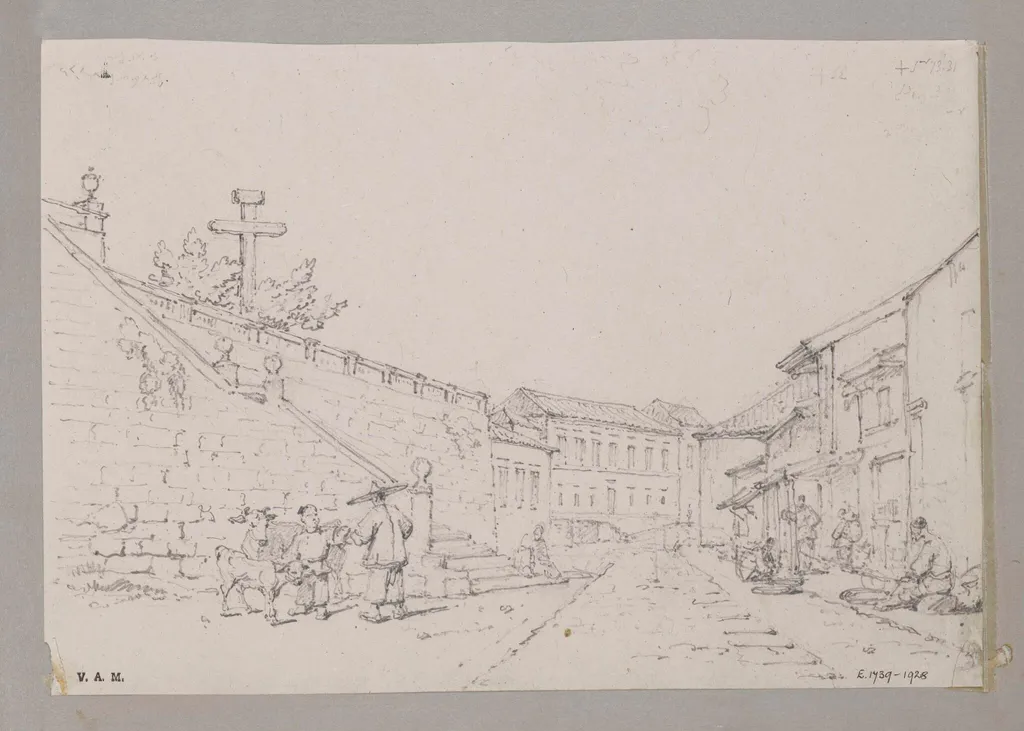
Mr. Baretto's House, Macao is a drawing by the Romanticist artist George Chinnery. It dates from 7 and is held in the collection of the Victoria and Albert Museum. This drawing captures a street scene in Macao, focusing on the architectural presence of S.
About this work
Overview
This drawing captures a street scene in Macao, focusing on the architectural presence of S. Lourenço Church. The composition includes steps leading up to the church wall, with a crucifix mounted on the parapet above. Figures and livestock are positioned at the base of the steps, suggesting everyday activity in the colonial urban landscape.
Subject & Meaning
The scene centers on a local setting rather than a ceremonial event, emphasizing the integration of Portuguese religious architecture within a Chinese urban context. The presence of cattle and figures implies daily life unfolding around a sacred structure, reflecting the hybrid cultural environment of Macao under Portuguese administration.
Technique & Style
Executed as a linear drawing, the work uses precise ink lines to define architectural forms and figures. Shading is minimal, favoring clarity over atmospheric depth. The arrangement of elements follows a straightforward perspective, prioritizing topographical accuracy over dramatic composition.
History & Provenance
The drawing is linked to the Barretto family, long-established in Portuguese colonial circles in Goa and Macao since the 1500s. Its inclusion in a manuscript index suggests it was part of a documented collection, possibly compiled for administrative or personal record-keeping within the colonial community.
Context
Macao in the 17th to 19th centuries functioned as a cultural crossroads, where Portuguese religious structures coexisted with Chinese social practices. This drawing reflects the physical and social layers of the city, where Catholic symbols and local life intersected without overt conflict or grandeur.
Legacy
As a record of daily life in colonial Macao, the drawing offers insight into the quiet coexistence of cultures. It stands as a modest but valuable artifact of urban observation, preserving details of architecture and routine that official histories often overlooked.
Own this work as a print
Artist & collection
Artist
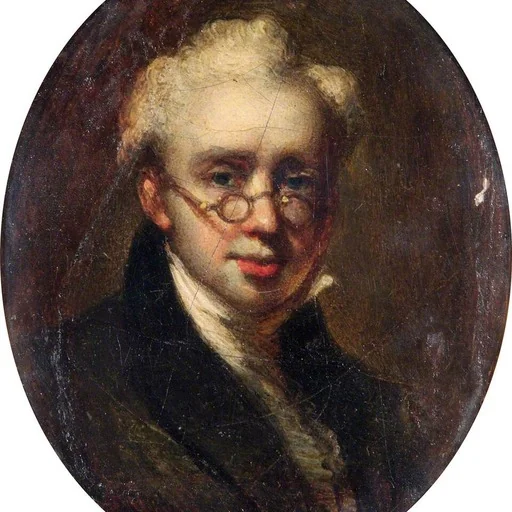
George Chinnery (Chinese: 錢納利; 5 January 1774 – 30 May 1852) was an English painter who spent most of his life in Asia, especially India and southern China.

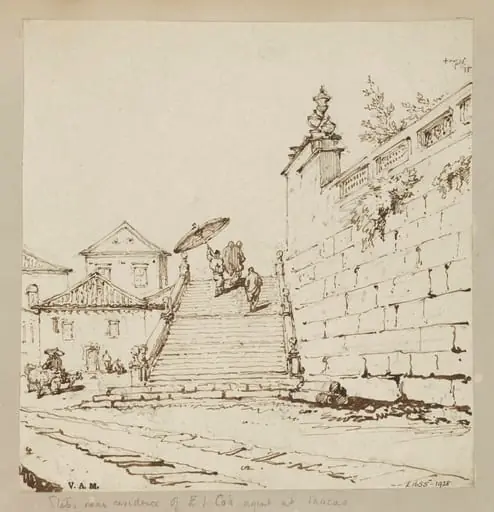 The steps and wall of S. Lourenço Church, Macau
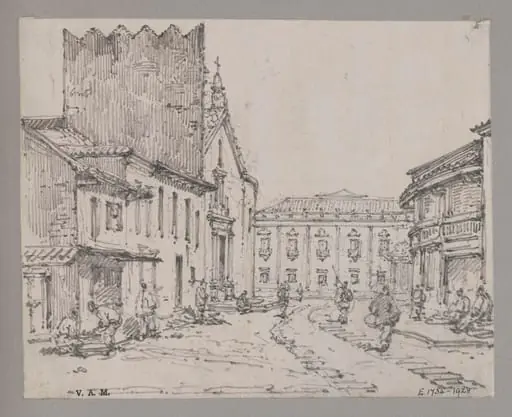 Misericordia Church and Senate House, Macao
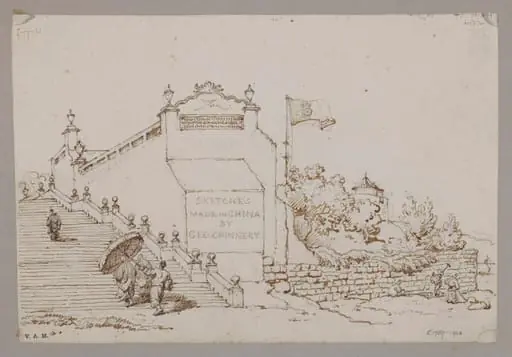 Part of Franciscan Church, Macao
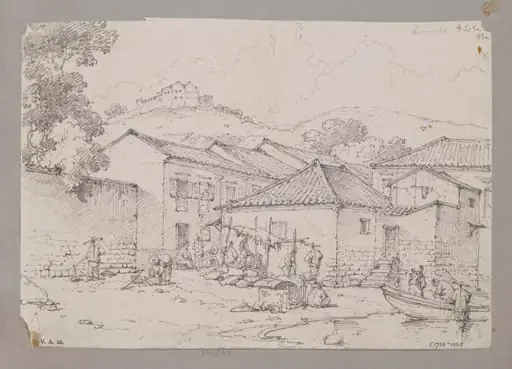 Part of the Praya Manduco, Macao
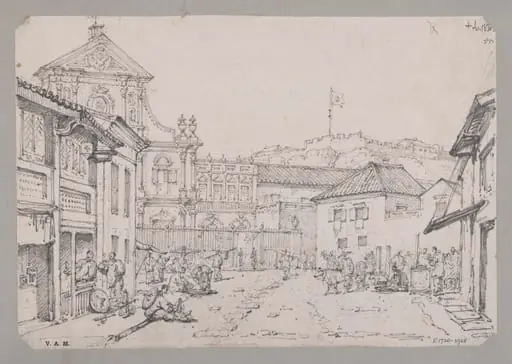 Church of S. Domingo, Macao
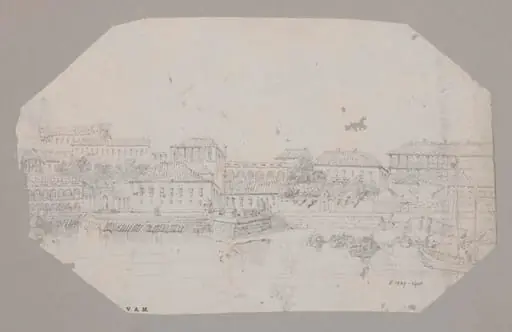 The Praya Grande, Macau
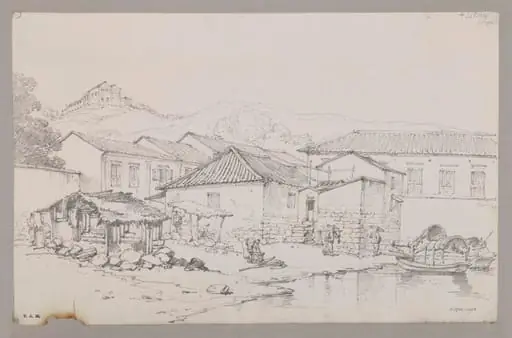 Part of the Praya Manduco and Penha Hill, Macao
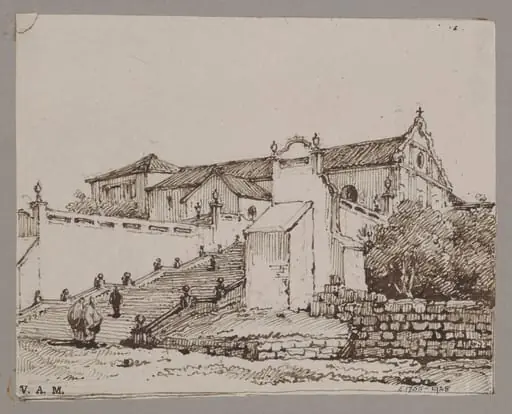 Franciscan Church, Macao
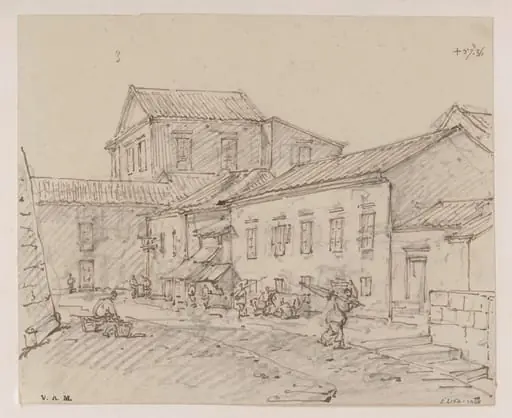 A street in Macau
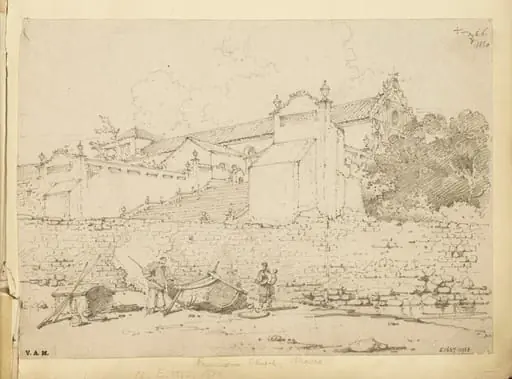 The church of S. Francisco, Macau