Artwork
'Rejection' and 'consent'
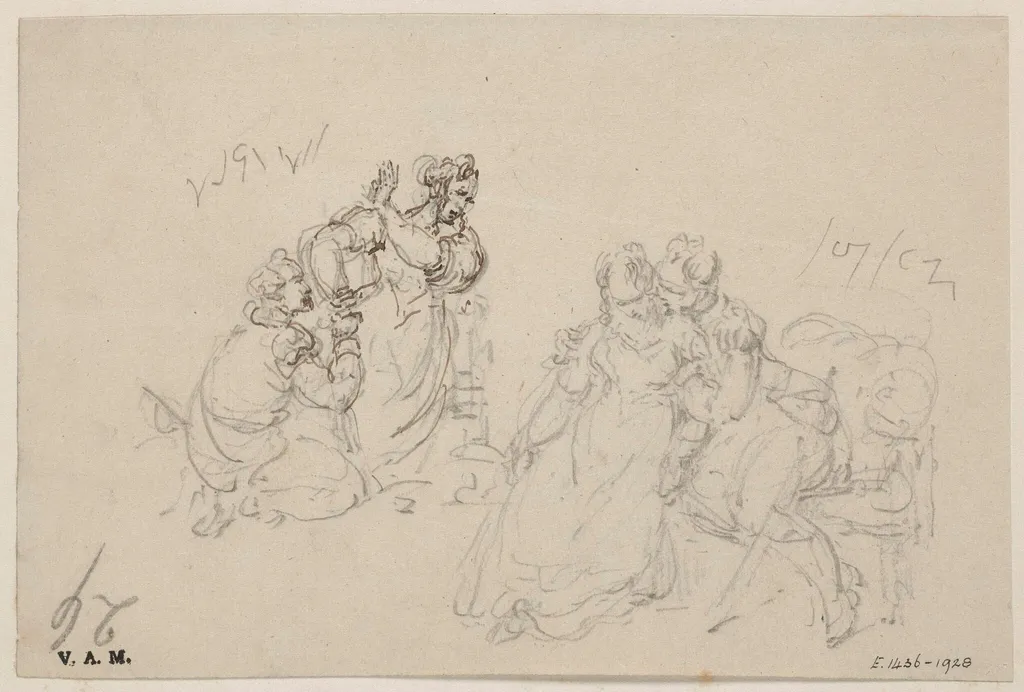
'Rejection' and 'consent' is a drawing by the Romanticist artist George Chinnery. It dates from 19 and is held in the collection of the Victoria and Albert Museum. Two companion drawings by the same hand depict contrasting interactions between a woman and a man in military uniform.
About this work
Overview
Two companion drawings by the same hand depict contrasting interactions between a woman and a man in military uniform.
Two companion drawings by the same hand depict contrasting interactions between a woman and a man in military uniform. Positioned side by side, they form a visual dialogue on physical boundaries and emotional response. The left scene shows resistance; the right, intimacy. Both are rendered in loose, expressive line work that prioritizes gesture over detail, inviting immediate emotional interpretation without narrative embellishment.
Subject & Meaning
The drawings explore the tension between autonomy and submission through bodily posture. In the left panel, the woman’s outstretched arm and the man’s kneeling position suggest refusal, while his grip on her hand implies persistence. The right panel reverses this dynamic: the embrace is relaxed, the woman’s posture yielding. Together, they frame consent not as a single moment but as a spectrum of physical negotiation.
Technique & Style
Executed in ink or graphite, the drawings employ fluid, economical lines that capture motion and weight without heavy shading. Facial features are minimized, directing focus to limb positioning and spatial relationships. The absence of background or ornamentation isolates the figures, amplifying the psychological weight of their gestures. The sketch-like quality lends immediacy, as if the scenes were observed in passing.
History & Provenance
The drawings are held in the collection of the Victoria and Albert Museum, acquired as part of a broader group of works documenting early 20th-century social dynamics. Their origin is tied to an artist engaged with gender and power in post-war Europe, though the specific creator remains unattributed in public records. They were likely produced in the 1920s or 1930s, reflecting contemporary anxieties around intimacy and authority.
Context
Created during a period of shifting gender roles after World War I, the drawings respond to changing expectations of masculinity and female agency. Military uniforms signal institutional power, yet their presence in intimate settings complicates assumptions about control. The pairing suggests a deliberate comparison — perhaps a commentary on how societal norms frame touch as either threatening or desirable depending on perceived consent.
Legacy
These drawings contribute to a quiet but persistent visual tradition examining consent through bodily language. Their simplicity and clarity have made them enduring reference points in discussions of non-verbal communication in art. Though not widely exhibited, they are frequently cited in academic analyses of early modern graphic narratives addressing personal autonomy and interpersonal boundaries.
Artist & collection
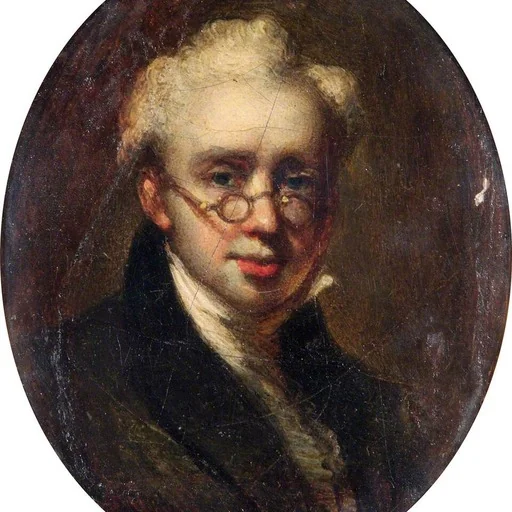
Artist
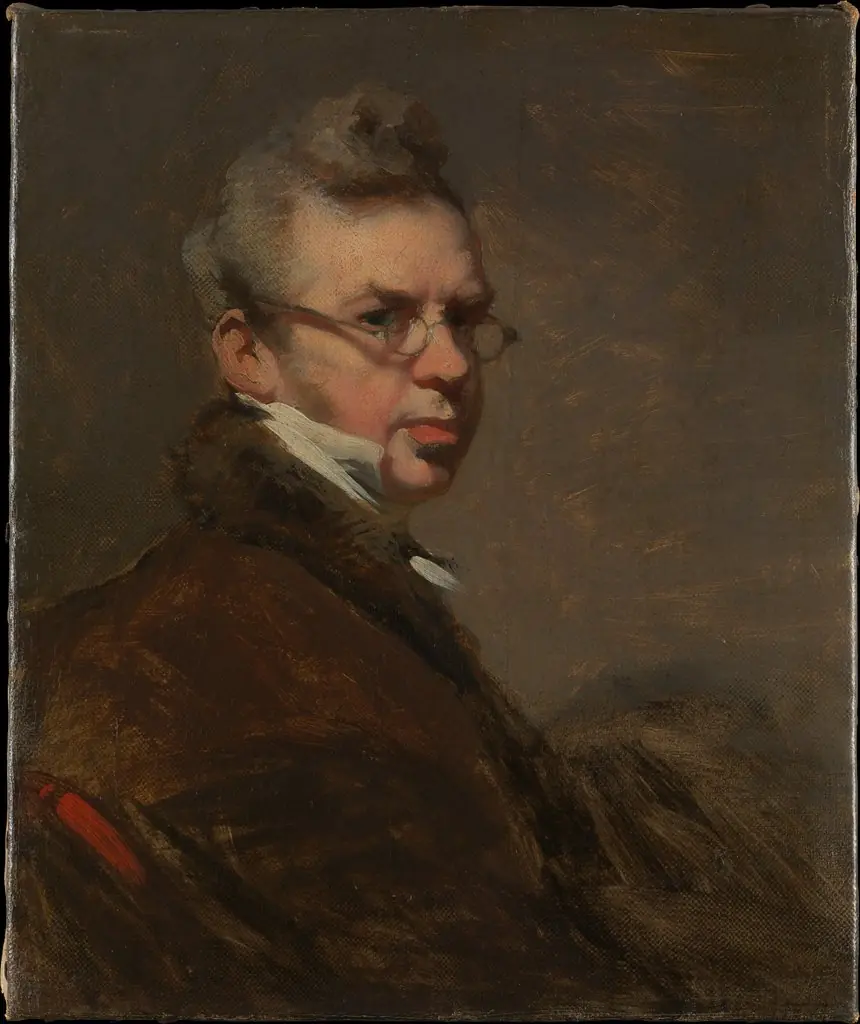
George Chinnery (Chinese: 錢納利; 5 January 1774 – 30 May 1852) was an English painter who spent most of his life in Asia, especially India and southern China.

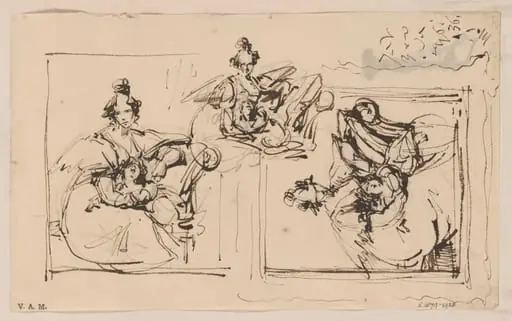 Three studies for a portrait of a Western woman and child
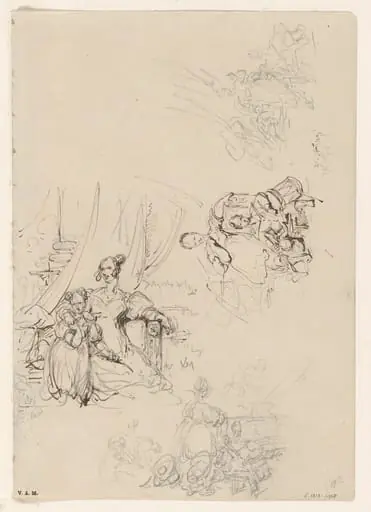 A Western woman with her children in Macau
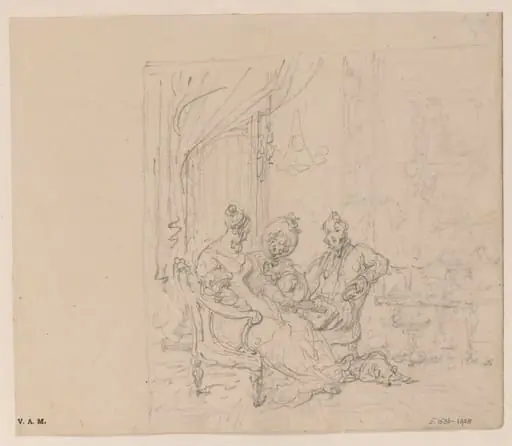 A sketch of three Western figures in a drawing room
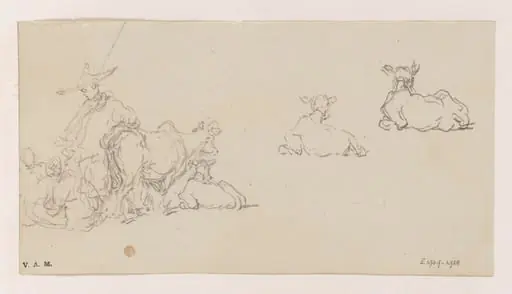 Sketches of Chinese figures and cows
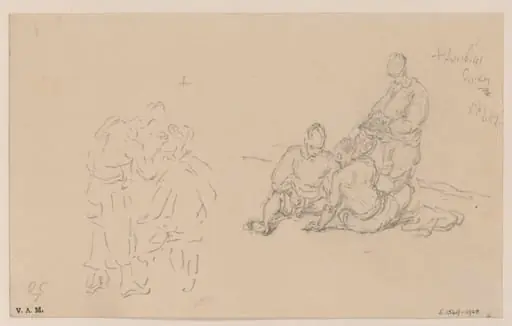 Two sketches of groups of Chinese figures
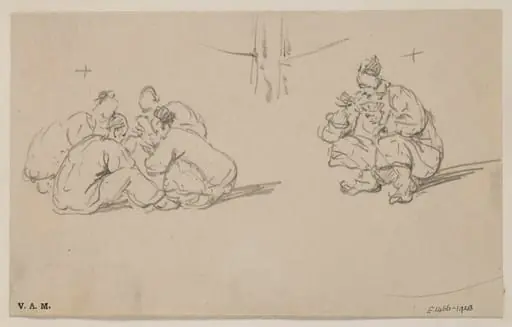 Seated Chinese men
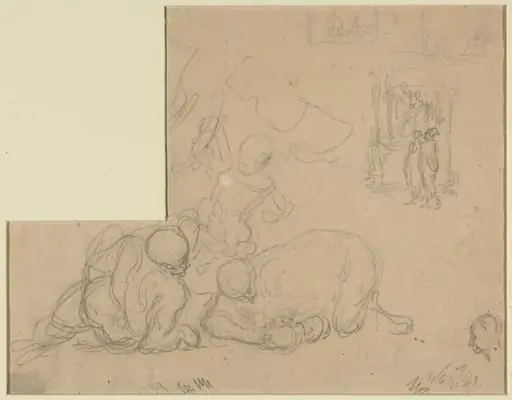 Sheet of Studies with Two Large Men on the Ground
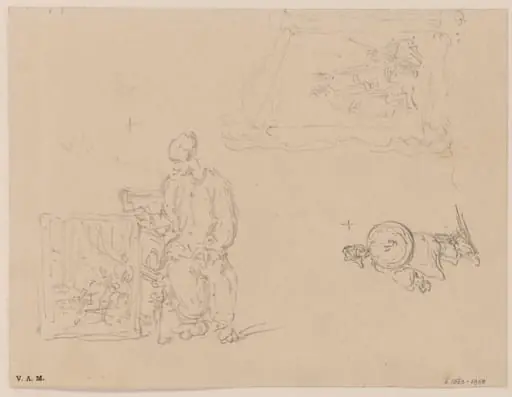 A figure seated beside a portrait, and other sketches
![Figure Studies [recto], by Giovanni Battista Cipriani](https://artifactworldgallery.com/img/giovanni-battista-cipriani--figure-studies-recto--32b47b1a71716a78-w320.webp) Figure Studies [recto]
Figure Studies [recto]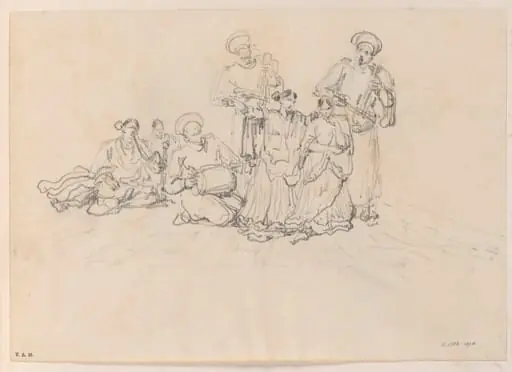 A group of Indian musicians and dancers