Artwork
Studies of Chinese figures, and of masts
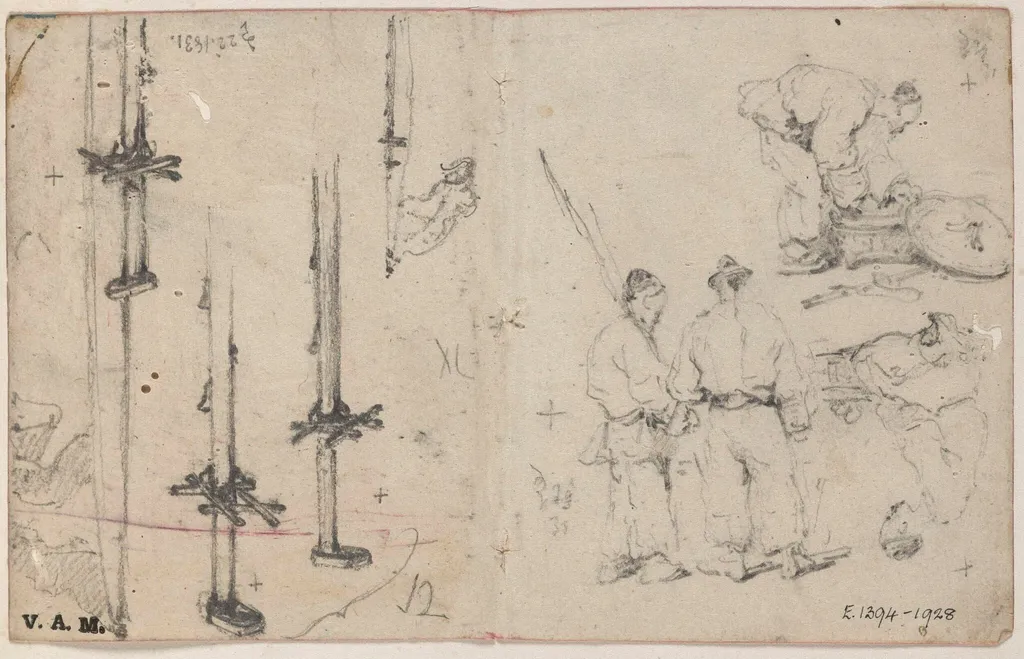
Studies of Chinese figures, and of masts is a drawing by the Romanticist artist George Chinnery. It dates from 17 and is held in the collection of the Victoria and Albert Museum.
About this work
George Chinnery made these eight small drawings in December 1831. Four show parts of ship masts, two with flags tied on. The other four focus on Chinese men, one bent over a basket.
This was a busy month for him. He often drew people and ships in China. These quick studies feel like notes, not finished art.
Check out George Chinnery next.
Overview
Four depict sections of ship masts, two with flags loosely tied; the other four portray Chinese men in casual postures, one bending over a basket.
Eight small pencil drawings, completed by George Chinnery in December 1831, capture fleeting observations from his time in China. Four depict sections of ship masts, two with flags loosely tied; the other four portray Chinese men in casual postures, one bending over a basket. Executed rapidly, these works function as visual notes rather than polished compositions, reflecting Chinnery’s habit of recording his surroundings with immediacy.
Subject & Meaning
The drawings juxtapose maritime structures with human figures, suggesting an interest in the interplay between ships and the local population. The stooping man and other figures are rendered without idealization, emphasizing daily labor and quiet presence. The masts, though partial, imply the scale and activity of port life. Together, they form a quiet record of coexistence between foreign vessels and Chinese workers.
Technique & Style
Chinnery used swift, light pencil strokes to capture form and movement without detail. Lines are economical, focusing on posture and silhouette rather than texture or shading. The figures and masts are suggested rather than defined, conveying a sense of spontaneity. The lack of finish underscores their function as on-the-spot observations, not preparatory studies for larger works.
History & Provenance
Created during a productive period in Macau, these drawings are part of Chinnery’s extensive archive of sketches made between 1825 and 1852. They were likely kept in his personal collection and later dispersed through family or institutional acquisitions. No single provenance chain is fully documented, but their survival reflects their value as documentary artifacts of early 19th-century coastal China.
Context
In 1831, foreign trade in southern China was tightly regulated, and European merchants lived under restrictive conditions. Chinnery, as a resident artist and physician, had unusual access to port life. His sketches document the visual rhythm of this constrained environment—ships anchored in the bay, laborers moving goods, the quiet persistence of local routines amid foreign presence.
Legacy
These drawings contribute to a broader visual record of China during the early Qing dynasty’s encounter with Western traders. They are not celebrated as artistic achievements but valued for their unembellished observation. Chinnery’s habit of sketching ordinary moments offers historians a direct, unmediated glimpse into daily life at a time when few Europeans recorded such details with such casual precision.
Artist & collection
Artist
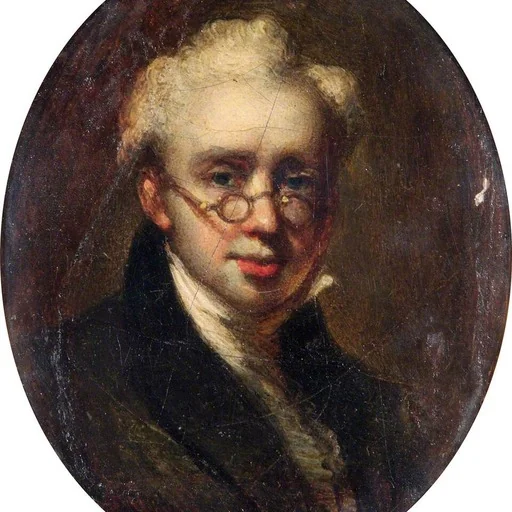
George Chinnery (Chinese: 錢納利; 5 January 1774 – 30 May 1852) was an English painter who spent most of his life in Asia, especially India and southern China.

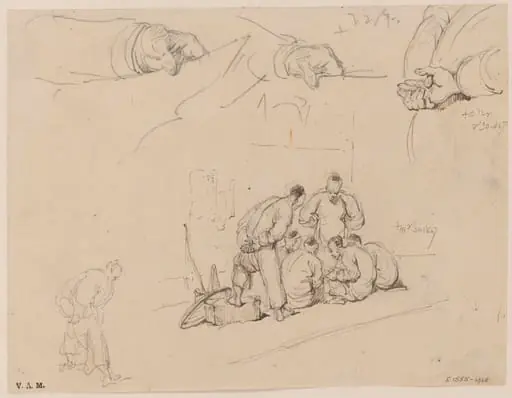 Drawings of a group of Chinese men, clasped hands, and a hand holding paper
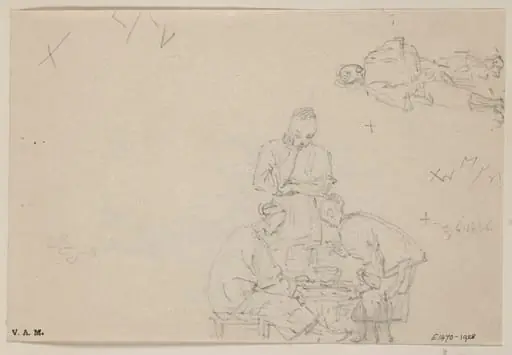 Chinese figures
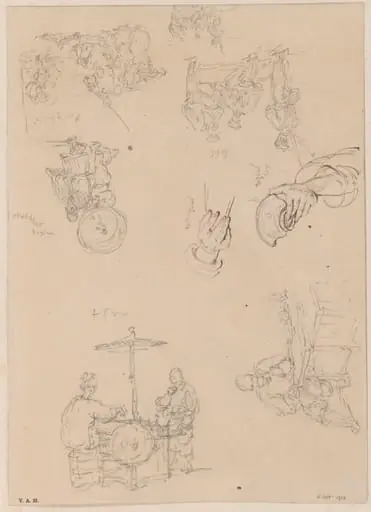 Chinese figures, soldiers, and details of hands
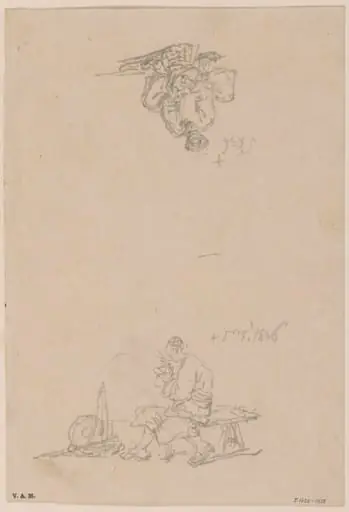 Two drawings of Chinese figures
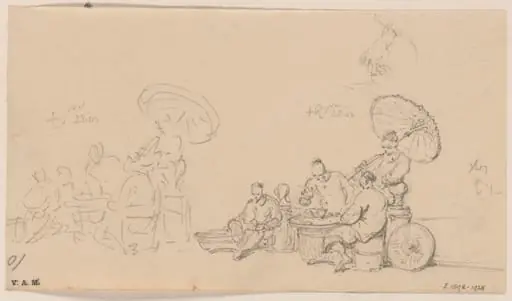 Chinese figures around a basket
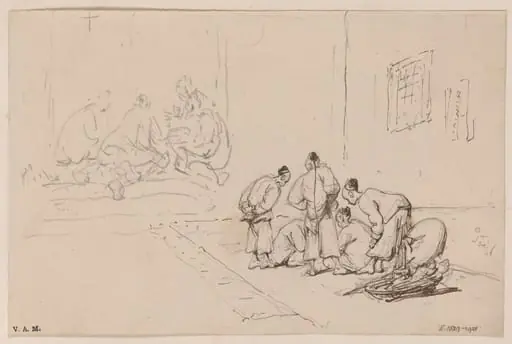 Two drawings of groups of Chinese figures
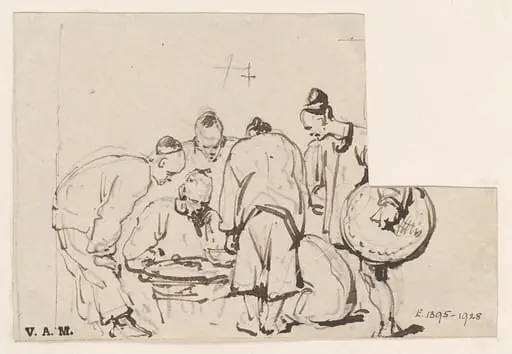 A group of six Chinese figures
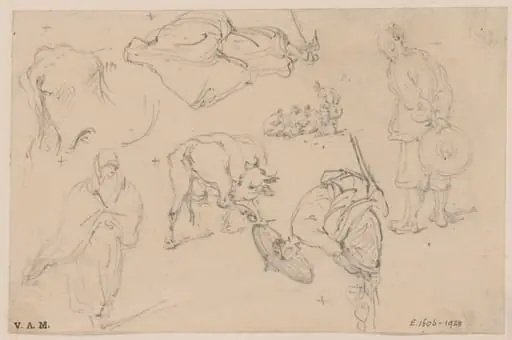 Chinese figures and cattle
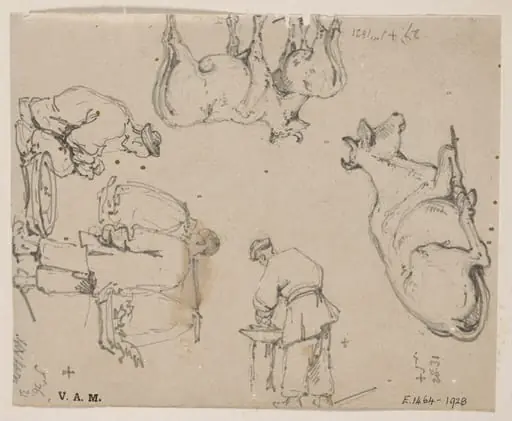 Chinese figures and cattle
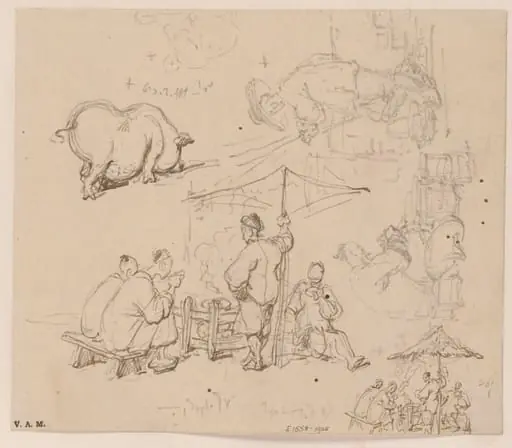 Chinese men at a cooking stove, and of a pig
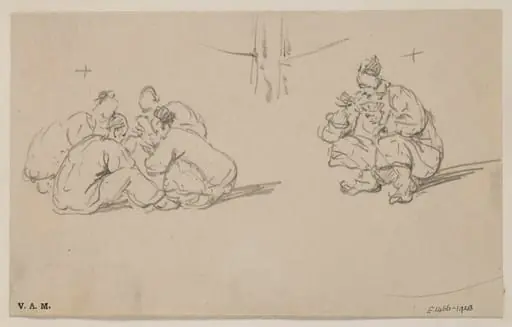 Seated Chinese men
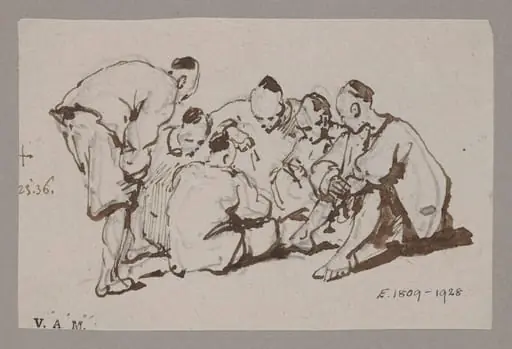 A group of six Chinese figures