Artwork
Three goats
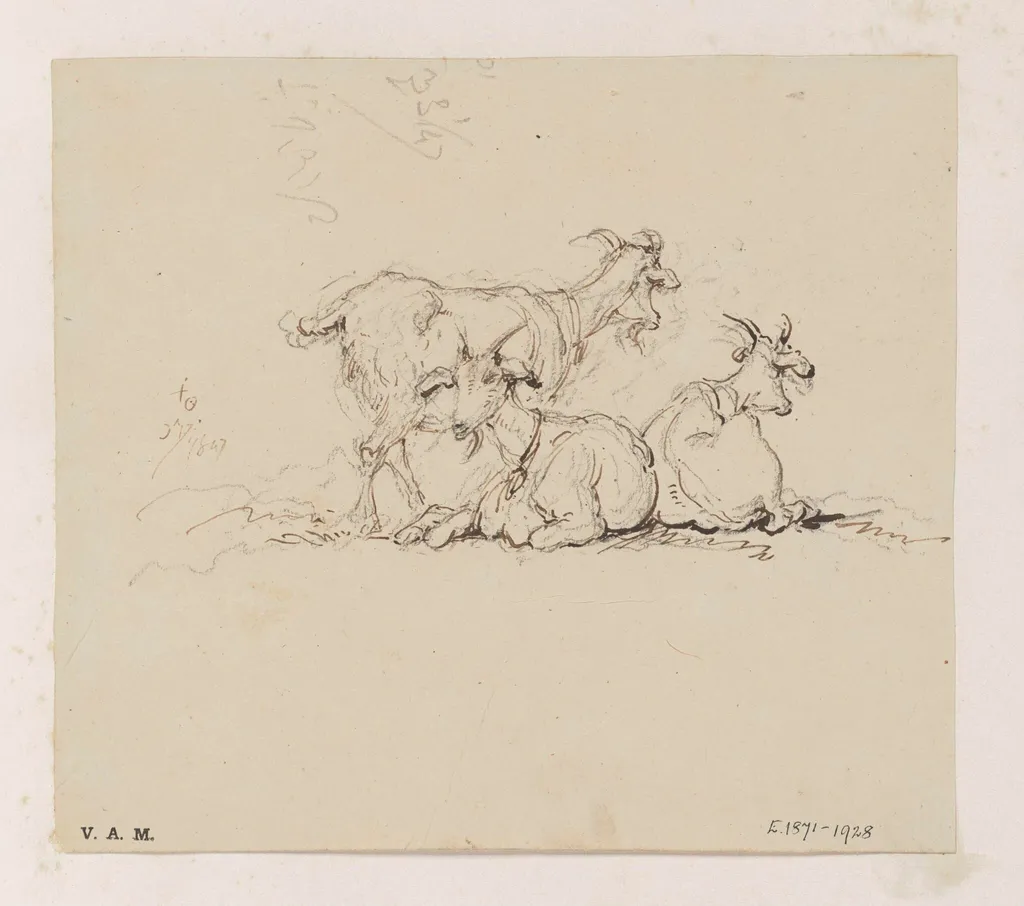
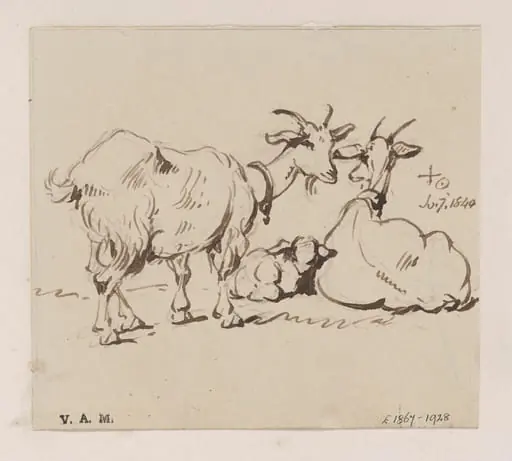
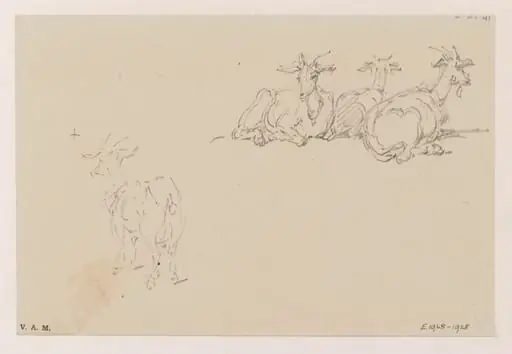
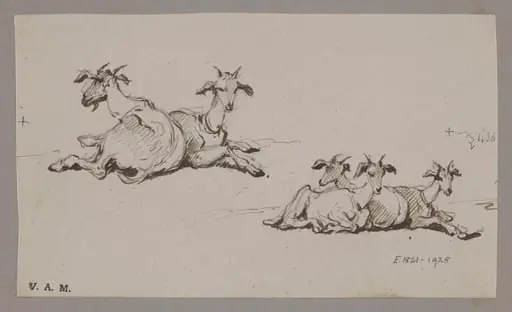
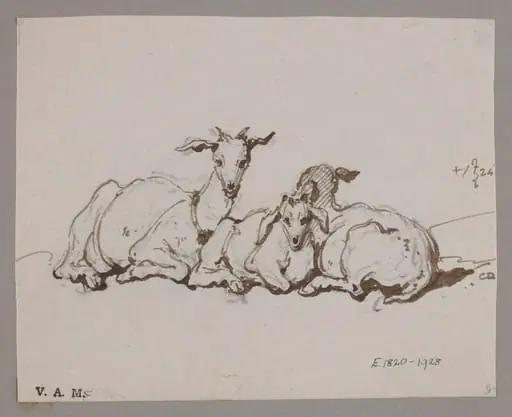
Three goats is a drawing by the Romanticist artist George Chinnery. It dates from 11 and is held in the collection of the Victoria and Albert Museum.
About this work
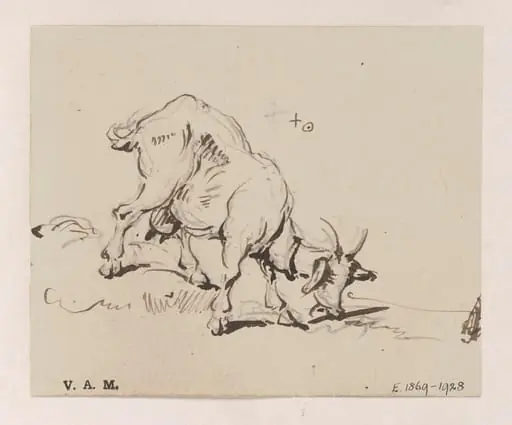
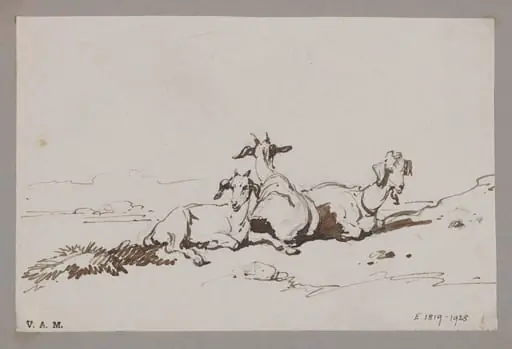
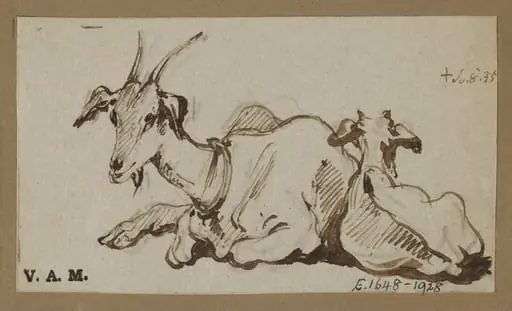
Here’s a simple take on this drawing: George Chinnery shows three goats in calm poses—two resting on the ground, one standing nearby.
Here’s a simple take on this drawing: George Chinnery shows three goats in calm poses—two resting on the ground, one standing nearby. It’s a quiet snapshot, not dramatic, just the animals being goats. The artist used Romanticism’s careful line work, common in his day, to capture their shapes and textures.
The year is right on the page, 1847, so it’s a solid mid-1800s piece. Small but precise. Chinnery often sketched animals like this, mostly as studies, not fancy paintings.
Next time you’re at the Victoria and Albert Museum, look up George Chinnery.
Overview
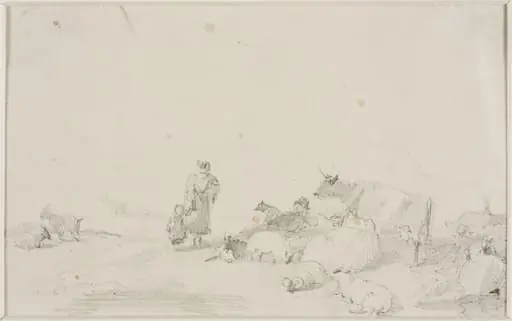
This small drawing by George Chinnery, dated 1847, depicts three goats in a tranquil, unadorned arrangement. Two lie recumbent on the ground, while a third stands nearby, alert but still. Executed in pencil or ink, the work is a quiet observational study, typical of Chinnery’s practice during his time in Asia. Its modest scale and lack of narrative suggest it was made as a preparatory sketch rather than a finished composition.
Subject & Meaning
The goats are rendered without symbolic or anthropomorphic intent. Their calm postures reflect an interest in natural behavior rather than allegory. Chinnery’s focus on ordinary animals—common in his sketchbooks—points to a broader curiosity about life in the regions he lived in, particularly the rural and domestic scenes around Macau and southern China. The scene holds no drama, only presence.
Technique & Style
Chinnery employs fine, controlled lines to define the goats’ forms and the texture of their coats. The shading is subtle, relying on hatching and tone rather than heavy contrast. This approach aligns with Romantic-era draftsmanship, which valued precision and sensitivity to natural detail. The drawing’s economy of means—no background, no embellishment—highlights the artist’s confidence in line and observation.
History & Provenance
Created in 1847 during Chinnery’s decades-long residence in Asia, the drawing likely originated in his personal sketchbook. It entered the Victoria and Albert Museum’s collection through later acquisitions of his works, many of which were donated or bequeathed by family or collectors. Its survival reflects the value placed on his observational studies, even when they were not intended for public display.
Context
Chinnery was among the few Western artists working in Asia during the early to mid-19th century, documenting local life through sketches. His animal studies, including goats, cattle, and birds, formed part of a broader ethnographic record. Unlike commissioned portraits or landscapes, these drawings reveal his personal engagement with the environment, offering insight into daily life beyond colonial narratives.
Legacy
Chinnery’s sketches, including this one, remain important for their unembellished record of 19th-century Asian rural scenes. While not widely exhibited, they are studied for their technical restraint and documentary value. The drawing exemplifies how artists of the period used private observation to capture moments of quiet authenticity, preserving a glimpse of ordinary life through disciplined draftsmanship.
Artist & collection
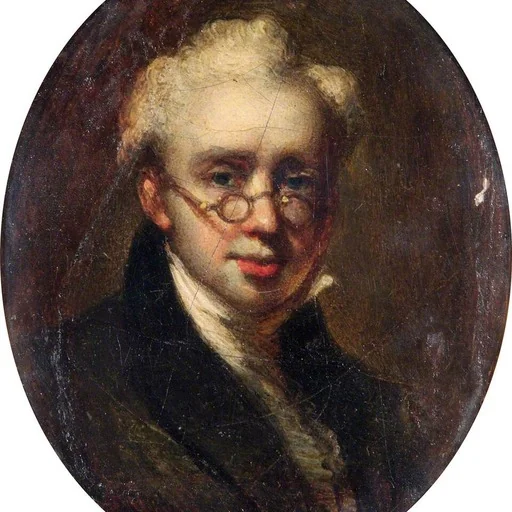
Artist
George Chinnery (Chinese: 錢納利; 5 January 1774 – 30 May 1852) was an English painter who spent most of his life in Asia, especially India and southern China.