Artwork
Two drawings of a Western woman
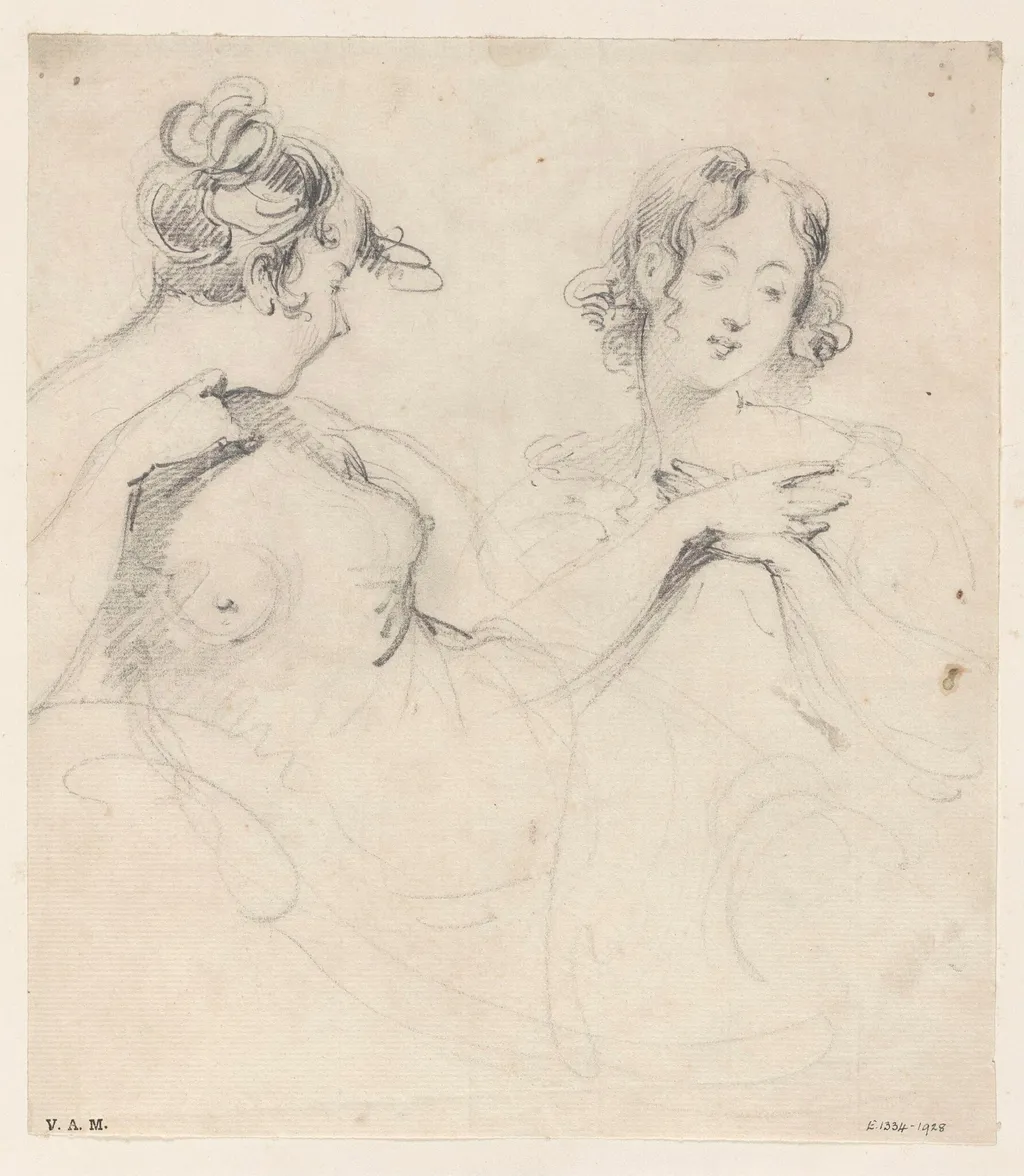
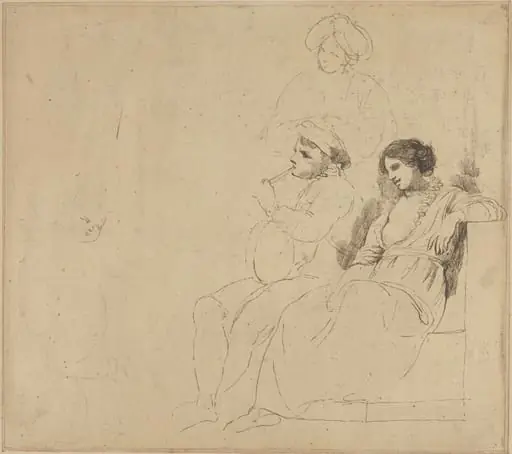
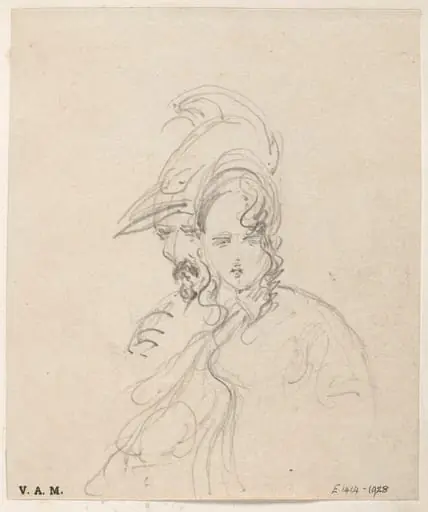
Two drawings of a Western woman is a drawing by the Romanticist artist George Chinnery. It dates from 16 and is held in the collection of the Victoria and Albert Museum. This pair of drawings depicts a Western woman in a state of partial undress, rendered in graphite or similar media.
About this work
The title of this work is "Two drawings of a Western woman".
It was created by George Chinnery between 1802 and 1825.
This work is part of the Romanticism movement, which often explored emotions and everyday life, and the fact that it was drawn on English paper in India is an interesting context.
You can learn more about this style by looking at the movement: Romanticism.
Overview
This pair of drawings depicts a Western woman in a state of partial undress, rendered in graphite or similar media. Created by George Chinnery, the works date from the early 19th century, spanning the years 1802 to 1825. The sheets themselves bear the watermark of English paper, suggesting they were executed outside Britain, likely in India, where Chinnery resided for much of his career.
Subject & Meaning
The drawings present a solitary female figure, captured in intimate, unguarded moments. Rather than idealized or allegorical representation, the studies emphasize observation and immediacy, reflecting a Romantic preoccupation with individual experience. The setting and attire imply a colonial context, though the focus remains on the figure’s private, informal presence.
Technique & Style
Chinnery’s approach combines precise draftsmanship with a loose, evocative line, characteristic of Romantic drawing practices. The works prioritize naturalism over embellishment, using subtle shading to model form and suggest texture. The absence of elaborate background detail directs attention to the figure, reinforcing the genre’s interest in personal, fleeting impressions.
History & Provenance
Produced during Chinnery’s extended stay in India, these drawings were likely created for private study or as preparatory sketches. The use of English paper indicates materials imported from Britain, common among expatriate artists. Their subsequent history remains undocumented, though they reflect the artist’s engagement with colonial society and daily life in South Asia.
Context
As a British artist working in early 19th-century India, Chinnery occupied a liminal space between colonial and local cultures.
As a British artist working in early 19th-century India, Chinnery occupied a liminal space between colonial and local cultures. These drawings align with Romanticism’s emphasis on subjective experience and the everyday, while also hinting at the social dynamics of British presence in India. The works offer insight into both artistic practice and the lived realities of Western women in a colonial setting.
Artist & collection
Artist
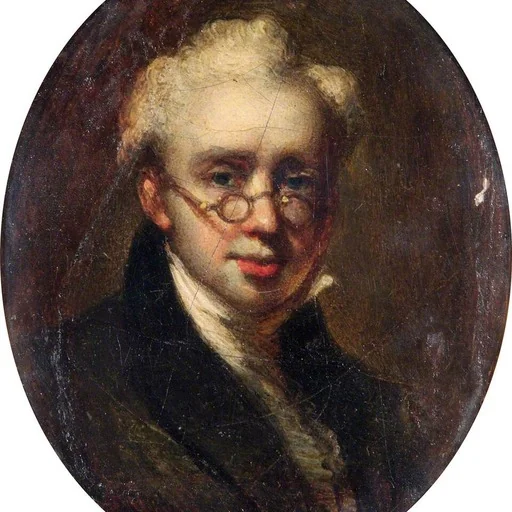
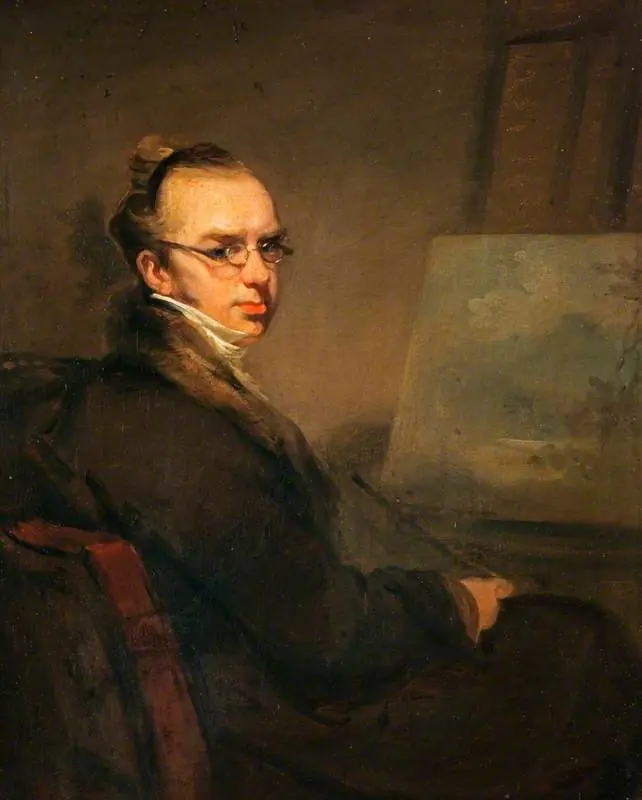
George Chinnery (Chinese: 錢納利; 5 January 1774 – 30 May 1852) was an English painter who spent most of his life in Asia, especially India and southern China.

![A Reclining Nude with Her Right Arm Raised over a Swift Composition Study [verso], by Jean-Baptiste Deshays](https://artifactworldgallery.com/img/jean-baptiste-deshays--a-reclining-nude-with-her-right-arm-raised-over-a-swift-comp--8e1ee92955ff9975-w320.webp)