Artwork
Group of trees at Dingwall, Ross-shire
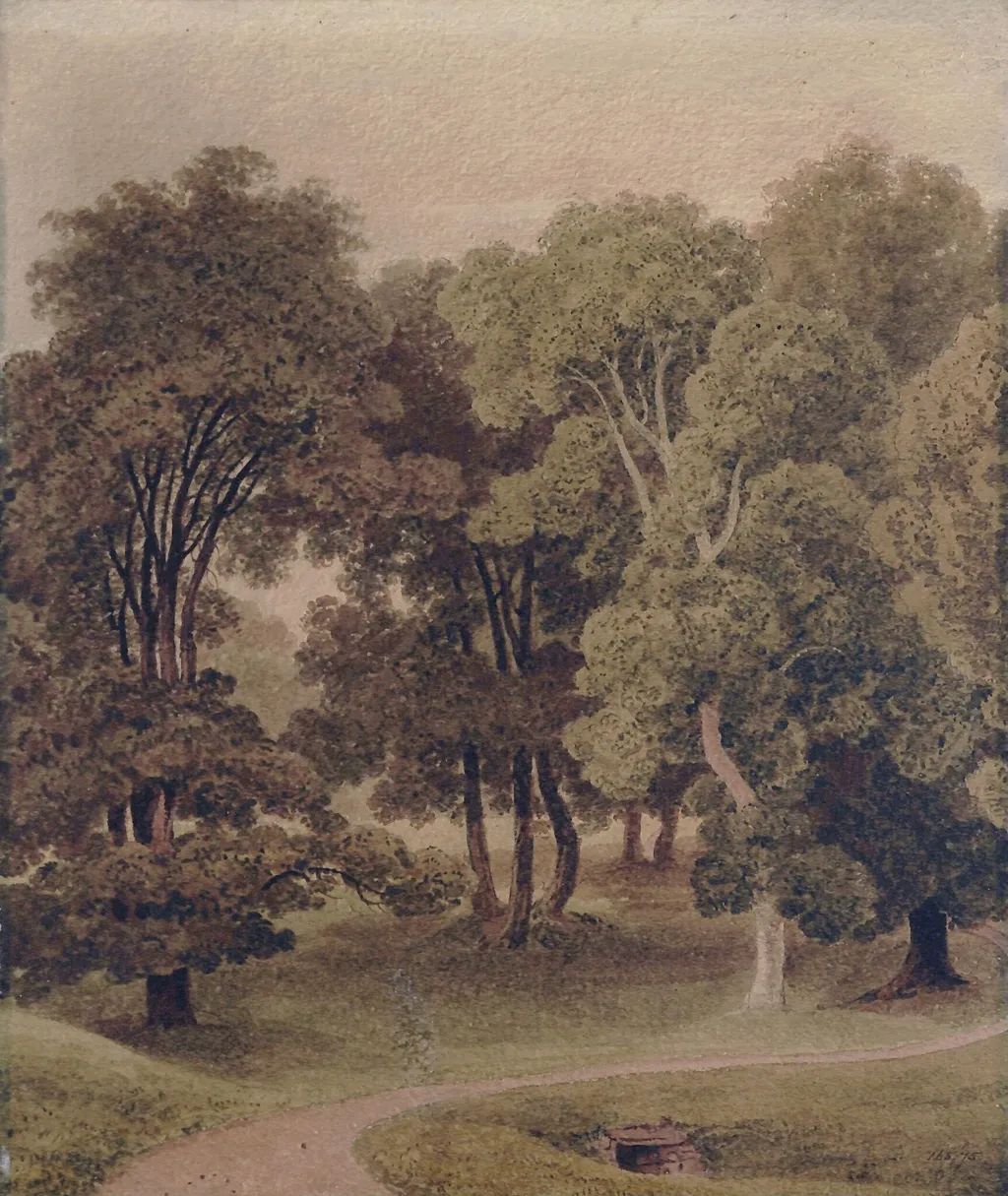
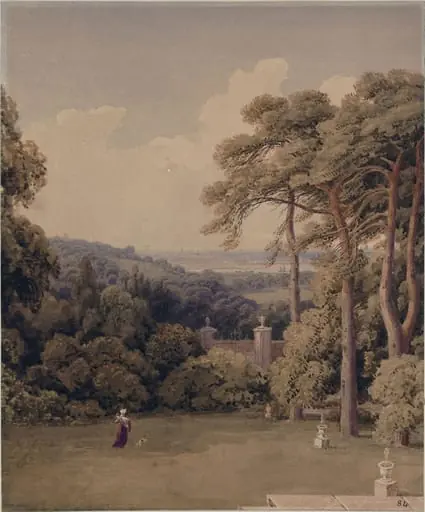
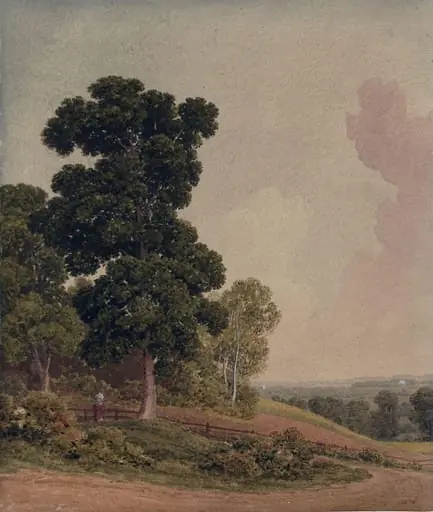
Group of trees at Dingwall, Ross-shire is a watercolor work on paper by the British Romanticist artist George Fennel Robson. It dates from 1805 and is held in the collection of the Victoria and Albert Museum. This watercolour portrays a cluster of trees in Dingwall, Ross-shire, rendered with subtle tonal shifts and soft edges.
About this work
Overview
This watercolour portrays a cluster of trees in Dingwall, Ross-shire, rendered with subtle tonal shifts and soft edges. The composition emphasizes natural form over detail, with foliage arranged in overlapping masses that recede into the distance. The medium’s transparency allows light to suggest atmosphere rather than define structure, creating a quiet, contemplative mood.
Subject & Meaning
The subject is a group of native trees in a rural Scottish landscape, depicted without human presence or narrative. Their arrangement suggests growth and resilience, rooted in the local terrain. The absence of architectural or figural elements directs focus to the quiet endurance of nature, evoking a sense of stillness rather than drama or symbolism.
Technique & Style
The artist employs layered washes of green to model foliage, varying intensity from pale lime to deep olive to suggest volume and distance. Wet-on-wet techniques blur tree forms into one another, while the hazy sky is rendered with diluted washes that dissolve into the horizon. Brushwork is restrained, prioritizing atmospheric effect over precise detail.
History & Provenance
The work originates from the early 19th century, likely created during a period of increased interest in Scottish topography. It may have been made by a local artist or a visitor documenting the landscape. No documented ownership history is available, but its modest scale and medium suggest it was intended as a personal study rather than a public commission.
Context
Produced during a time when British artists were turning to rural and wild landscapes for inspiration, this piece aligns with broader trends in Romantic-era observation. Unlike grand Romantic scenes, it avoids theatricality, instead favoring quiet observation. Its focus on a modest Scottish glen reflects a growing appreciation for regional scenery beyond traditional tourist destinations.
Legacy
The work contributes to a quiet tradition of Scottish watercolour studies that valued direct observation over idealization. While not widely exhibited or reproduced, it represents an unassuming yet persistent practice of recording local nature through sensitive, intimate means — a counterpoint to more monumental landscape traditions of the era.
Artist & collection


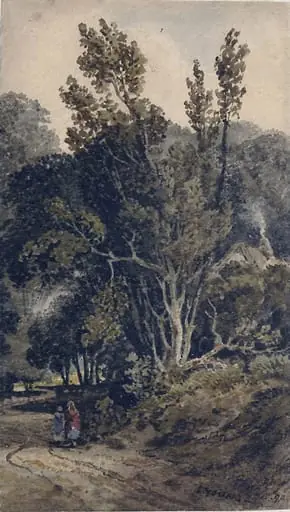 A road through a wood, with figures
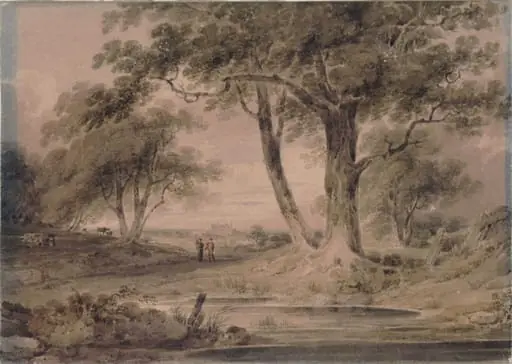 Landscape: Ripon Cathedral in the distance
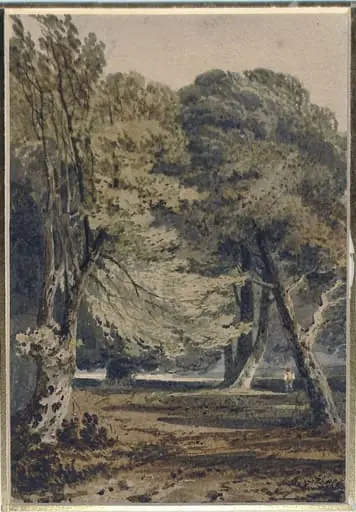 Woodland scene
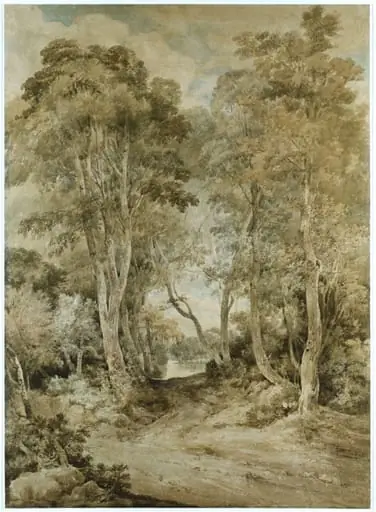 A wood scene
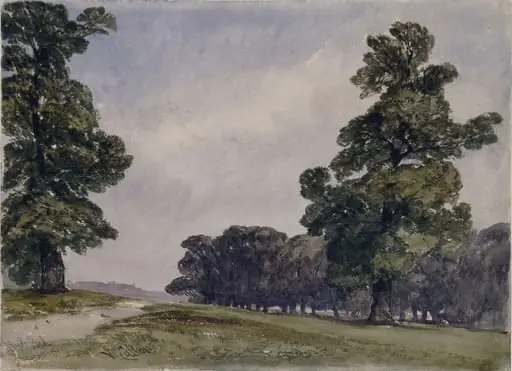 View in Hyde Park
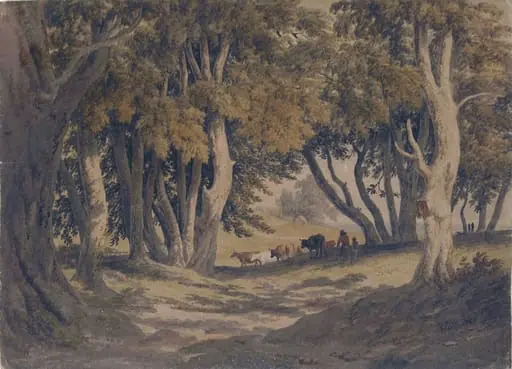 Woodland Glade with Cattle
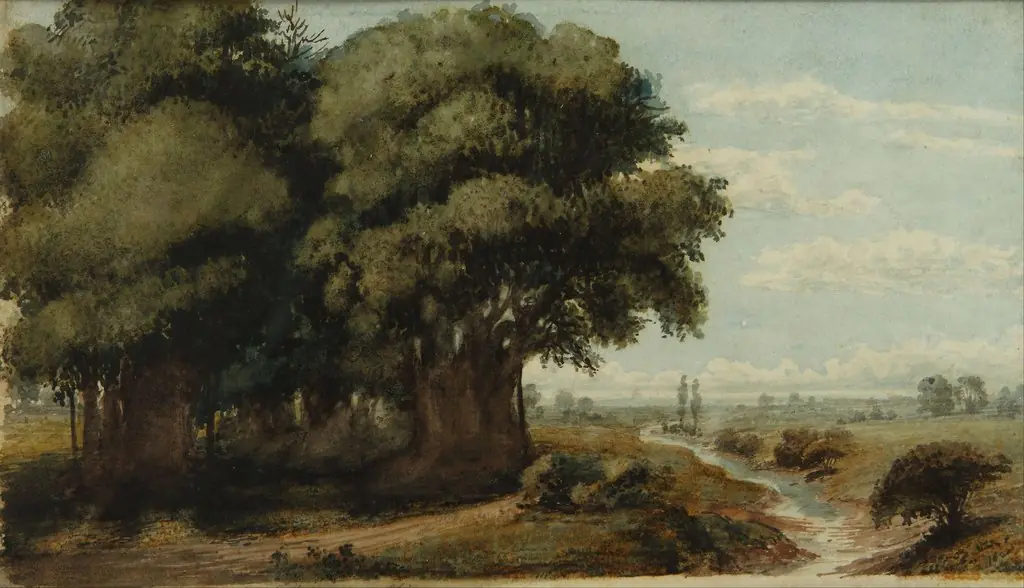 Capricho (Olivos 13 Nov. 1858)
 View from Box Hill, Dorking
 Woodland Road with Ox-waggon
 A Scene At Knights, Downton, Herefordshire
 Study of trees at Ballater, Aberdeenshire