Artwork
A wood scene
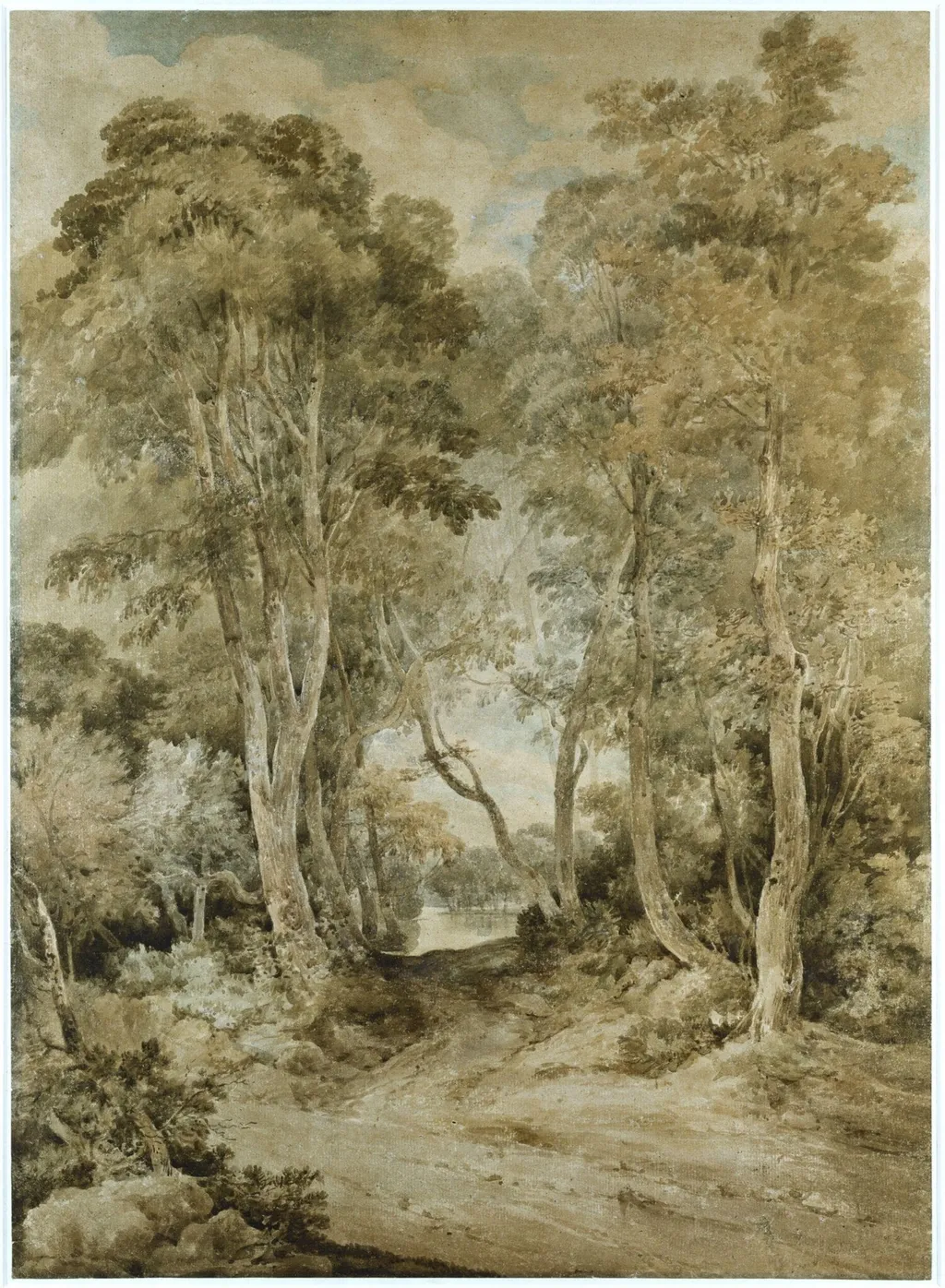
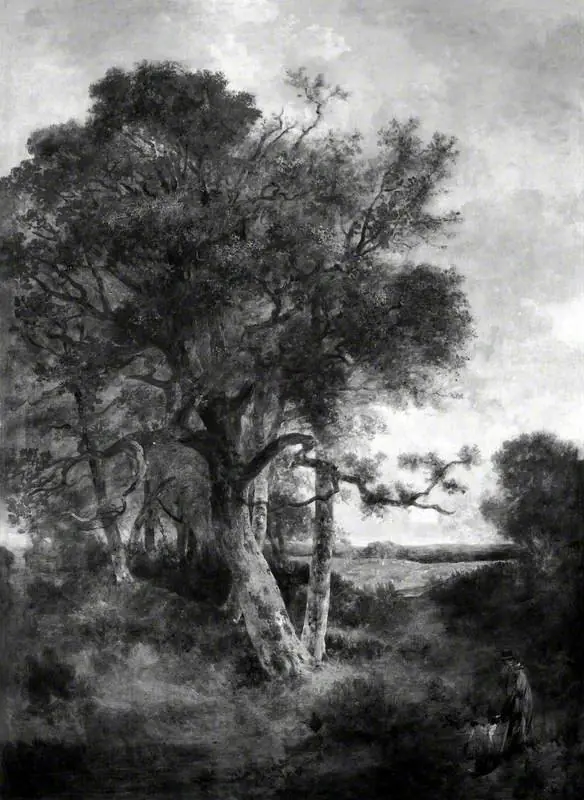
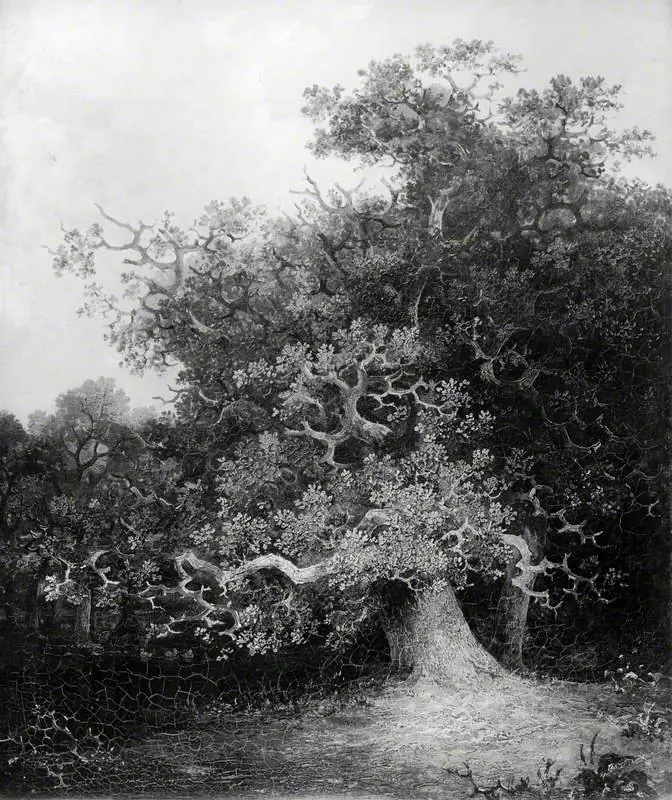
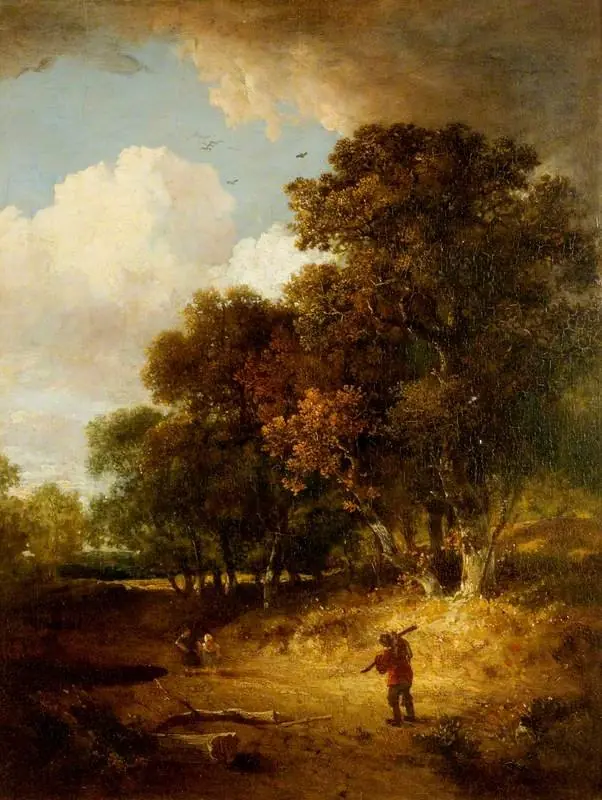
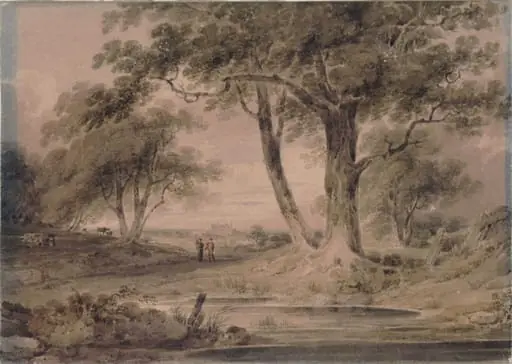
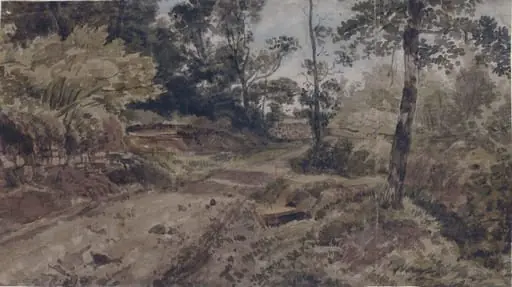
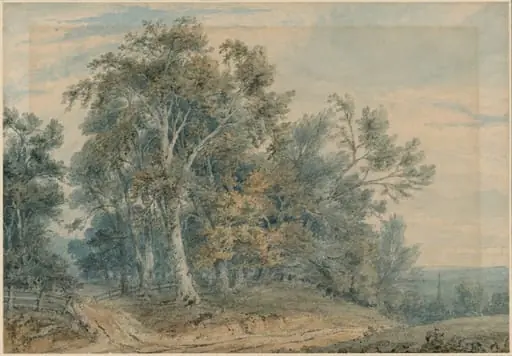
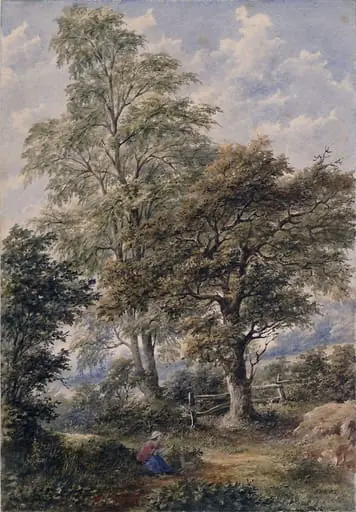
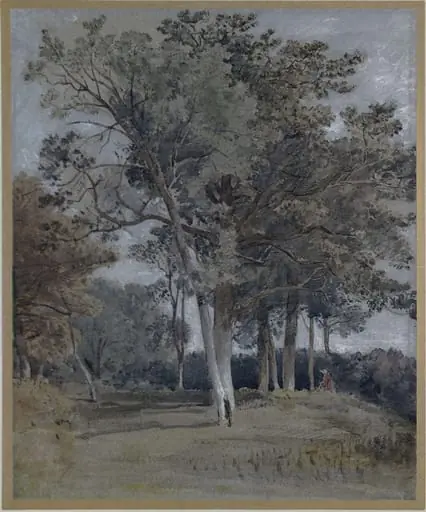
A wood scene is a watercolor work on paper by the Hague School artist John Crome. It dates from 1790 and is held in the collection of the Victoria and Albert Museum. Created in 1790, this watercolour presents a tranquil woodland corridor.
About this work
Overview
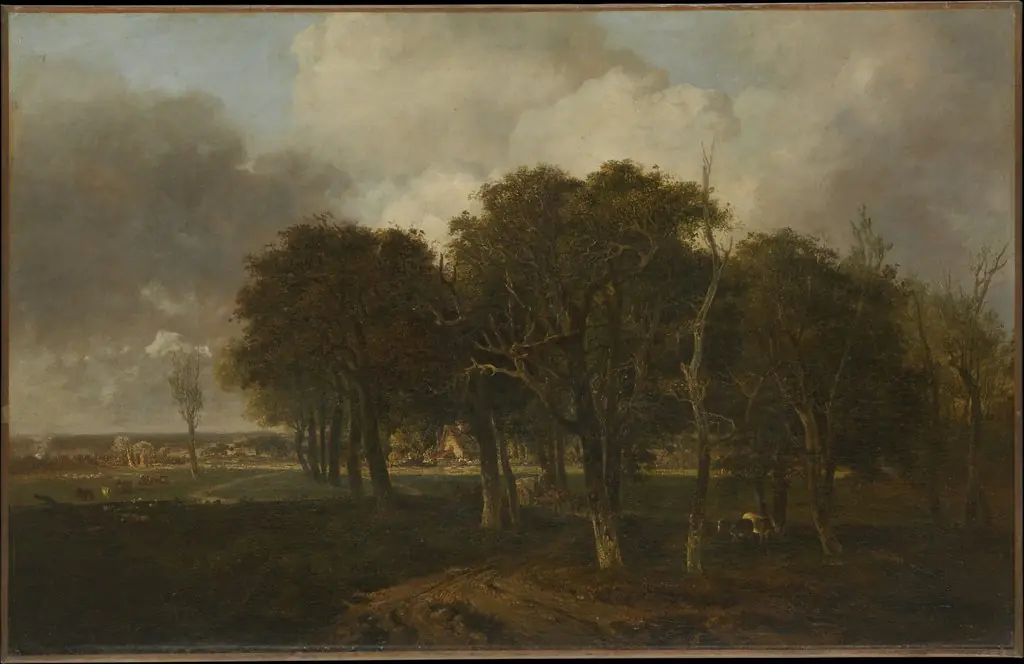
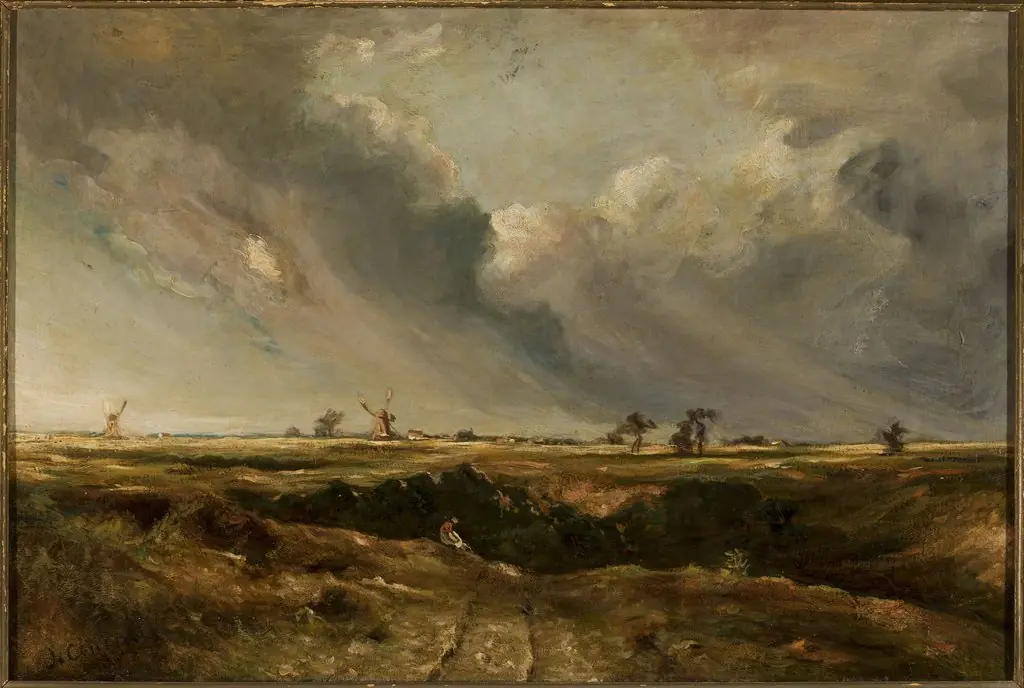
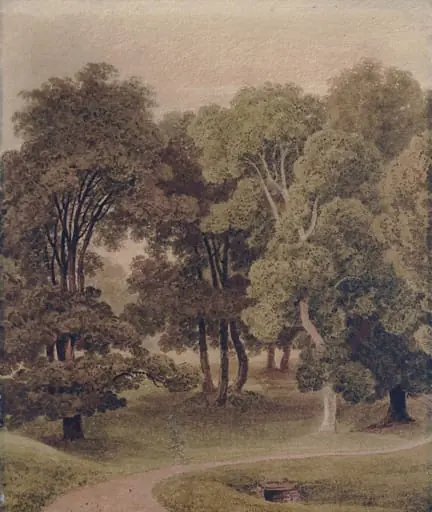
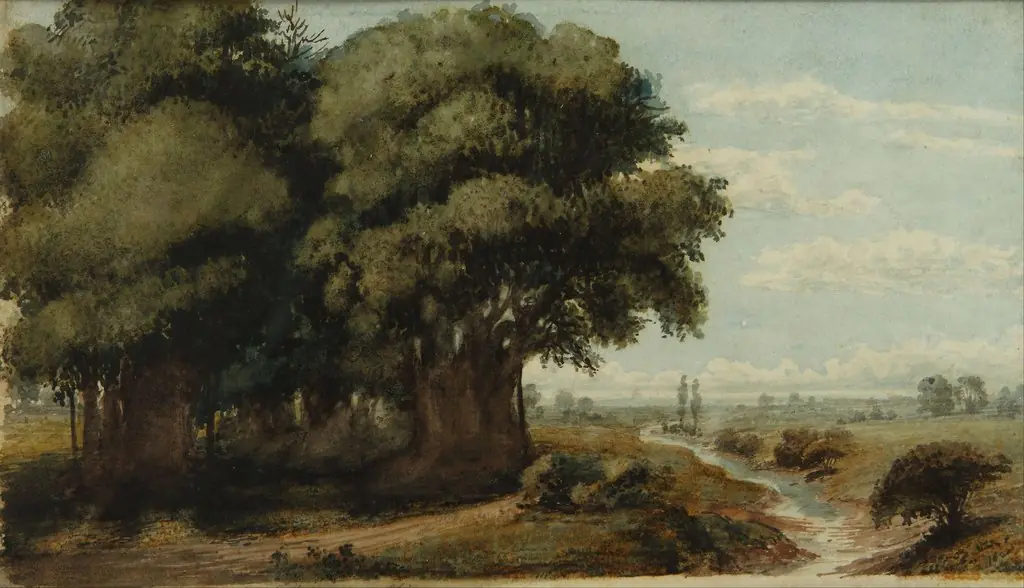
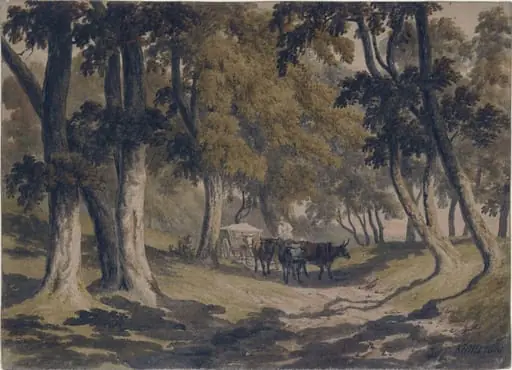
Created in 1790, this watercolour presents a tranquil woodland corridor. A narrow track winds between slender, bark‑textured trees, their foliage rendered in muted greens. The sky is a pale wash with faint cloud hints, while the forest floor shows uneven ground dotted with grass and subtle shadows, conveying a quiet, natural atmosphere.
Subject & Meaning
The composition focuses on an everyday rural scene, emphasizing the modest beauty of a Norfolk woodland. By depicting a simple path and unadorned trees, the work reflects a Romantic interest in the quiet dignity of the natural world and invites contemplation of the landscape’s inherent calm.
Technique & Style
Executed in watercolour, the artist employs light, fluid brushwork that allows pigments to merge softly, preserving a sense of immediacy. The handling of bark texture and foliage relies on delicate washes, while the limited palette and restrained detail contribute to a loose, naturalistic effect typical of early English landscape watercolours.
History & Provenance
The painting was produced by John Crome, a central figure in the Norwich School of painters, who spent his career documenting the Norfolk countryside. It entered the collection of the Victoria and Albert Museum, where it remains part of the institution’s holdings of 18th‑century British watercolours.
Own this work as a print
Artist & collection
Artist
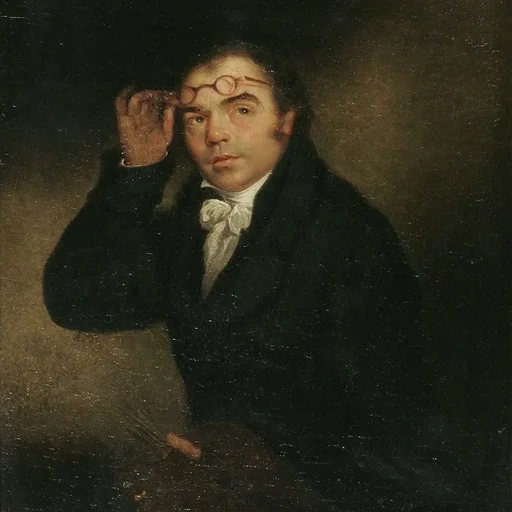
John Crome, once known as Old Crome to distinguish him from his artist son John Berney Crome, was an English landscape painter of the Romantic era, one of the principal artists and founding members of the Norwich School of painters.