Artwork
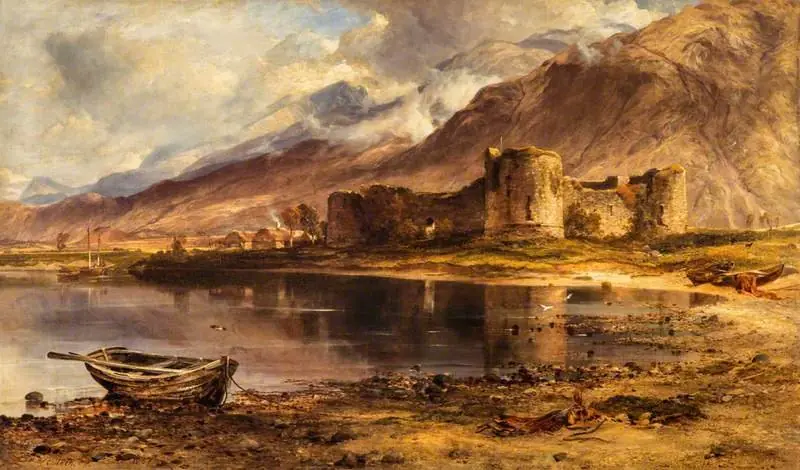
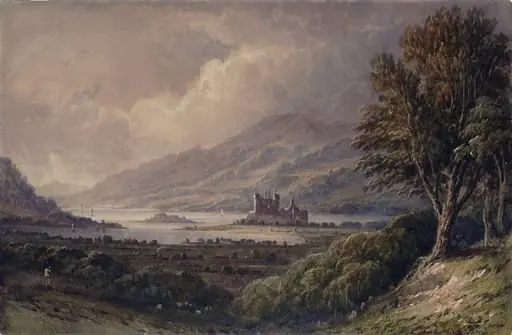
Kilchurn Castle, Loch Awe
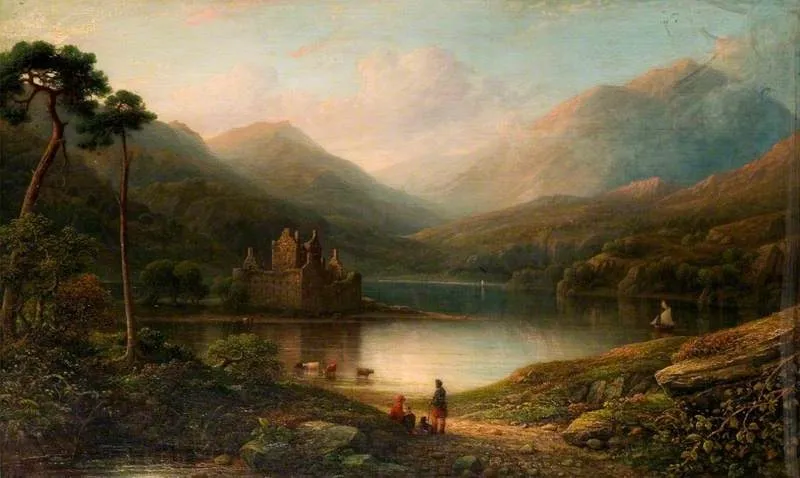
Kilchurn Castle, Loch Awe is an oil painting by George Frederick Buchanan. It dates from 1854 and is held in the collection of the Victoria and Albert Museum.
About this work
Overview
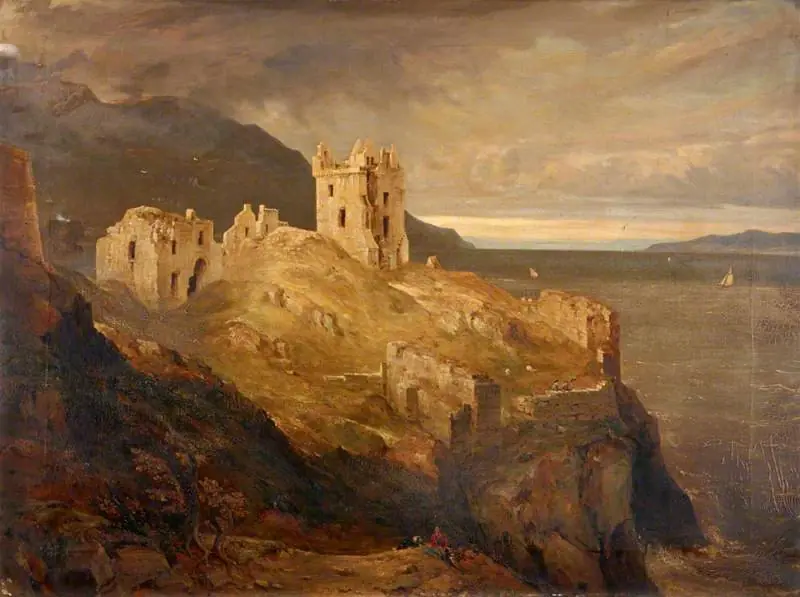
Painted in 1854 by George Frederick Buchanan, this oil on canvas depicts Kilchurn Castle situated on the northeastern shore of Loch Awe in Scotland.
Painted in 1854 by George Frederick Buchanan, this oil on canvas depicts Kilchurn Castle situated on the northeastern shore of Loch Awe in Scotland. The work captures the ruin in its natural setting, framed by rugged highland terrain and still waters. It is part of the Victoria and Albert Museum’s collection, where it represents 19th-century British landscape painting focused on architectural ruins within wild scenery.
Subject & Meaning
Kilchurn Castle, once a stronghold of the Campbells, appears here as a silent relic amid nature’s endurance. The painting emphasizes decay and tranquility rather than historical drama. The castle’s presence, isolated and weathered, suggests the passage of time, while the calm lake and distant mountains reinforce a mood of quiet contemplation, typical of Romantic-era sensibilities toward the sublime in landscape.
Technique & Style
Buchanan employed fine brushwork to render textures of stone, water, and foliage with precision. The castle and foreground elements are rendered in warmer tones, contrasting with the cool, muted grays of the distant peaks. Reflections on the lake are carefully rendered to enhance spatial depth. Small figures and animals are included not as focal points but as subtle indicators of scale and human presence within the vastness of the highland environment.
History & Provenance
The painting was completed in 1854 during a period of growing interest in Scottish topography among British artists. It entered the Victoria and Albert Museum’s collection in the 19th century, likely through acquisition or donation. Its preservation reflects institutional interest in documenting architectural heritage and landscape aesthetics of the British Isles during the Victorian era.
Context
Buchanan’s work emerged amid a broader cultural fascination with Scotland’s medieval ruins, fueled by Romantic literature and tourism. Artists like J.M.W. Turner and William Daniell had already popularized such subjects, but Buchanan’s approach was more restrained, favoring quiet observation over dramatic effect. This painting aligns with efforts to record and preserve visual records of historic sites before further decay.
Legacy
While not widely exhibited today, the painting remains a representative example of mid-19th-century British topographical art. It contributes to the historical record of Kilchurn Castle’s appearance in the Victorian period and reflects the aesthetic values of its time—precision, serenity, and reverence for nature’s reclamation of human structures.
Artist & collection