Artwork
Tenby
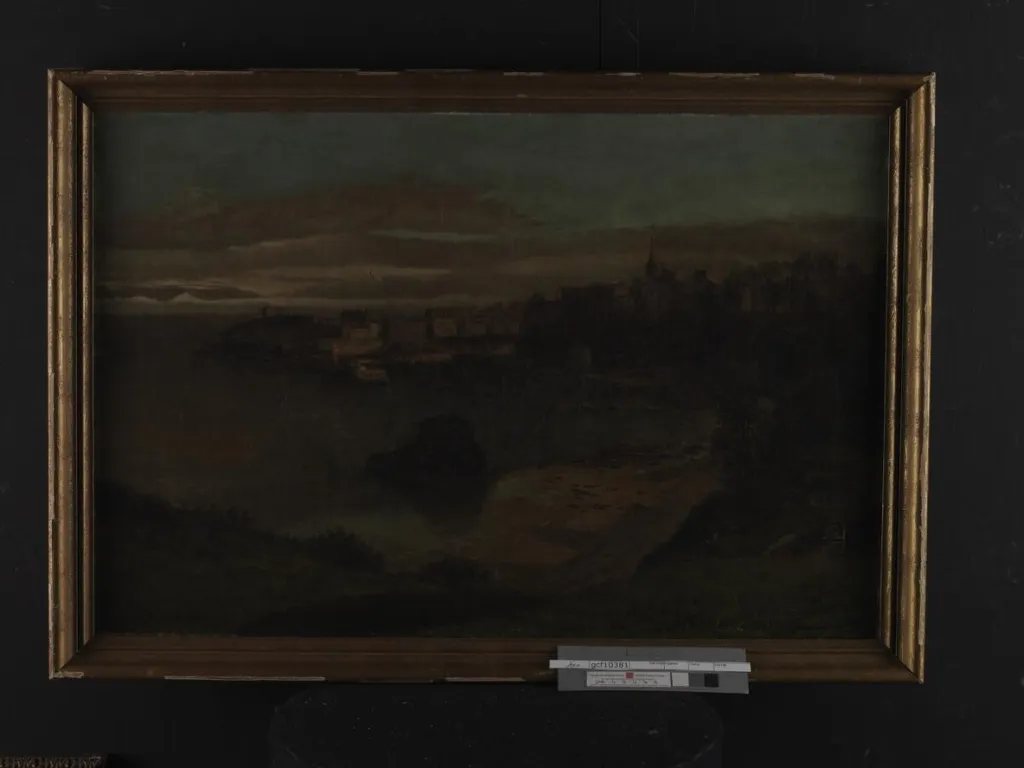
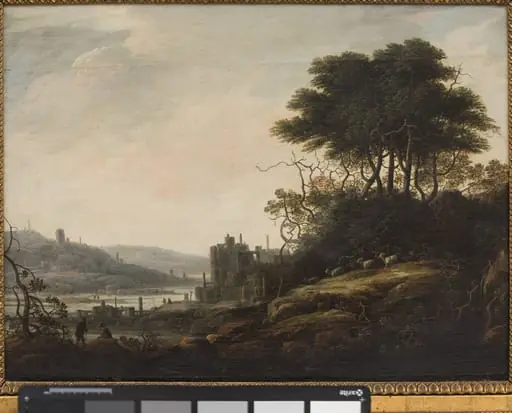
Tenby is an oil painting by the Impressionist artist George Frederick Hughes. It dates from 1875 and is held in the collection of the National Library of Wales.
About this work
Overview
George Frederick Hughes’s 1875 oil work titled Tenby presents a brooding coastal scene. The composition centers on a muted horizon where a small settlement recedes under a heavy, overcast sky. Dominated by deep tonal values, the painting conveys a sense of atmospheric weight, inviting viewers to contemplate the landscape’s quiet, introspective character.
Subject & Meaning
The canvas captures the Welsh seaside town of Tenby, rendered as a distant cluster of structures amid a bleak sky. The limited visibility of the buildings and the indistinct foreground forms—likely trees or low hills—suggest a landscape where nature’s mood overshadows human presence, emphasizing the transitory nature of light and weather.
Technique & Style
Executed in oil, Hughes employs a palette of dark greys, browns, and muted blues, applying paint with discernible brushwork that adds texture to the sky and landforms. The visible strokes create a tactile surface, while the restrained color scheme reinforces the somber atmosphere, aligning the piece with mid‑nineteenth‑century tonal landscape traditions.
History & Provenance
Created in 1875, Tenby entered the collection of the National Library of Wales, where it remains accessible for study. The work reflects Hughes’s interest in Welsh scenery during a period when regional landscapes were increasingly documented for cultural preservation, underscoring the painting’s role in the visual record of the era.
Artist & collection
Artist
George Frederick Hughes painted the Welsh seaside town of Tenby so often that locals called him “the man who put Tenby on the map.” In 1875 he stood on the same cliff every morning, waited for the light to hit St.

 Landskap
 View Across Præstø Fiord towards the manor of Nysø
 Mountain Landscape with a Couple of Horsemen in the Foreground
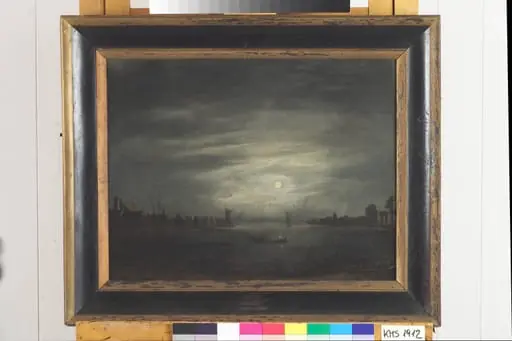 Moonlight
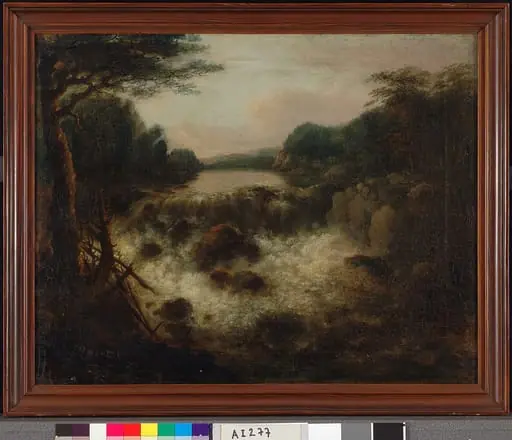 Vesiputous Värmlannissa
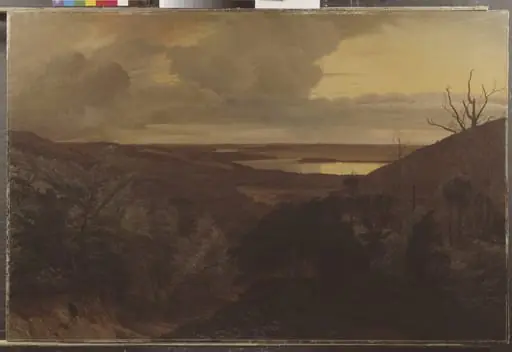 Late Evening near Himmelbjerget, Jutland
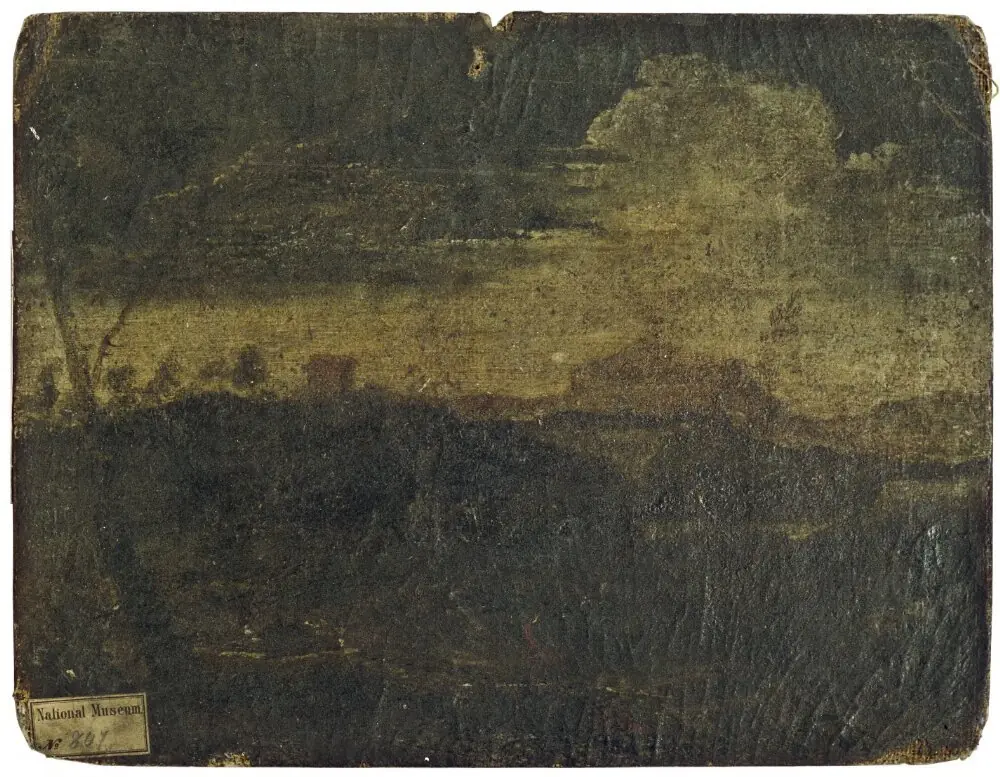 Landscape
 A View towards Castel Gandolfo, Italy
 View of Pirna
 Dorp in een dal
 Peisaj cu mănăstire pe deal
 Landscape