Artwork
Untitled
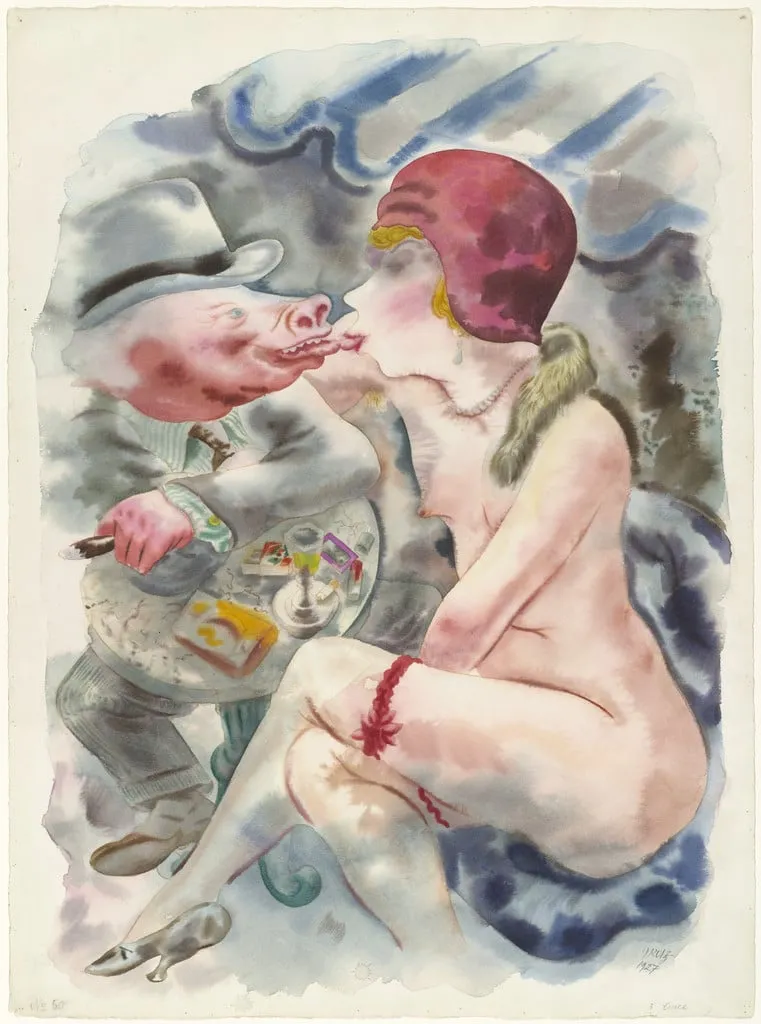
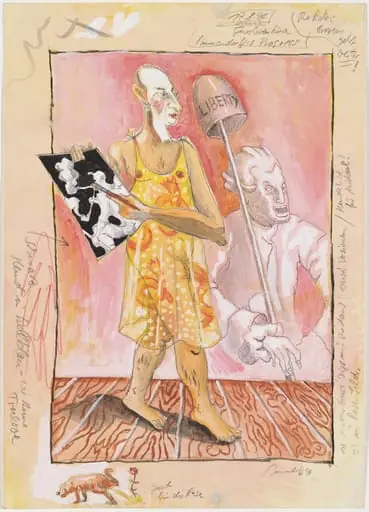
Untitled is a watercolor drawing by George Grosz. It dates from 1927 and is held in the collection of the Museum of Modern Art.
About this work
Overview
Created in 1927, this drawing by George Grosz combines watercolor and ink on paper, with additional ink on the reverse.
Created in 1927, this drawing by George Grosz combines watercolor and ink on paper, with additional ink on the reverse. It belongs to a body of work from his Berlin period, marked by sharp social critique and surreal distortions. The piece is held in the collection of The Museum of Modern Art, New York, where it reflects Grosz’s engagement with the psychological undercurrents of Weimar-era urban life.
Subject & Meaning
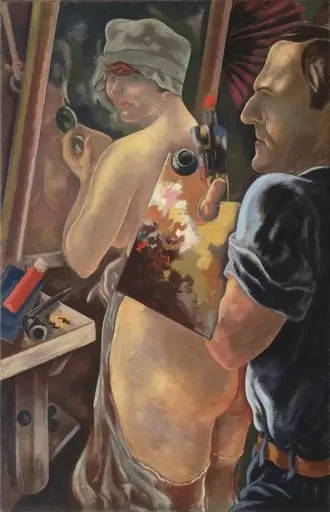
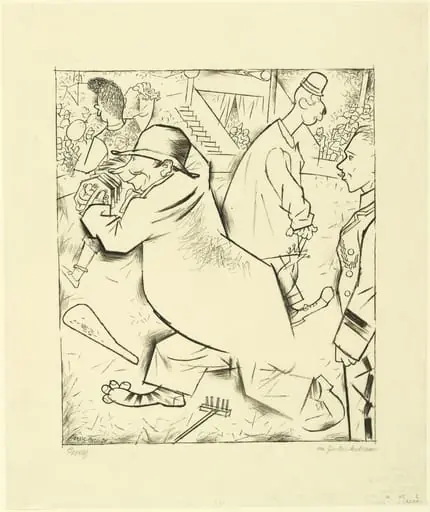
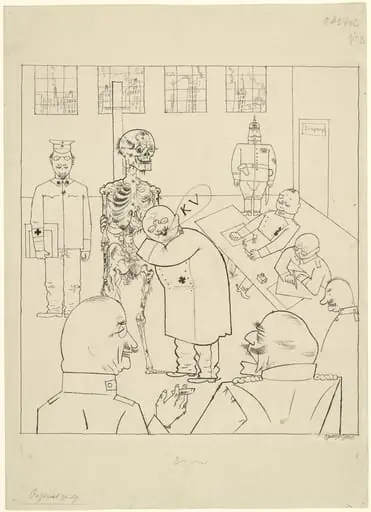
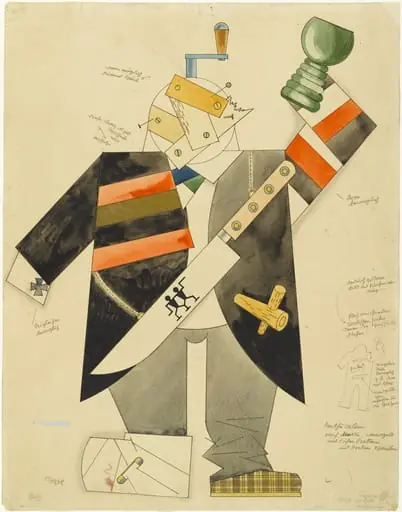
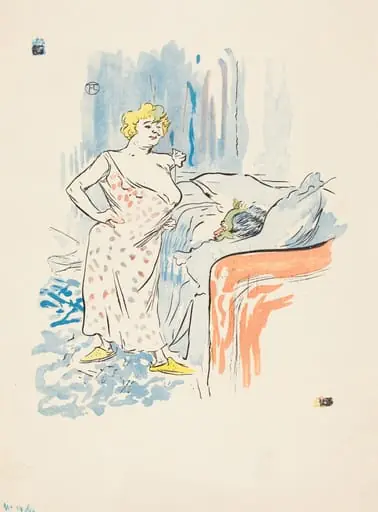
A figure with a pig’s snout, seated at a table with a brush and palette, faces a woman adorned with a red hat and pearls, her torso exposed. The pairing suggests a grotesque inversion of artistic creation and domestic intimacy. The unnatural forms and disjointed posture imply moral decay, possibly critiquing the commodification of art and the performative nature of bourgeois relationships in postwar Germany.
Technique & Style
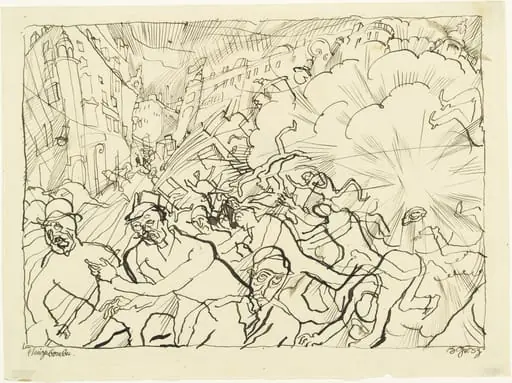
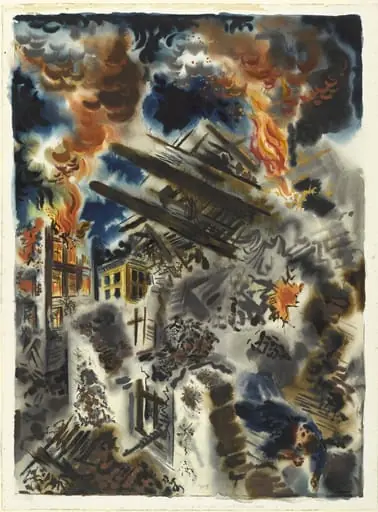
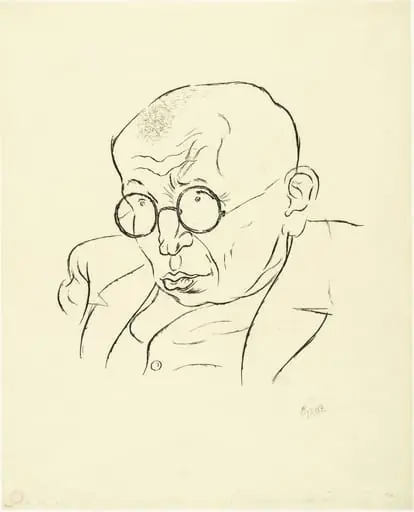
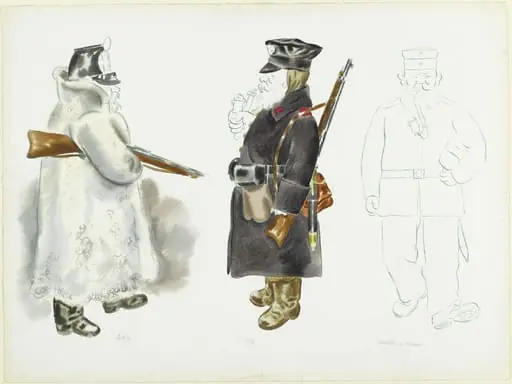
Grosz employed loose, rapid ink lines and unblended watercolor washes to construct an unstable, dreamlike space. Colors are vivid but deliberately jarring—reds and yellows clash against muted tones—enhancing the disquieting atmosphere. The sketchy execution avoids polish, reinforcing the sense of immediacy and psychological unease, characteristic of his satirical approach to figuration.
History & Provenance
The work entered The Museum of Modern Art’s collection in the mid-20th century, likely through acquisitions of European modernist drawings during the 1940s–50s. It was produced during Grosz’s time in Berlin, shortly before his emigration to the United States in 1933. Its survival through political upheaval reflects its status as a private, intimate work rather than a public commission.
Context
Made during the height of the Weimar Republic, the drawing responds to a society grappling with economic instability, shifting gender roles, and the erosion of traditional values. Grosz’s use of animalistic features and distorted bodies aligns with broader Expressionist and Dadaist tendencies to expose societal hypocrisy through grotesque imagery, rejecting realism in favor of emotional truth.
Legacy
This drawing exemplifies Grosz’s enduring influence on 20th-century satirical art. Its unflinching portrayal of human absurdity informed later generations of artists exploring identity, power, and alienation. Though not widely exhibited, it remains a key example of how drawing could serve as a vehicle for incisive social commentary beyond the realm of painting or print.
Artist & collection

Artist
George Grosz was a German artist known especially for his caricatural drawings and paintings of Berlin life in the 1920s.