Artwork
Ginger Pot wit Anemones
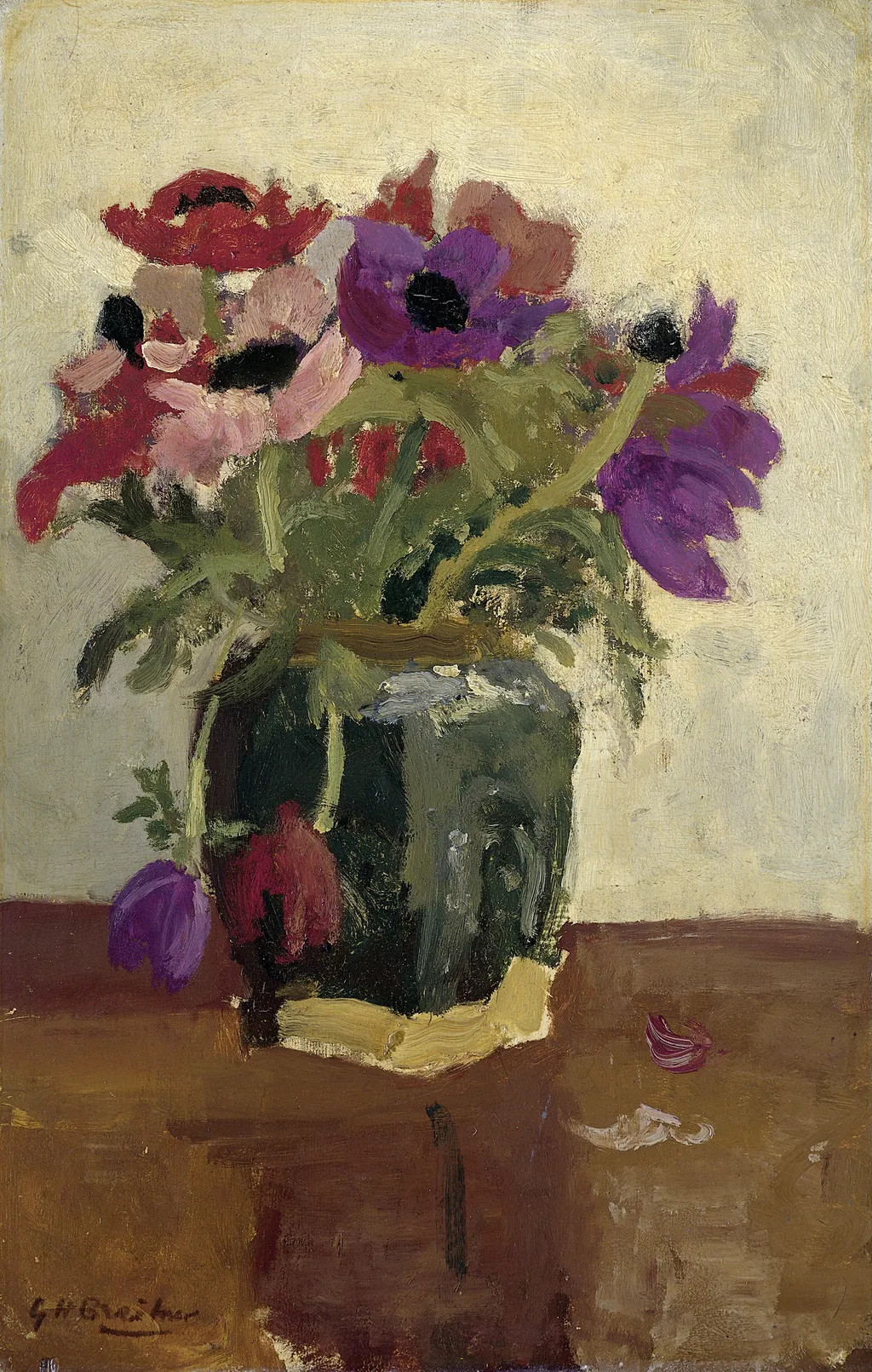
Ginger Pot wit Anemones is an oil painting by George Hendrik Breitner. It dates from 1911 and is held in the collection of the Rijksmuseum.
About this work
Overview
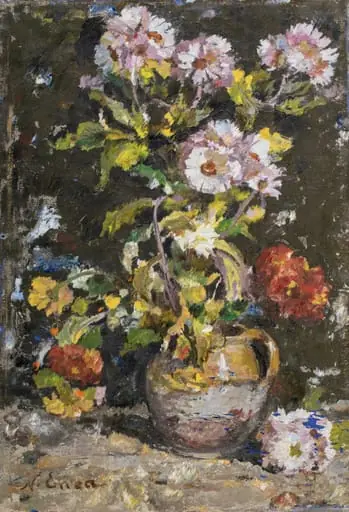
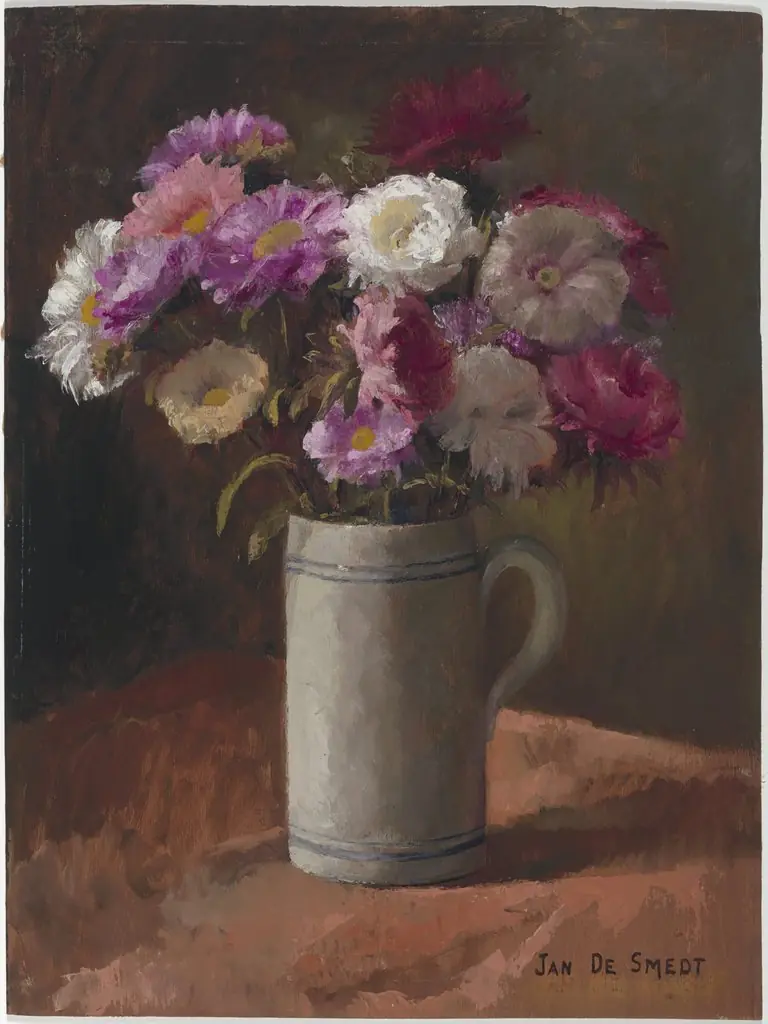
George Hendrik Breitner’s 1911 work *Ginger Pot with Anemones* is a small still‑life executed on wood. The composition centers on a dark ceramic vessel brimming with vivid blossoms, set against a plain wooden tabletop. The painting belongs to the Rijksmuseum’s collection and exemplifies Breitner’s turn toward intimate, everyday subjects during the later phase of his career.
Subject & Meaning
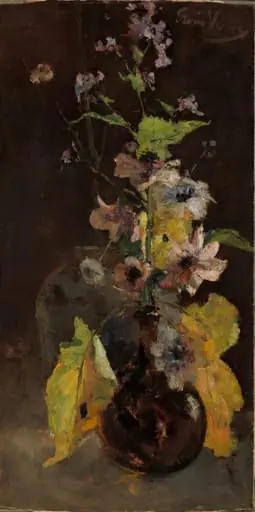
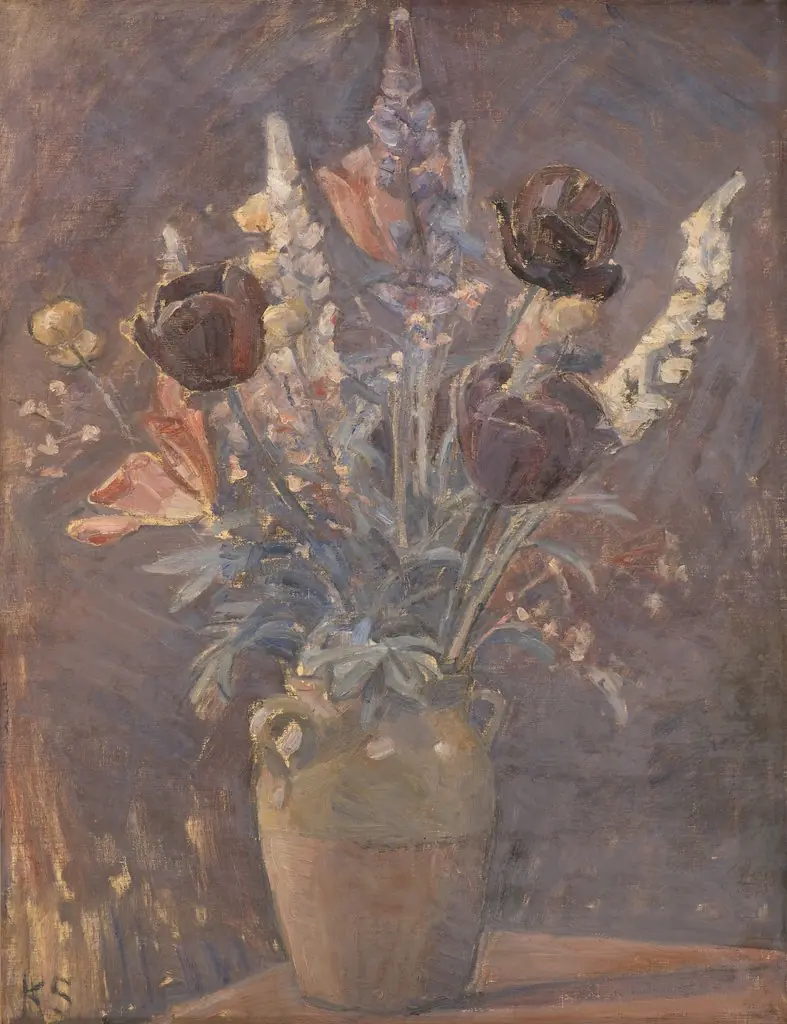
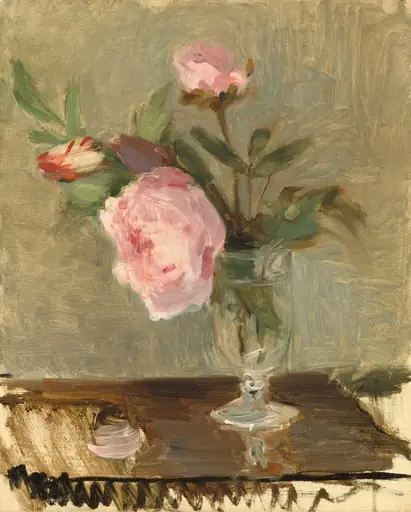
The piece presents a simple domestic arrangement: a pot of anemones rendered in reds, purples, pinks and green foliage. By focusing on ordinary household objects, Breitner continues his broader interest in documenting the mundane with immediacy, inviting viewers to notice the fleeting beauty of a momentary floral display.
Technique & Style
Breitner applies thick, impasto brushwork that leaves the paint’s texture visible, creating a tactile surface where light and shadow are suggested by rapid, gestural strokes. The rough application heightens the vibrancy of the flowers and contrasts with the subdued background, a method that reflects his plein‑air practice and his photographic eye for transient atmospheric effects.
History & Provenance
Created in 1911, the work was later acquired by the Rijksmuseum, where it remains on display. It represents a period when Breitner, already known for urban and harbor scenes, experimented with still‑life subjects, expanding the range of his observational repertoire within the Amsterdam Impressionist movement.
Own this work as a print
Artist & collection
Artist
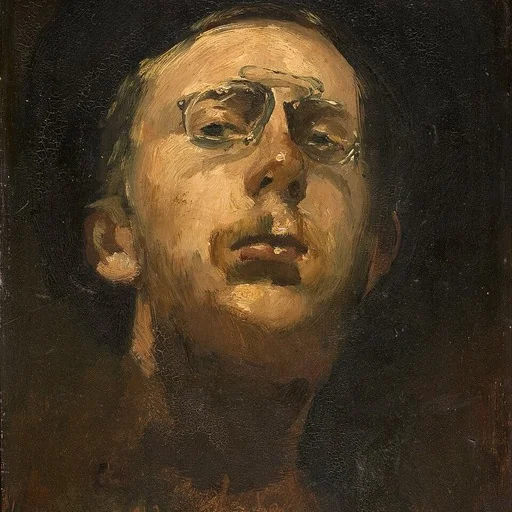
George Hendrik Breitner (12 September 1857 – 5 June 1923) was a Dutch painter and photographer.