Artwork
A Marine
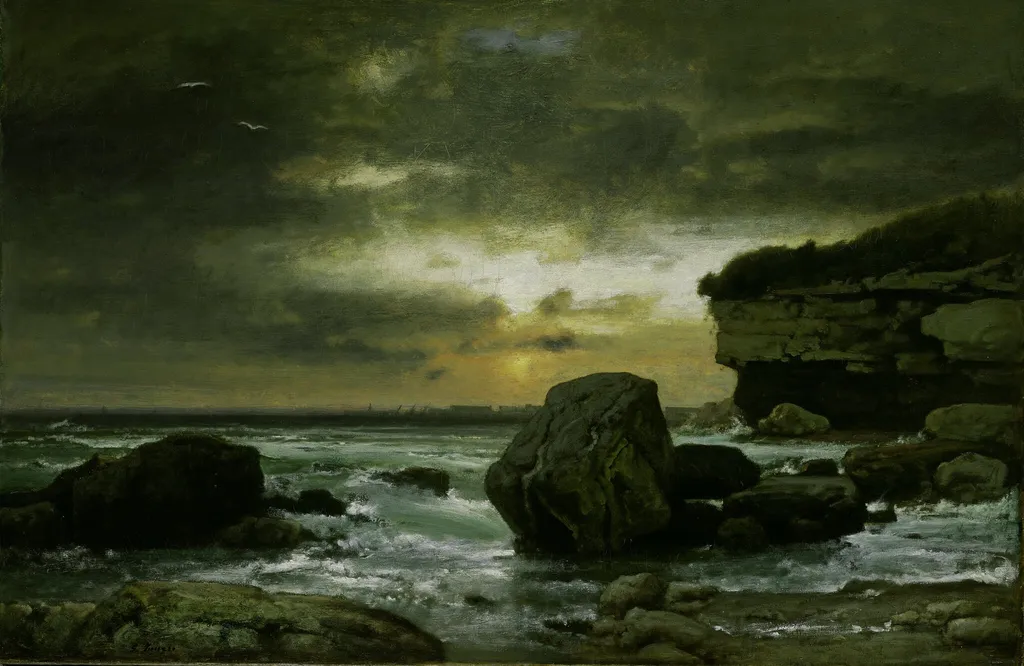
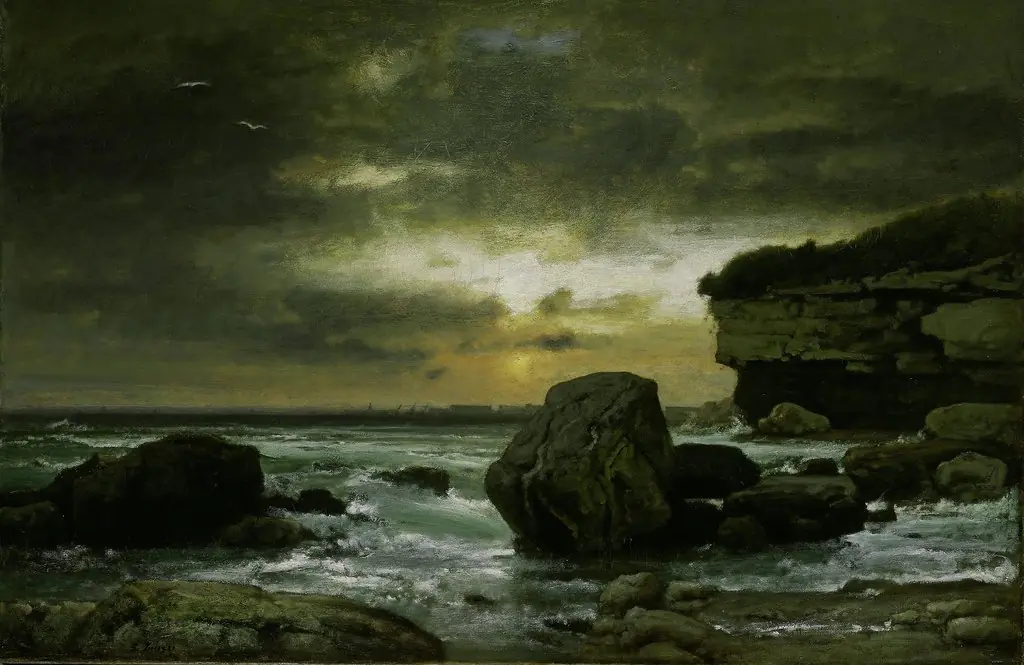
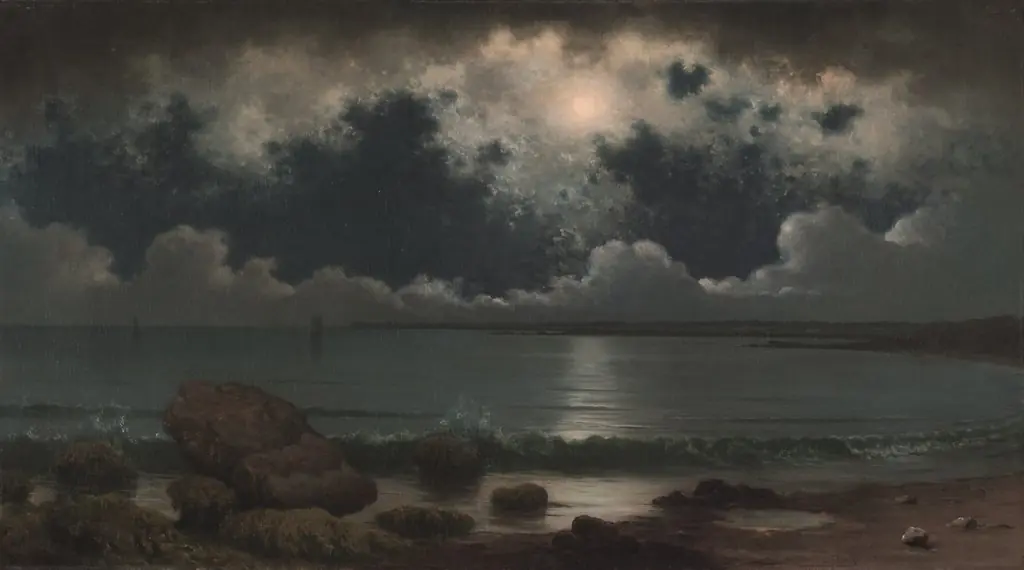
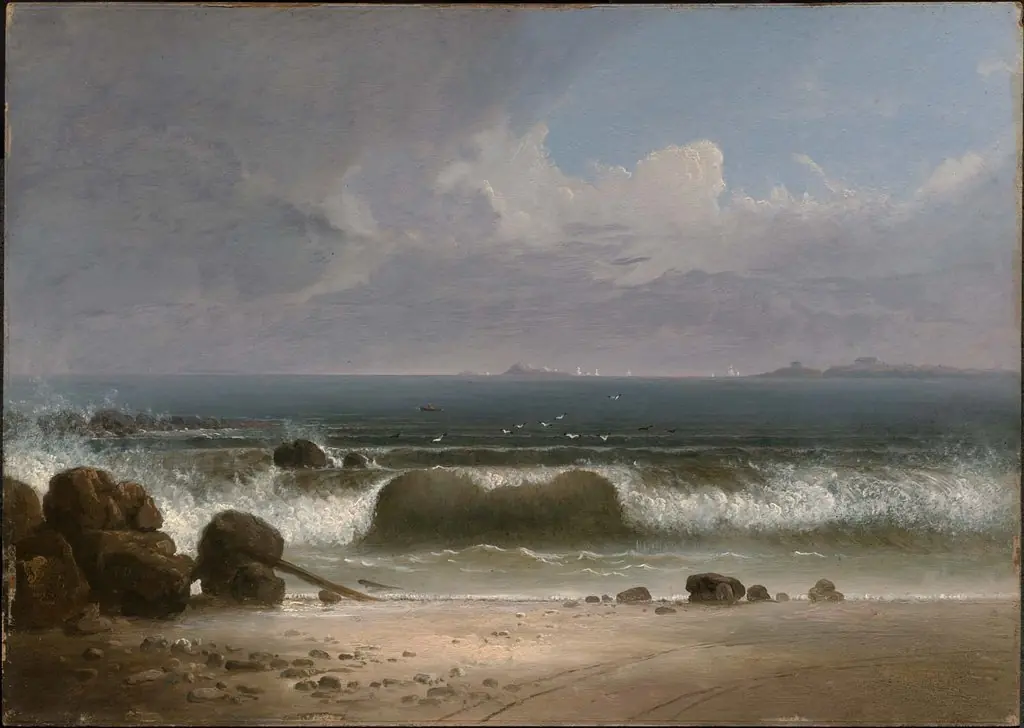
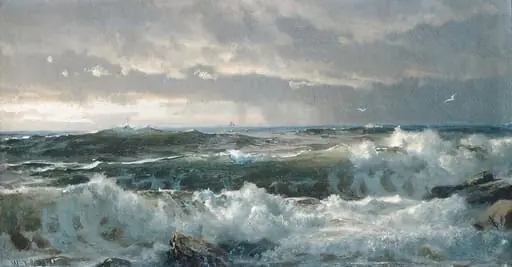
A Marine is an oil painting by the Hudson River School artist George Inness. It dates from 1874 and is held in the collection of the Art Institute of Chicago.
About this work
Overview
The scene’s location, once identified as Étretat, is now understood to be Porto d’Anzio in Italy, reshaping its geographic context.
Painted in oil on canvas during George Inness’s European travels in the early 1870s, this seascape captures the turbulent edge of the sea against a rugged coast. Its dynamic brushwork and shifting light reflect a departure from American romantic landscape traditions, aligning instead with the subdued, observational approach of the Barbizon School. The scene’s location, once identified as Étretat, is now understood to be Porto d’Anzio in Italy, reshaping its geographic context.
Subject & Meaning
The painting presents the ocean not as a serene backdrop but as an active, elemental force. Waves crash against dark, weathered rocks, while distant ships and a faint coastal settlement suggest human presence against nature’s scale. The interplay of light and shadow conveys transient moments—sun breaking through clouds, seawater gleaming under fleeting rays—emphasizing impermanence and the quiet tension between land and sea.
Technique & Style
Inness applied paint with varied texture and pressure, creating tactile contrasts between wet and dry surfaces, sunlit and shadowed rock. His loose, energetic strokes suggest motion in the waves and spray, while finer details in the central boulder reveal deliberate modulation of tone and surface. These methods reflect his study of Barbizon painters, who favored intimate, atmospheric rendering over grand spectacle.
History & Provenance
Created during Inness’s time in Europe, the work was long associated with Étretat’s famous cliffs, a common subject for artists of the period. Later analysis of topographical features and historical records led scholars to reassign its location to Porto d’Anzio, a less documented but geographically consistent site. This revision underscores the evolving nature of art historical attribution and the artist’s engagement with lesser-known coastal landscapes.
Context
Inness traveled to Europe to distance himself from the monumental style of the Hudson River School and immerse himself in the quieter, more personal landscapes favored by French realists. His exposure to Barbizon artists encouraged a focus on mood, light, and tactile surface rather than idealized scenery. This painting exemplifies his shift toward a more introspective, emotionally resonant form of landscape painting.
Legacy
The work stands as a transitional piece in Inness’s career, bridging his earlier American traditions and his later, more abstracted visions. Its emphasis on atmospheric effect and material texture influenced subsequent generations of American landscape painters who sought emotional depth over topographical accuracy. The reidentification of its location also highlights how scholarly reassessment can reshape understanding of an artist’s journey and intent.
Own this work as a print
Artist & collection

Artist
George Inness (May 1, 1825 – August 3, 1894) was an American landscape painter. Now recognized as one of the most influential American artists of the nineteenth century, Inness was influenced by the Hudson River School…