Artwork
The Wheat Field
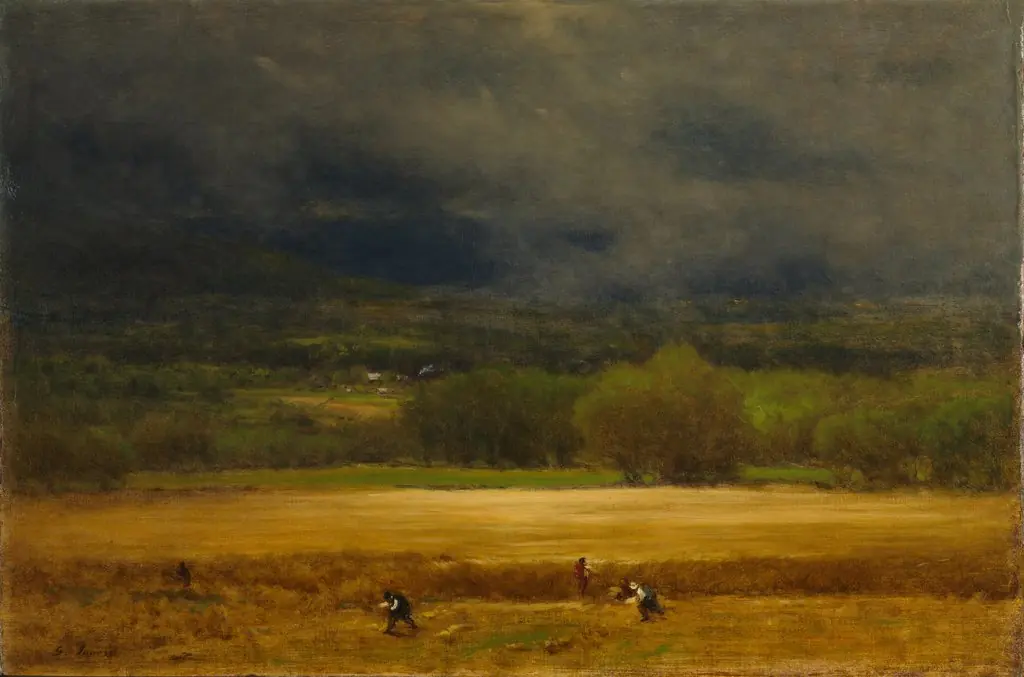
The Wheat Field is an unspecified painting by the American Impressionist artist George Inness. It dates from 1876 and is held in the collection of the Cleveland Museum of Art.
About this work
Overview
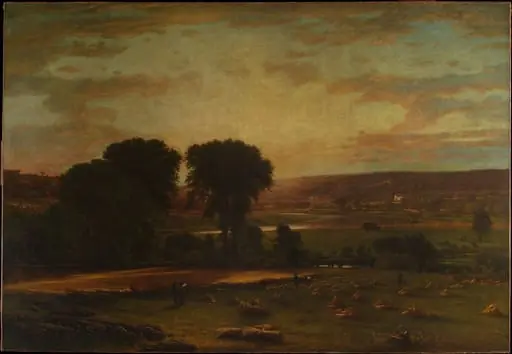
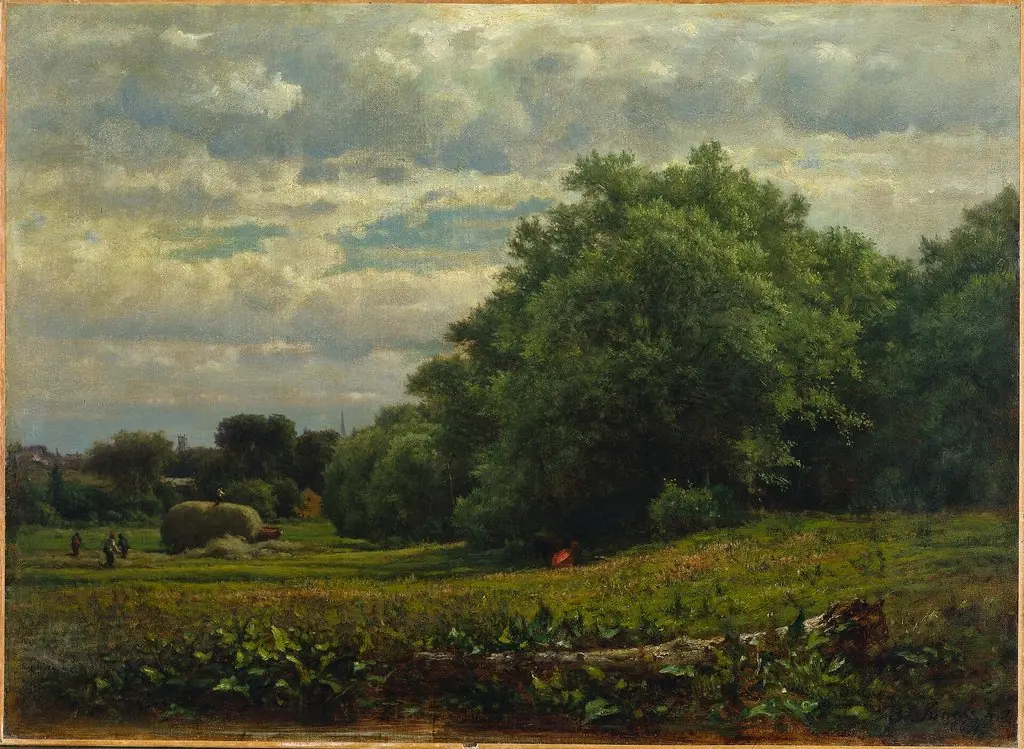
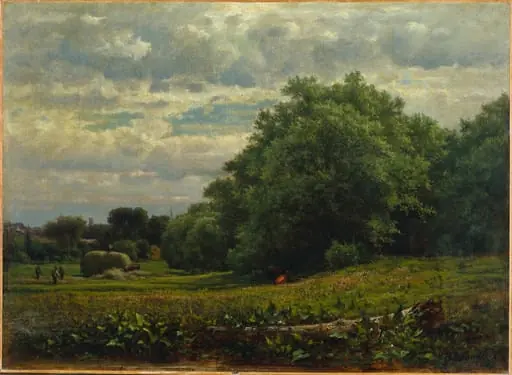
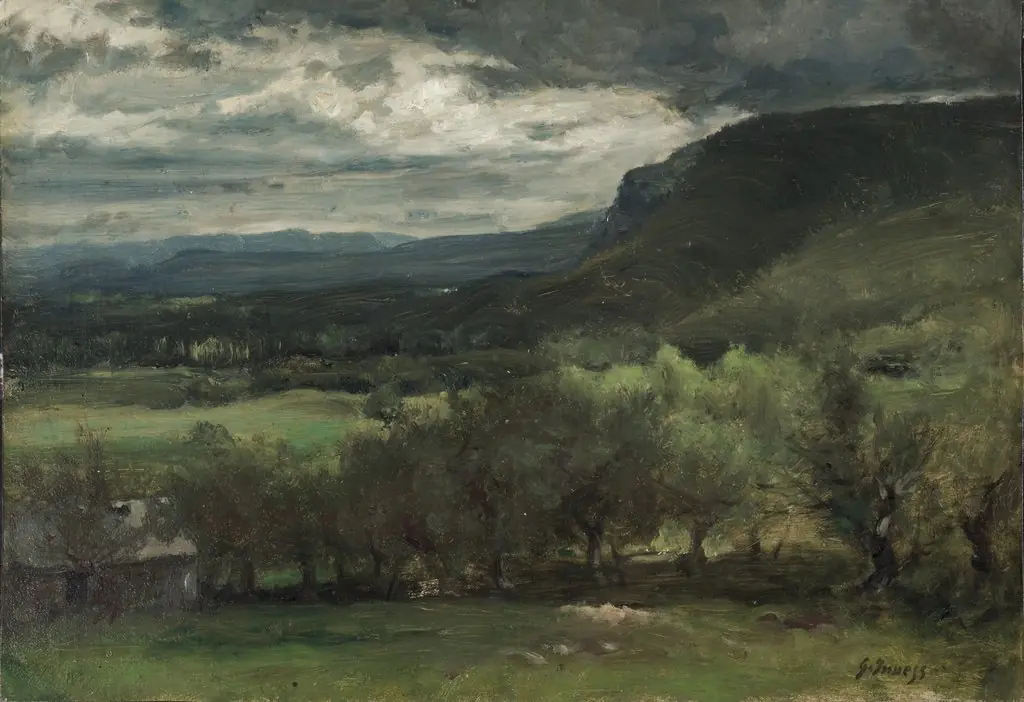
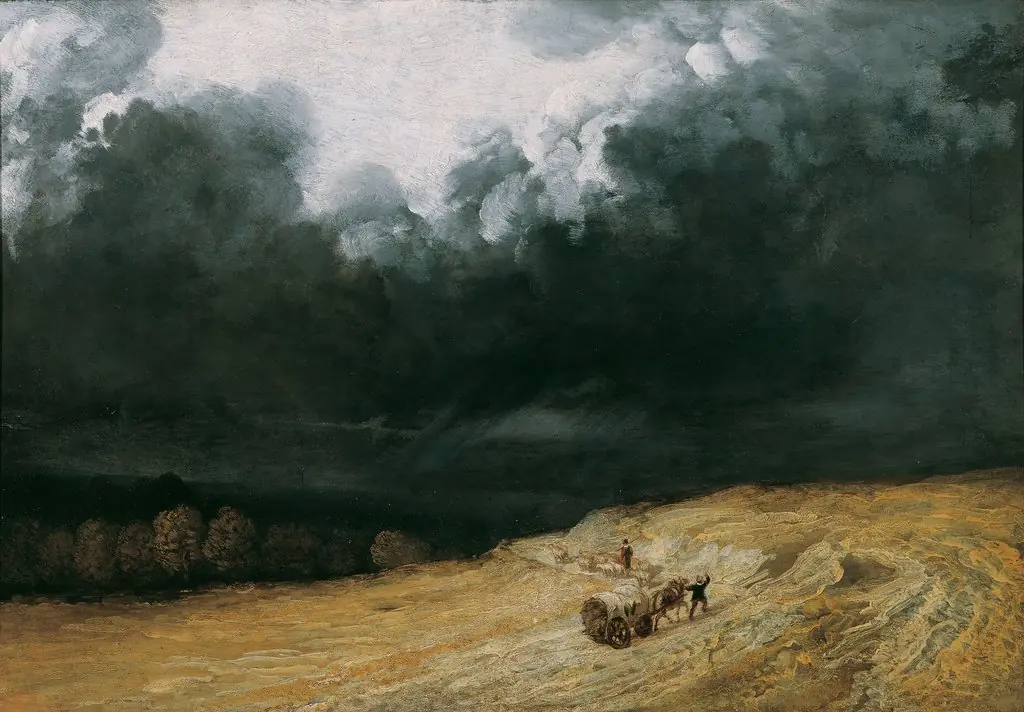
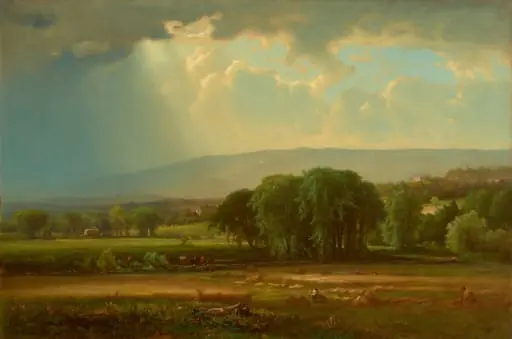
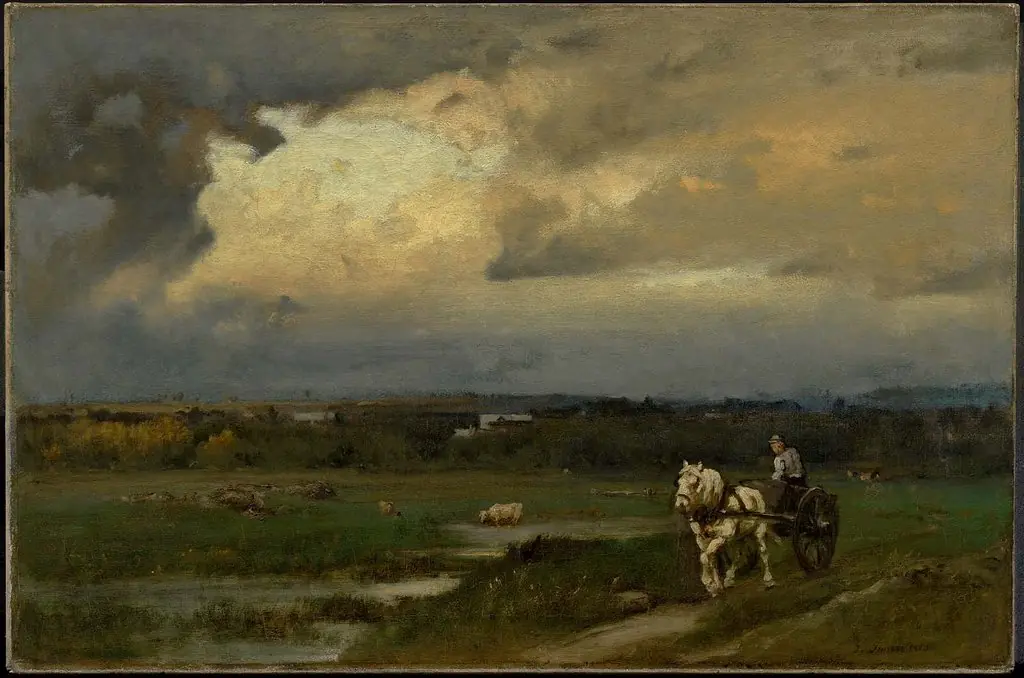
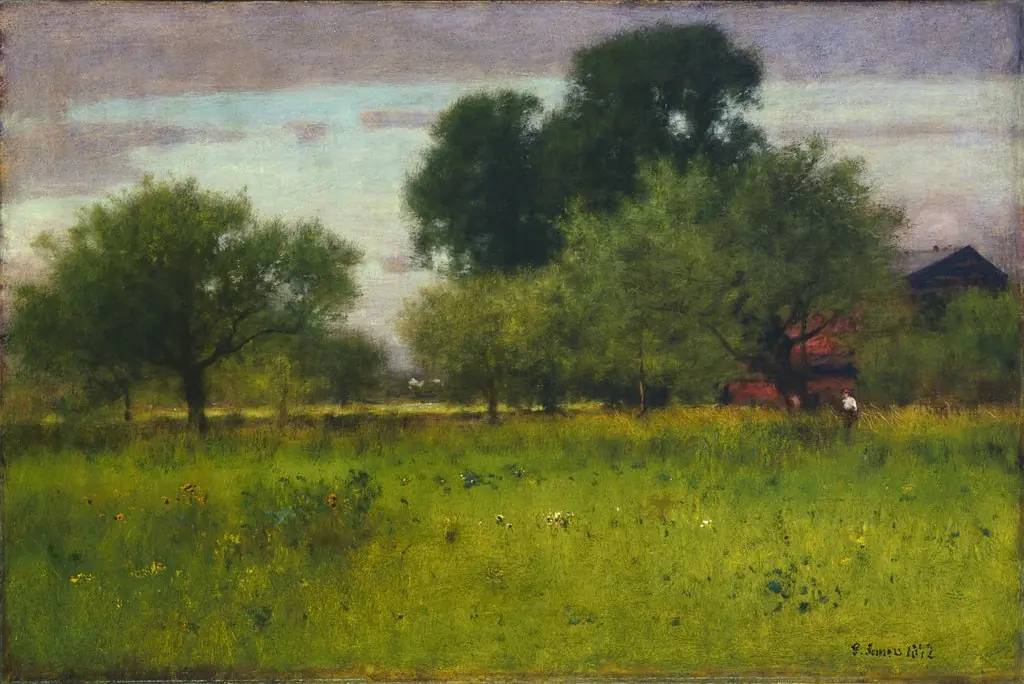
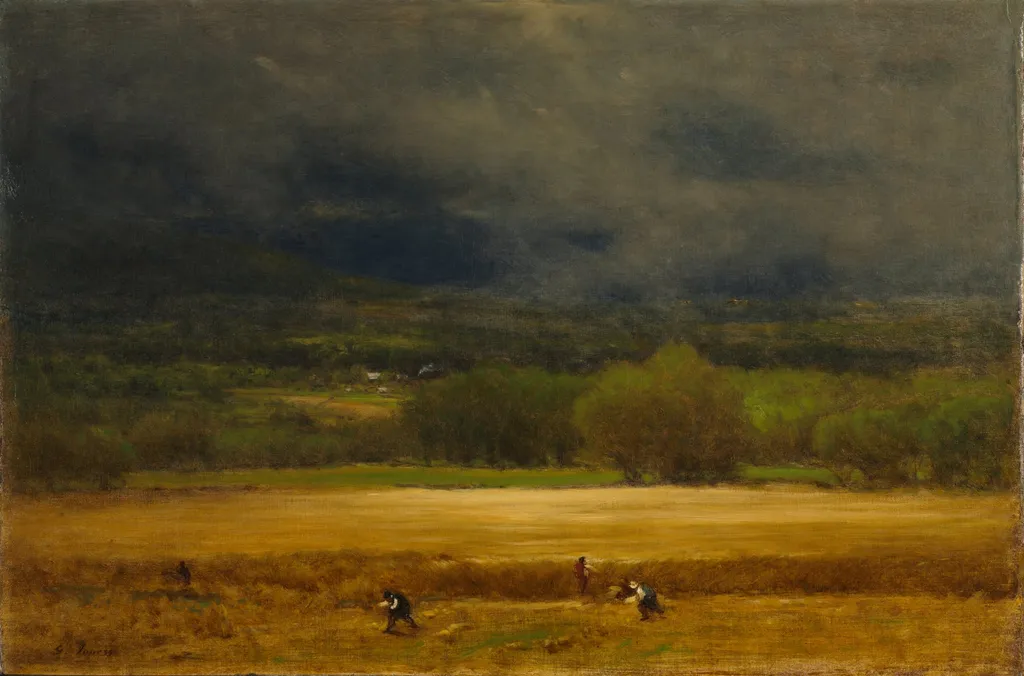
George Inness painted The Wheat Field circa 1876, a work that exemplifies his late‑career shift toward a more atmospheric approach within American Impressionism. The canvas presents an expansive, sun‑bleached field beneath a brooding sky, punctuated by three modest figures and a distant line of trees that separate the land from a muted horizon.
Subject & Meaning
The composition centers on a rural scene, where the golden, arid ground and the solitary figures suggest a quiet, perhaps contemplative interaction with nature. Inness’s later oeuvre often conveyed spiritual ideas drawn from Swedenborgian thought, and the painting’s somber sky and subdued palette may reflect an underlying meditation on the transience of human activity amid the landscape.
Technique & Style
Loose, rapid brushwork dominates the sky, creating a sense of movement and atmospheric tension, while the field and figures are rendered with broader, less detailed strokes. This approach aligns Inness with the Barbizon influence and the emerging American Impressionist tendency to prioritize mood and light over precise delineation, allowing the forms to merge with their surroundings.
History & Provenance
The Wheat Field is part of the collection at the Cleveland Museum of Art. It entered the museum’s holdings after changing hands in the early twentieth century, reflecting the broader acquisition of Inness’s work by American institutions seeking to represent the transition from Hudson River classicism to more modern, spiritually infused landscapes.
Own this work as a print
Artist & collection

Artist
George Inness (May 1, 1825 – August 3, 1894) was an American landscape painter. Now recognized as one of the most influential American artists of the nineteenth century, Inness was influenced by the Hudson River School…