Artwork
Hazy Morning
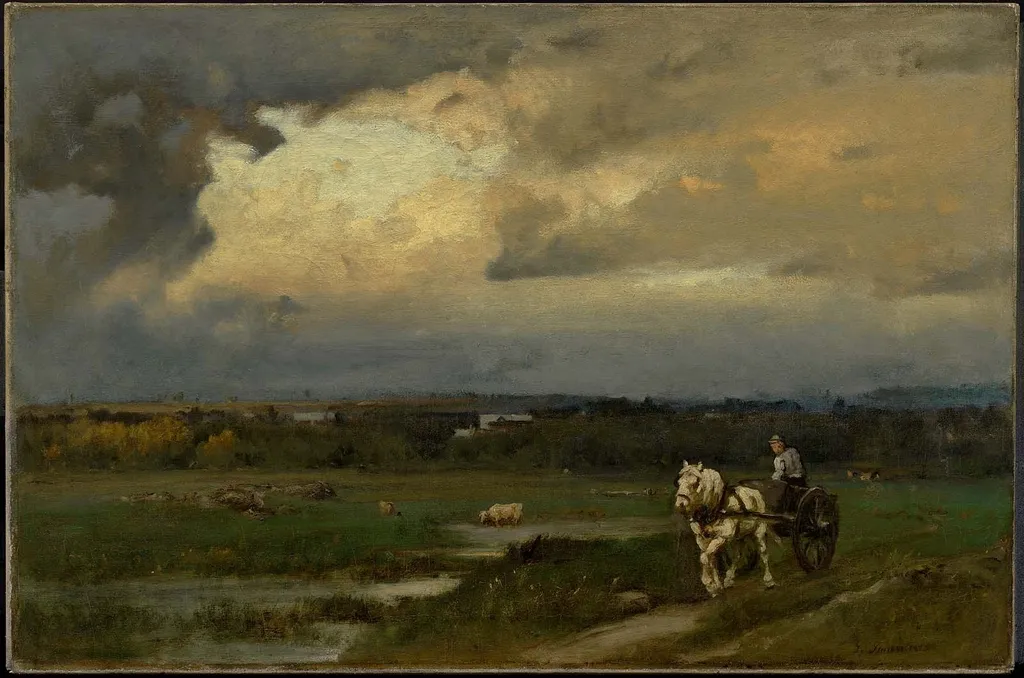
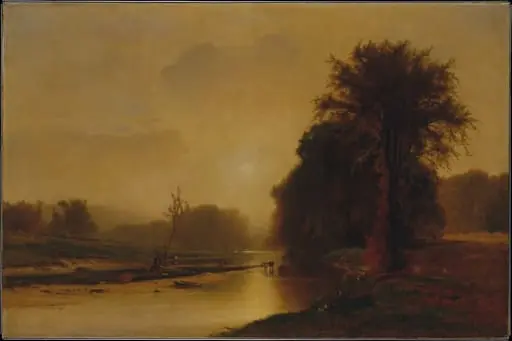
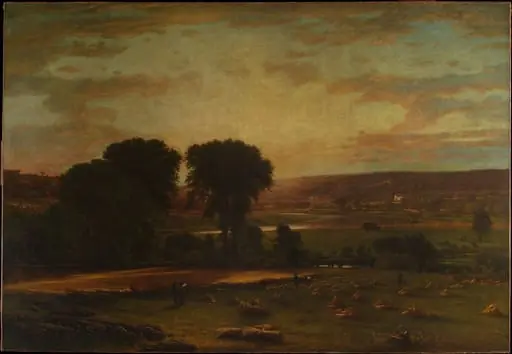
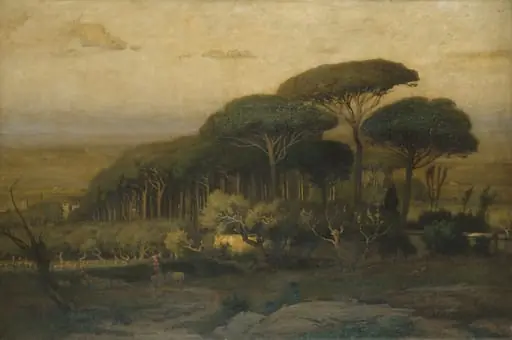
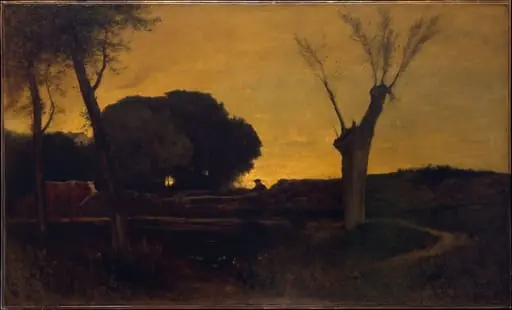
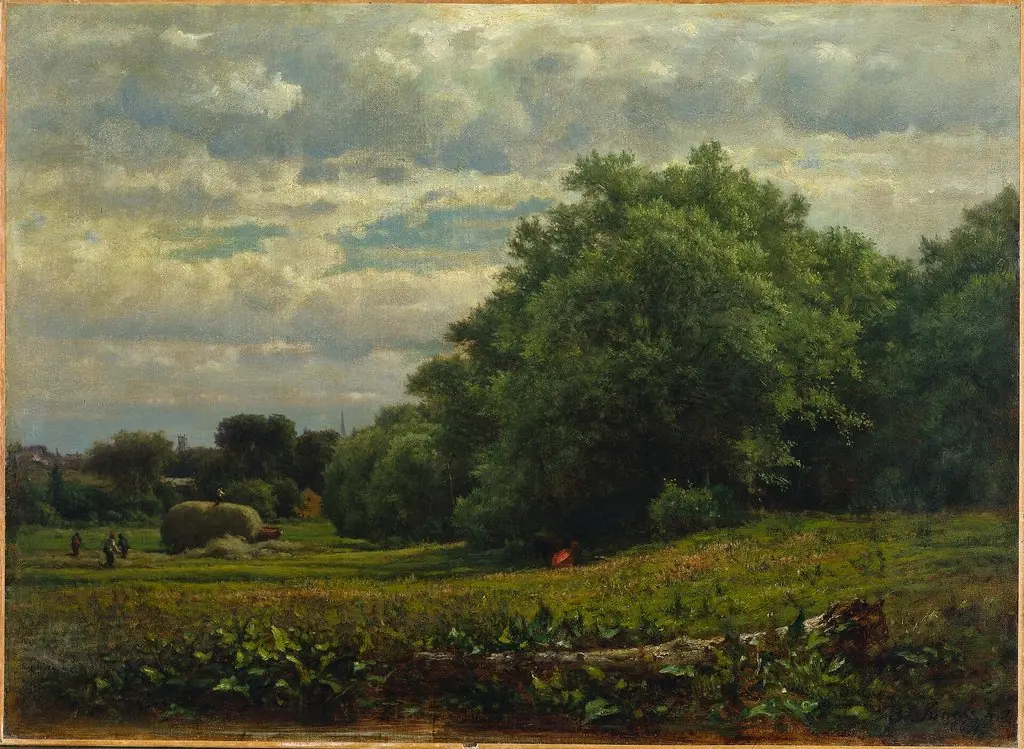
Hazy Morning is an oil painting by the American Impressionist artist George Inness. It dates from 1875 and is held in the collection of the Museum of Fine Arts Boston.
About this work
Overview
Though often associated with American Impressionism, Inness’s approach diverged from the movement’s focus on light and color alone.
George Inness completed *Hazy Morning* in 1875, an oil painting that captures a quiet rural scene at dawn. Though often associated with American Impressionism, Inness’s approach diverged from the movement’s focus on light and color alone. His work instead merged observational detail with a contemplative mood, reflecting his deepening interest in spiritual harmony and the emotional resonance of nature.
Subject & Meaning
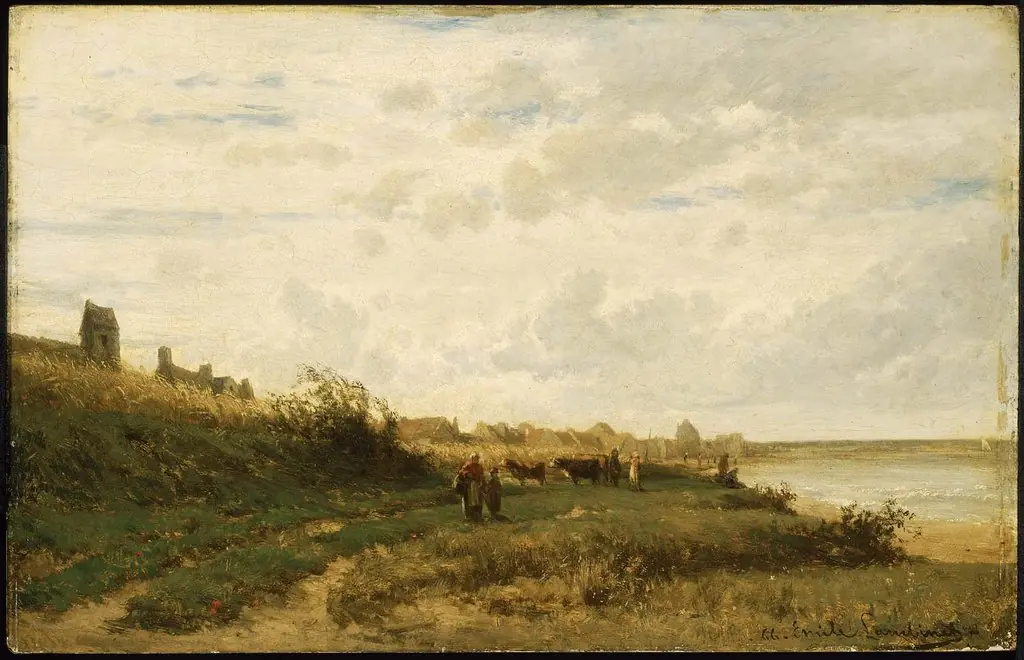
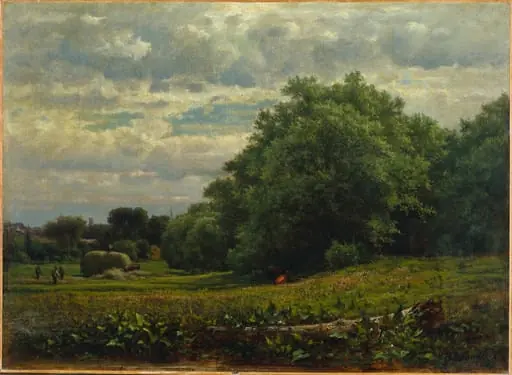
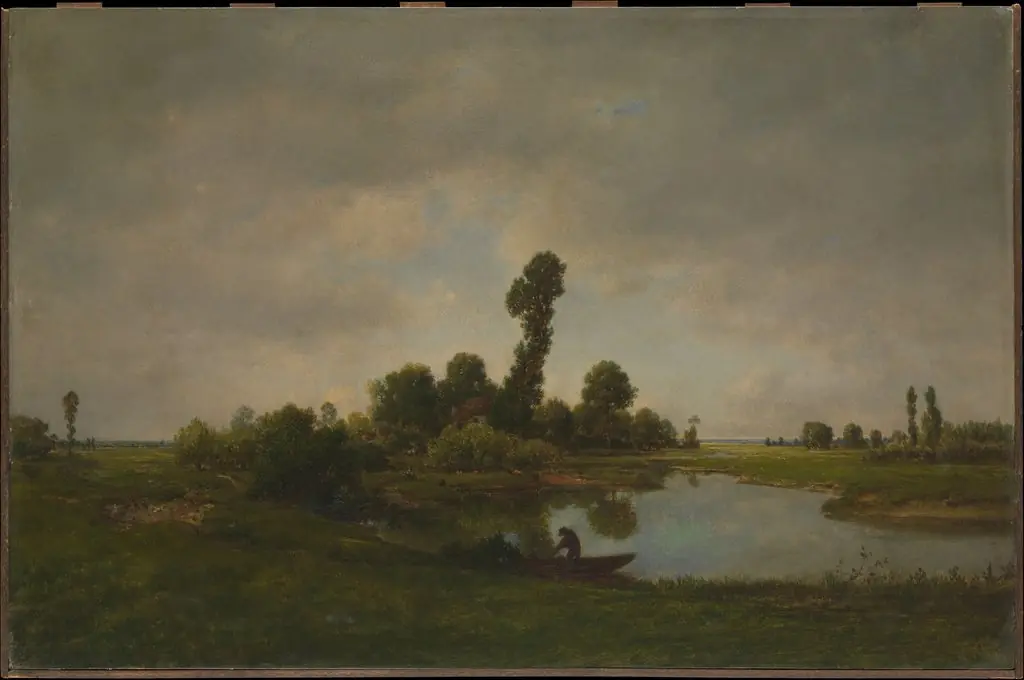
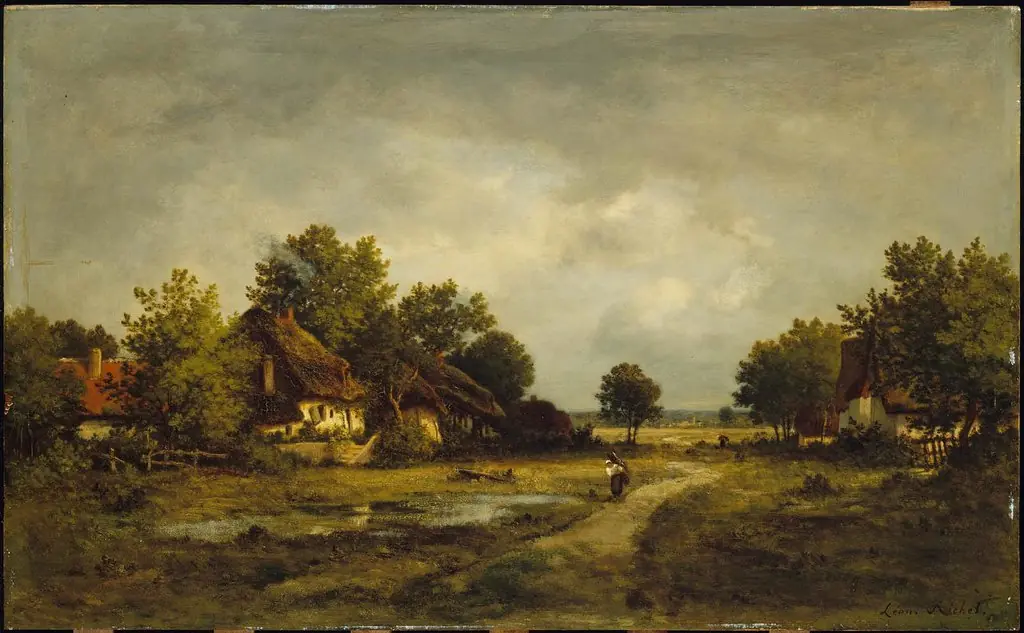
The painting depicts a solitary horse and carriage traveling along a narrow path toward a body of water, flanked by sparse vegetation and distant trees. A faint structure emerges in the background, suggesting human presence without intrusion. The scene conveys stillness and introspection, aligning with Inness’s engagement with Swedenborgian thought, which viewed nature as a manifestation of divine order. The quiet journey may symbolize a spiritual passage rather than a mere physical one.
Technique & Style
Inness employed soft, blended brushwork to dissolve hard edges, creating a diffused atmosphere that mimics morning mist. His palette is restrained—dominated by muted greens, browns, and grays—with subtle tonal shifts suggesting depth and light. Unlike the brighter hues of Impressionism, his method prioritizes emotional tone over optical precision, using layered glazes to achieve a luminous, atmospheric effect that feels both tangible and ethereal.
History & Provenance
Painted during Inness’s mature period, *Hazy Morning* emerged after his travels in Europe, where he studied the works of the Barbizon School and Dutch landscape painters. These experiences deepened his move away from the grand, detailed style of the Hudson River School toward a more intimate, mood-driven approach. The painting reflects his personal evolution as an artist, shaped by both technical study and philosophical inquiry into the spiritual dimensions of landscape.
Context
In the post-Civil War United States, many artists sought to reconcile the nation’s rapid industrialization with a longing for natural tranquility. Inness’s work responded to this cultural tension, offering landscapes that were neither idealized nor purely documentary. His paintings, including *Hazy Morning*, provided a meditative counterpoint to urban expansion, resonating with contemporary spiritual movements that valued inner peace and nature’s hidden symbolism.
Legacy
Inness’s later works, including *Hazy Morning*, influenced a generation of American painters who prioritized emotional atmosphere over topographical accuracy. His synthesis of European techniques with American subject matter helped bridge the gap between 19th-century realism and early modernist sensibilities. Though less widely known today than his Hudson River contemporaries, his quiet, introspective landscapes remain significant for their psychological depth and spiritual undertones.
Artist & collection

Artist
George Inness (May 1, 1825 – August 3, 1894) was an American landscape painter. Now recognized as one of the most influential American artists of the nineteenth century, Inness was influenced by the Hudson River School…