Artwork
Early Morning, Tarpon Springs
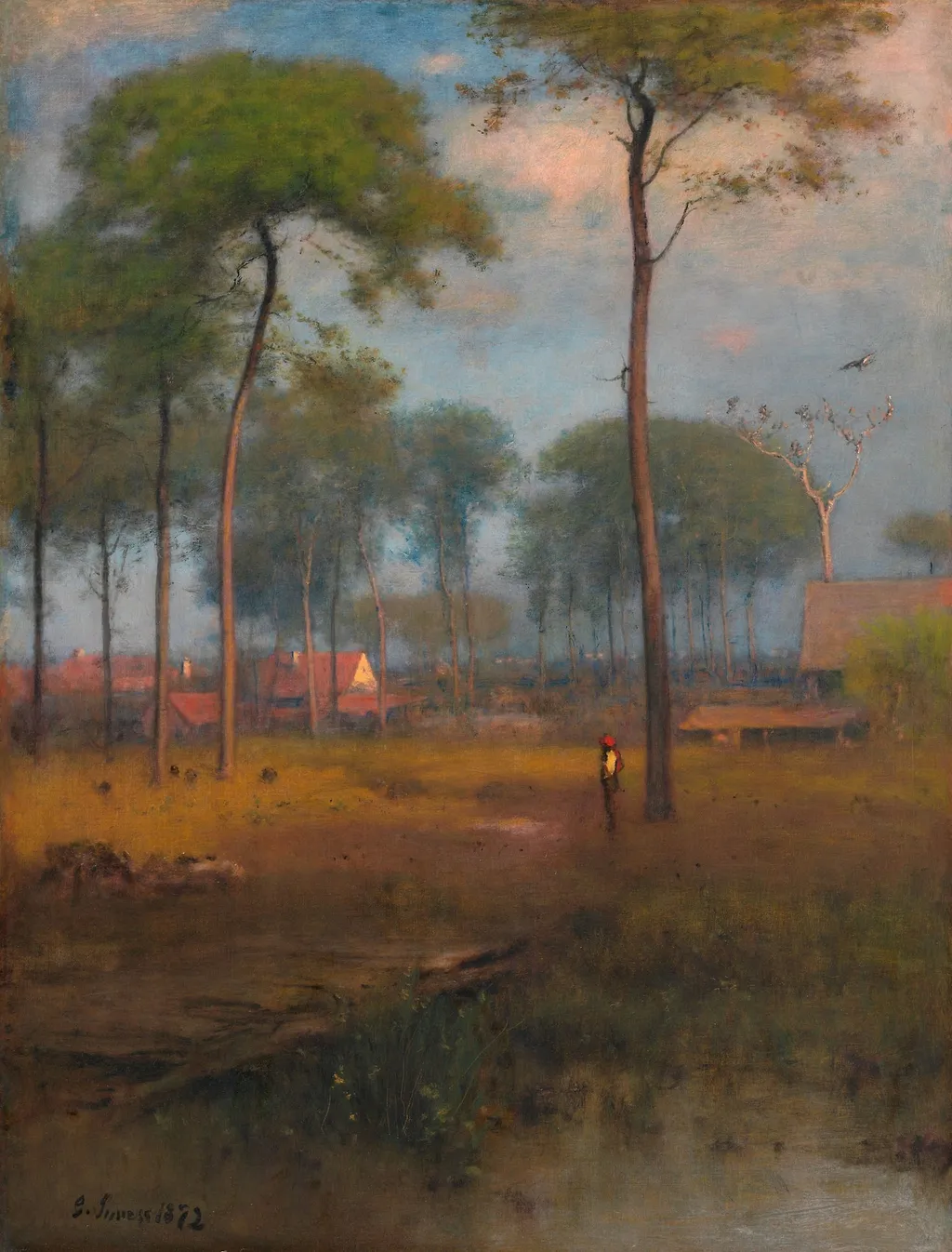
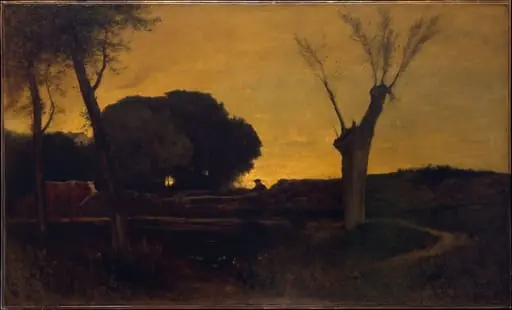
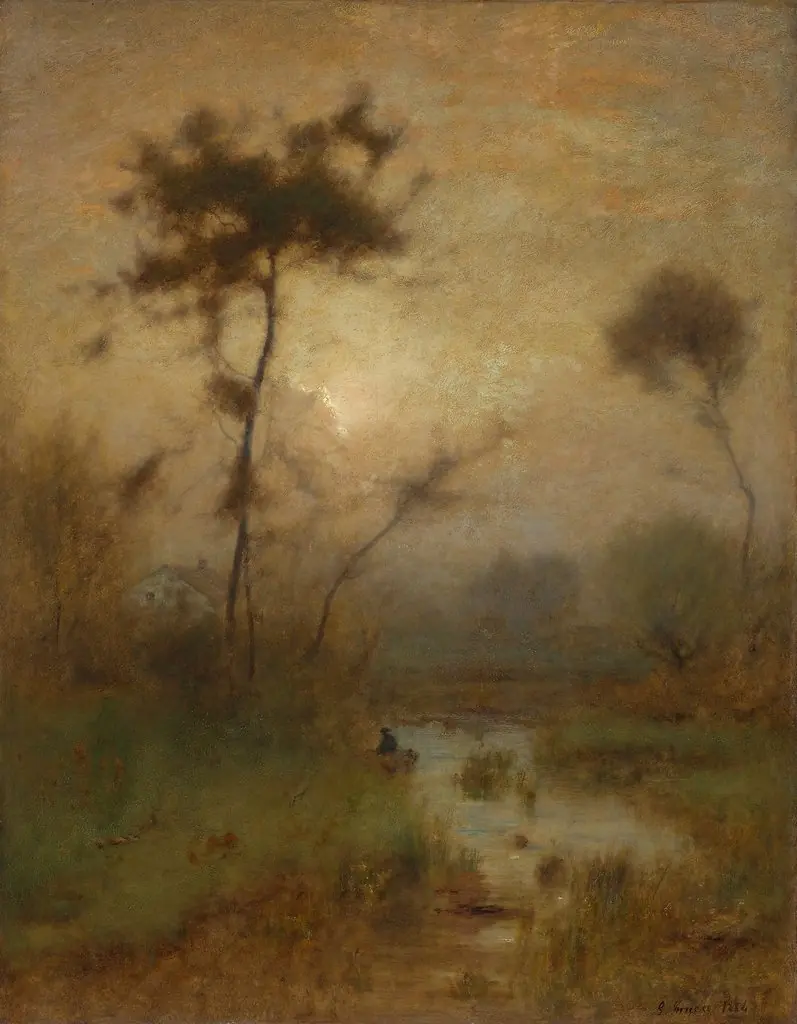
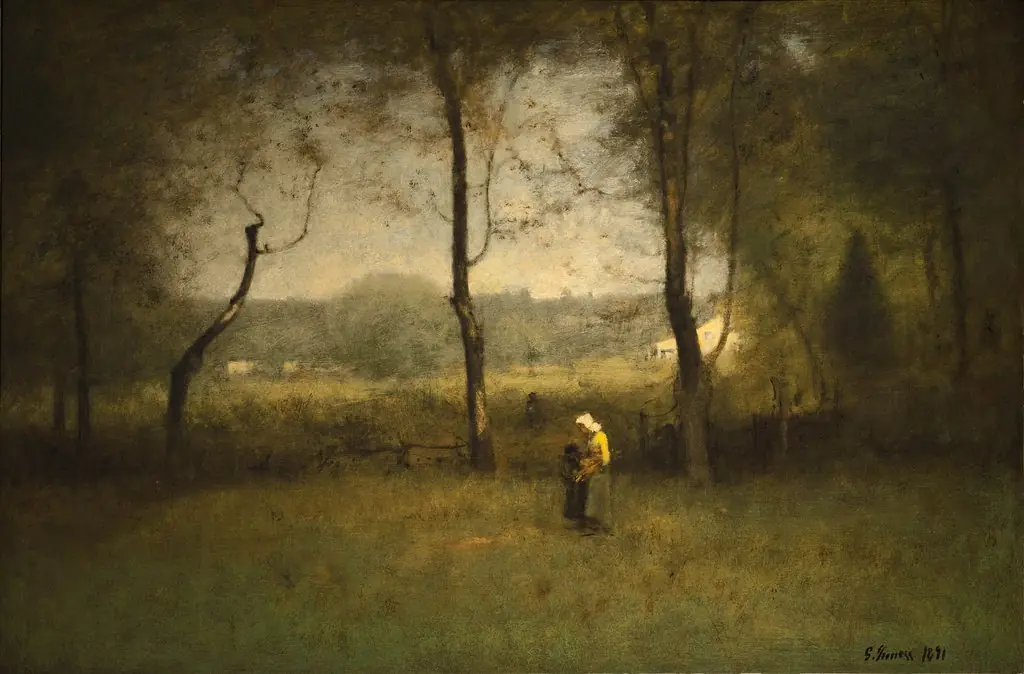
Early Morning, Tarpon Springs is an oil painting by the American Impressionist artist George Inness. It is held in the collection of the Art Institute of Chicago. Created in 1896, this oil painting presents a tranquil early‑morning landscape in Tarpon Springs.
About this work
Overview
Created in 1896, this oil painting presents a tranquil early‑morning landscape in Tarpon Springs. A solitary figure in a red hat stands amid a field bordered by slender trees, while distant red‑tiled structures emerge faintly through the foliage. The sky is rendered in soft, pale tones, and the ground combines muted browns and greens, conveying a quiet, expansive atmosphere.
Subject & Meaning
The composition centers on a lone individual set against a broad, open countryside, suggesting contemplation within nature. The modest human presence, dwarfed by the surrounding trees and sky, underscores a sense of humility before the environment. The subtle inclusion of distant architecture hints at a nearby settlement, linking the natural scene to the everyday life of the region.
Technique & Style
The artist employs a loose, impressionistic brushwork that captures fleeting light and shadow across the landscape. Layers of translucent paint create a soft, glazed effect, allowing colors to blend gently and produce a muted palette. This approach emphasizes atmosphere over detail, aligning the work with the American Impressionist tendency to render mood through color and light.
History & Provenance
Painted by George Inness, a prominent American landscape artist of the late nineteenth century, the work reflects his evolution from Hudson River School influences toward a more atmospheric, Barbizon‑inspired style. The painting entered the collection of the Art Institute of Chicago, where it remains part of the museum’s holdings, representing Inness’s mature period.
Context
This piece exemplifies that shift, merging Inness’s earlier romantic sensibilities with the softer, more naturalistic treatment characteristic of the era.
Inness’s later oeuvre integrates spiritual concepts drawn from Emanuel Swedenborg, favoring contemplative scenes that evoke inner reflection. By the 1890s, American artists were increasingly adopting Impressionist techniques, focusing on light effects and everyday subjects. This piece exemplifies that shift, merging Inness’s earlier romantic sensibilities with the softer, more naturalistic treatment characteristic of the era.
Own this work as a print
Artist & collection

Artist
George Inness (May 1, 1825 – August 3, 1894) was an American landscape painter. Now recognized as one of the most influential American artists of the nineteenth century, Inness was influenced by the Hudson River School…