Artwork
The Elm Tree
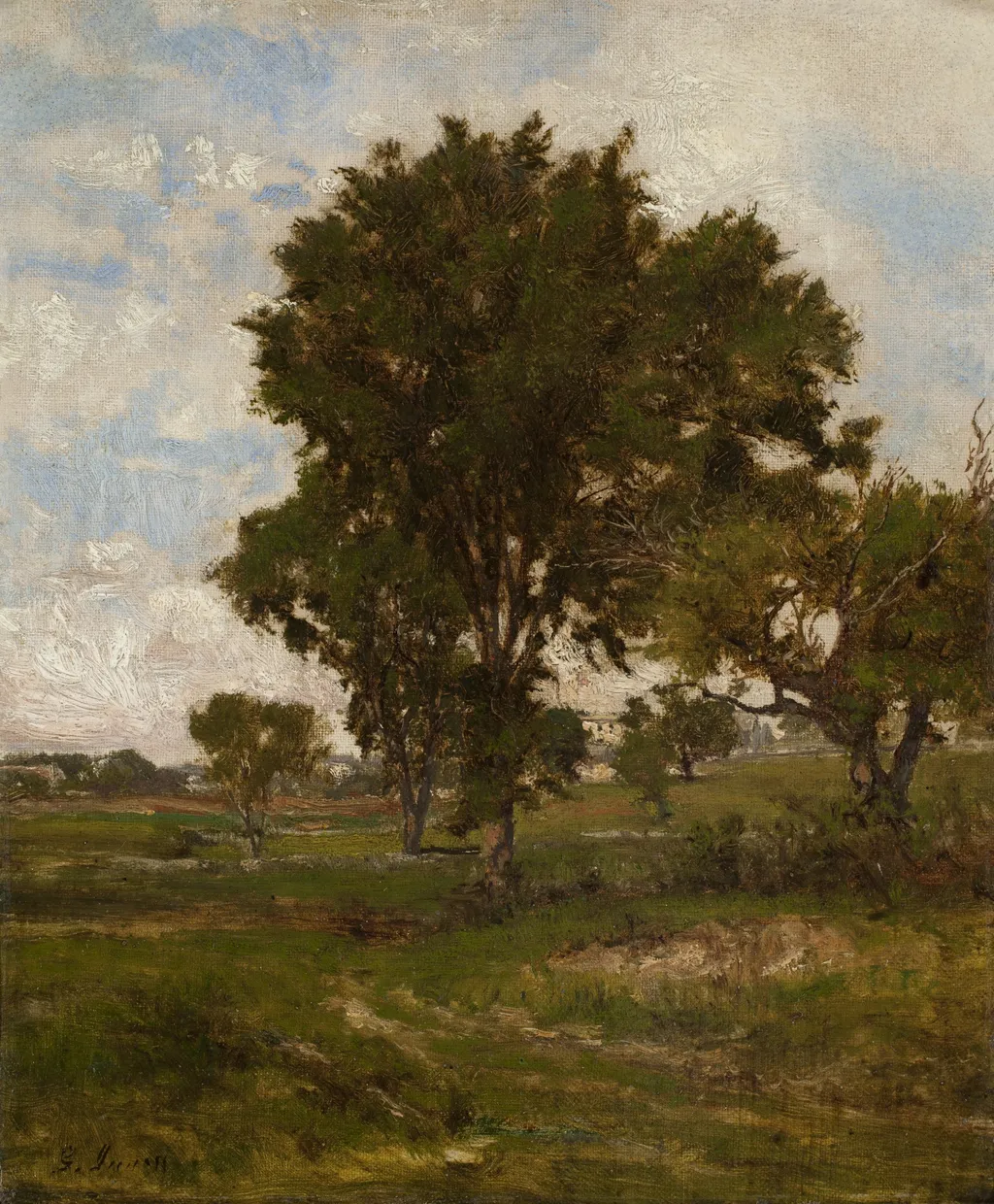
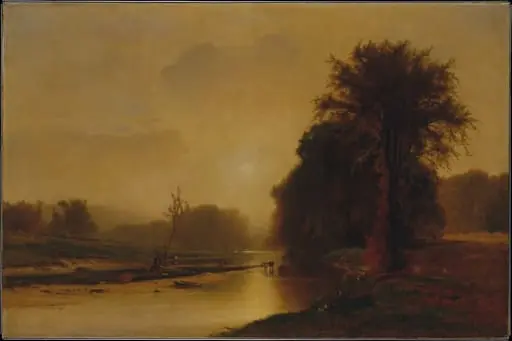
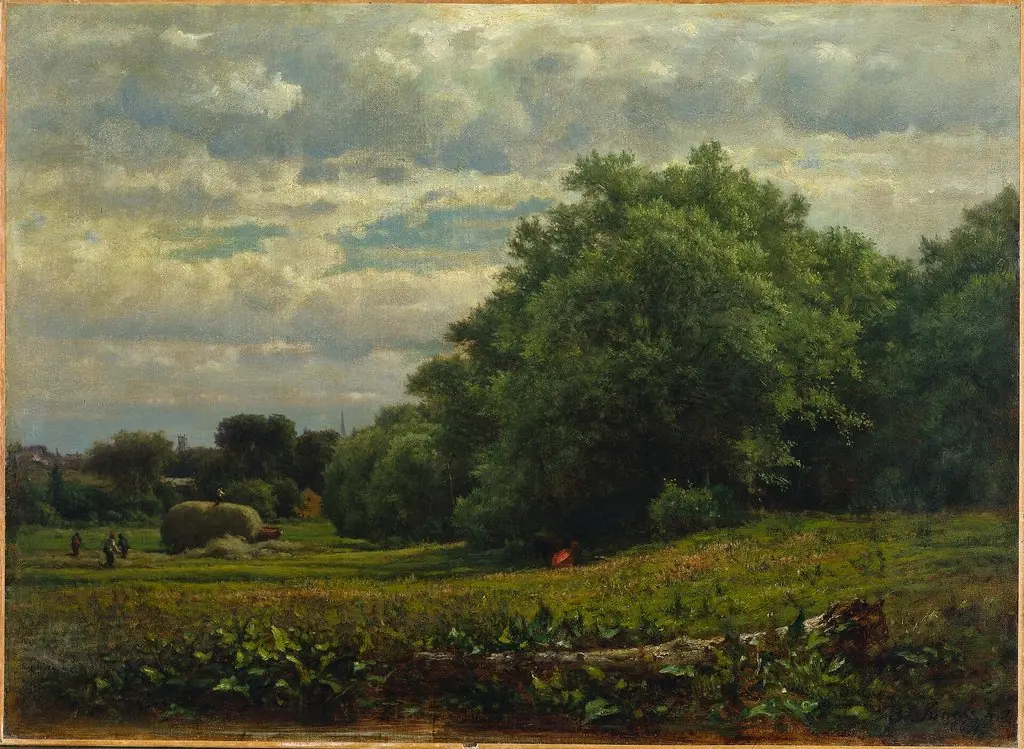
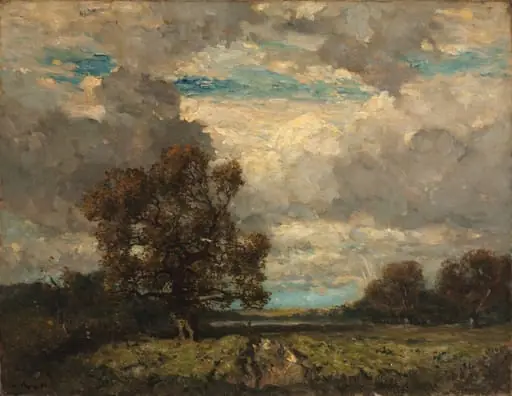
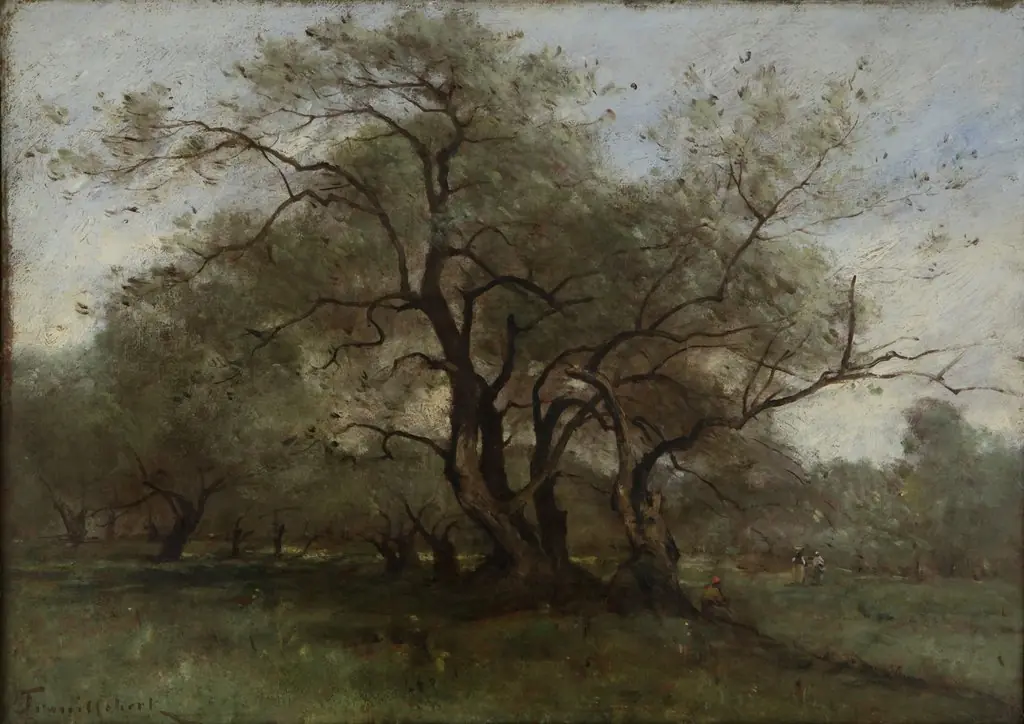
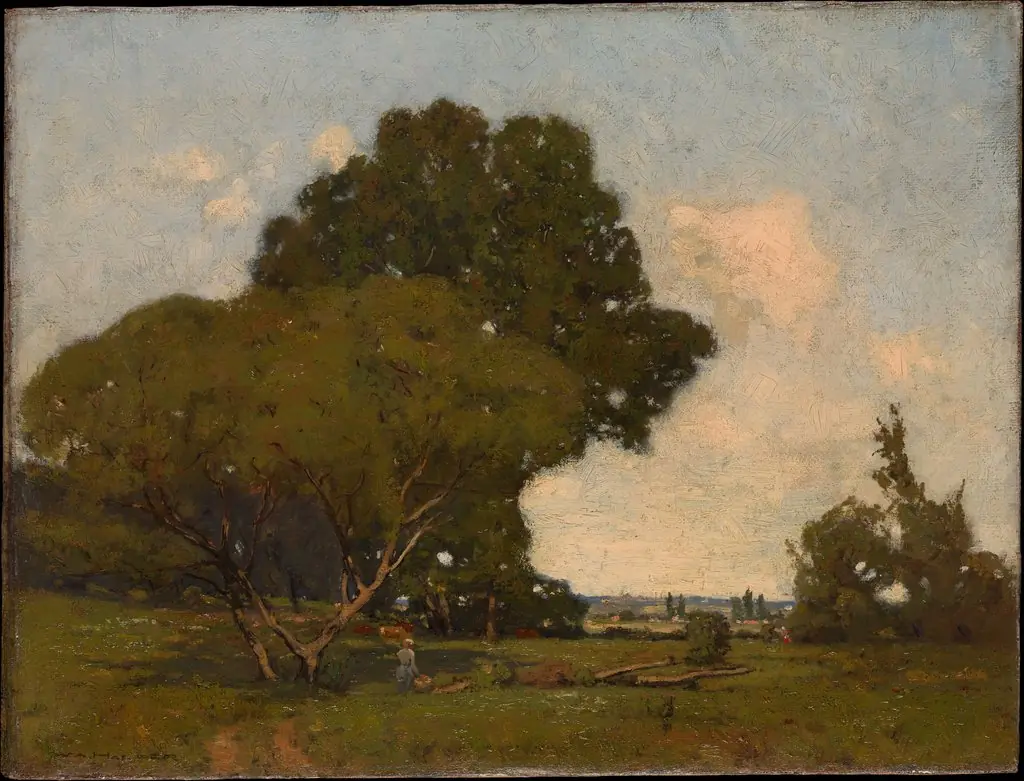
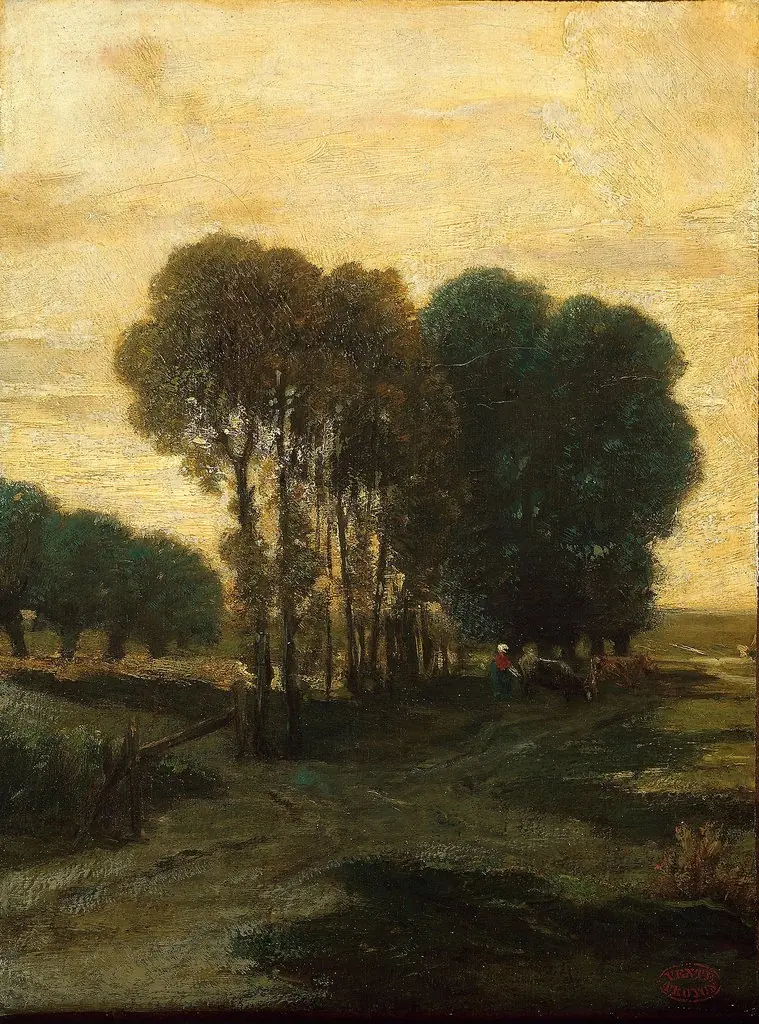
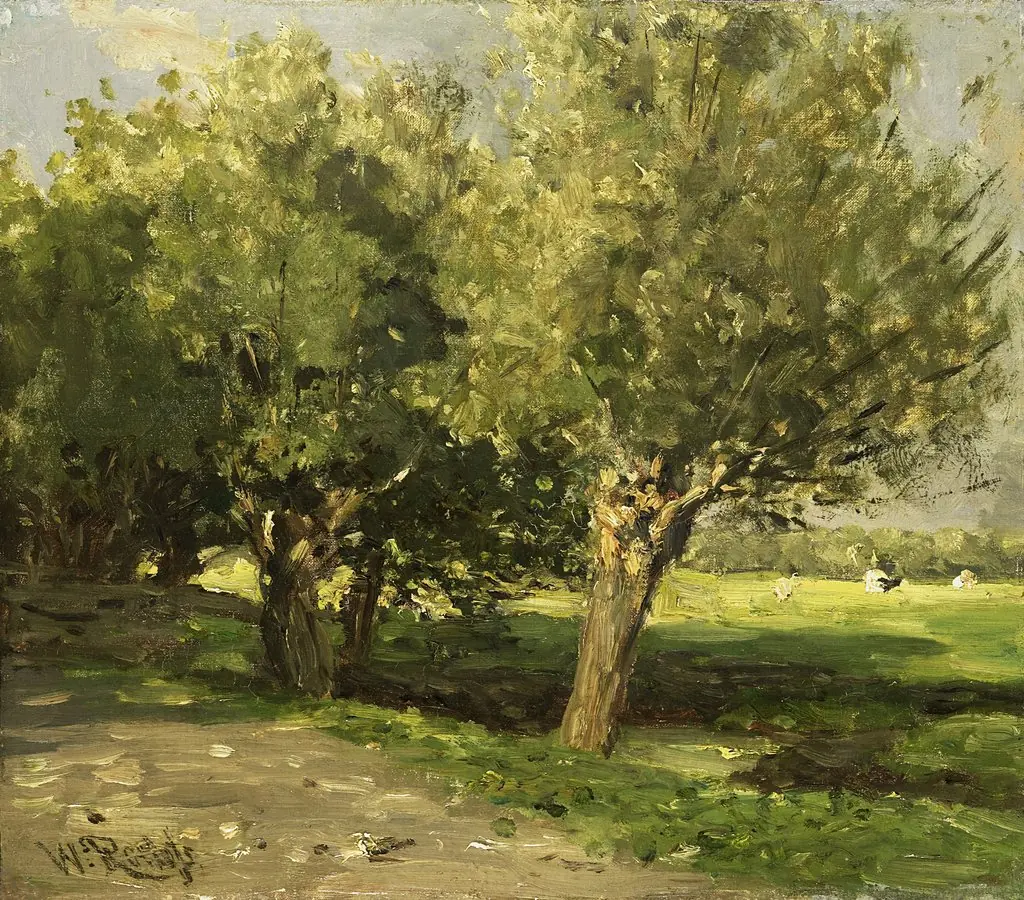
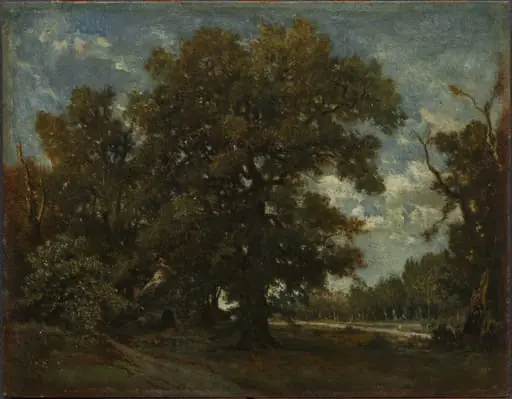
The Elm Tree is an oil painting by the American Impressionist artist George Inness. It dates from 1890 and is held in the collection of the Clark Art Institute.
About this work
Overview
The work presents a quiet rural scene centered on a single, mature elm, surrounded by understated vegetation and a soft, atmospheric sky.
George Inness completed *The Elm Tree* in 1890 using oil on canvas. The work presents a quiet rural scene centered on a single, mature elm, surrounded by understated vegetation and a soft, atmospheric sky. It reflects the mature phase of Inness’s career, moving beyond topographical realism toward a more contemplative rendering of nature, shaped by his evolving spiritual outlook and exposure to European landscape traditions.
Subject & Meaning
The solitary elm dominates the composition, standing as a quiet emblem of endurance amid a subdued landscape. Rather than emphasizing grandeur, Inness focuses on the tree’s presence within a modest, unremarkable setting. This choice aligns with his later interest in Swedenborgian thought, where nature becomes a vessel for spiritual reflection—each element, however humble, hinting at deeper, unseen harmonies.
Technique & Style
Inness employed layered oil paint to create a tactile surface with blended edges and muted tonal shifts. Brushwork is loose yet deliberate, avoiding sharp definition in favor of atmospheric cohesion. The sky and ground merge softly, and foliage is suggested rather than detailed, reflecting influences from the Barbizon School and early Impressionism, while retaining a meditative stillness distinct from French contemporaries.
History & Provenance
Painted during Inness’s final years, *The Elm Tree* was acquired by the Clark Art Institute in the 20th century and remains part of its permanent collection. It represents a late-stage synthesis of his artistic journey—from early Hudson River School precision to a more introspective, emotionally charged style. The painting’s preservation reflects its significance in understanding the transition of American landscape painting in the late 1800s.
Context
In the 1890s, American artists were increasingly drawn to personal, emotional interpretations of nature, moving away from the heroic vistas of earlier decades. Inness’s work responded to this shift, integrating European influences like the Barbizon painters’ focus on everyday rural scenes. His engagement with Swedenborgian mysticism further distinguished his approach, positioning landscape not as spectacle but as a medium for inner experience.
Legacy
Though less widely known than some of his peers, Inness’s later works, including *The Elm Tree*, influenced subsequent generations of American tonalists and modernist landscape painters. His emphasis on mood, subtle color, and spiritual resonance helped pave the way for a more introspective tradition in American art, one that valued quietude over spectacle and inner vision over external detail.
Own this work as a print
Artist & collection

Artist
George Inness (May 1, 1825 – August 3, 1894) was an American landscape painter. Now recognized as one of the most influential American artists of the nineteenth century, Inness was influenced by the Hudson River School…