Artwork
Elms in Summer
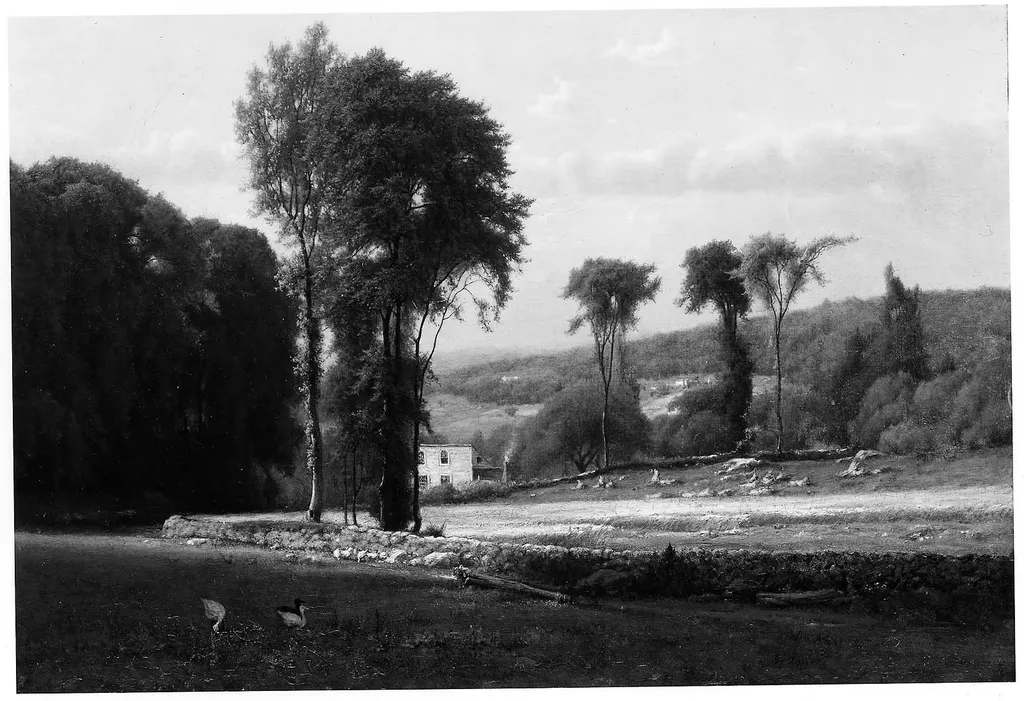
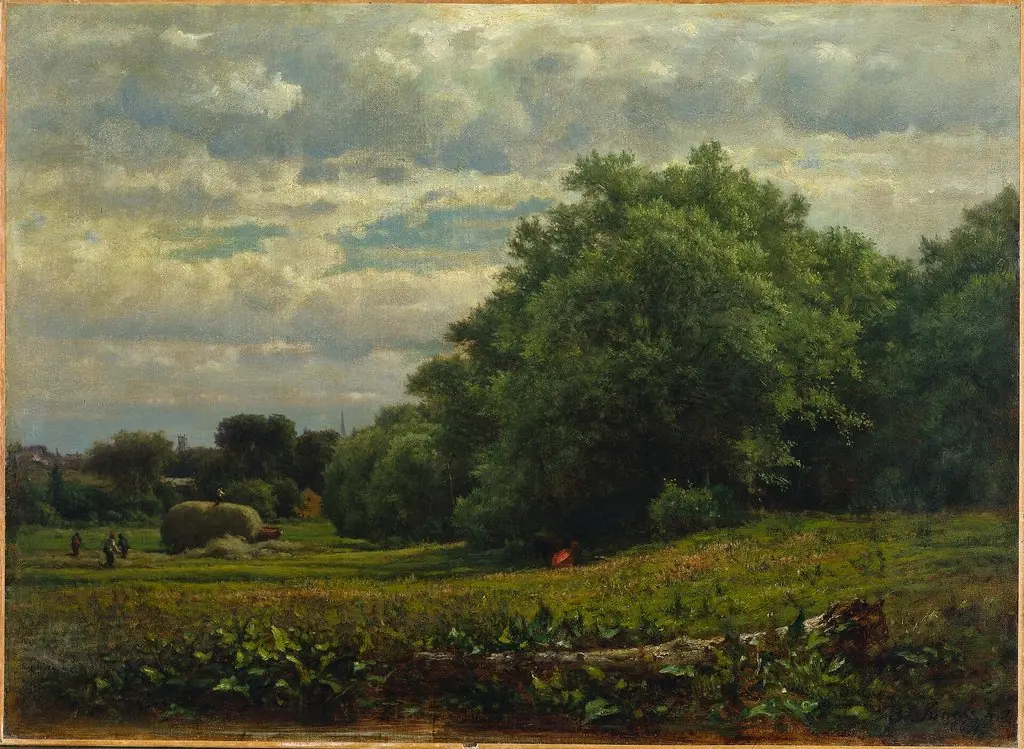
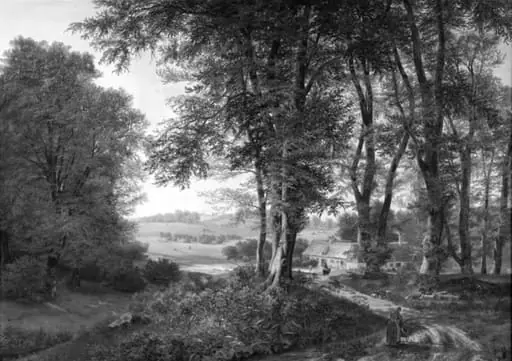
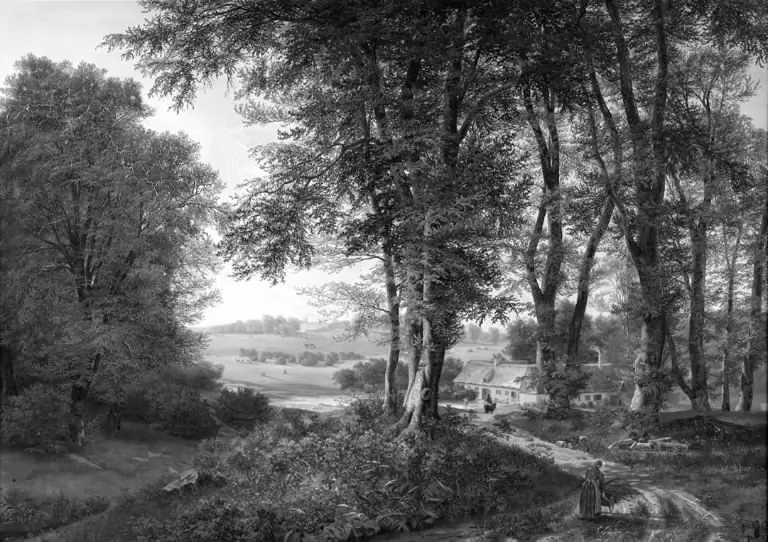
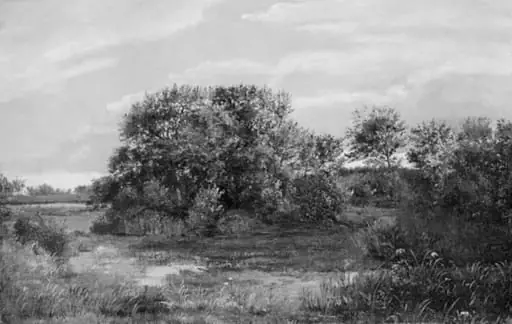
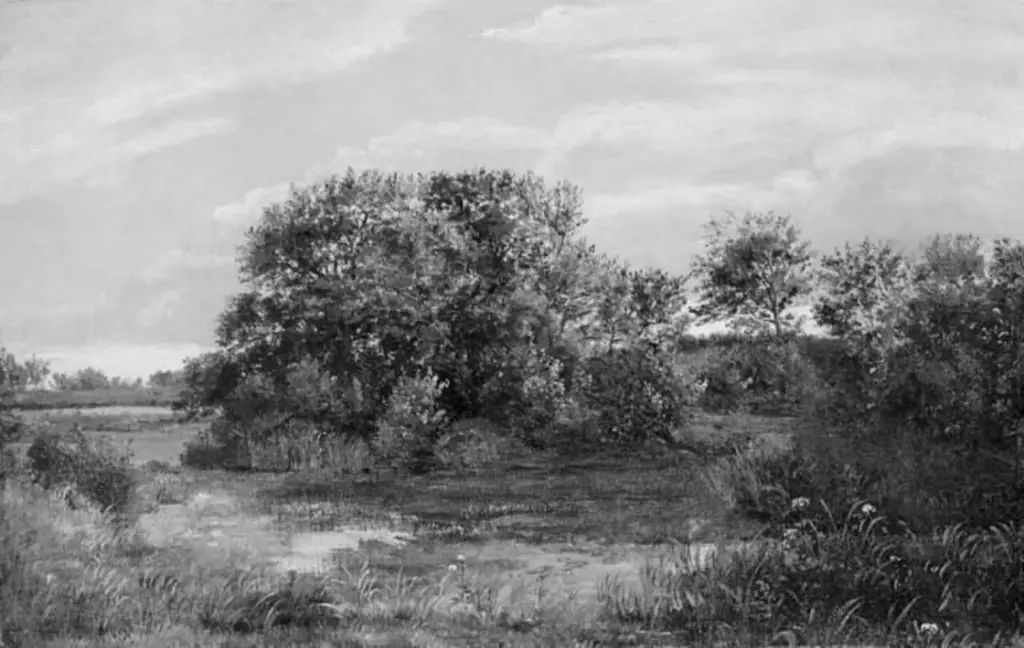
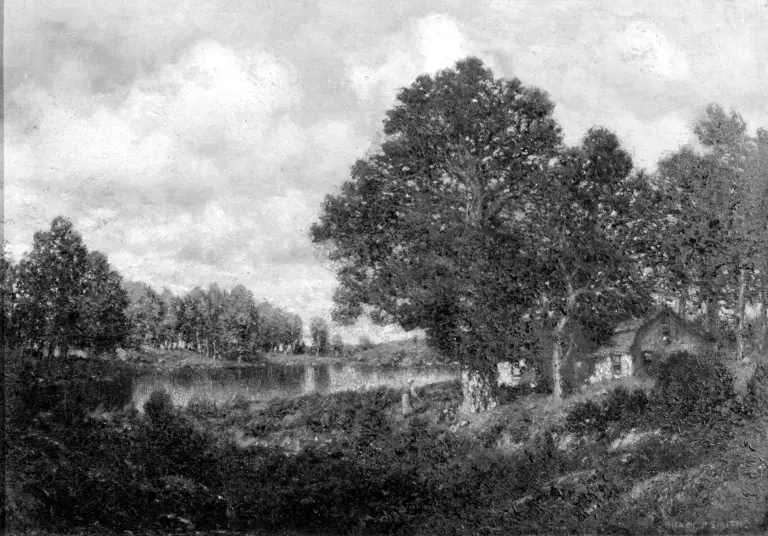
Elms in Summer is an oil painting by the Hudson River School artist George Inness. It dates from 1868 and is held in the collection of the Museum of Fine Arts Boston.
About this work
Overview
Painted in 1868, *Elms in Summer* is an oil-on-canvas landscape by American artist George Inness.
Painted in 1868, *Elms in Summer* is an oil-on-canvas landscape by American artist George Inness. Created during his early period, the work reflects his engagement with the Hudson River School’s tradition of detailed naturalism, though it already hints at the atmospheric sensitivity that would define his later style. The scene captures a quiet rural setting under summer light, emphasizing mood over narrative.
Subject & Meaning
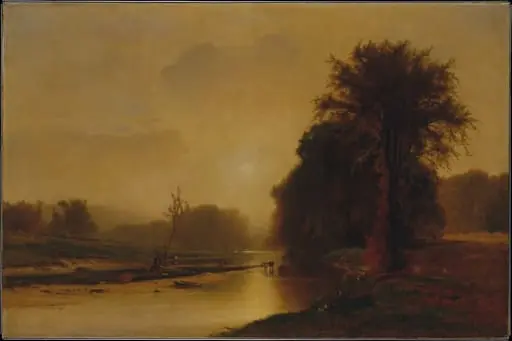
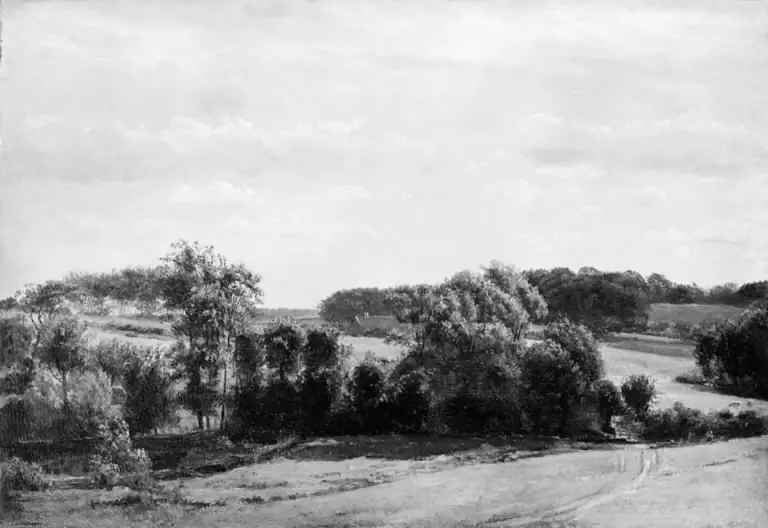
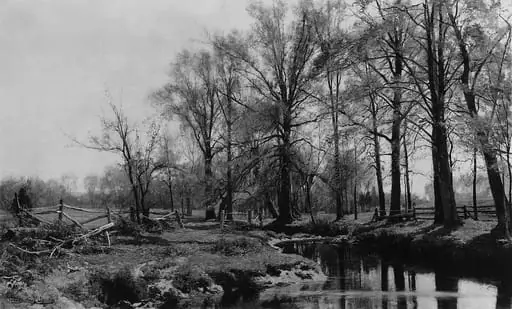
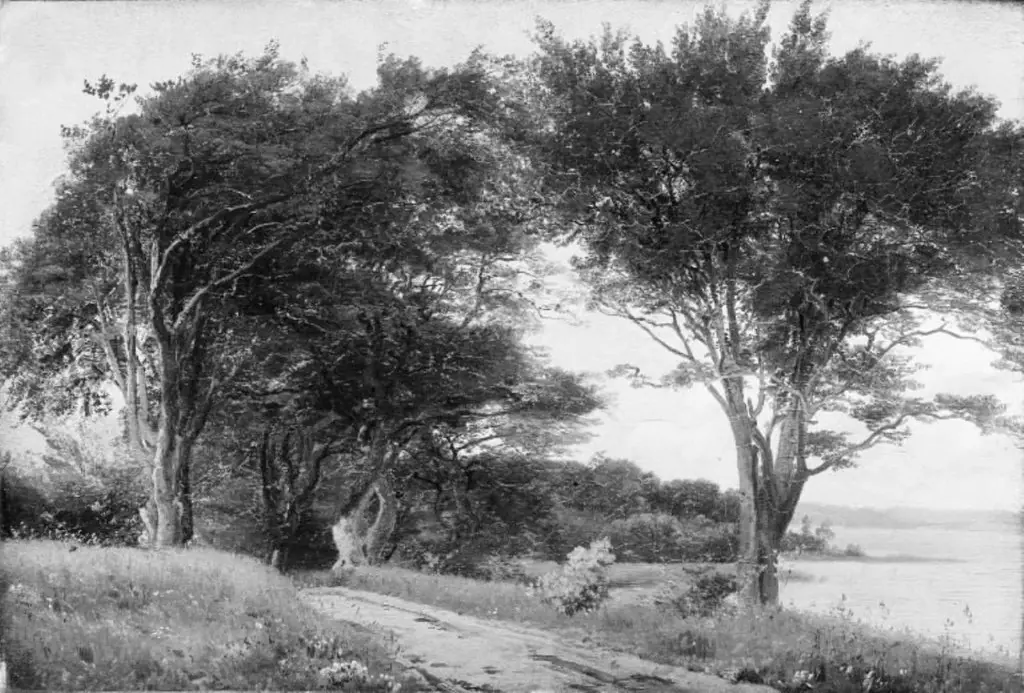
The painting presents a cluster of elm trees in a sun-dappled meadow, their forms softened by heat haze and diffused light. No human figures or structures interrupt the scene, reinforcing a contemplative stillness. The composition suggests an intimate communion with nature, aligning with Inness’s growing interest in spiritual interpretations of the natural world, though overt symbolism remains subtle.
Technique & Style
Inness applied oil paint with loose, textured brushwork, allowing layers of green to blend optically rather than being meticulously defined. The palette favors muted, warm tones—olive, ochre, and pale yellow—creating a luminous atmosphere. Depth is suggested through aerial perspective, with distant trees fading into a hazy sky, while foreground elements retain slightly sharper edges and richer pigment.
History & Provenance
Executed during Inness’s formative years, *Elms in Summer* predates his deeper engagement with Swedish mystic Emanuel Swedenborg’s writings. It was painted shortly after his return from Europe, where exposure to Barbizon School painters influenced his shift toward tonal harmony over topographical precision. The work remained in private collections until entering a public museum’s holdings in the 20th century.
Context
In 1868, American landscape painting was transitioning from grand, heroic vistas to quieter, more personal interpretations. Inness, like contemporaries such as Albert Bierstadt, worked within the Hudson River School framework but began moving toward emotional resonance over documentary detail. *Elms in Summer* reflects this pivot, favoring atmosphere and inner experience over geographic accuracy.
Legacy
Though less celebrated than his later mystical works, *Elms in Summer* marks a critical stage in Inness’s evolution. It demonstrates his early mastery of light and tone, foreshadowing the poetic abstraction he would develop in the 1870s and 1880s. The painting is now recognized as a bridge between 19th-century realism and the emerging American impressionist sensibility.
Artist & collection

Artist
George Inness (May 1, 1825 – August 3, 1894) was an American landscape painter. Now recognized as one of the most influential American artists of the nineteenth century, Inness was influenced by the Hudson River School…