Artwork
New England Elms
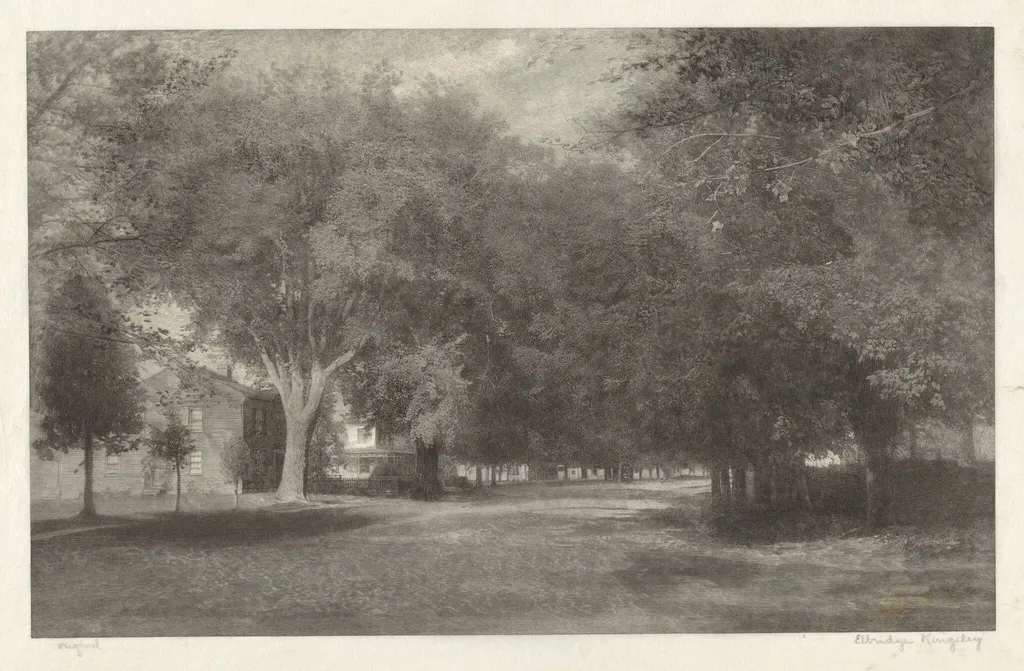
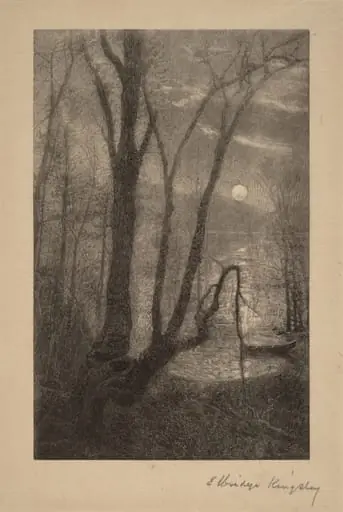
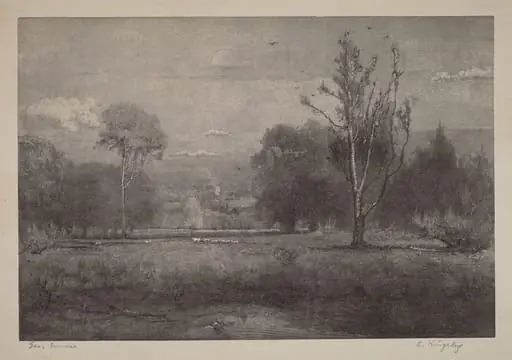
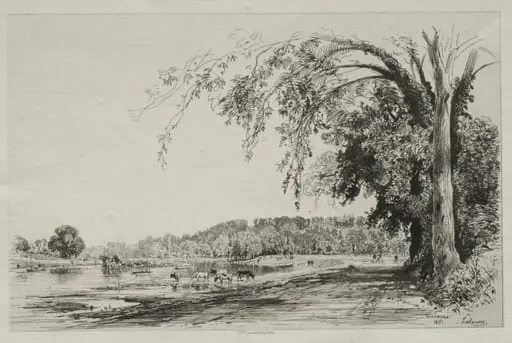
New England Elms is an ink print by the Impressionist artist Elbridge Kingsley. It dates from 1890 and is held in the collection of the National Gallery of Art.
About this work
Overview
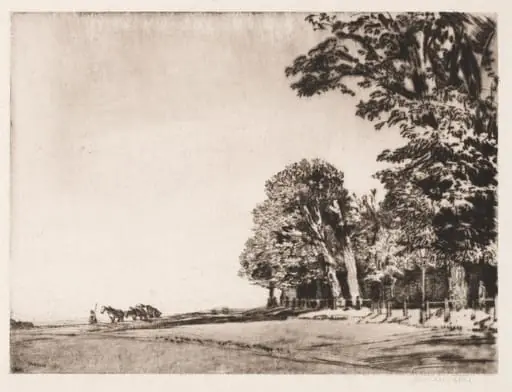
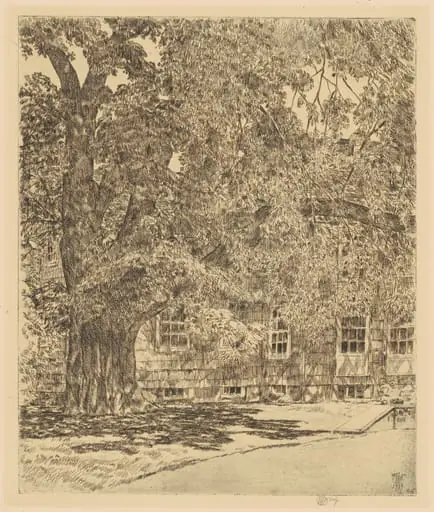
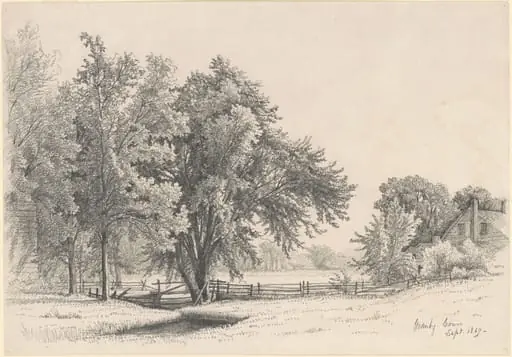
New England Elms, a wood engraving on Japanese paper executed around 1890 by Elbridge Kingsley, presents a tranquil rural scene. A narrow dirt lane stretches forward, bordered by a line of elm trees that vary in stature and girth. In the distance, faint architectural forms suggest a modest settlement beyond the foliage, reinforcing the work’s quiet, contemplative atmosphere.
Subject & Meaning
The composition centers on a procession of elms framing a solitary path, evoking themes of journey and the passage of time within a New England landscape. The varied tree forms and the empty roadway invite reflection on the relationship between nature and human habitation, while the distant structures hint at a community set within a modest, pastoral environment.
Technique & Style
Kingsley employed the wood engraving process, incising fine lines into a wood block before printing onto Japanese paper, a surface known for its smoothness and translucency. The delicate rendering of leaves and the nuanced gradations of light and shadow demonstrate the medium’s capacity for intricate detail and atmospheric depth, guiding the eye along the winding lane.
Context
Created in the late nineteenth century, the print aligns with a broader American interest in regional landscapes and the documentation of rural life. The choice of Japanese paper reflects contemporary experimentation with non‑Western materials, a practice that offered artists new textures and tonal possibilities within the printmaking tradition.
Artist & collection