Artwork
Watering Place
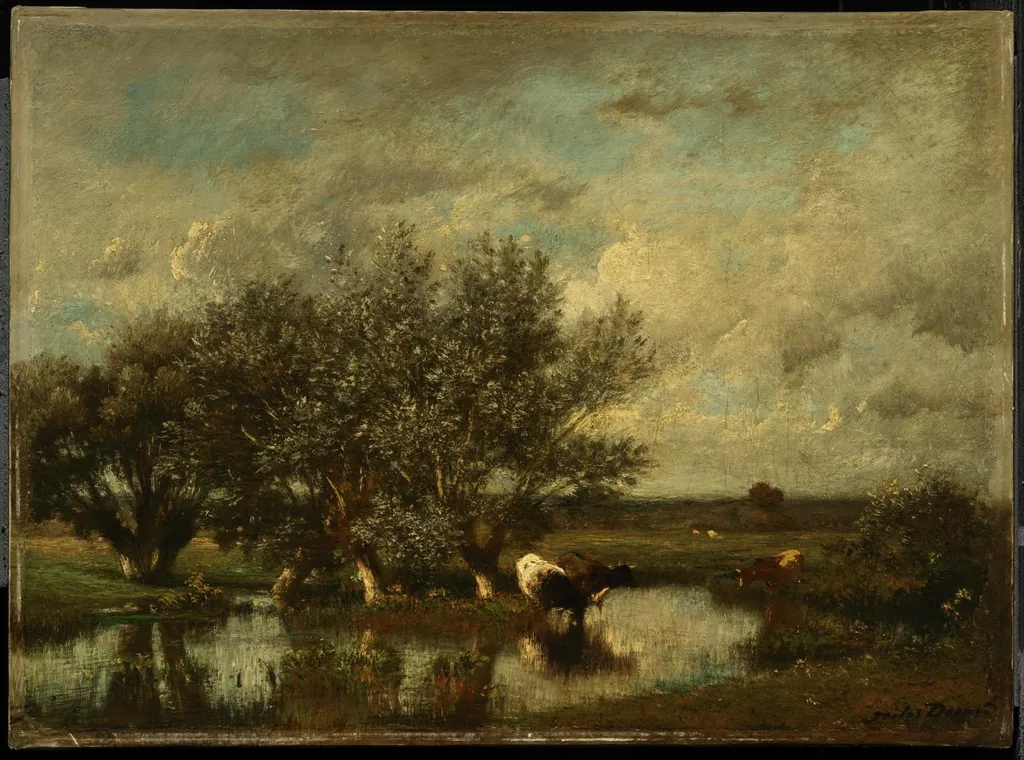
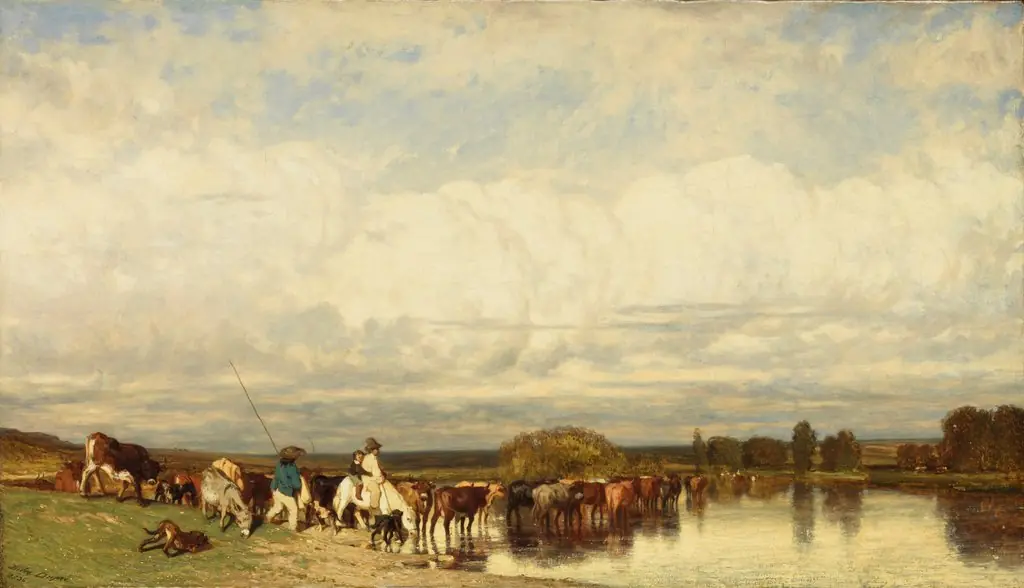
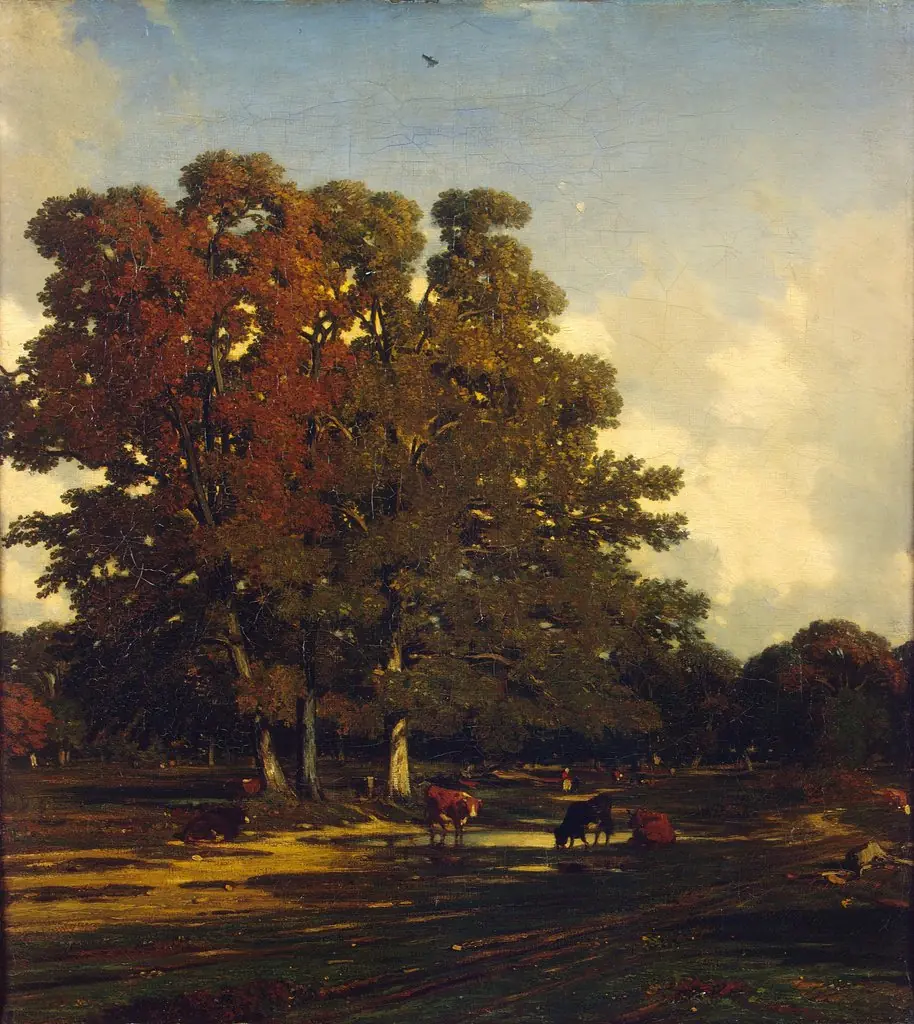
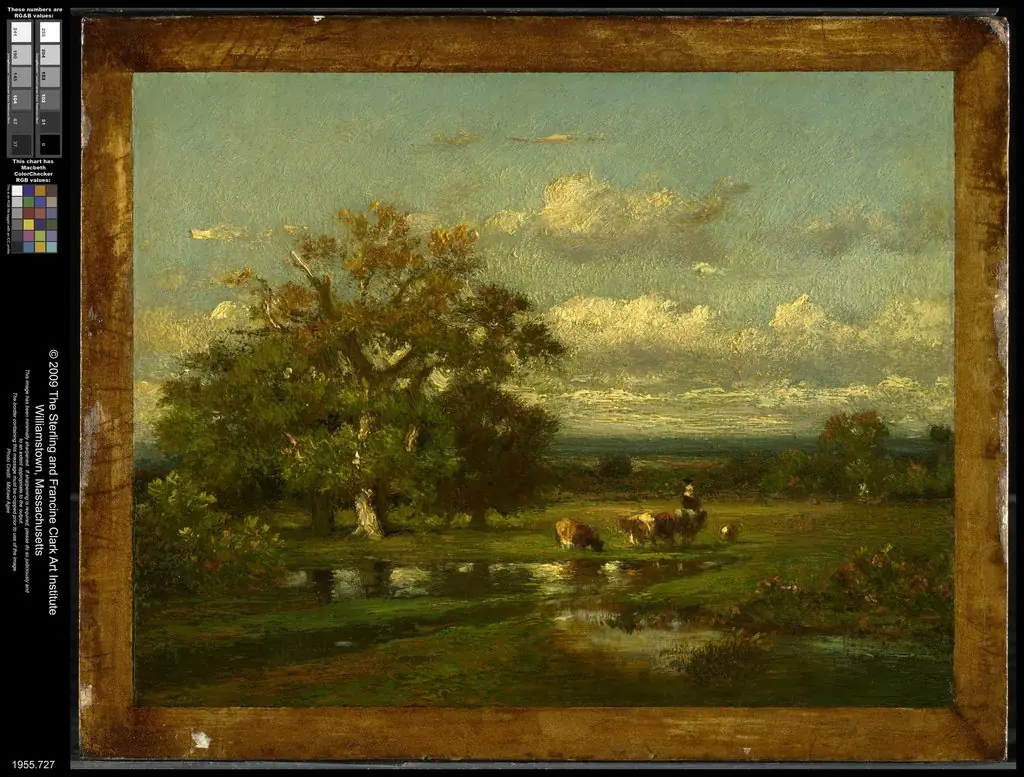
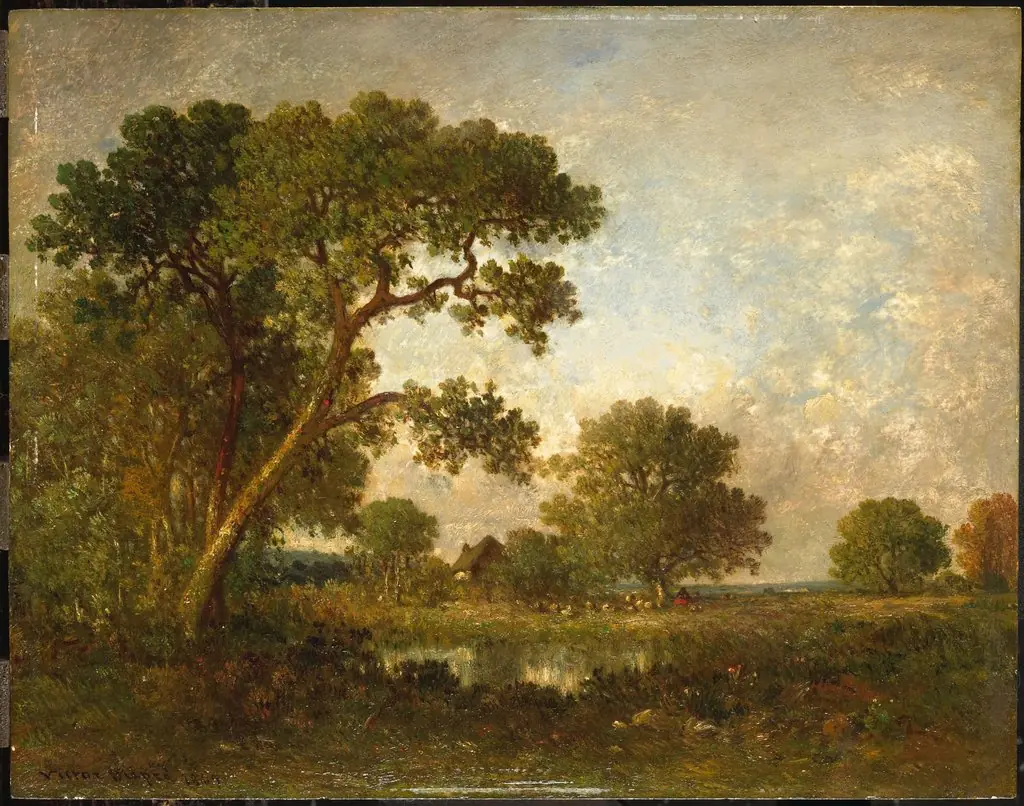
Watering Place is an oil painting by the Barbizon school artist Jules Dupré. It dates from 1860 and is held in the collection of the Museum of Fine Arts Boston.
About this work
Overview
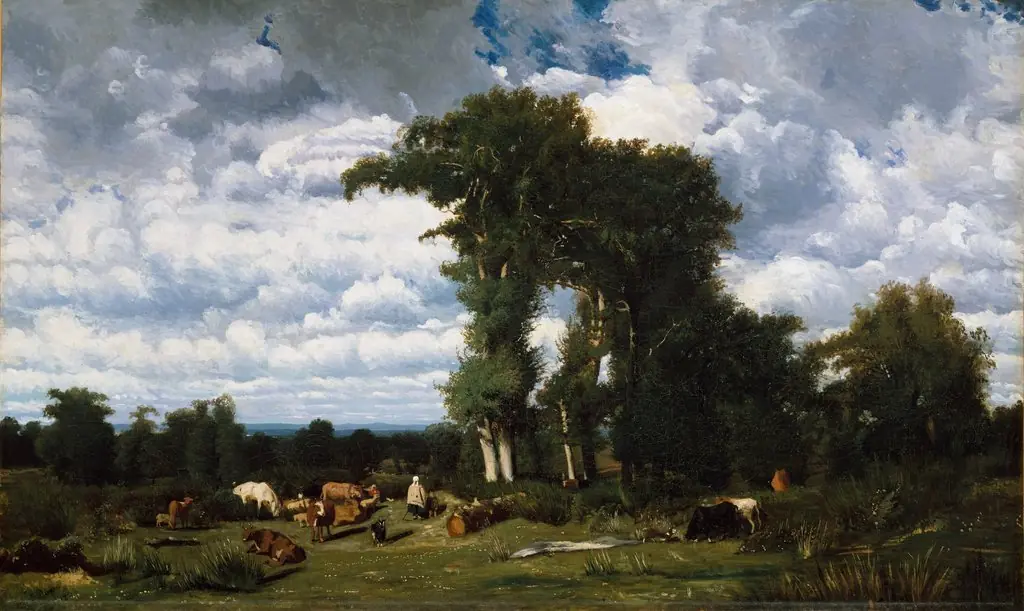
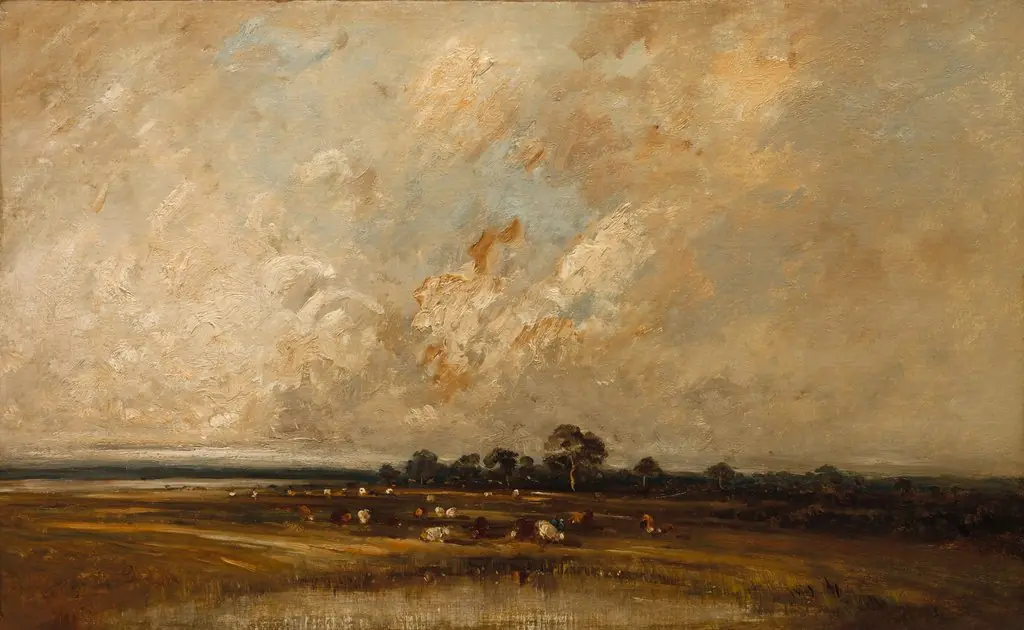
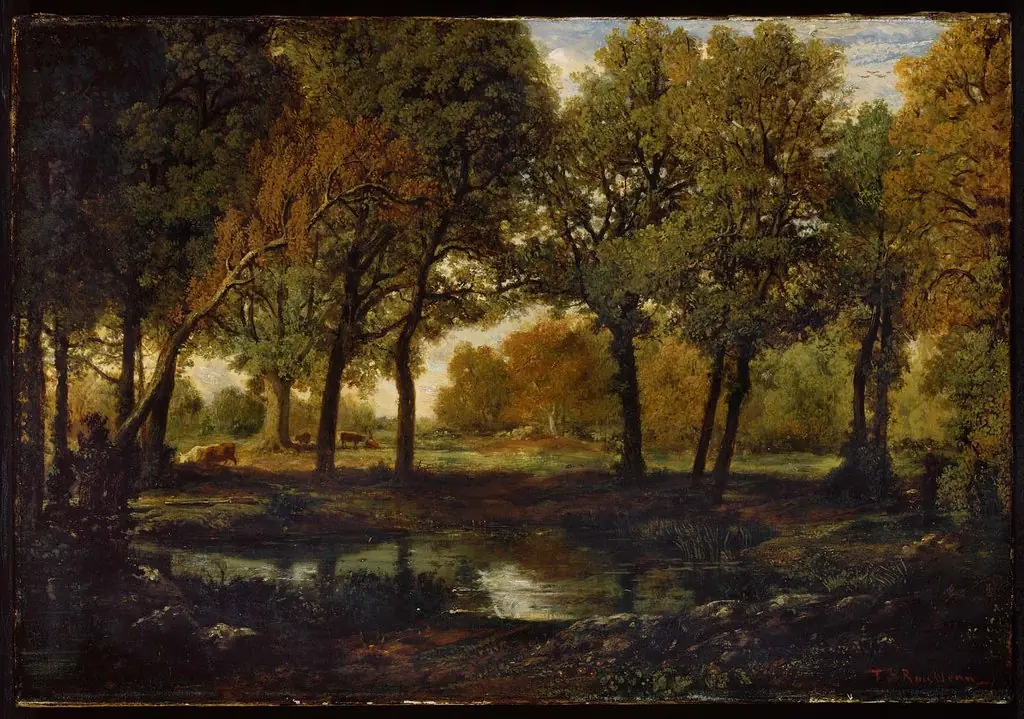
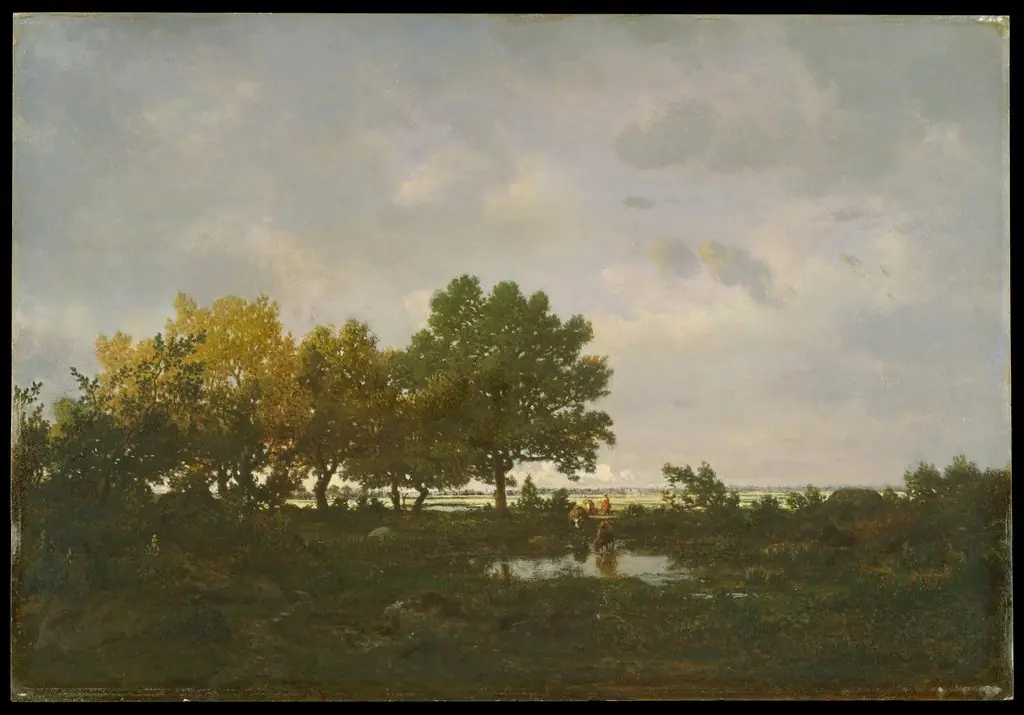
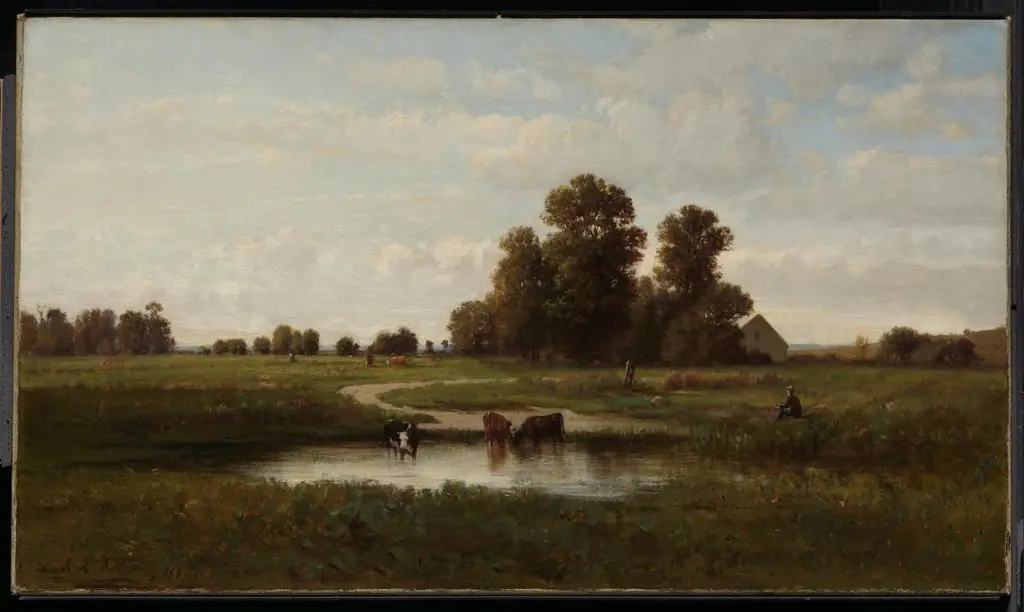
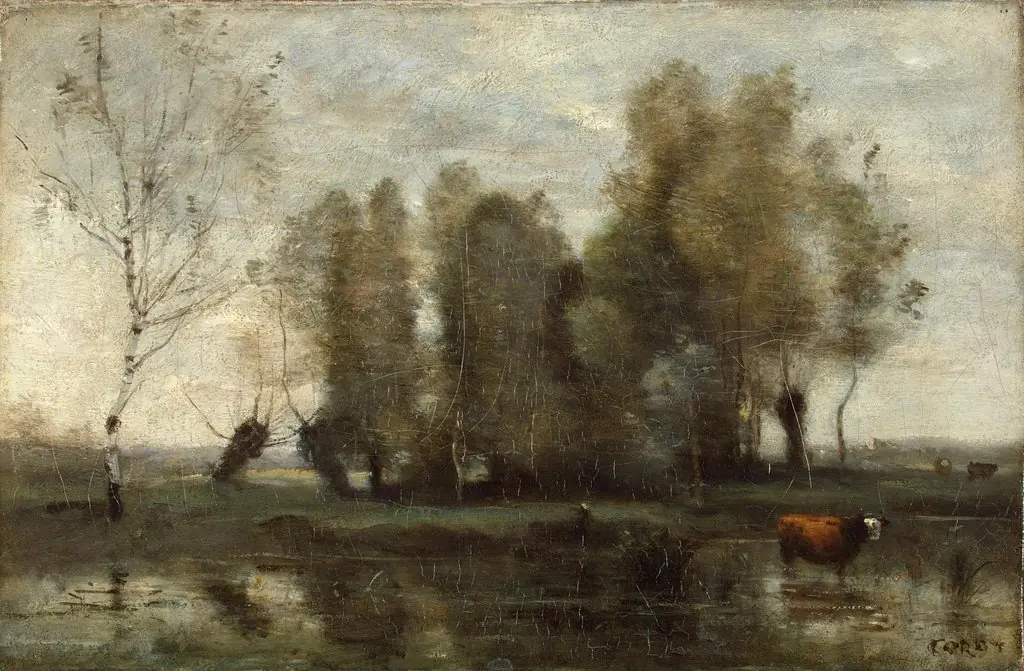
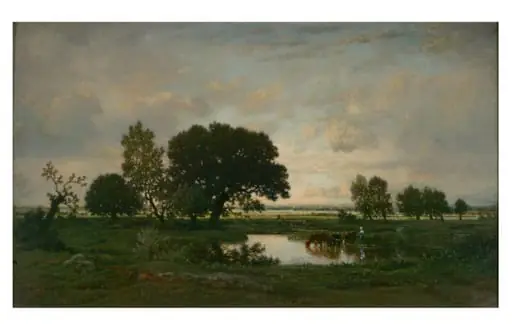
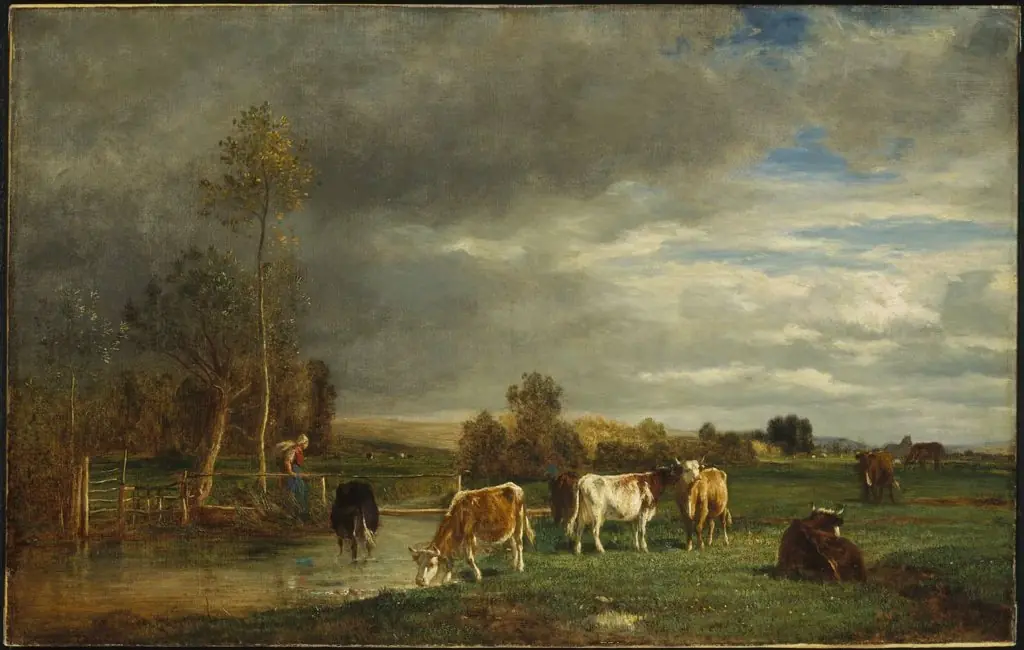
Created circa 1860, this oil painting by Jules Dupré captures a quiet rural scene centered on a solitary tree beside a reflective pool. A cow bends to drink, while another animal watches nearby, all set beneath a cloud‑filled sky pierced by shafts of sunlight. The composition balances natural elements with a calm, contemplative atmosphere, typical of mid‑nineteenth‑century French landscape art.
Subject & Meaning
The work portrays everyday life in the French countryside, emphasizing the relationship between livestock and their environment. By focusing on a simple watering spot, Dupré invites viewers to consider the quiet rhythms of agrarian labor and the subtle interplay of light on water and foliage, suggesting a reverence for ordinary moments rather than heroic narratives.
Technique & Style
Dupré employs a restrained palette of earth tones, allowing muted greens, browns, and grays to dominate the scene. Light filters through the clouds, creating delicate contrasts that model the forms and lend depth to the composition. The handling of oil paint yields soft transitions, while the careful modulation of chiaroscuro enhances the atmospheric quality without overt dramatization.
History & Provenance
Jules Dupré (1811–1889), a prominent member of the Barbizon school, produced this piece during a period when artists turned toward realistic depictions of nature. The painting entered the Museum of Fine Arts, Boston, where it remains part of the permanent collection, reflecting the institution’s commitment to representing 19th‑century French landscape painting.
Artist & collection
Artist
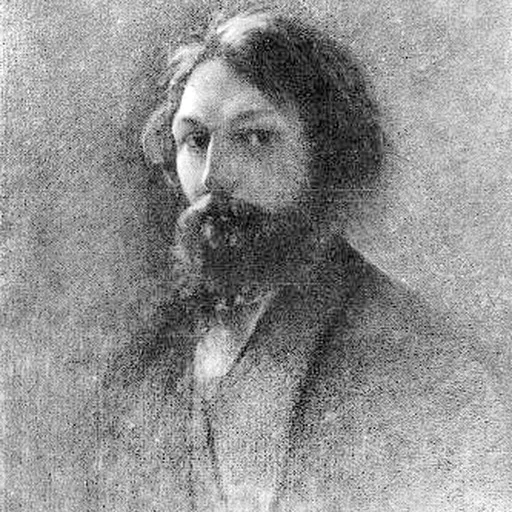
Jules Louis Dupré (French pronunciation: ; April 5, 1811 – October 6, 1889) was a French painter, one of the chief members of the Barbizon school of landscape painters.