Artwork
The Archimedes Group from 'The School of Athens'
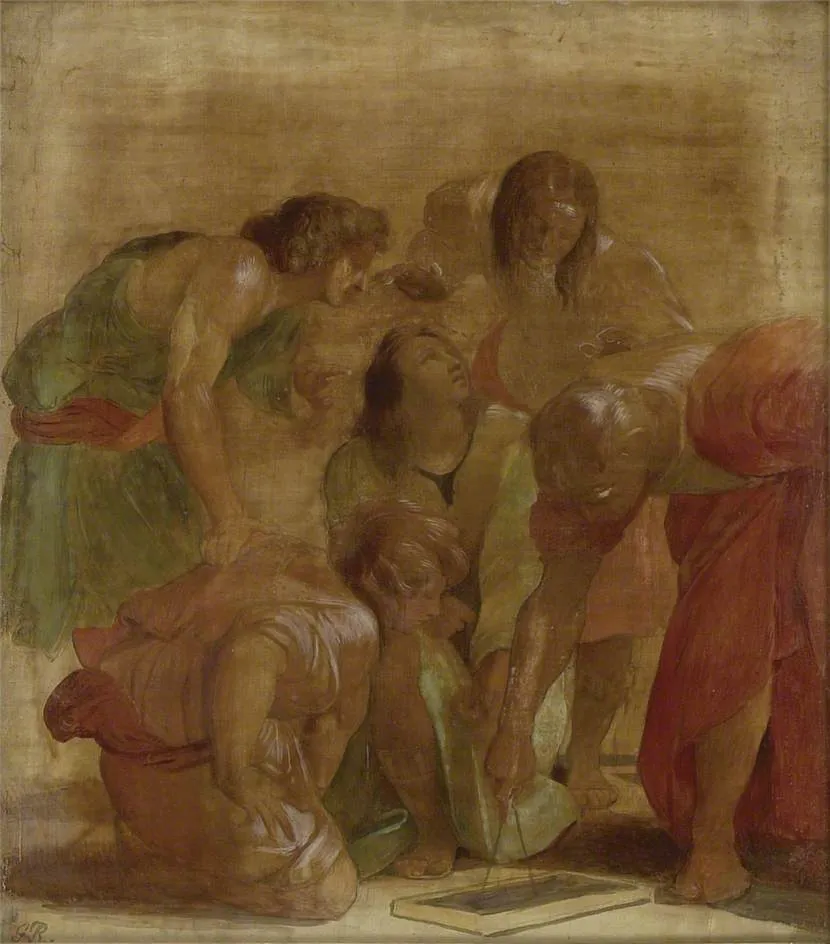
The Archimedes Group from 'The School of Athens' is an oil painting by the British Romanticist artist George Richmond. It dates from 1839 and is held in the collection of the Ashmolean Museum.
About this work
Overview
' Richmond, then early in his career, engaged with classical themes under the influence of The Ancients, a circle inspired by William Blake.
Painted in 1839 by George Richmond, this oil work is a standalone composition derived from Raphael’s fresco 'The School of Athens.' Richmond, then early in his career, engaged with classical themes under the influence of The Ancients, a circle inspired by William Blake. The painting reflects his transition from romantic idealism toward the portraiture for which he later became known. It resides in the Ashmolean Museum’s collection as a study in historical reinterpretation.
Subject & Meaning
The scene depicts a cluster of scholars gathered around a central figure engaged in writing, likely representing Archimedes. The figures, dressed in classical robes, observe with quiet intensity, suggesting a moment of intellectual revelation. Richmond emphasizes collective reverence for knowledge rather than individual heroism. The absence of dramatic gesture reinforces a contemplative atmosphere, aligning with Romantic ideals that valued inner reflection over external spectacle.
Technique & Style
Richmond employed muted earth tones—browns, olives, and soft grays—to evoke antiquity and solemnity. Chiaroscuro models the figures with subtle light shifts, directing focus to the central writer and his parchment. The brushwork is controlled, with careful attention to drapery and facial expression. The composition is tightly grouped, creating a sense of intimacy, while the background recedes into shadow, enhancing the psychological weight of the moment.
History & Provenance
Created in 1839, the painting emerged during Richmond’s formative years before he became a favored portraitist of the British elite. It was likely made as an independent study rather than a commission, reflecting his personal engagement with Renaissance sources. The work entered the Ashmolean Museum’s collection in the 19th century, where it remains as part of its holdings of British Romantic-era art and classical reinterpretations.
Context
Richmond’s painting responds to the 19th-century European revival of classical antiquity, particularly through Raphael’s fresco, which was widely studied in academic circles. While contemporaries often emulated Renaissance grandeur, Richmond chose a quiet, intimate moment over spectacle. His approach aligns with British Romanticism’s interest in intellectual solitude and the moral weight of knowledge, distinct from the more theatrical styles of continental peers.
Legacy
Though Richmond is better known for his portraits, this work illustrates his early commitment to historical and philosophical themes. It stands as a rare example of his engagement with Italian Renaissance composition outside of portraiture. The painting contributes to understanding how British artists interpreted classical narratives through a domesticated, introspective lens, influencing later academic studies of antiquity in Victorian Britain.
Artist & collection
Artist
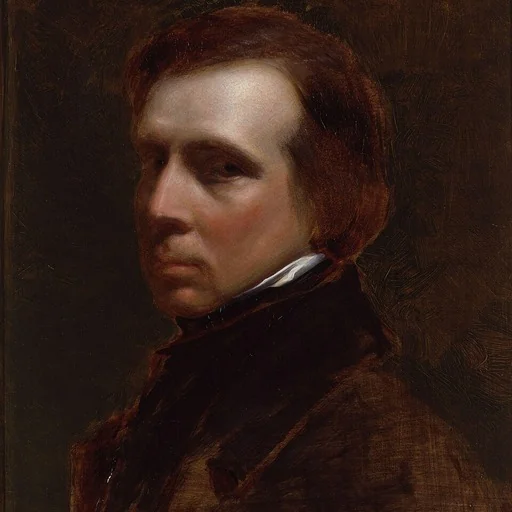
George Richmond (28 March 1809 – 19 March 1896) was an English painter and portraitist.

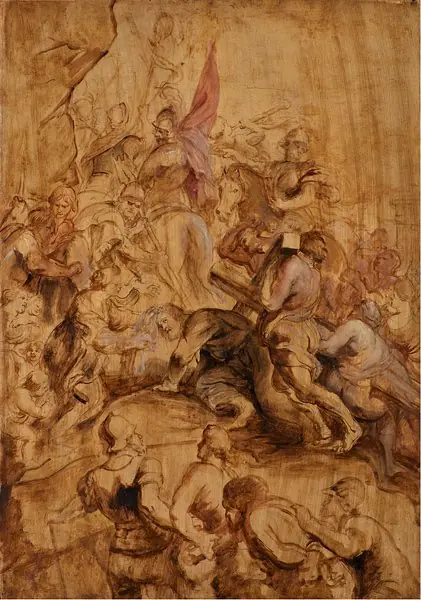 The Ascent to Calvary. The Bearing of the Cross
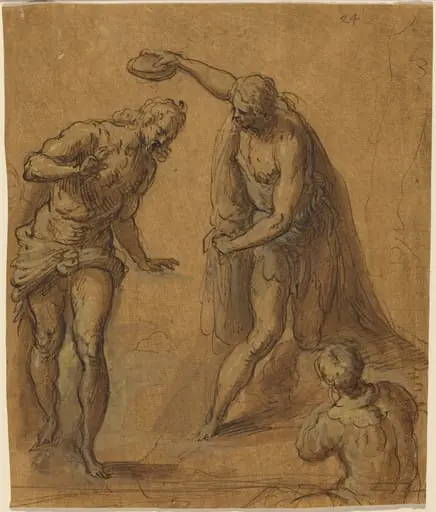 Sketch for a Baptism of Christ
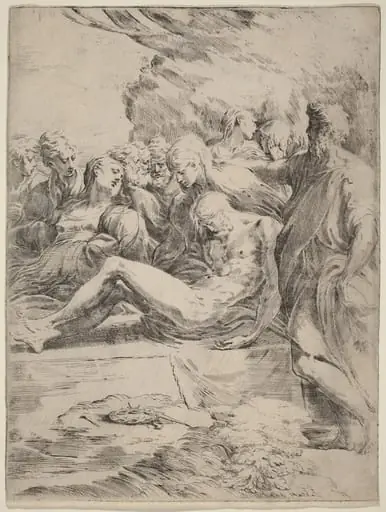 The Entombment
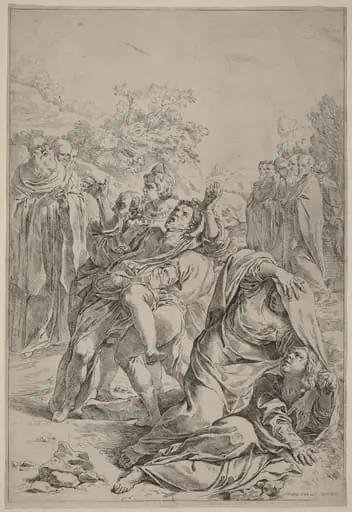 Saint Benedict Healing the Possessed
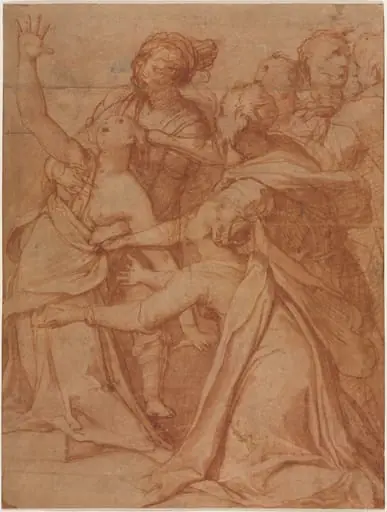 A Miracle of Saint Philip Benizzi: The Healing of a Demoniac Woman
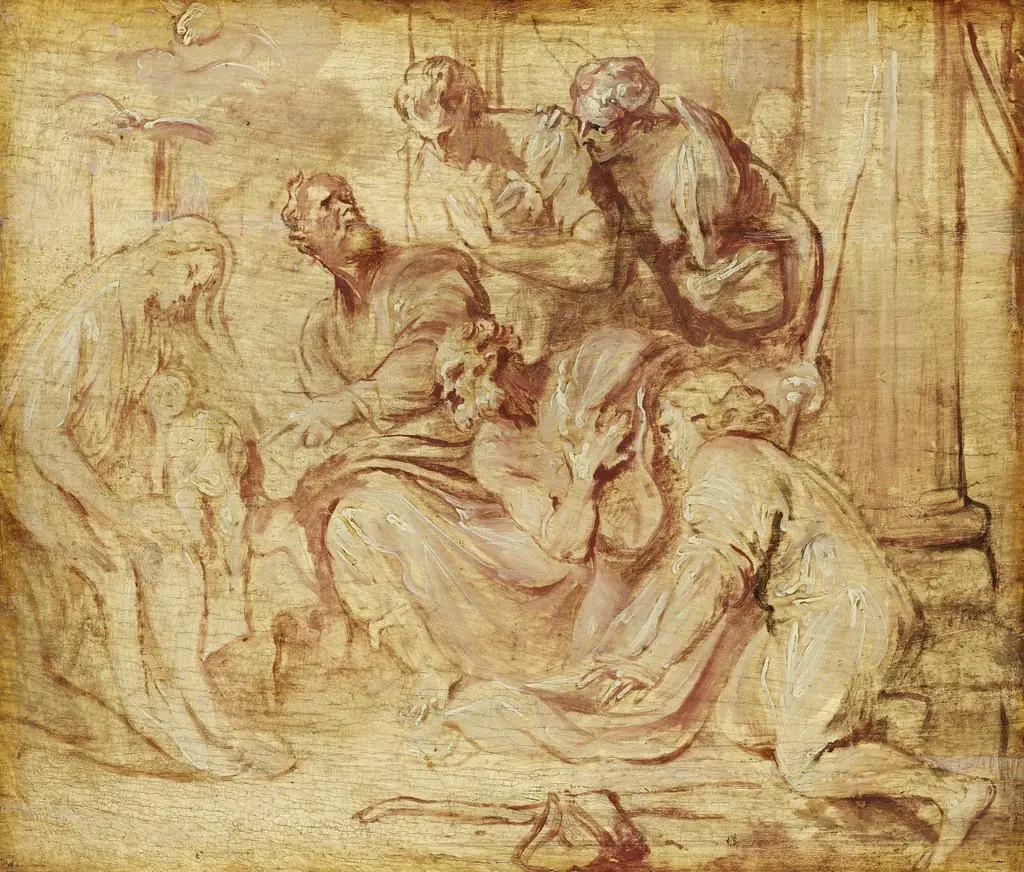 Adoration of the Shepherds (study)
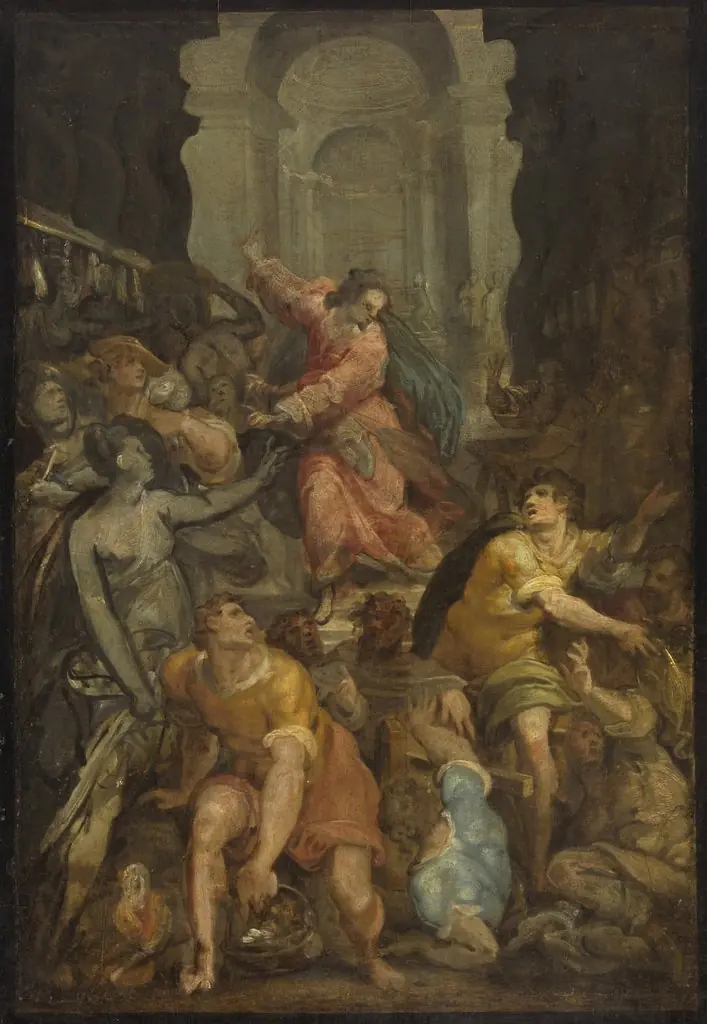 Christus vertreibt die Händler aus dem Tempel (?)
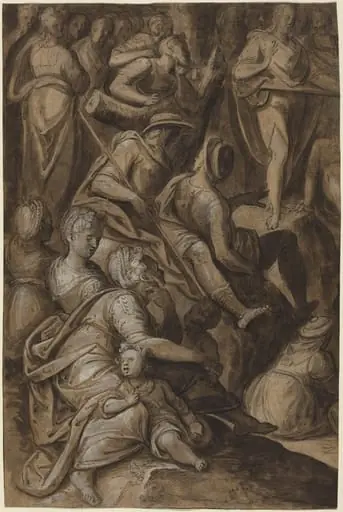 Saint John Preaching
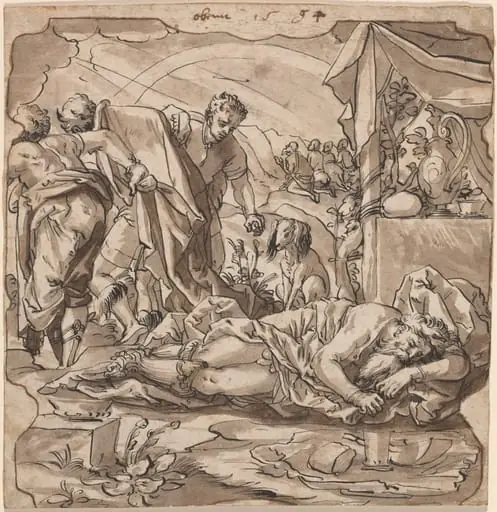 The Drunkenness of Noah
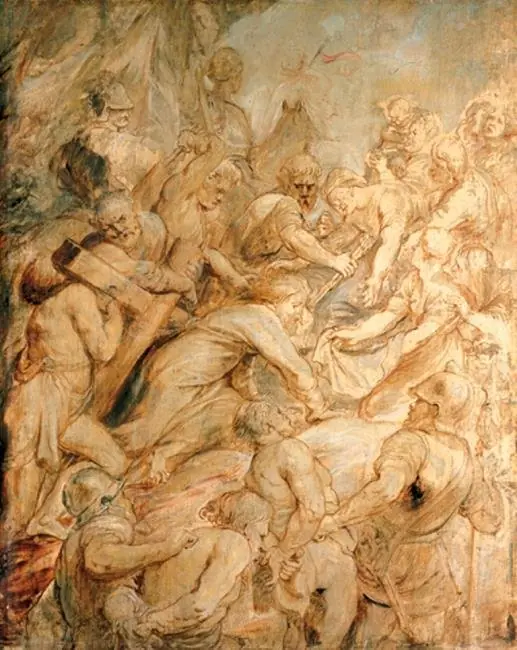 Christ carrying the cross, 1634-1637
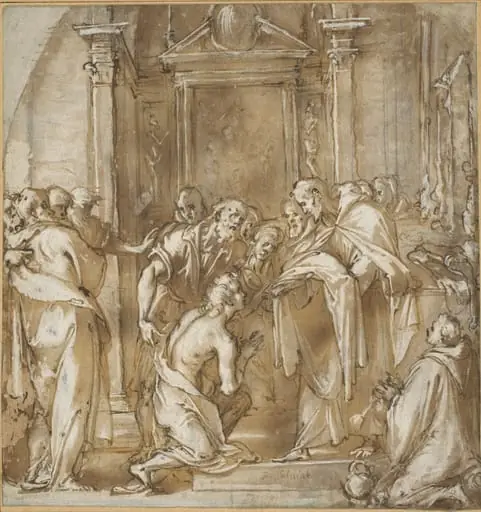 Saint Vincent Ferrer Taking His Vestments
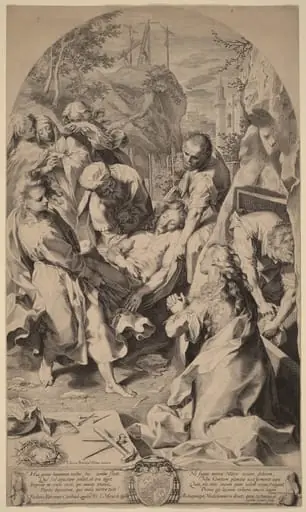 The Entombment