Artwork
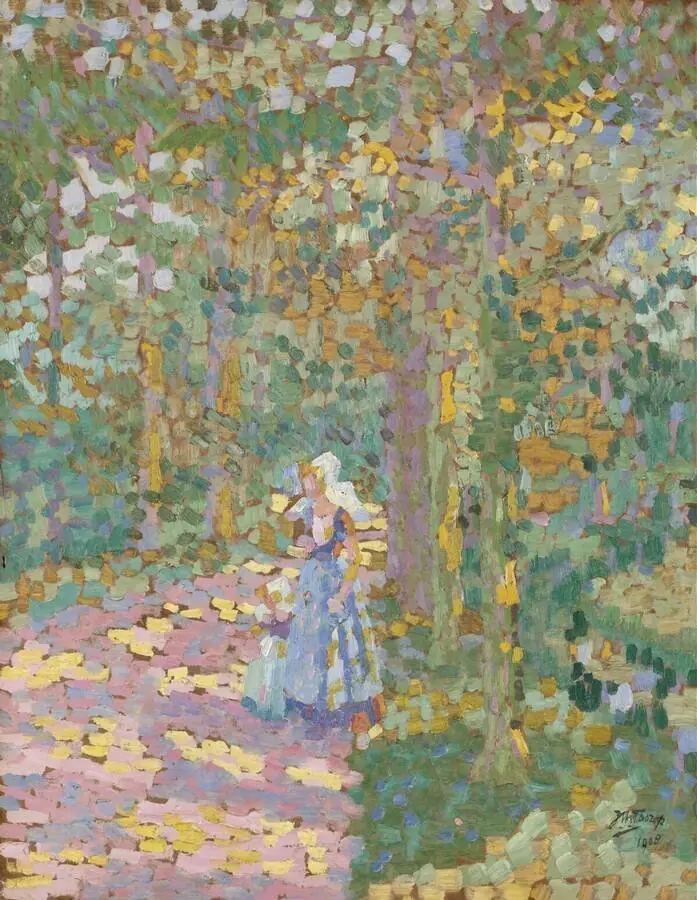
Woman in a Park
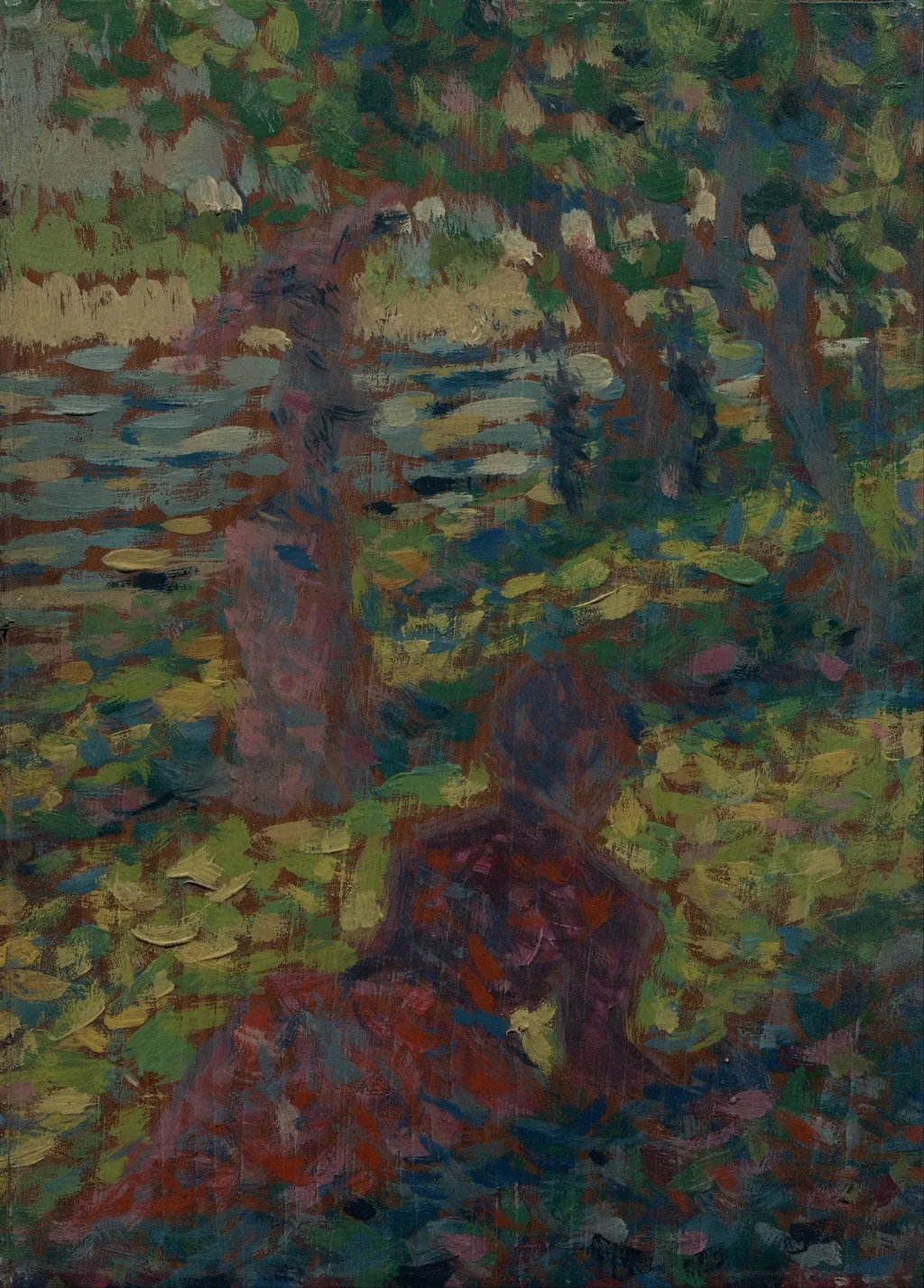
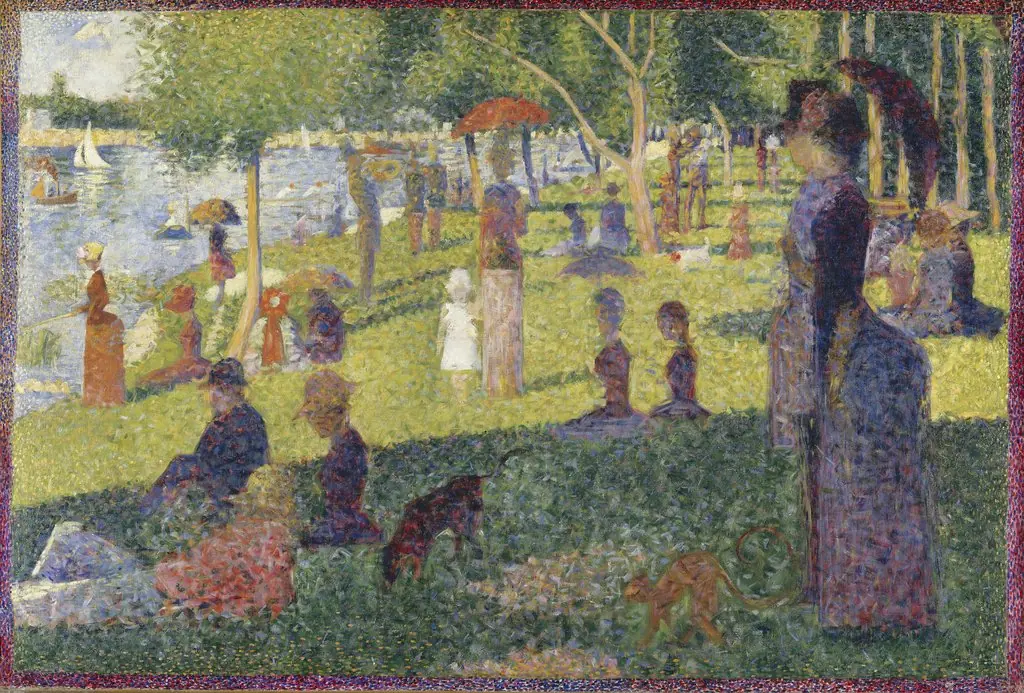
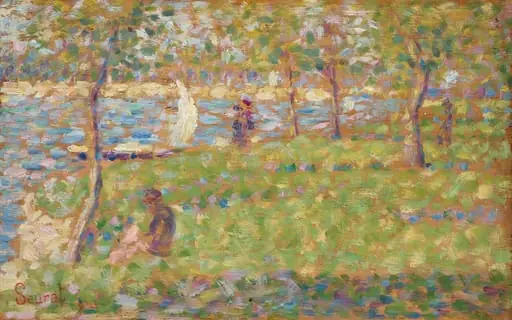
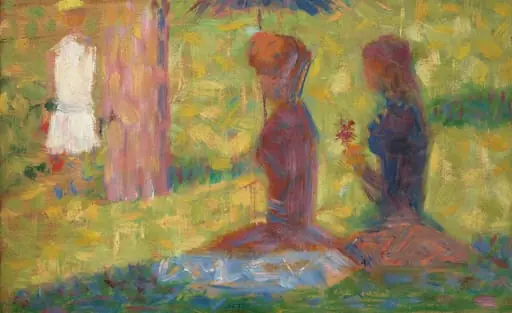
Woman in a Park is an oil painting by the Post-Impressionist artist Georges Seurat. It dates from 1885 and is held in the collection of the Museum of Fine Arts Boston.
About this work
Overview
The painting captures a quiet moment in a public garden, rendered through thousands of small, distinct brushstrokes.
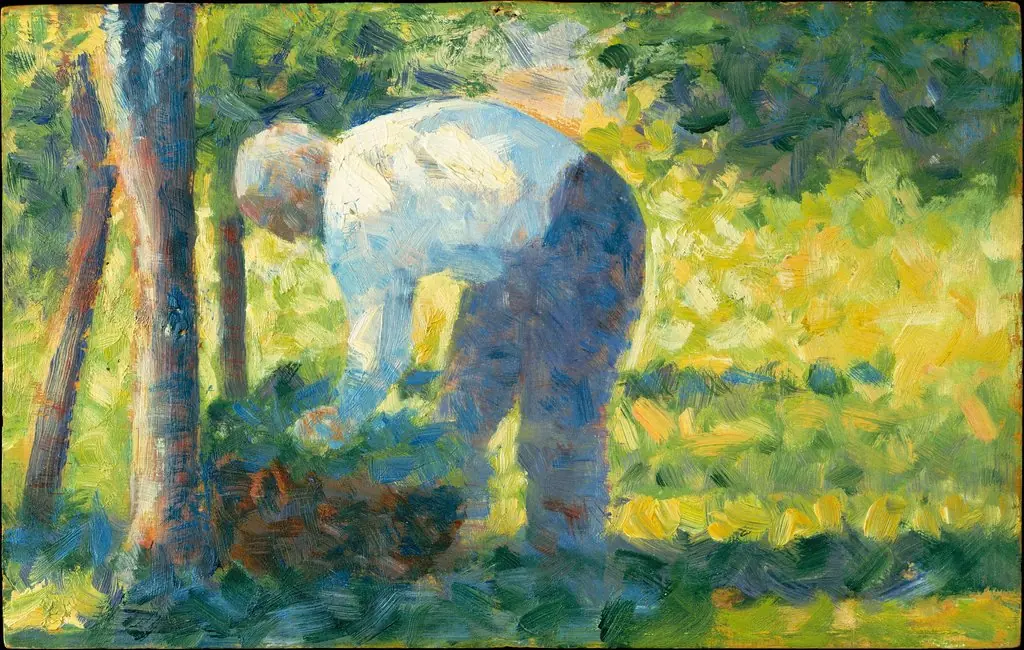
Painted around 1885, *Woman in a Park* is an oil on canvas work by French artist Georges Seurat. It exemplifies his systematic approach to color and form, rooted in the principles of chromoluminarism. The painting captures a quiet moment in a public garden, rendered through thousands of small, distinct brushstrokes. It is held in the collection of the Museum of Fine Arts, Boston, and represents a key phase in Seurat’s exploration of optical mixing and structured composition.
Subject & Meaning
The painting depicts a solitary woman seated on a park bench, dressed in a long garment and wide-brimmed hat, gazing to her right. Her stillness contrasts with the softly rendered foliage surrounding her, suggesting contemplation or quiet observation. Seurat avoids narrative drama, instead emphasizing atmosphere and the rhythm of everyday life. The figure becomes an anchor within a larger study of light, space, and urban leisure in late 19th-century France.
Technique & Style
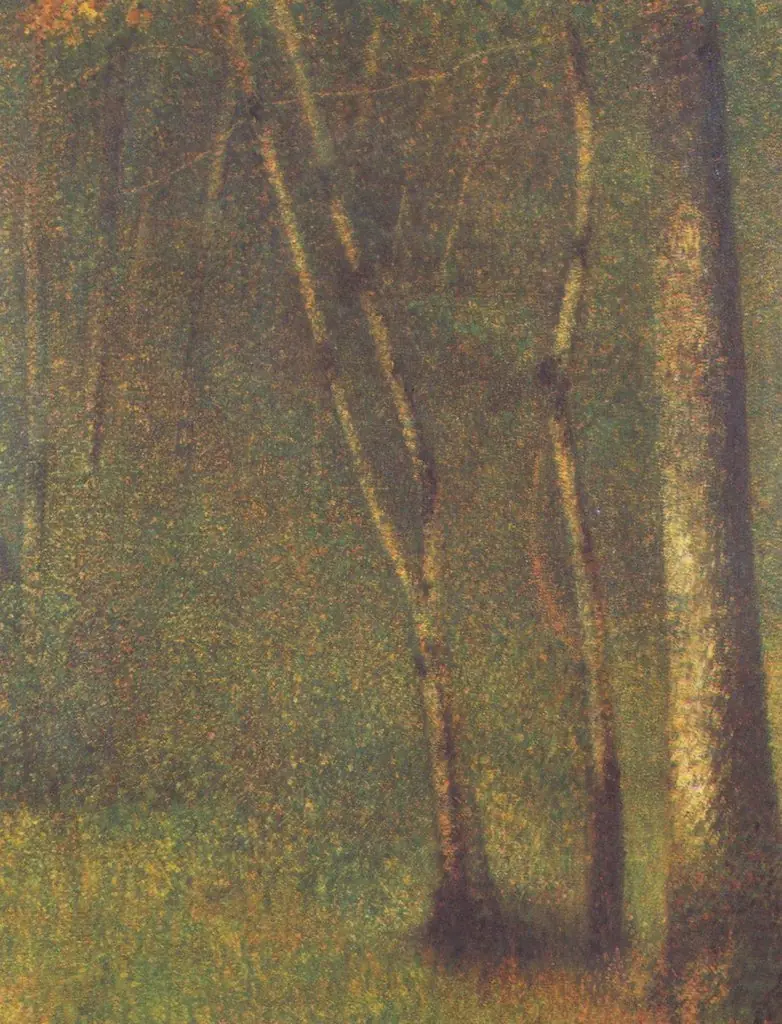
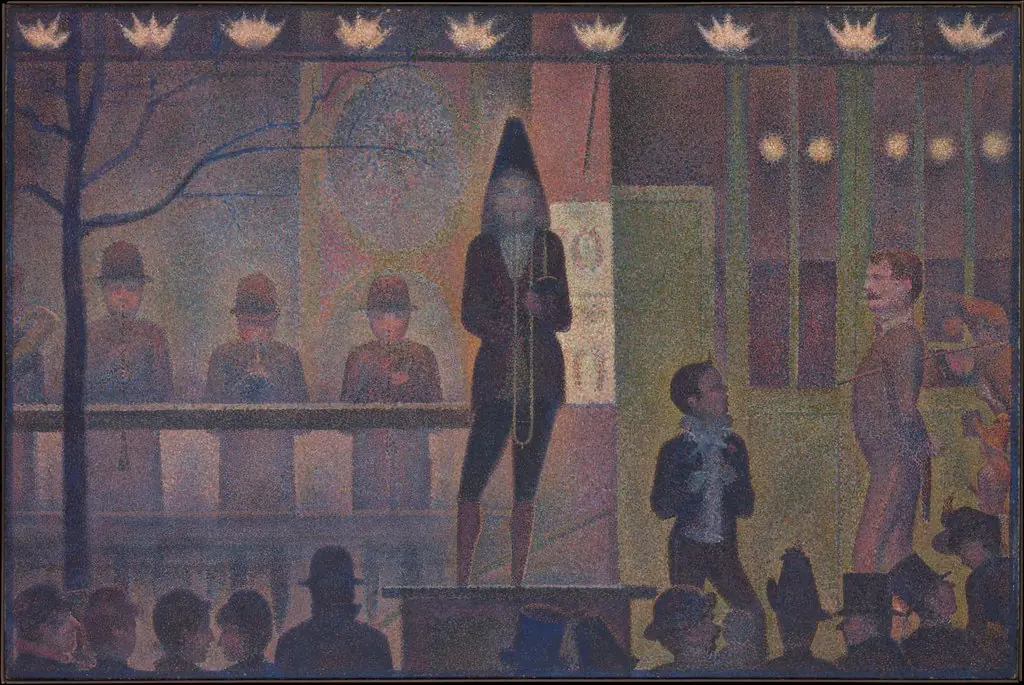
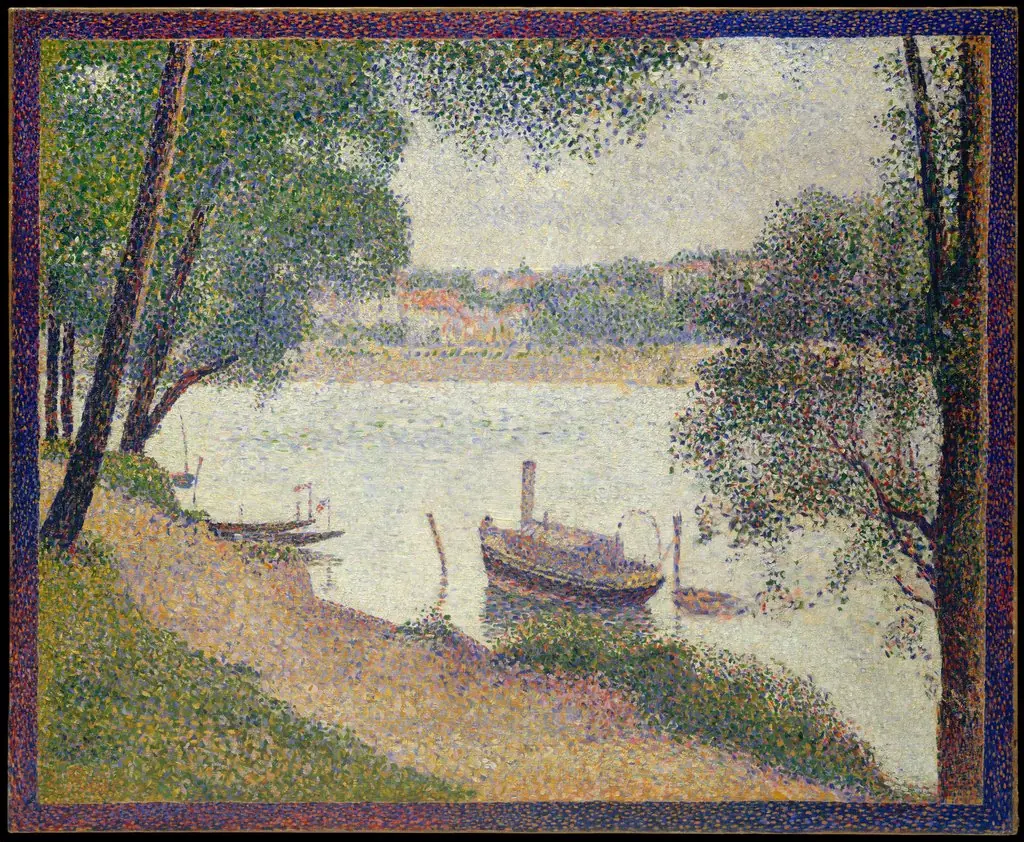
Seurat applied oil paint using a pointillist method, placing tiny dabs of pure color side by side to be optically blended by the viewer’s eye. Greens and browns dominate the palette, creating a naturalistic tone without blending on the canvas. The technique produces a textured, shimmering surface that softens edges and unifies the scene. This method reflects his scientific interest in color theory and visual perception, distinguishing his work from the spontaneity of Impressionism.
History & Provenance
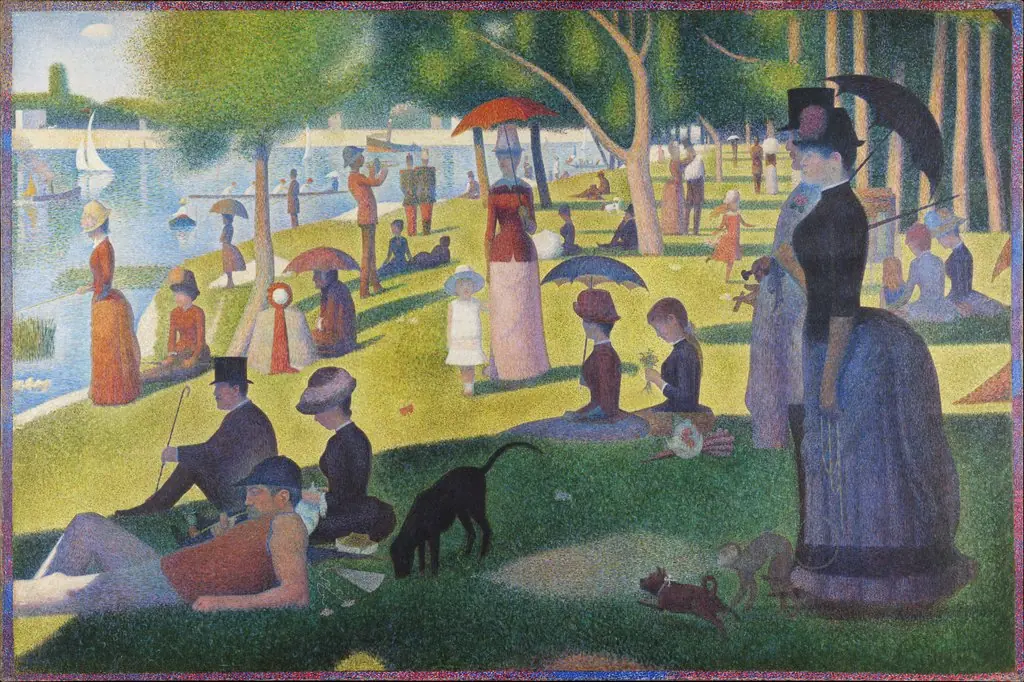
Created in 1885, the painting entered the Museum of Fine Arts, Boston’s collection in the early 20th century. It was made during Seurat’s most active period of pointillist experimentation, following his major work *A Sunday Afternoon on the Island of La Grande Jatte*. Unlike larger compositions, this smaller-scale piece reveals his ability to apply his method to intimate, observational scenes, offering insight into his broader artistic practice.
Context
In the mid-1880s, Parisian parks became popular subjects for artists exploring modern life. Seurat’s focus on public leisure aligns with broader cultural shifts toward urban recreation. His method stood apart from the loose brushwork of Impressionists, instead drawing from scientific studies of color and optics. This painting reflects a deliberate, almost architectural approach to depicting nature, rooted in the intellectual currents of post-Impressionist theory.
Legacy
Though less famous than Seurat’s monumental works, *Woman in a Park* illustrates the adaptability of pointillism to smaller, personal subjects. It influenced later artists interested in structured color systems and the psychological quietude of everyday scenes. The painting remains a quiet testament to Seurat’s commitment to method, demonstrating how scientific inquiry could inform aesthetic expression without sacrificing emotional resonance.
Own this work as a print
Artist & collection
Artist
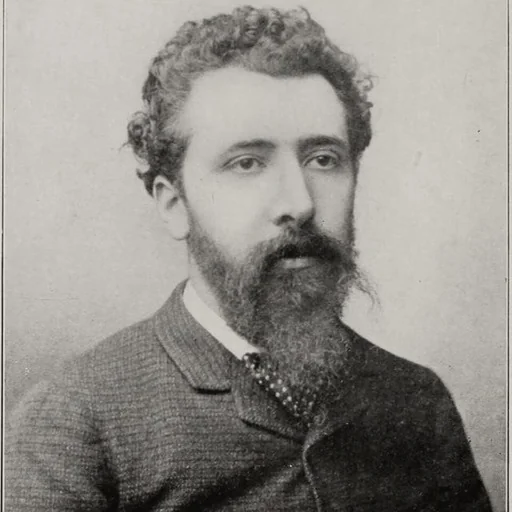
Georges Pierre Seurat (UK: SUR-ah, -ə, US: suu-RAH; French: ; 2 December 1859 – 29 March 1891) was a French post-Impressionist artist.