Artwork
Satyr and Nymph
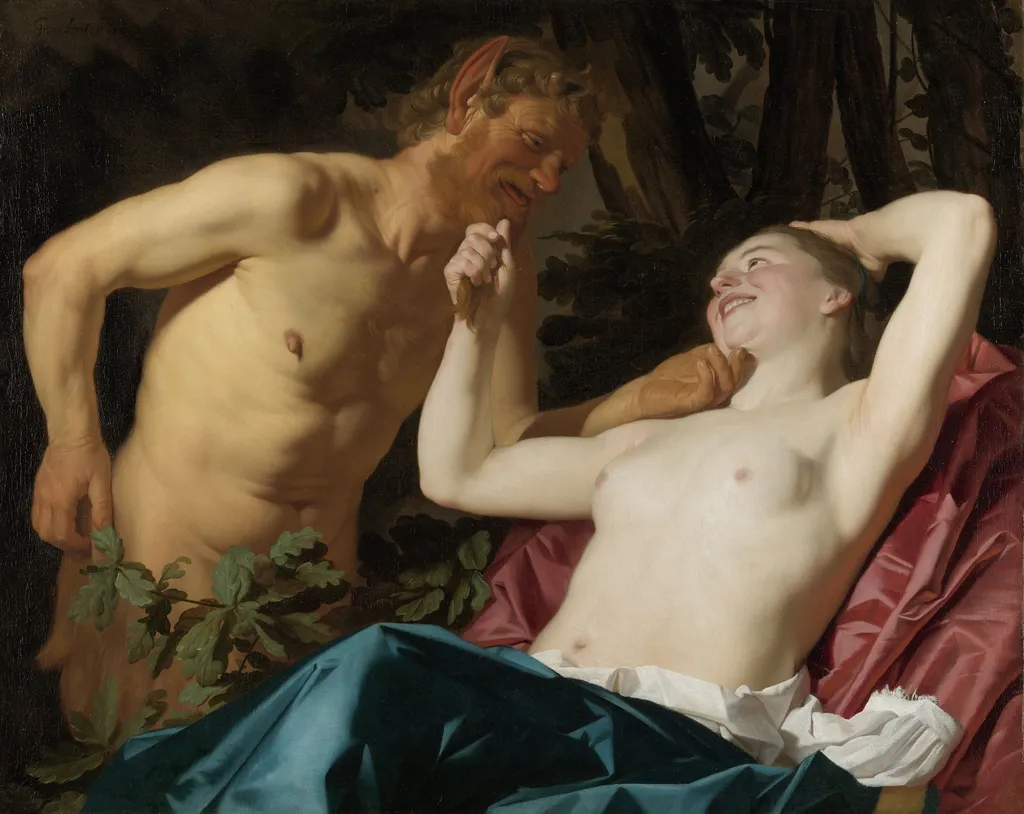
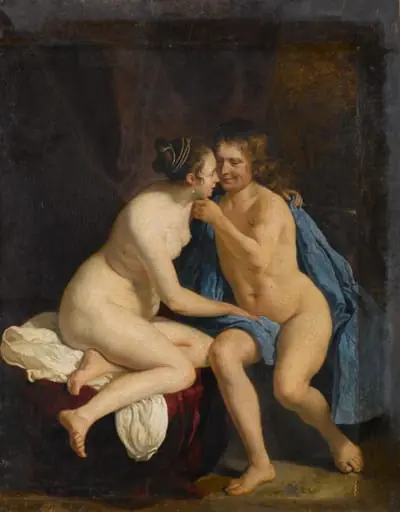
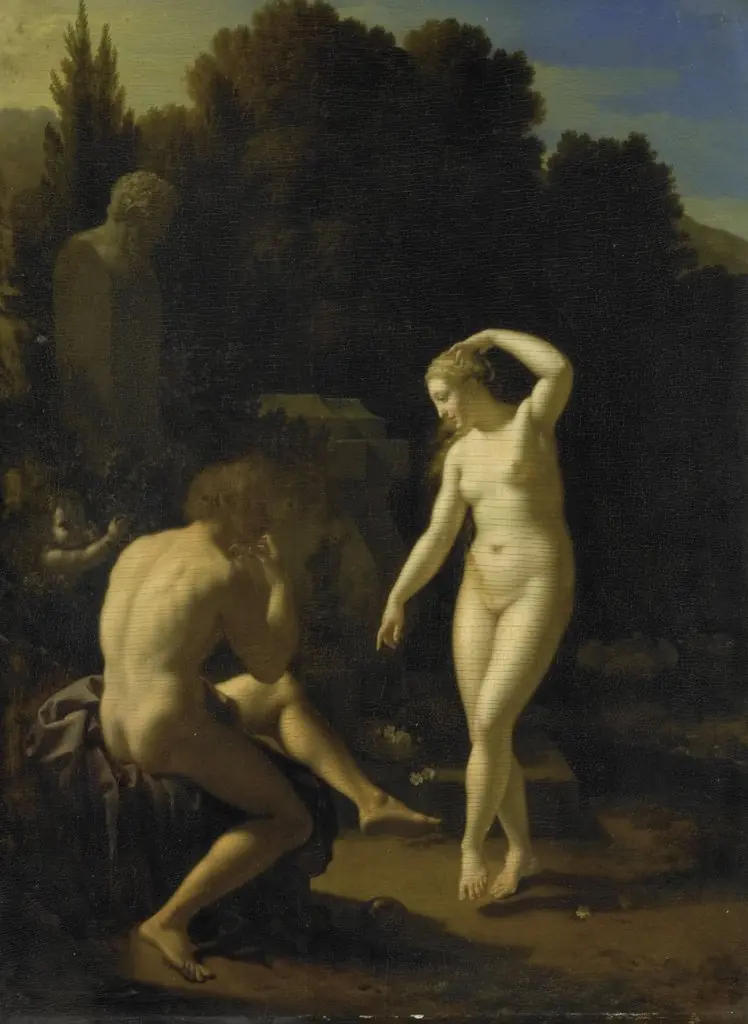
Satyr and Nymph is an oil painting by the Dutch Golden Age artist Gerard van Honthorst. It dates from 1623 and is held in the collection of the Schloss Weißenstein.
About this work
Overview
Satyr and Nymph is a 1623 oil painting by Dutch Golden Age artist Gerard van Honthorst, characterized by its use of chiaroscuro and depiction of a mythological scene in a forest setting.
Subject & Meaning
The painting portrays a contemplative satyr and a reclining nymph, their interaction ambiguous, inviting interpretation of their relationship and emotions. The satyr's thoughtful pose contrasts with the nymph's relaxed yet engaged position.
Technique & Style
Van Honthorst employs strong chiaroscuro, with a dark background and selective lighting, creating depth and mood. This style, influenced by his time under Caravaggio in Rome, emphasizes the emotional and spatial dynamic between the figures.
History & Provenance
Created during van Honthorst's period of Caravaggisti influence, the painting is now part of the Rijksmuseum's collection, reflecting the artist's contribution to the Dutch Golden Age alongside peers like Hendrick ter Brugghen.
Context
Painted after van Honthorst's return to the Netherlands, Satyr and Nymph blends Italianate lighting techniques with Dutch Golden Age sensibilities, marking a transitional phase in his career before he focused on portraiture.
Legacy
While not as widely recognized as some of van Honthorst's other works, Satyr and Nymph remains a notable example of the Caravaggisti style's impact on Dutch painting, highlighting the artist's mastery of light and shadow.
Own this work as a print
Artist & collection
Artist
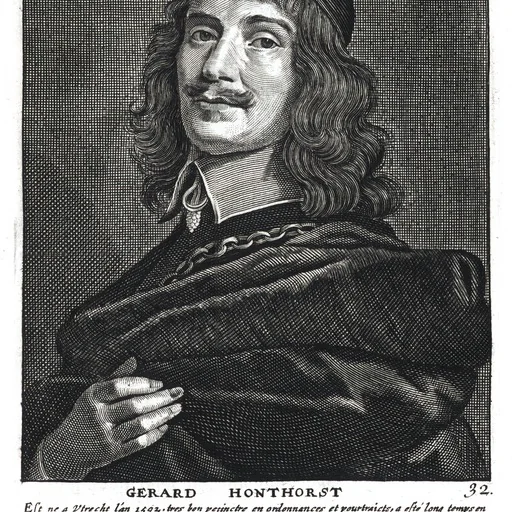
Gerard "Gerrit" van Honthorst (4 November 1592 – 27 April 1656) was a Dutch Golden Age painter who became known for his depiction of artificially lit scenes, eventually receiving the Italian nickname Gherardo delle Notti ("Gerard of the…

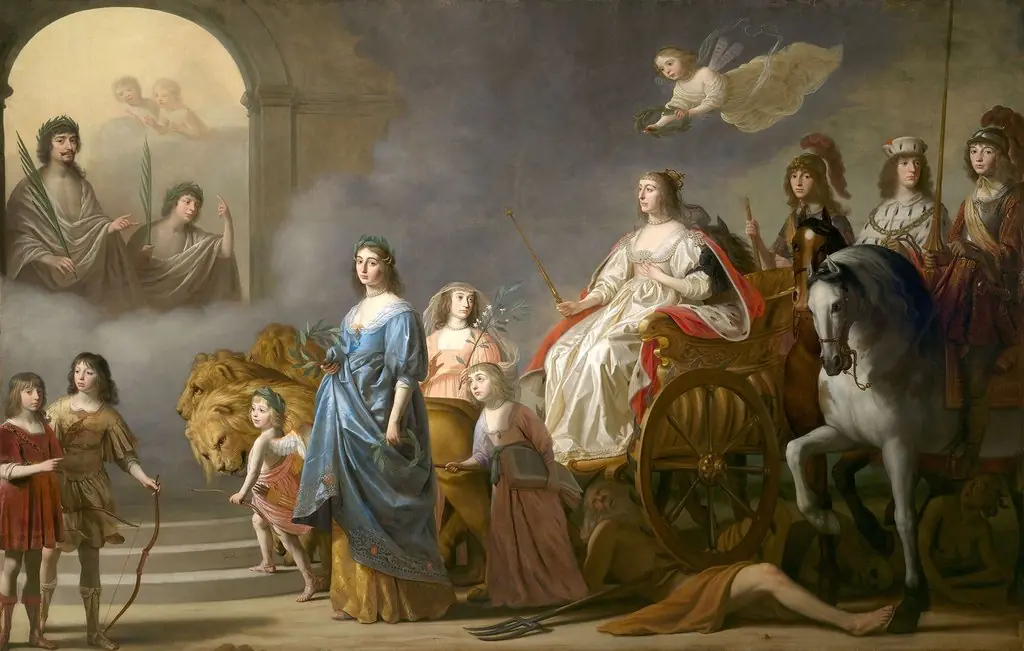 The Triumph of the Winter Queen: Allegory of the Just
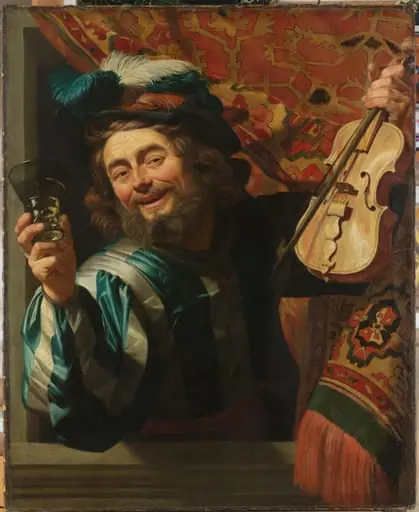 Een vrolijke vioolspeler
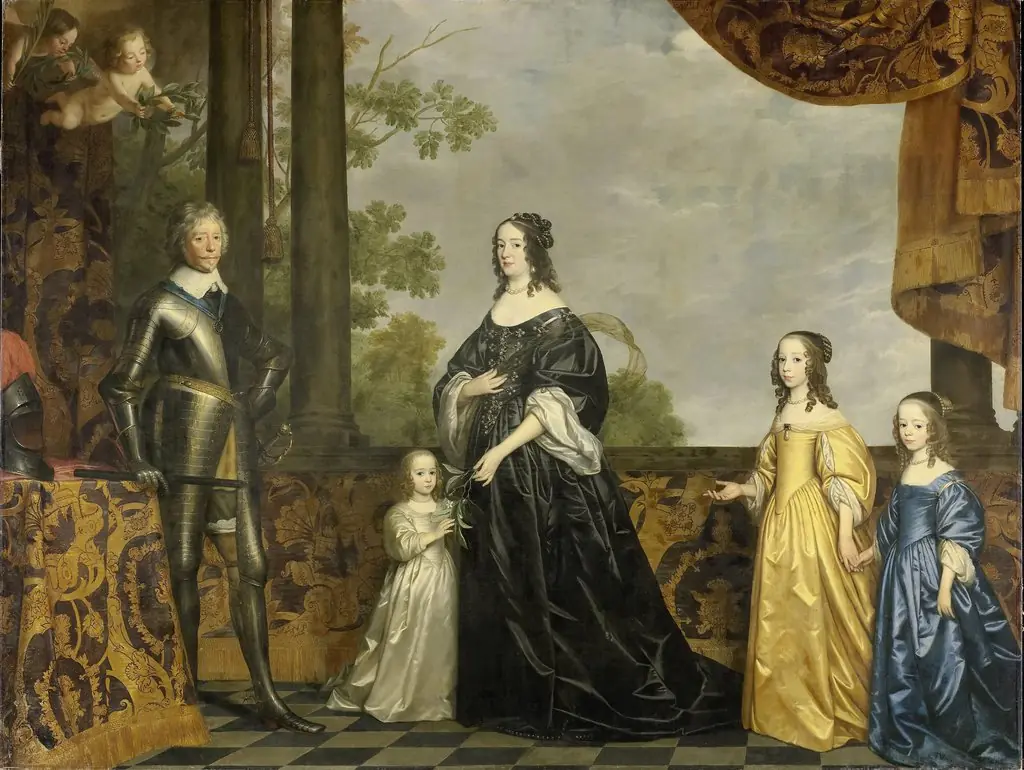 Frederik Hendrik (1584-1647), Prince of Orange, his wife Amalia van Solms (1602-75) and their three youngest daughters, Albertina Agnes (1634-96), Henrietta Catharina (1637-1708) and Maria (1642-88)
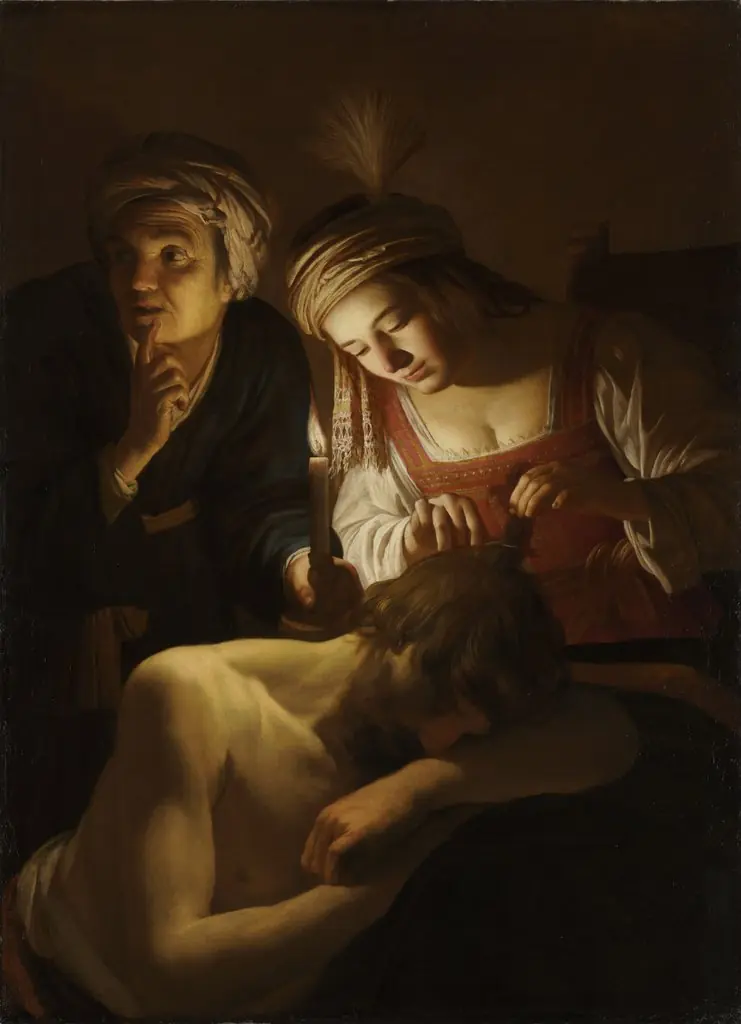 Samson and Delilah
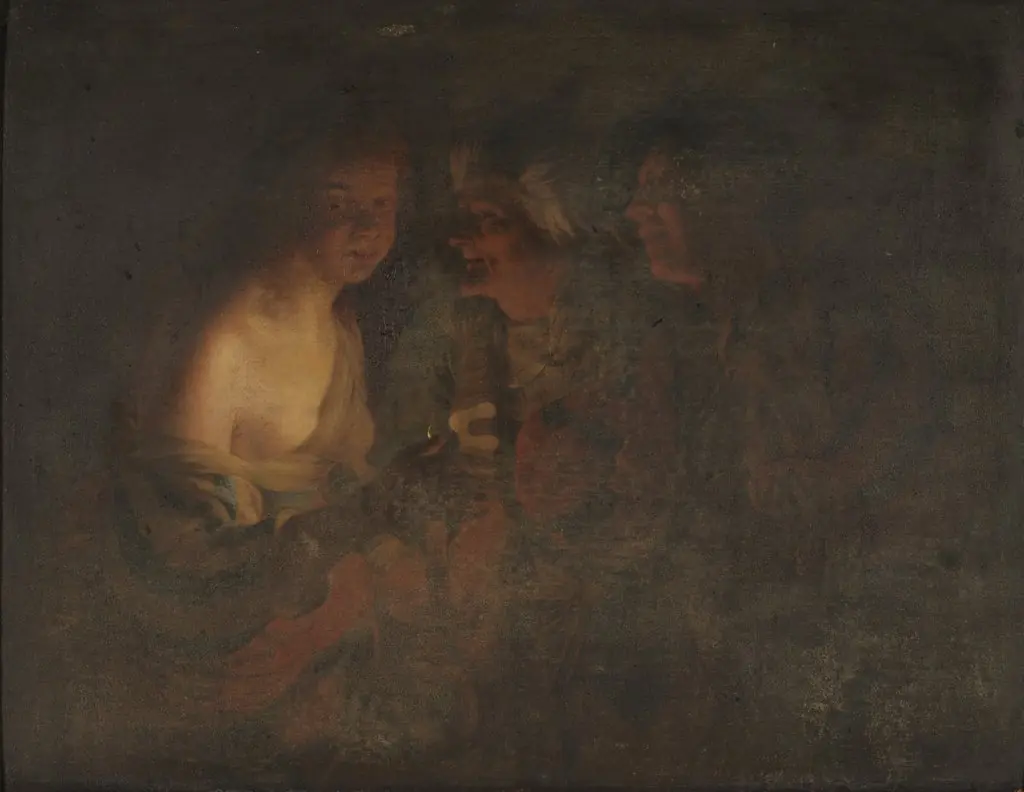 Young Woman with a Candlestick, Old Woman and a Violin Player
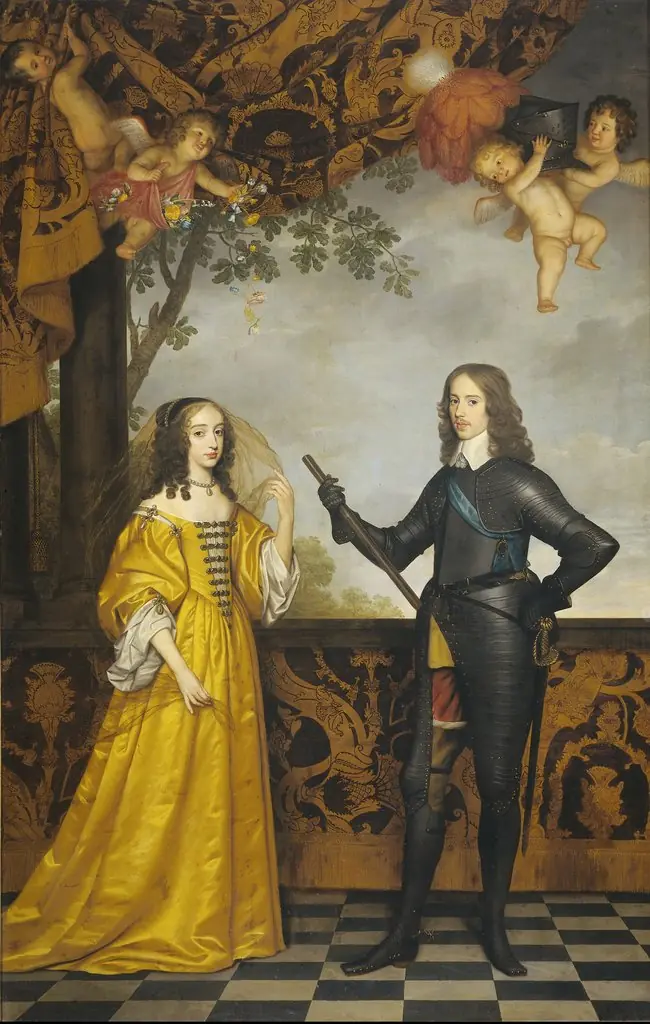 Willem II (1626-50), Prince of Orange, and his wife Maria Stuart (1631-60)
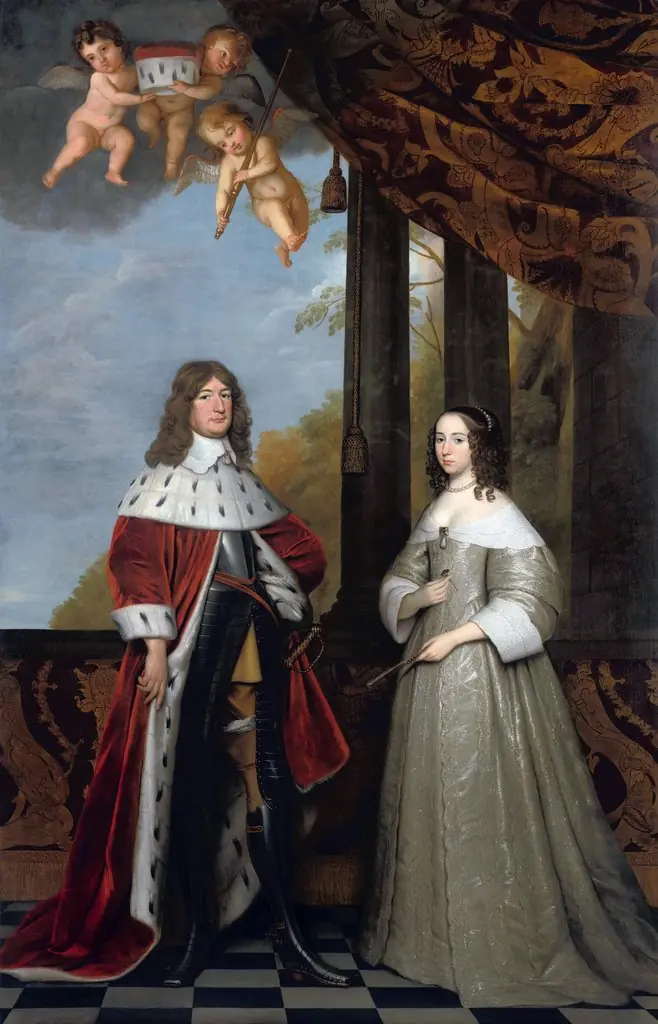 Friedrich Wilhelm (1620-88), Elector of Brandenburg, and his wife Louise Henriette (1627-67), Countess of Orange-Nassau
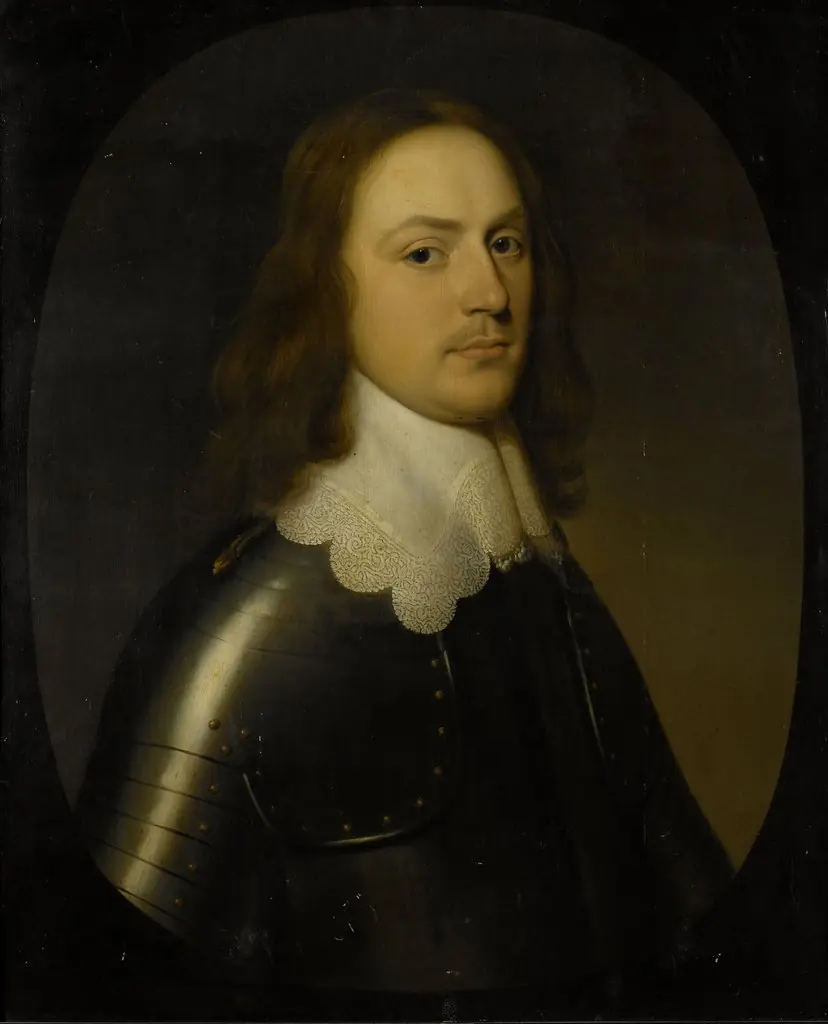 Portrait of an officer