Artwork
Prophet Elisha and the Shunammite woman on Mt. Carmel
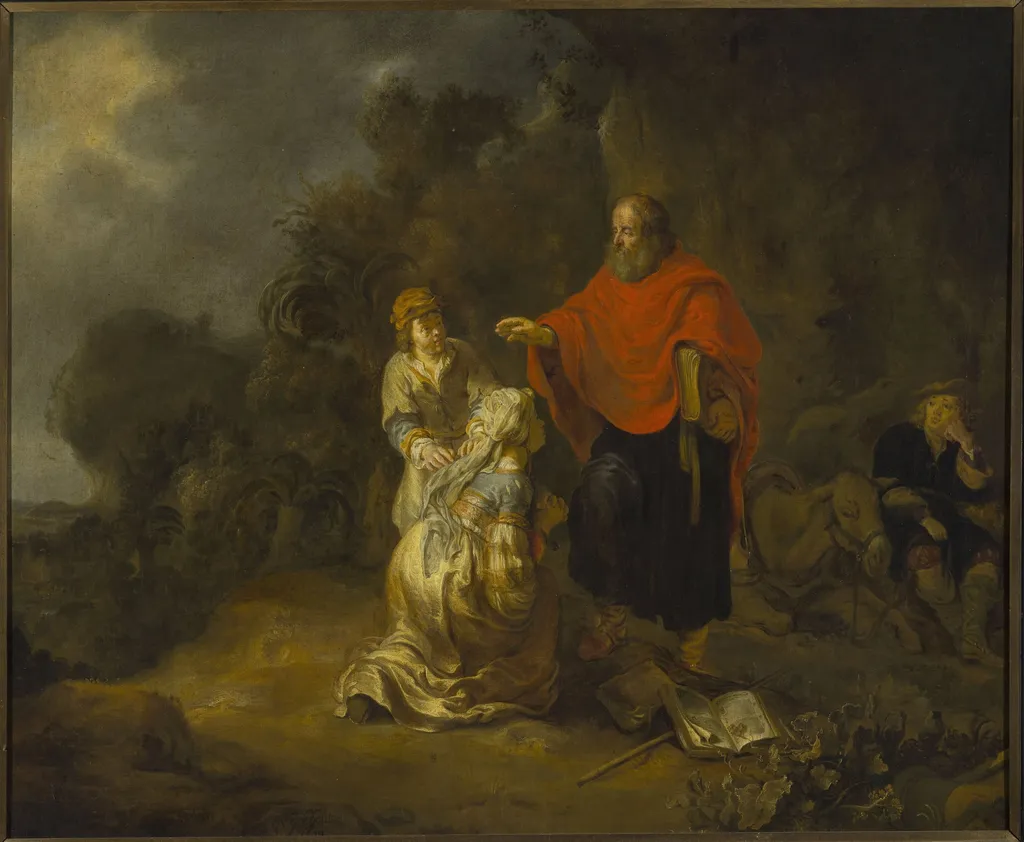
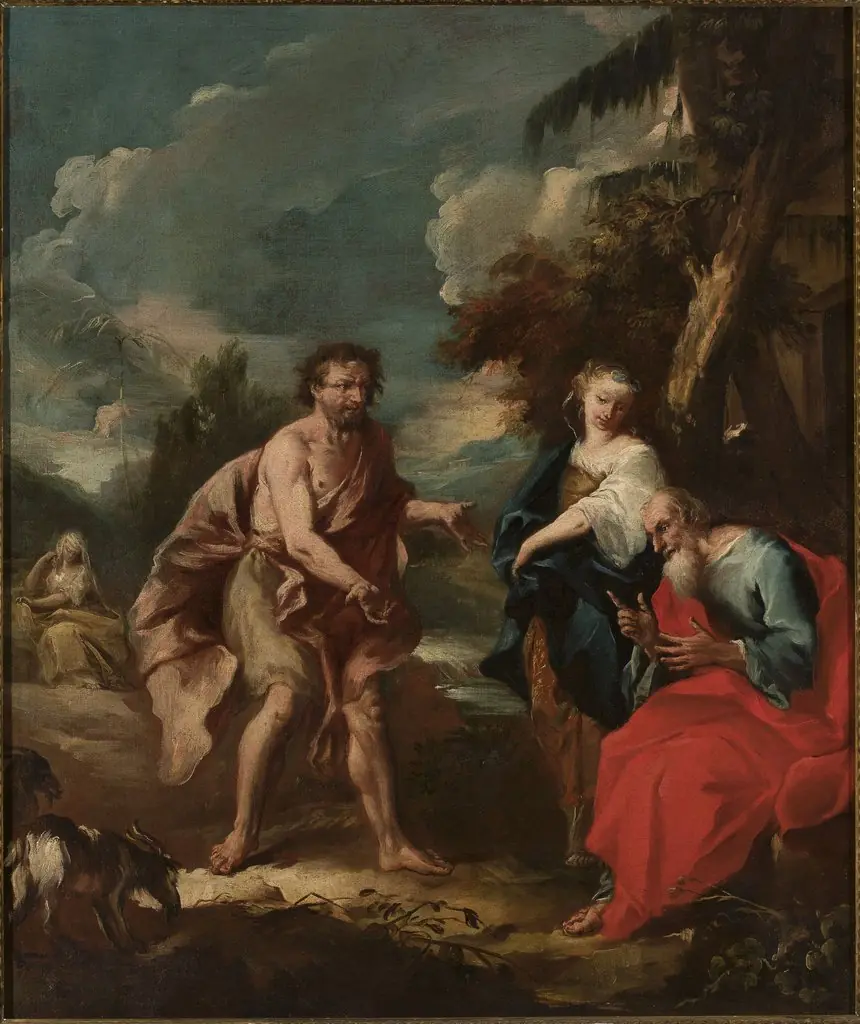
Prophet Elisha and the Shunammite woman on Mt. Carmel is an oil painting by Gerbrand van den Eeckhout. It dates from 1649 and is held in the collection of the National Museum in Warsaw.
About this work
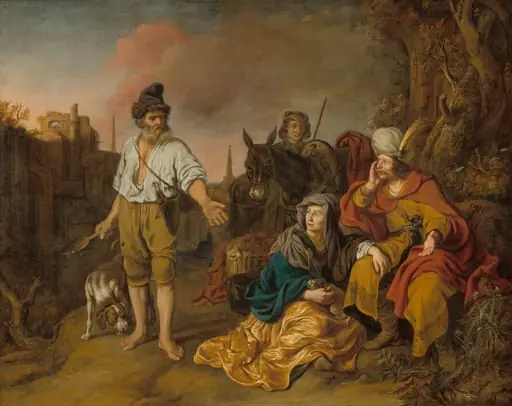
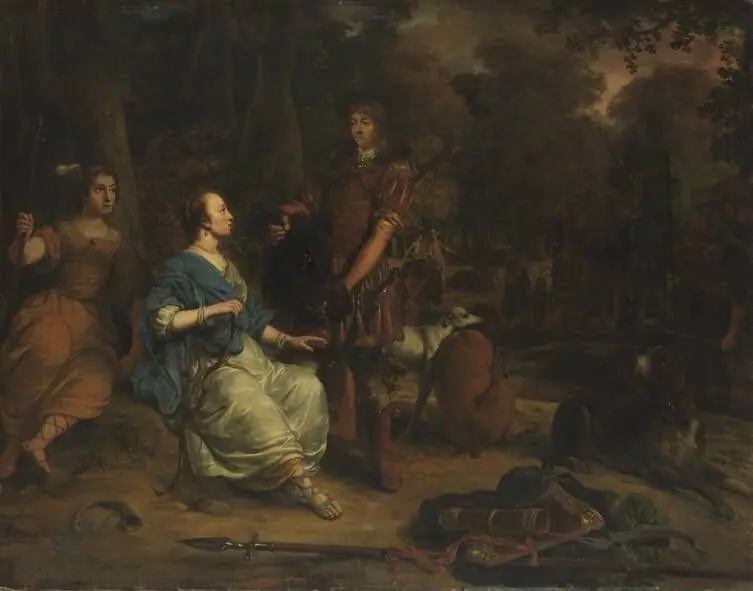
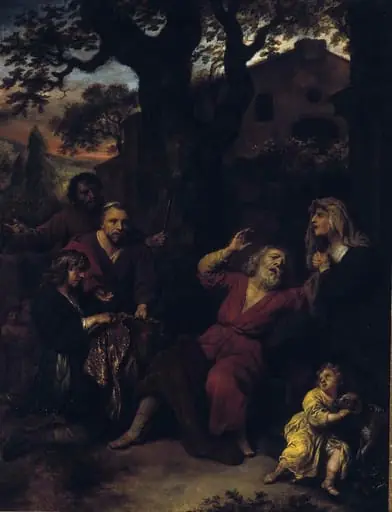
A man in a red robe stands to the right, gesturing towards a woman who kneels on the ground, her head covered.
This painting depicts a scene with four figures in a landscape. A man in a red robe stands to the right, gesturing towards a woman who kneels on the ground, her head covered. A man in a yellow hat stands behind her, holding her arms. Another man sits to the right, looking on.
The scene is set against a backdrop of trees and a cloudy sky. The figures are dressed in clothing from the 17th century, and the overall mood is one of solemnity.
The use of chiaroscuro creates a sense of depth and drama in the scene. To learn more about this technique, look up chiaroscuro.
Overview
Painted in 1649 by Gerbrand van den Eeckhout, this oil-on-canvas work illustrates a moment from the biblical narrative involving the prophet Elisha and the Shunammite woman. Executed in the Dutch Golden Age, the painting reflects van den Eeckhout’s training under Rembrandt and his mastery of narrative composition. It resides today in the National Museum in Warsaw, where it is recognized as a significant example of 17th-century biblical illustration in Dutch art.
Subject & Meaning
The scene captures Elisha’s encounter with the Shunammite woman, a story from 2 Kings in which she seeks his aid after her son’s sudden death. Though the exact moment is not explicitly biblical, the composition suggests her plea for intervention. The kneeling woman, covered head and all, conveys grief and submission, while Elisha’s gesture implies divine authority. The surrounding figures reinforce the gravity of the moment, framing it as a sacred encounter.
Technique & Style
Van den Eeckhout employs chiaroscuro to model the figures with strong contrasts of light and shadow, lending volume and emotional weight. The clothing, though biblically inspired, reflects 17th-century Dutch dress, grounding the sacred in contemporary reality. The landscape is rendered with loose, atmospheric brushwork, and the cloudy sky adds a somber tone. Figures are arranged in a quiet, intimate grouping, emphasizing psychological depth over theatrical action.
History & Provenance
The painting entered the National Museum in Warsaw’s collection in the 19th century, likely through European art acquisitions. Its documented history before that is limited, though its style and signature align with van den Eeckhout’s known output from the late 1640s. As a work by a respected pupil of Rembrandt, it was valued in its time for its narrative clarity and technical refinement, though it never achieved widespread fame.
Context
In mid-17th-century Holland, biblical scenes remained popular among collectors despite the Protestant rejection of religious imagery in churches. Artists like van den Eeckhout catered to private devotion and intellectual interest in scripture. His approach—blending historical accuracy with emotional restraint—reflected broader Dutch tendencies to treat sacred stories as human dramas, rendered with psychological nuance rather than grandeur.
Legacy
Though not among van den Eeckhout’s most widely reproduced works, this painting exemplifies his skill in translating biblical texts into intimate, emotionally resonant scenes. It stands as a testament to his role in the Dutch tradition of biblical painting, where moral gravity and quiet realism replaced Baroque spectacle. Today, it contributes to scholarly understanding of how religious narratives were visually interpreted in Protestant Europe.
Artist & collection
Artist
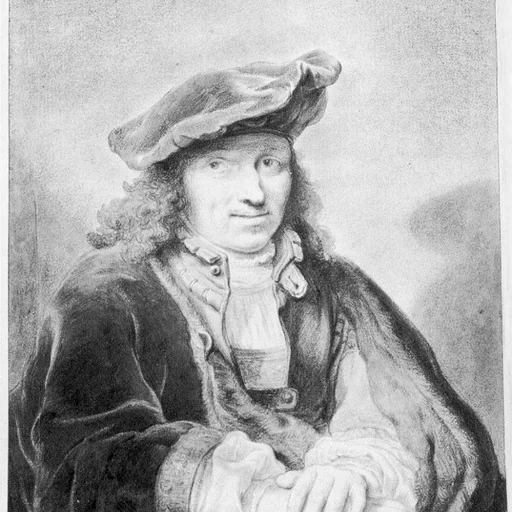
Gerbrand van den Eeckhout (19 August 1621 – 29 September 1674) was a Dutch Golden Age painter and a favourite student of Rembrandt. He was also an etcher, an amateur poet, a collector and an adviser on art.