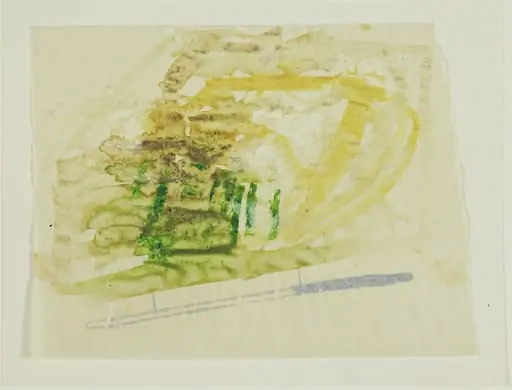
Artwork
Untitled
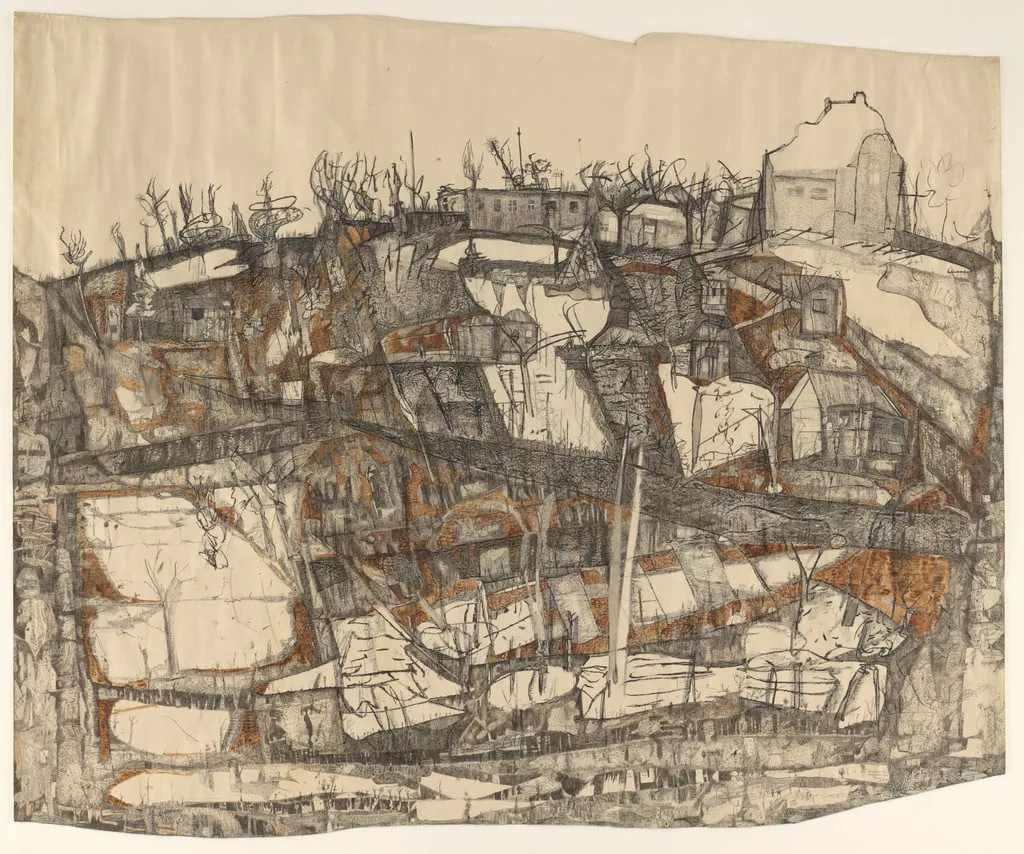
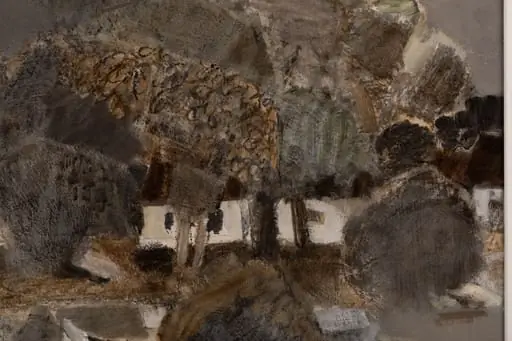
Untitled is a watercolor drawing by Gerhard Altenbourg. It dates from 1956 and is held in the collection of the Museum of Modern Art.
About this work
Overview
Created in 1956, this work by Gerhard Altenbourg combines ink, lithographic crayon, and watercolor on paper mounted to canvas.
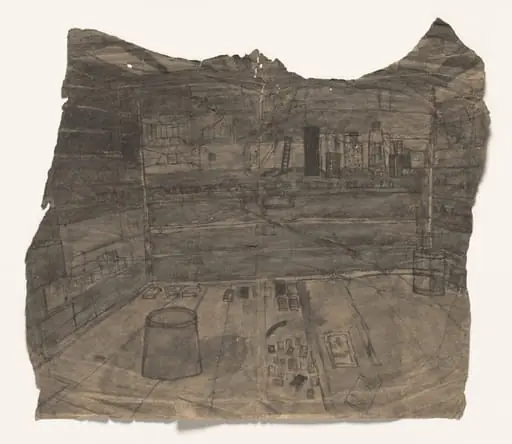
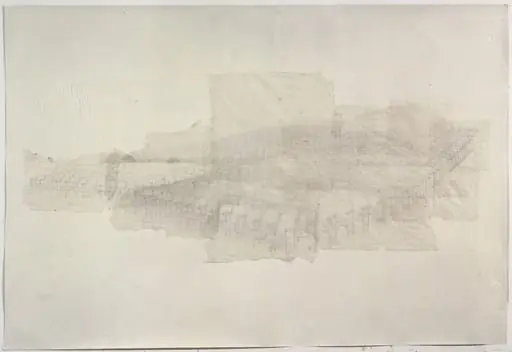
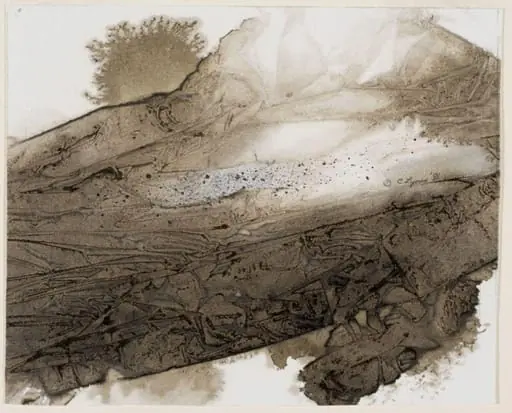
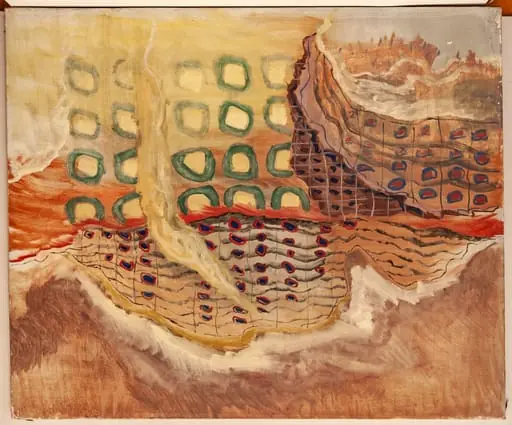
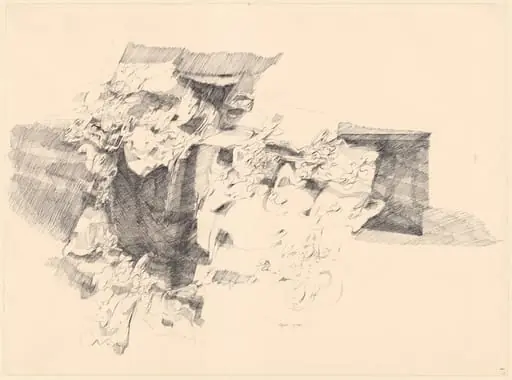
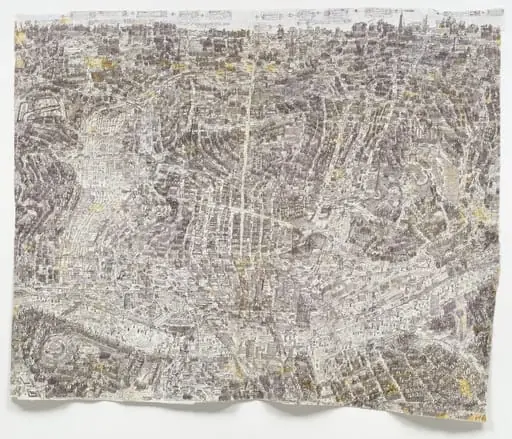
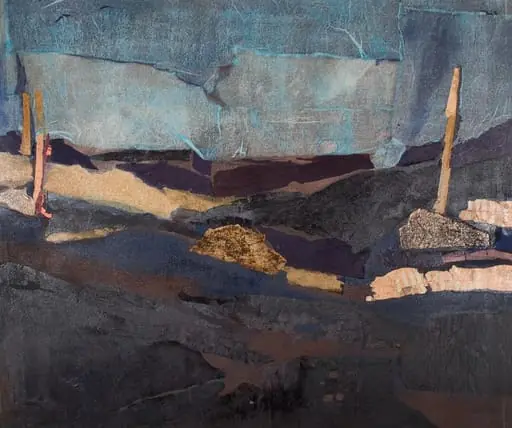
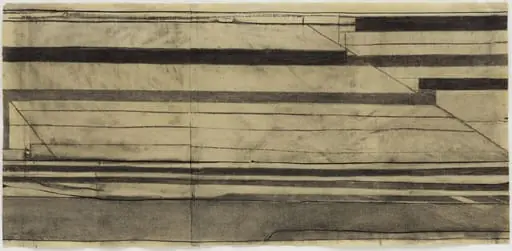
Created in 1956, this work by Gerhard Altenbourg combines ink, lithographic crayon, and watercolor on paper mounted to canvas. Its layered, gestural marks suggest a dense urban landscape without clear boundaries. The composition resists neat definition, favoring a sense of accumulation and decay. The piece belongs to the collection of The Museum of Modern Art, where it is cataloged as a drawing rather than a print, reflecting its hand-made, non-reproductive nature.
Subject & Meaning
The image evokes a fragmented cityscape—buildings tilt unpredictably, forms appear half-erased or collapsing, and sparse figures emerge from the chaos. There is no single narrative, but rather a mood of urban disintegration and quiet habitation. The inclusion of skeletal trees and ambiguous human or animal shapes suggests life persisting amid disorder, without romanticizing or condemning the scene.
Technique & Style
Altenbourg employed loose, overlapping strokes using lithographic crayon and ink, layered with diluted watercolor to create muted tonal shifts. Edges are deliberately blurred, forms interpenetrate, and no area is fully resolved. The absence of clean outlines and the raw texture of the paper contribute to a sense of immediacy, as if the scene were drawn in real time, without revision or polish.
History & Provenance
The work was produced in 1956 during Altenbourg’s early period in East Germany, when he was developing a personal visual language distinct from official socialist realism. It entered The Museum of Modern Art’s collection in the decades following its creation, reflecting growing international interest in postwar German artists who explored abstraction and expression through drawing.
Context
Made in the aftermath of World War II, the piece resonates with the physical and psychological ruins of German cities. Altenbourg’s approach aligns with broader European tendencies toward gestural abstraction and existential imagery, rejecting idealized representation in favor of emotional and material texture. His work was influenced by Art Brut and the informalism movement, emphasizing process over polished outcome.
Legacy
This drawing exemplifies Altenbourg’s enduring focus on the expressive potential of mark-making over representational clarity. It contributed to the recognition of drawing as a primary medium for postwar German artists seeking to articulate trauma and memory. Its presence in MoMA’s collection affirms its role in expanding the boundaries of what drawing could convey in the 20th century.
Artist & collection
Artist
Gerhard Ströch, better known as Gerhard Altenbourg was an East German painter, sculptor, and poet.