Artwork
Untitled
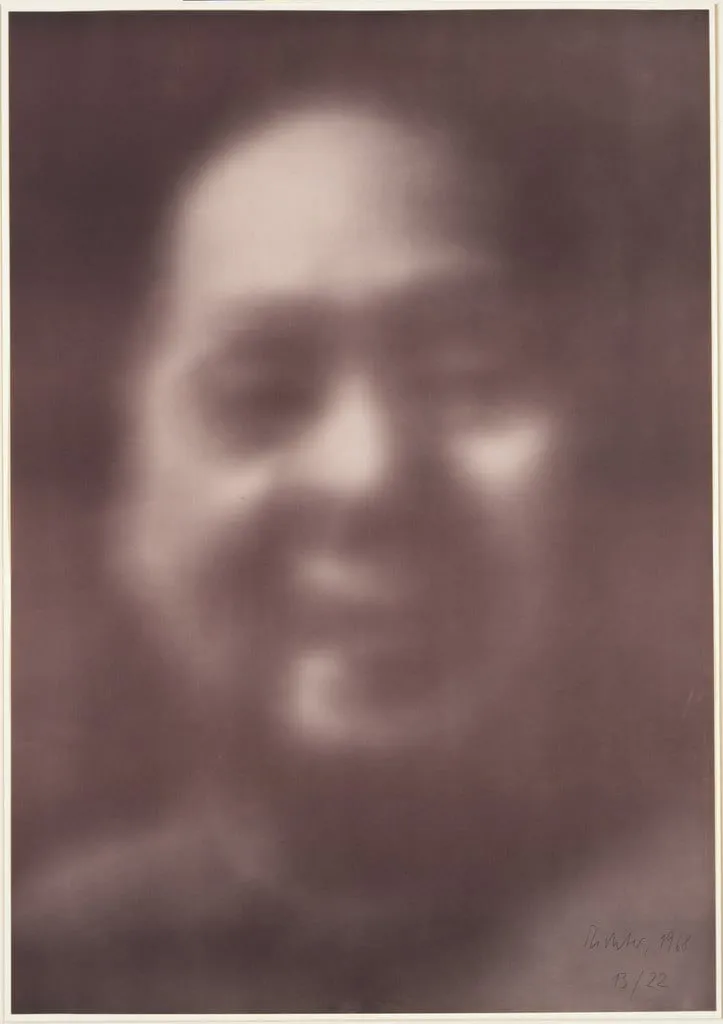
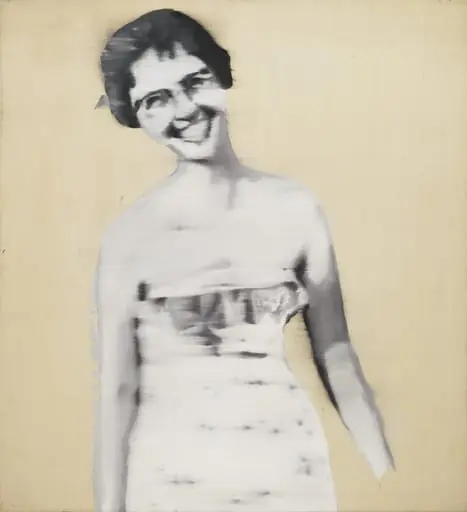
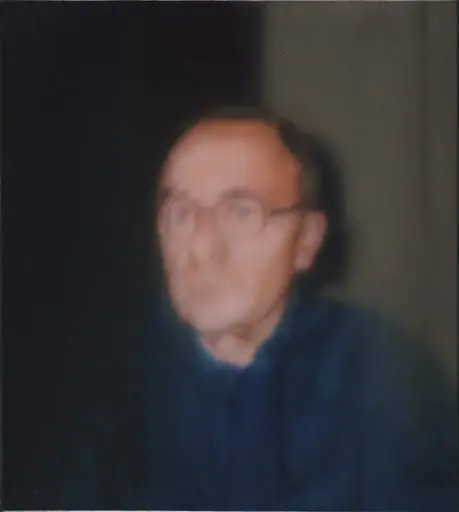
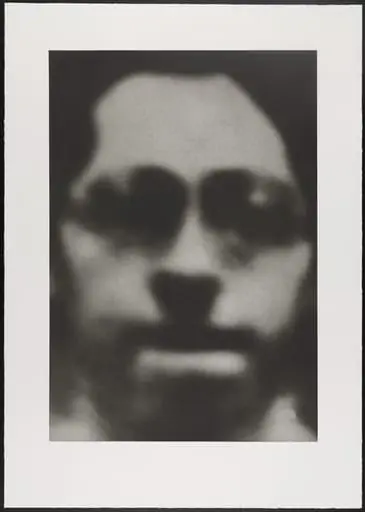
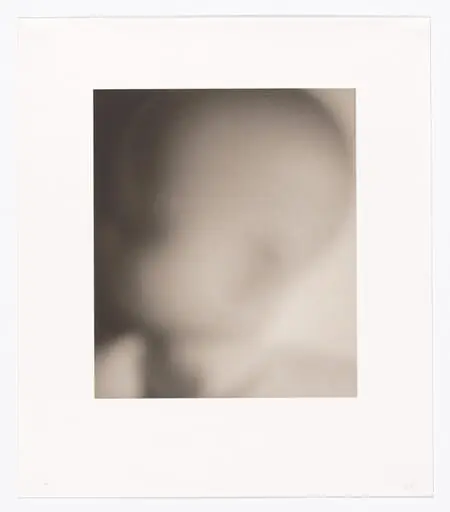
Untitled is a print by Gerhard Richter. It dates from 1968 and is held in the collection of the Museum of Modern Art.
About this work
Overview
Its muted, indistinct imagery departs from traditional portraiture, emphasizing ambiguity over clarity.
Created in 1968, this print by Gerhard Richter is titled Untitled and executed in collotype, a photographic printing process known for its subtle tonal gradations. The work is part of the permanent collection at The Museum of Modern Art. Its muted, indistinct imagery departs from traditional portraiture, emphasizing ambiguity over clarity. The technique contributes to a sense of erosion, as if the subject is receding from view.
Subject & Meaning
The image presents a faint, fragmented human face—barely discernible eyes, nose, and mouth—emerging from a dark, uniform field. No identity is specified, and the lack of detail resists narrative interpretation. The blurring suggests memory’s decay or the instability of representation itself. The face appears not as a person but as a trace, evoking absence rather than presence.
Technique & Style
Richter employed collotype, a labor-intensive photomechanical process that reproduces fine tonal variations without halftone dots. This method produces soft, almost atmospheric transitions between light and dark, enhancing the image’s ethereal quality. The resulting surface lacks sharp edges, mimicking the effect of a photograph left in damp conditions. The technique aligns with Richter’s broader interest in mechanical reproduction and perceptual uncertainty.
History & Provenance
The work entered The Museum of Modern Art’s collection in the late 20th century as part of a broader acquisition of Richter’s photographic-based prints. It was made during a period when the artist was systematically exploring the limits of representation through blurred imagery. No prior ownership records suggest public exhibition before its institutional acquisition, though it was likely produced in a limited edition.
Context
In the late 1960s, Richter was moving away from photorealism toward works that questioned the reliability of images. This print reflects his engagement with media saturation and the erosion of personal identity in postwar Germany. Collotype, a pre-digital method, was chosen not for its novelty but for its capacity to mute and obscure—mirroring cultural amnesia and the difficulty of confronting the past.
Legacy
This print exemplifies Richter’s enduring investigation into how images convey—or fail to convey—meaning. Its quiet ambiguity influenced later artists working with photographic degradation and non-narrative portraiture. Though not widely reproduced, it remains a key example of how technical choice can shape conceptual intent, reinforcing the idea that what is unseen may hold greater weight than what is shown.
Artist & collection

Artist
Gerhard Richter is a German visual artist. Richter has produced abstract as well as photorealistic paintings, photographs and glass pieces. He is widely regarded as one of the most important contemporary German artists…